Nairobi, Kenya, has been awarded the prestigious 2029 World Athletics Championships, marking a historic first for the African continent. The decision, announced by World Athletics president Sebastian Coe at a council meeting in Budapest, saw the Kenyan capital triumph over strong bids from London, UK, and Rome, Italy. Munich, Germany, was simultaneously confirmed as the host city for the 2031 edition.
This landmark decision signifies a significant step in World Athletics’ stated mission to expand the sport’s global reach, bringing its premier event to Africa for the first time in its history. President Coe lauded Nairobi’s bid as "compelling and emotional," emphasizing that the timing was right for Africa to host the championships. "We were fortunate to have four outstanding bids for 2029 and 2031, and this was not an easy decision for the council," Coe stated. "With this decision today, we continue to fulfil our mission of growing athletics worldwide with the hosting of our World Athletics Championships in Asia, Africa and Europe over its next three editions. Nairobi presented a compelling and emotional bid, and taking the World Athletics Championships to Africa for the first time will be historic." He further elaborated, "It was important that the World Athletics Championships should come to Africa when we had the right host, the right bid and the right circumstances. Nairobi has demonstrated emphatically that this is their moment."
London’s Bid Falls Short Amidst Strong Competition
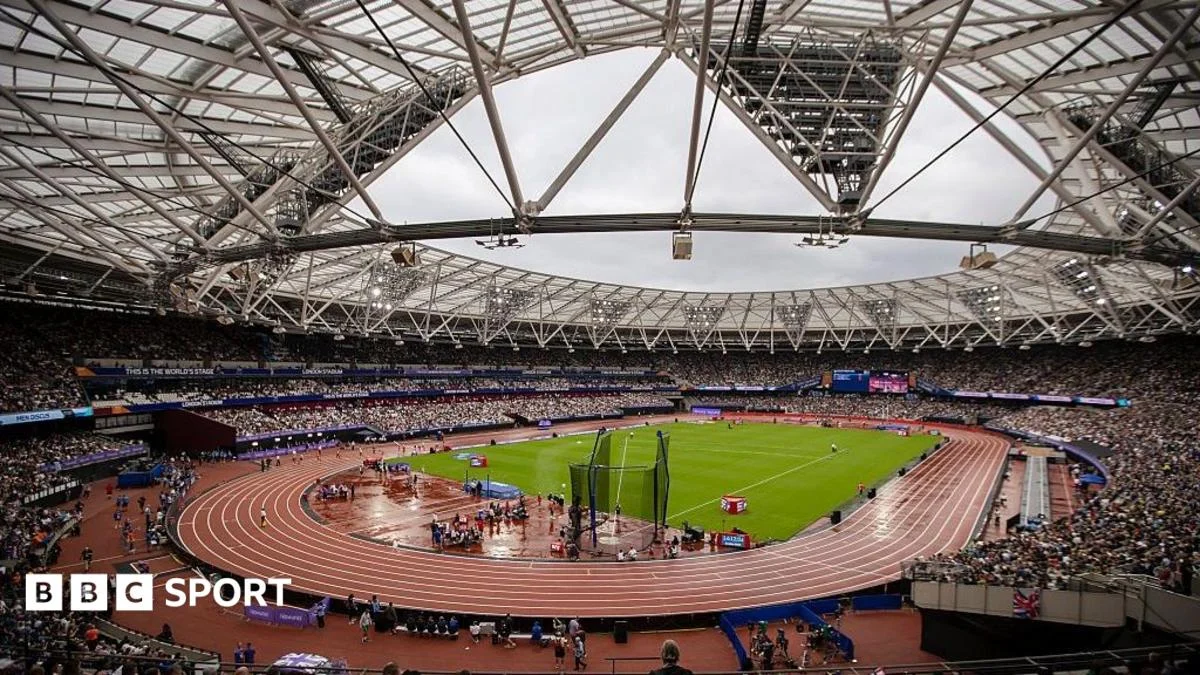
The London bid, spearheaded by Athletic Ventures – a consortium comprising UK Athletics, London Marathon Events, and the Great Run Company – had proposed utilizing the iconic London Stadium. This venue, a cornerstone of the 2012 Olympic Games, has a proven track record of hosting major athletics events, including the annual London Diamond League and the 2017 World Athletics Championships. Despite securing substantial public funding, estimated at £45 million, and confidence in replicating the commercial success of the 2017 event, London’s bid ultimately failed to convince the World Athletics council.
Jack Buckner, CEO of UK Athletics and co-founder of Athletic Ventures, expressed profound disappointment. "We are deeply disappointed that the 2029 World Athletics Championships will not be held in London," Buckner commented. "We believed we had an outstanding bid which would genuinely take the sport to new levels." He extended gratitude to the UK government, the Department for Digital, Culture, Media and Sport, the Mayor of London, and UK Sport for their unwavering support, as well as acknowledging the contributions of London Stadium, West Ham United, and other stakeholders. "Our congratulations go to Nairobi and we wish the organising committee all the best for a great event in 2029."
Nairobi’s Journey to Hosting
Nairobi’s selection for the 2029 championships follows a previous unsuccessful bid for the 2025 edition, which was ultimately awarded to Tokyo. The Kenyan capital’s credentials as a host city have been significantly bolstered by ongoing renovations at its Kasarani Stadium, a key venue for the upcoming 2027 Africa Cup of Nations (Afcon). This infrastructural development, coupled with Kenya’s formidable reputation in middle and long-distance running – evidenced by their second-place finish on the medal table at the 2025 World Athletics Championships with seven gold and eleven total medals – likely played a crucial role in their successful bid.
The World Athletics Championships, established in 1983, is the pinnacle event in track and field, held biennially. It brings together thousands of athletes from over 200 nations to compete across a comprehensive program of track, field, and road running events. The championships have a significant economic and cultural impact on host cities, attracting substantial tourism, media attention, and leaving a lasting legacy in terms of sporting infrastructure and community engagement. Previous hosts have included major global cities like Berlin (2009), Daegu (2011), Moscow (2013), Beijing (2015), London (2017), Doha (2019), and Eugene (2022).
Potential Hurdles and Considerations for London’s Bid
While Lord Coe remained focused on the positive historical implications of Nairobi’s win, speculation has arisen regarding potential factors that may have hindered London’s bid. One such point of discussion was the timing of confirmation regarding the London Stadium’s availability. While West Ham United, the stadium’s primary tenant, eventually granted permission for its use, this was only finalized shortly before the bid’s formal submission. This uncertainty, however brief, could have been perceived as a risk.
Furthermore, the recent European Athletics Championships held in Birmingham saw a notable number of empty seats at the Alexander Stadium, with capacities of 23,000. Ticket prices were cited by some attendees as a contributing factor to lower-than-expected attendance. While London’s bid aimed to replicate the success of the 2017 championships, which saw record attendances, the experience in Birmingham may have raised questions about the current appetite and affordability of athletics events for the UK public. Lord Coe, however, declined to comment on whether these specific issues were determinants in the council’s decision.
Another sensitive area for consideration, though not directly addressed by World Athletics, is the ongoing scrutiny surrounding doping violations within Kenyan athletics in recent years. While Nairobi’s bid champions the nation’s rich sporting heritage, particularly in distance running, the issue of doping remains a significant concern for the sport’s integrity. The decision to award the championships to Kenya will undoubtedly lead to heightened attention and expectations regarding anti-doping measures and their implementation in the lead-up to and during the event.
A Landscape of Major Sporting Events in the UK
Despite this disappointment, the UK continues to be a significant player in hosting major international sporting events. The nation is set to host the Grand Départ of the men’s and women’s Tour de France cycling races in 2027, followed by the men’s Euros football tournament in 2028. Additionally, the UK is a contender for the 2035 Women’s World Cup. This robust pipeline of events underscores the UK’s capacity and ambition in the global sports landscape. However, in the context of the government’s interest in a potential Olympic bid for 2040, the failure to secure the 2029 World Athletics Championships represents a notable setback.
Athlete Reactions and Broader Implications
The news has elicited mixed reactions from British athletes. Amber Anning, the World Indoor 400m champion and British record holder, expressed her disappointment at missing the opportunity to compete in a home World Championships. "There was a lot of disappointment, honestly," Anning told BBC Sport. "That was our dream. In 2017, I saw that we have the best crowds, the best atmosphere. So I would say it is a bit unfortunate that we weren’t able to get the bid." However, she also acknowledged the significance of Nairobi’s win. "But seeing how Botswana was for the World Relays this year, I think it will be really special to have it in Africa for the first time. It’s going to leave a legacy, so while it was not the result we wanted, it’s still a chance for another country and another generation to inspire. It’s an honour."
Greg Rutherford, an Olympic long jump gold medalist from the 2012 London Games, echoed these sentiments, describing it as a "bitter pill to swallow" for London. Rutherford, however, emphasized the need for global inclusivity in hosting major sporting events. "We’ve seen over the years how well we can put on these incredible championships – 2017 was massive, record amounts of people through the doors, bums on seats watching some amazing performances," Rutherford told BBC Sport. "We also saw that in 2012 but at the same time, we are seeing something that is going to change the lay of the land. Of course there is real disappointment but equally, it’s going to be incredible to finally see this event in Africa. I think what may have harmed it [London’s bid] is that we had hosted one so recently, and Nairobi’s bid was a very strong one. They are looking to invest into Africa so there is more chance for their nations to have the opportunity like this going forward and I do think we need to see change at times."
A spokesperson for the Mayor of London, Sadiq Khan, conveyed disappointment but also offered congratulations to Nairobi. "The Mayor is disappointed that London will not host the 2029 World Athletics Championships. London put forward an outstanding bid, and he thanks all the partners who supported it," the spokesperson stated. "Sadiq congratulates Nairobi. Their selection means that the World Athletics Championships will be held in Africa for the first time ever in what is a landmark moment for athletics. He wishes them every success in 2029. London remains the sporting capital of the world, and the Mayor will continue working to bring more of the world’s biggest events to our city."
The awarding of the 2029 World Athletics Championships to Nairobi is more than just a sporting decision; it is a powerful statement about the evolving landscape of global sports governance and a commitment to diversifying the hosting of major international events. For Kenya and the African continent, it represents a moment of immense pride and opportunity, promising to inspire a new generation of athletes and showcase the vibrant spirit of the nation on a global stage. The focus now shifts to Nairobi’s preparations, ensuring a successful and memorable championship that lives up to the historic significance of this moment.