Rome, Italy – Exein, an innovative Italian cybersecurity startup, has officially achieved unicorn status, securing a substantial $270 million funding round led by the venture capital firm Headline. This latest infusion of capital propels the company’s valuation to an impressive $1.7 billion, solidifying its position as a leading force in the burgeoning field of physical AI security. The investment underscores a growing recognition of the critical need for robust cybersecurity solutions at the intersection of artificial intelligence and the physical world, an area Exein has strategically focused on, evolving its initial concentration from the broader Internet of Things (IoT) landscape.
The Evolution of Device Security: From IoT to Physical AI
Founded in 2018, Exein embarked on a mission driven by a fundamental principle articulated by CEO Gianni Cuozzo: "The concept of Exein is that every device should be able to defend itself, regardless if they are connected to a secure network or not." This vision positions Exein at the forefront of a paradigm shift in cybersecurity, moving beyond traditional network perimeters to embed security directly within the devices themselves. The company’s latest product, Photon, exemplifies this approach, offering a runtime security solution designed to prevent sophisticated cyberattacks at the kernel level of a device. This deep-seated protection is crucial for ensuring the integrity and functionality of critical embedded systems.
The strategic decision to collaborate closely with original equipment manufacturers (OEMs) and silicon vendors since its inception has been a cornerstone of Exein’s success. This approach was predicated on the early conviction that connected devices were not just a trend but a foundational shift in technology, necessitating built-in security rather than bolt-on afterthoughts. By integrating security at the design phase, Exein ensures compatibility and effectiveness across a vast array of hardware, a critical advantage in a fragmented device ecosystem.
This forward-thinking strategy has generated significant tailwinds for Exein, which now asserts it has secured more than 2 billion connected devices globally. Its reach spans highly sensitive and critical sectors where cyberattacks could have catastrophic consequences, including aerospace, industrial automation, automotive manufacturing, energy grids, healthcare systems, and semiconductor production. The sheer volume of devices protected highlights the scale of Exein’s impact and the pervasive need for its specialized expertise.
Addressing the Unique Vulnerabilities of Physical AI
While its roots are in IoT security, Exein’s recent pivot and accelerated focus on "physical AI" reflect a keen understanding of technological convergence and emerging threat landscapes. Physical AI refers to intelligent systems that interact with the physical world, often through sensors, actuators, and embedded processors running AI models at the edge. This category encompasses a wide range of devices from AI-powered robots and drones to self-driving cars, advanced industrial sensors, and smart appliances.
Gianni Cuozzo emphasizes that Exein’s product suite is uniquely positioned to cover these diverse AI-powered devices, securing the models and operations running directly on the edge. The integration of AI into physical systems introduces a new layer of complexity and potential vulnerabilities. Unlike traditional software systems where a breach might lead to data loss, a compromise in physical AI could result in physical damage, operational disruption, or even loss of life, making the stakes significantly higher. For instance, a manipulated AI algorithm in an autonomous vehicle could lead to accidents, or a hacked industrial robot could cause production line failures or physical harm to workers.
The market for physical AI and edge computing is experiencing explosive growth. According to various industry analyses, the global edge AI market is projected to reach tens of billions of dollars within the next few years, driven by the demand for real-time processing, reduced latency, and enhanced privacy. This expansion directly translates into a parallel surge in the demand for robust security solutions capable of protecting these intelligent edge devices from sophisticated cyber threats. Exein’s timely focus on this niche positions it for sustained growth, leveraging the same supply chain that fuels the rise of physical AI.
Accelerating Threat Landscape: Machine-Speed Attacks
The proliferation of AI, while enabling unprecedented technological advancements, has also inadvertently empowered malicious actors. Cuozzo points out a concerning trend: the rise in attackers’ capabilities, significantly facilitated by the availability of open-source AI models. These models, often deployed without adequate guardrails or security considerations, lower the barrier to entry for developing highly sophisticated and novel attack vectors targeting physical devices. This makes it considerably easier and cheaper for adversaries to launch targeted and highly effective cyber campaigns.
Exein has already observed a marked increase in what Cuozzo terms "machine-speed attacks." These are automated, highly efficient, and rapidly evolving cyber threats that leverage AI to identify vulnerabilities, craft exploits, and execute attacks at speeds far beyond human capabilities. To counter this escalating threat, Exein is developing a foundational model specifically designed for Physical AI security. The company is actively training this model on vast datasets of machine data and telemetrics, with an ambitious target to have it ready for deployment in the first quarter of 2027. This initiative represents a proactive step to harness AI’s defensive capabilities against its offensive misuse, aiming to provide an intelligent, adaptive layer of protection for critical physical AI infrastructure.
A Rapid Ascent: Funding Milestones and Investor Confidence
Exein’s journey to unicorn status has been marked by a series of impressive funding rounds and rapidly escalating valuations, signaling strong investor confidence in its technology and market strategy. The latest $270 million round was reportedly "significantly oversubscribed," indicating high demand from investors eager to participate in Exein’s growth trajectory.
Just two years prior, Exein closed its Series B funding round. Since then, its valuation has soared an astonishing thirty-fold. More recently, in December 2025, following its Series C round earlier that year, the company secured additional equity and debt, pushing its valuation to €700 million. The current $1.7 billion valuation represents a doubling of its worth in just over a year, a testament to its rapid execution, market traction, and the perceived criticality of its mission. This rapid appreciation underscores the urgency and importance investors place on securing the next generation of intelligent, connected physical systems. Headline, as the lead investor, brings significant experience in scaling global technology companies, further validating Exein’s potential.
Strategic Expansion and Global Ambitions
With the fresh injection of capital, Exein has outlined ambitious plans for both product development and global expansion. A significant portion of the funding is earmarked for strategic mergers and acquisitions (M&As). This M&A strategy aims to complement Exein’s existing portfolio of products, allowing it to acquire specialized technologies or teams that can further enhance its end-to-end security offerings for physical AI. In a fast-evolving cybersecurity landscape, M&A can accelerate time-to-market for new features and capabilities, ensuring Exein maintains its competitive edge.
Simultaneously, Exein intends to significantly expand its workforce, particularly to accelerate its presence and market penetration in two key strategic regions: the United States and the Asia Pacific (APAC). These regions are critical for several reasons: the U.S. is a massive market for advanced technology and critical infrastructure, while APAC hosts many of the world’s leading manufacturing hubs and a rapidly growing adoption of IoT and AI technologies. Currently, the APAC region already contributes half of Exein’s total revenue, highlighting its strategic importance and the potential for further growth.
Navigating such a rapid global expansion has presented its challenges. Gianni Cuozzo acknowledges that "being spread across three continents has been Exein’s main challenge so far." Managing diverse regulatory environments, cultural nuances, and operational logistics across geographically dispersed teams requires sophisticated coordination and adaptability. However, Cuozzo affirms that these efforts have borne fruit, proudly stating that the company is "growing 400% year on year." While sustaining such high growth rates can be difficult for any company, Exein’s foundational technology and market positioning suggest a strong potential for continued upward trajectory.
Regulatory Tailwinds: The European Cyber Resilience Act
Exein’s growth trajectory is further bolstered by a favorable regulatory environment, particularly within the European Union. The EU’s Cyber Resilience Act (CRA), a landmark piece of legislation, recently saw its reporting obligations kick off last week, with the Act set to come into full force in December 2027. The CRA mandates that manufacturers selling digital products within the EU must ensure these products are "safe from cyber threats" throughout their lifecycle. This includes requirements for secure-by-design principles, vulnerability handling, and clear security documentation.
For companies like Exein, which specialize in embedded and runtime device security, the CRA represents a significant market accelerator. The Act essentially codifies the very principles Exein was founded upon – embedding security at the core of every device. As manufacturers scramble to comply with these new stringent regulations, the demand for sophisticated, integrated security solutions like those offered by Exein is expected to surge. This regulatory push will likely create a sustained demand for Exein’s services, particularly among European manufacturers and those wishing to access the lucrative EU market. It transforms a best practice into a legal requirement, thereby validating Exein’s core value proposition and potentially mitigating some of the challenges associated with maintaining high growth numbers.
An Italian Unicorn on the Global Stage
Exein’s achievement of unicorn status marks a significant milestone not just for the company, but also for the burgeoning Italian and broader European tech ecosystems. Italy, while home to a vibrant startup scene, has historically seen fewer unicorns compared to countries like the UK, France, or Germany. Exein’s success provides a powerful testament to the innovation and entrepreneurial spirit present in the region, attracting further attention and investment into European deep tech. The company’s focus on critical infrastructure and deep-seated security solutions positions it as a vital player in safeguarding the increasingly interconnected and intelligent world, promising a secure future for physical AI.
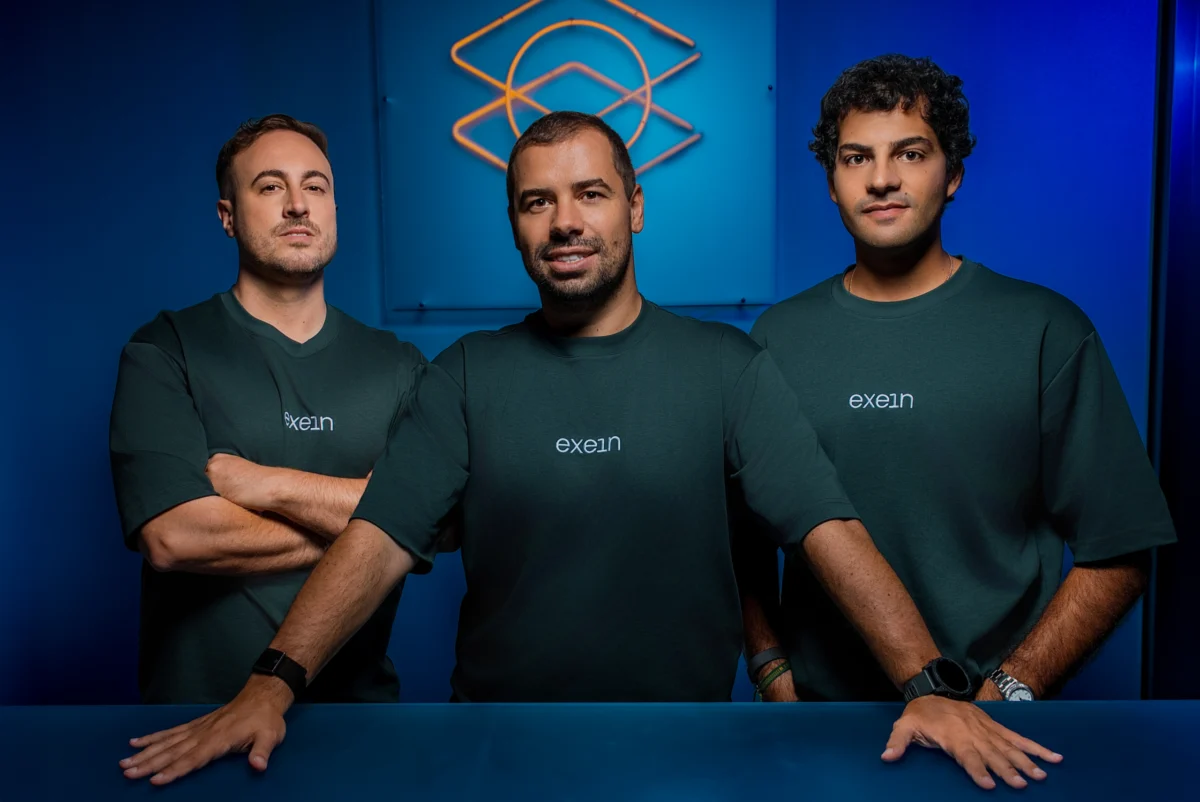
Pictured from left to right: Gerardo Gagliardo, CFO & co-founder; Gianni Cuozzo, CEO & founder; Giovanni Alberto Falcione, CTO & co-founder.