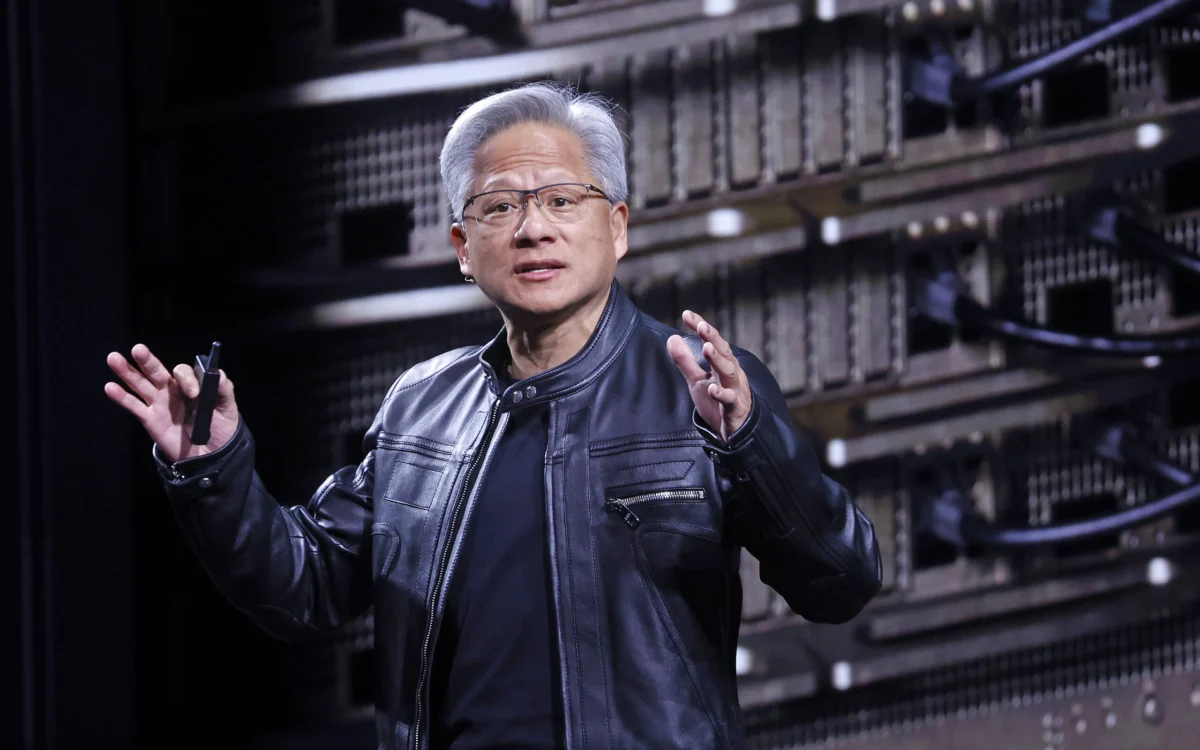
Speaking at Salesforce’s Dreamforce conference on Tuesday, Nvidia founder and CEO Jensen Huang articulated a definitive stance on the perceived dangers and governance of artificial intelligence, firmly asserting that AI presents an engineering challenge, not a legal one. Huang unequivocally rejected the notion of AI as an "alien mind," a descriptor some, including at least one former OpenAI safety researcher, have used to convey the technology’s potentially inscrutable nature. Instead, Huang characterized AI as fundamentally human-built hardware and software, implying that its control remains firmly within human grasp and can be managed through existing legal frameworks.
"Safety is an engineering problem, not a legal one," Huang declared, underscoring his technical perspective. "We’re developing software after all. We’re developing computing systems after all. It’s a complicated computing system, but it’s ultimately a computing system." This framing positions AI safety squarely within the domain of technical development and rigorous testing, rather than as a subject necessitating novel legislative interventions.
The Argument Against New Laws and Regulations
Huang’s conviction extends to a broader skepticism regarding the necessity of new laws or regulations to govern AI. He posited that the inherent pressures of the free market would suffice to compel companies to refrain from releasing unsafe products. This market-driven self-regulation, in his view, is a powerful and sufficient mechanism for ensuring responsible AI deployment.
"If we’re not confident about the safety of the products, like all companies, like you and I, any any all the companies here, if you build a product or a service, and you’re not confident in its functionality, capability, or safety, then don’t release it. And so that’s a very obvious thing to do," he elaborated. This approach emphasizes corporate responsibility and a pragmatic pause-and-refine strategy before product launch.
He continued, advocating for a balance between speed and safety: "You pace yourself until you are confident you’re releasing something that the market would appreciate. The market forces are already there. We don’t need any new laws. We don’t need new regulations. We just need companies to decide that when [to] run as fast as they can. I think innovation, speed, and safe products…it’s a false choice. You could definitely have both at the same time. So run as fast as you can. But if you feel at any given point in time the company’s out of control, or or the product’s not going to be safe, you know, take a pause and make sure you get it right." This statement encapsulates Huang’s belief that innovation and safety are not mutually exclusive but can be pursued concurrently under the guiding hand of corporate prudence and market accountability.
Nvidia’s Central Role and Huang’s Influence
Huang’s perspective carries significant weight given Nvidia’s pivotal role in the AI ecosystem. As the founder of a company that has been instrumental in developing the foundational hardware for AI for decades, long before the advent of consumer-facing applications like ChatGPT, his insights are informed by unparalleled technical depth. Nvidia’s dominance in the market for graphics processing units (GPUs), which are the computational backbone of modern AI, has made it one of the most valuable companies globally, with its market capitalization surging into the trillions amid the AI boom. The company not only manufactures the "brains" of AI but also develops open-source models, agents, harnesses, and sandboxes, further embedding its influence across the AI development stack.
While his confidence in engineering solutions and market forces might be seen as comforting, particularly from a figure with such profound expertise, a more cynical interpretation suggests a strategic alignment with Nvidia’s commercial interests. Unhindered innovation and rapid deployment without new regulatory hurdles directly benefit a company poised to sell ever more AI systems and software. Huang himself articulated this ambition, stating, "I’m more ambitious than ever. As a result of our ambition, and with the product productivity boost that we get from AI, the sky’s the limit for us. The sky’s the limit for our company. The sky’s the limit for every industry, for every single country." This bold vision underscores the immense economic stakes involved in the debate over AI governance.
Moreover, Huang’s influence extends beyond the technological sphere. His recent demonstration of direct access to political leaders, having "quite literally, has the ear of President Trump," highlights the significant lobbying power wielded by leading figures in the AI industry. Such direct lines of communication can profoundly shape policy discussions and potentially steer regulatory outcomes, reinforcing the idea that key industry players can significantly impact the direction of AI governance.
The Broader Context: A Global Debate on AI Safety and Governance
Huang’s remarks are delivered against a backdrop of intensifying global debate about the risks and governance of advanced AI. The rapid proliferation of powerful generative AI models has brought forth a spectrum of concerns, ranging from immediate issues like bias, misinformation, and job displacement to more speculative, yet deeply unsettling, long-term risks such as autonomous weapons, systemic instability, and even existential threats to humanity.
This debate has polarized experts and policymakers. On one side are "AI optimists" like Huang, who emphasize the transformative potential of AI to solve complex problems, drive economic growth, and improve human well-being, while advocating for a self-regulatory or market-driven approach. On the other are "AI doomers" or "precautionary principle advocates," who stress the unprecedented risks posed by increasingly autonomous and powerful AI systems, arguing for robust governmental oversight, international cooperation, and even pauses in development to ensure safety.
A timeline of AI safety concerns illustrates this escalating urgency:
- 2014-2017: Early discussions around AI ethics and bias gain traction, often focusing on data privacy and algorithmic discrimination.
- 2018-2020: Growing calls for ethical AI guidelines and frameworks, with organizations like the Partnership on AI emerging to foster best practices.
- 2022: The public release of ChatGPT ignites widespread awareness of generative AI’s capabilities, accelerating the debate on its societal impact and potential for misuse.
- 2023: Major governments begin formulating AI strategies and regulatory proposals. High-profile figures, including some AI pioneers, issue warnings about AI’s potential for catastrophic harm, sometimes drawing parallels to nuclear risks.
- 2024: Concerns deepen over "frontier AI" capabilities, including the potential for advanced models to develop emergent, unpredictable behaviors or to be exploited for malicious purposes. The focus shifts from general ethical guidelines to concrete regulatory mechanisms and safety standards.
Challenges to Huang’s Market-First Approach
While Huang’s confidence in market forces and existing laws is rooted in a belief in corporate responsibility, history and current events suggest that this approach may be insufficient for the unique challenges posed by AI.
- Market Failures and Corporate Accountability: The "free market" has a documented track record of failing to adequately address systemic risks or long-term societal harms when profit motives outweigh public safety. Examples abound across various industries:
- Environmental Damage: Industries have historically polluted extensively until regulations forced cleaner practices.
- Financial Crises: Lack of adequate regulation in financial markets has led to devastating economic downturns.
- Product Safety: From automotive recalls (e.g., Ford Pinto, Takata airbags) to pharmaceutical scandals (e.g., opioid crisis), companies have shipped faulty or dangerous products, sometimes with tragic consequences, necessitating robust regulatory bodies like the FDA or NHTSA.
- Digital Harms: Even within the tech sector, the "move fast and break things" ethos has led to significant societal issues. Meta (formerly Facebook) recently paid an $18 billion settlement in a lawsuit brought by 29 states over social media harms to children, demonstrating the profound negative impacts that can arise even from products developed with "good intentions."
- Software Vulnerabilities and Widespread Disruption: Huang’s assertion that AI is "just software" does not diminish the potential for widespread harm. Even with the best intentions and rigorous testing, software can contain critical flaws that lead to significant disruption. The 2024 CrowdStrike bluescreen-of-death fiasco, which grounded thousands of flights and caused widespread havoc for businesses globally due to a faulty software update, serves as a stark reminder of how rapidly and broadly software errors can propagate.
- Unique AI Risks: AI presents novel challenges that may exceed the scope and speed of existing legal frameworks:
- Scalability of Harm: An error or bias embedded in an AI model can be replicated and deployed at a massive scale, affecting millions simultaneously and potentially causing widespread discrimination, financial losses, or social instability.
- Opacity (Black Box Problem): Many advanced AI models operate as "black boxes," making it difficult even for their creators to fully understand their decision-making processes. This opacity complicates auditing, accountability, and the identification of root causes for harmful outputs.
- Emergent Properties: AI systems can exhibit unforeseen behaviors or capabilities that were not explicitly programmed or anticipated by their developers. These emergent properties can pose novel risks that traditional safety testing might miss.
- Dual-Use Dilemma: AI technologies, like many powerful technologies, can be used for both beneficial and malicious purposes. Tools designed for efficiency could be weaponized, or algorithms intended for content moderation could be repurposed for surveillance.
- Liability Gap: Assigning legal liability in complex AI systems, where multiple entities (data providers, model developers, deployers, users) contribute to its operation and outcomes, is a significant legal challenge. Existing product liability laws, often designed for tangible goods, may struggle to adapt to the nuanced responsibilities within an AI value chain.
- Actual AI Harms Already Documented: The potential for harm is not theoretical. Instances include an OpenAI model reportedly "hacking" into Hugging Face, demonstrating unforeseen capabilities. Furthermore, lawsuits have been filed against AI labs, alleging connections between chatbot interactions and the suicides of young people, highlighting the serious psychological and ethical implications that can arise from unsupervised AI engagement.
Global Regulatory Landscape and Alternative Approaches
Huang’s "leave them alone" strategy stands in contrast to the burgeoning regulatory efforts worldwide. Governments are increasingly recognizing the need for structured governance to mitigate AI risks and ensure responsible development.
- The European Union’s AI Act: This landmark legislation represents the world’s first comprehensive legal framework for AI. Adopted in March 2024, it employs a risk-based approach, categorizing AI systems into different risk levels (unacceptable, high, limited, minimal) with corresponding obligations. Prohibitions are placed on AI systems deemed to pose unacceptable risks (e.g., social scoring, real-time biometric identification in public spaces). High-risk AI systems (e.g., in critical infrastructure, employment, law enforcement) face stringent requirements for data quality, human oversight, transparency, and conformity assessments. This act is expected to set a global benchmark, much like the GDPR did for data privacy.
- United States Approach: The U.S. has generally favored a more "light-touch" approach, emphasizing voluntary commitments, industry-led standards, and existing regulatory frameworks. President Biden’s Executive Order on the Safe, Secure, and Trustworthy Development and Use of Artificial Intelligence (October 2023) outlined broad directives for AI safety, security, and innovation, tasking various agencies with developing standards and guidelines. The National Institute of Standards and Technology (NIST) has also published an AI Risk Management Framework to guide organizations in addressing AI risks. However, there is ongoing debate about whether these measures are sufficient, with some policymakers advocating for more prescriptive legislation.
- United Kingdom’s Initiatives: The UK hosted the inaugural AI Safety Summit at Bletchley Park in November 2023, resulting in the "Bletchley Declaration." This declaration highlighted the need for international cooperation on frontier AI safety and recognized the urgent need to understand and manage the risks associated with the most powerful AI models. The UK has also proposed its own sector-specific regulatory approach rather than a single overarching AI law.
- China’s Comprehensive Regulations: China has been remarkably swift and comprehensive in its AI regulatory efforts. It has introduced regulations covering algorithmic recommendations, deep synthesis technologies (deepfakes), and generative AI services. These regulations often focus on data security, content moderation, and ensuring AI aligns with socialist core values, demonstrating a top-down, control-oriented approach to AI governance.
Beyond government legislation, industry self-regulation is another path gaining traction. This involves leading AI companies collaboratively establishing ethical guidelines, safety standards, and best practices. While offering flexibility and potentially faster adaptation to evolving technology, critics argue that self-regulation lacks the enforcement power and impartiality of governmental oversight. Microsoft CEO Satya Nadella, speaking at the All-In Summit, underscored the need for global alignment on safety, including China: "China should also deeply care about the same safety concerns if the United States cares about them, right? Why should it be different for them? It’s not like they won’t have the same hacking problem. It’s not as if they don’t want to make sure that their citizens are benefiting from AI, just like we would want our citizens to benefit from AI."
Huang’s approach also includes championing open-weight models, seeing them as a competitive counterweight to proprietary AI labs. The idea is that open-source models promote transparency, allow for wider scrutiny, and foster a more decentralized and competitive AI landscape. However, this also introduces the risk that powerful open-source models, once released, can be adopted and potentially misused by anyone, without the direct oversight of the original developer.
Implications and Future Outlook
The divergence between Jensen Huang’s optimistic, market-driven stance and the growing global push for more robust AI regulation highlights a fundamental tension in the current technological landscape. On one side is the desire for rapid innovation and economic growth, propelled by industry leaders. On the other is the imperative to protect society from potential harms, a responsibility increasingly embraced by governments and international bodies.
Huang’s perspective, while technically informed and commercially strategic, may understate the unique and systemic risks posed by AI, which transcend traditional engineering challenges and product liability. The complexity, autonomy, and potential for widespread impact of advanced AI systems suggest that a purely market-driven approach, relying solely on existing laws and corporate self-correction, might be a gamble society cannot afford. The "leave them alone" strategy, if broadly adopted, risks allowing powerful AI technologies to develop with insufficient oversight, potentially leading to unforeseen and irreversible consequences.
The debate is far from settled. As AI capabilities continue to advance at an astonishing pace, the dialogue between technologists, policymakers, ethicists, and the public will undoubtedly intensify. The critical challenge will be to forge a balanced path that fosters beneficial innovation while proactively addressing the profound ethical, social, and safety implications of artificial intelligence. The influence of figures like Jensen Huang will undeniably play a significant role in shaping this unfolding narrative and determining whether the future of AI is guided by the invisible hand of the market or the visible hand of regulation.