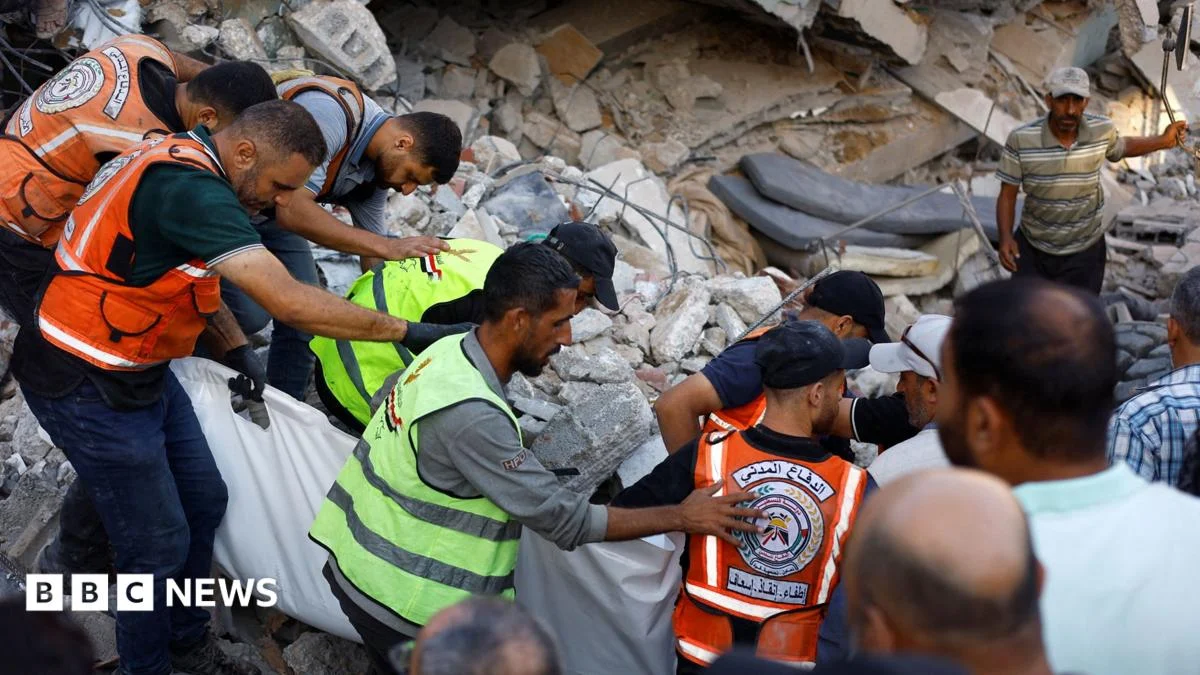
Local rescuers and medical personnel, operating under severe constraints, confirmed the fatalities from the six-storey residential building that crumbled in the early hours of Wednesday. The structure, located in a densely populated district of Gaza City, had been rendered structurally unsound and dangerously tilted following an Israeli strike over a year ago. Despite its precarious state, multiple displaced families, driven by extreme desperation and the acute shortage of safe housing, had sought refuge within its compromised walls.
The Catastrophic Collapse and Initial Response
Witnesses recounted a scene of sudden horror and chaos as the building gave way. Umm Mohammed Bakrun, a woman living in a nearby tent, described the collapse as feeling "like an earthquake." She was speaking with her son when the ground beneath them shook violently. "There was a loud sound and I couldn’t stand up. Stones rained down on us and when I looked outside I saw a lot of dust," she told reporters, her voice trembling. "Within minutes, there were screams everywhere." Another resident, Mansour Abu Mohammed, underscored the speed of the tragedy, stating the building collapsed "in a few seconds." He noted that the building had been visibly tilting and that "every day, a stone or a few stones would fall from it," yet residents had no alternative housing. It is believed that approximately ten families were living in the apartments within the compromised structure at the time of the collapse.
The immediate aftermath saw an outpouring of frantic, albeit ill-equipped, rescue efforts. Members of the Hamas-run Civil Defence agency were among the first responders, resorting to using their bare hands to sift through the immense piles of rubble. Their efforts were joined by teams from various United Nations agencies and an Egyptian contingent, all facing significant hurdles. Raed al-Dahshan, the director of the Civil Defence in Gaza City, articulated the dire situation: "We are still hearing voices from under the rubble, so there is still hope to find people." He lamented the circumstances that led to the tragedy, stating, "The limited availability of shelter options forced residents to move into this building, believing it was safe. However, at one point it collapsed entirely, tragically crashing down on people as they slept." The lack of heavy machinery, specialized tools, and even basic supplies like engine oil and spare parts for existing equipment severely hampered the search for survivors, rendering the process agonizingly slow and arduous.
A Looming Crisis: Unsafe Structures and Desperate Populations
The collapse in Tal al-Hawa is not an isolated incident but a stark symptom of a much wider, systemic crisis engulfing the Gaza Strip. The United Nations estimates that a staggering 80% of all structures in Gaza have been either destroyed or damaged since the conflict escalated in October 2023. This widespread devastation has decimated residential areas, public infrastructure, and vital services, leaving an already vulnerable population in an unprecedented state of precarity.
The scale of displacement is equally staggering. More than 1.9 million people – approximately 90% of the territory’s entire population – have been forced from their homes, many experiencing multiple displacements as they seek elusive safety. Of these, an estimated 1.2 million are currently living in overcrowded tents or makeshift shelters, often exposed to harsh elements and unsanitary conditions. The sheer volume of displaced individuals, coupled with the widespread destruction of housing, has created an acute and critical shortage of safe accommodation. This forces families into impossible choices, often leading them to inhabit buildings like the one in Tal al-Hawa that pose an imminent risk to life.
Alessandro Mrakic, the head of the United Nations Development Programme (UNDP) Gaza office, who visited the collapse site, painted a grim picture of the broader threat. He warned that approximately 400 other war-damaged buildings across Gaza were at imminent risk of collapse, a danger that will only intensify as the winter months approach, bringing with them heavy rains and colder temperatures that can further compromise structural integrity. Mrakic emphasized the desperate need for international support, particularly heavy machinery, equipment, and crucial spare parts to facilitate rescue operations and begin the monumental task of securing or demolishing unsafe structures. "Our colleagues here don’t have [engine] oil and spare parts to continue to work with all the equipment that is still in Gaza," he highlighted, underscoring the severe logistical challenges faced by humanitarian responders.
International Calls for Aid and Access
The international community has reacted with profound concern and renewed calls for greater humanitarian access and protection for civilians in Gaza. Ramiz Alakbarov, the UN’s humanitarian relief co-ordinator, expressed his devastation over the reports of the building collapse, unequivocally stating, "No-one should have to risk their life simply to find a safe place to shelter." He reiterated the urgent plea for Israeli authorities to approve the delivery of essential heavy machinery for rescue and recovery operations into Gaza, alongside vital non-food items such as tents, tarpaulins, and blankets, which are desperately needed by displaced families ahead of the anticipated winter rains.
Israel, however, maintains that its stringent restrictions on imports into Gaza are necessary to prevent equipment from falling into the hands of Palestinian armed groups, arguing that such materials could have dual military uses. This security concern has been a long-standing point of contention, frequently impeding the flow of critical aid and reconstruction materials into the territory, further exacerbating the humanitarian crisis. The UN and other aid organizations consistently argue that a more robust and efficient mechanism is needed to allow essential civilian goods to enter without compromising legitimate security concerns.
The Broader Context of Ongoing Hostilities
The building collapse occurred against a backdrop of ongoing hostilities and a precarious humanitarian situation, despite the ceasefire agreed upon in October 2023. Israeli air strikes and other attacks continue to hit populated areas, causing further casualties, property damage, and driving additional displacement. Just one day prior to the Tal al-Hawa tragedy, on Tuesday, Israeli air strikes reportedly killed at least five Palestinians, including two children and a Hamas commander, according to health officials and Hamas sources. The Israeli military confirmed it had killed a Hamas commander in southern Gaza and another fighter in the north, noting that a child was also reportedly killed in both incidents.
Separately, the British charity Medical Aid for Palestinians (MAP) reported a deeply concerning incident where a patient was allegedly killed by an Israeli drone at a health centre it supports in Jabalia in northern Gaza. A spokesperson for the Israeli military, when contacted by the BBC, stated they were not aware of such an incident. These events underscore the constant peril faced by civilians, even those seeking refuge in ostensibly protected facilities, and highlight the volatile nature of the conflict zone.
The current war was ignited by the Hamas-led attack on southern Israel on October 7, 2023, which resulted in the deaths of approximately 1,200 people and the taking of 251 hostages. Since that devastating day, the conflict has claimed an immense toll in Gaza. According to the territory’s Hamas-run health ministry, whose figures are considered reliable by the UN and other international bodies, more than 73,790 people have been killed in Gaza. This staggering number reflects the unprecedented scale of destruction and loss of life in the densely populated enclave.
Implications and Future Challenges
The collapse in Tal al-Hawa serves as a grim indicator of the profound and multi-faceted challenges facing Gaza. The immediate imperative is to accelerate rescue efforts, provide emergency medical care, and ensure safe, dignified shelter for those who have lost their homes. However, the incident also highlights critical long-term implications.
Firstly, the sheer scale of infrastructural damage, with 80% of structures affected, means that even in the event of a lasting peace, the task of reconstruction will be monumental, requiring unprecedented international investment and unimpeded access to building materials. The current blockade and restrictions make any meaningful large-scale reconstruction virtually impossible.
Secondly, the vulnerability of displaced populations remains an acute concern. The desperation that forces families into unsafe, war-damaged buildings underscores a profound failure in providing basic human security and shelter. As winter looms, the risks of hypothermia, illness, and further structural collapses will only increase, potentially leading to an even greater humanitarian catastrophe.
Thirdly, the incident reignites debates about accountability and the protection of civilians in conflict zones. While immediate blame falls on the conflict itself for causing the damage, questions arise about the responsibility of local authorities to prevent occupancy of such dangerous structures, and the international community’s role in failing to provide adequate, timely aid and safe alternatives.
Finally, the incident underscores the urgent need for a durable political solution to the conflict that addresses the root causes of the humanitarian crisis and ensures the safety and well-being of all civilians. Without a sustained cessation of hostilities and a concerted international effort to rebuild and restore vital services, such tragedies are likely to recur, perpetuating a cycle of suffering and displacement in the Gaza Strip. The cries from under the rubble in Tal al-Hawa resonate far beyond Gaza City, serving as a desperate plea for humanity’s collective attention and action.