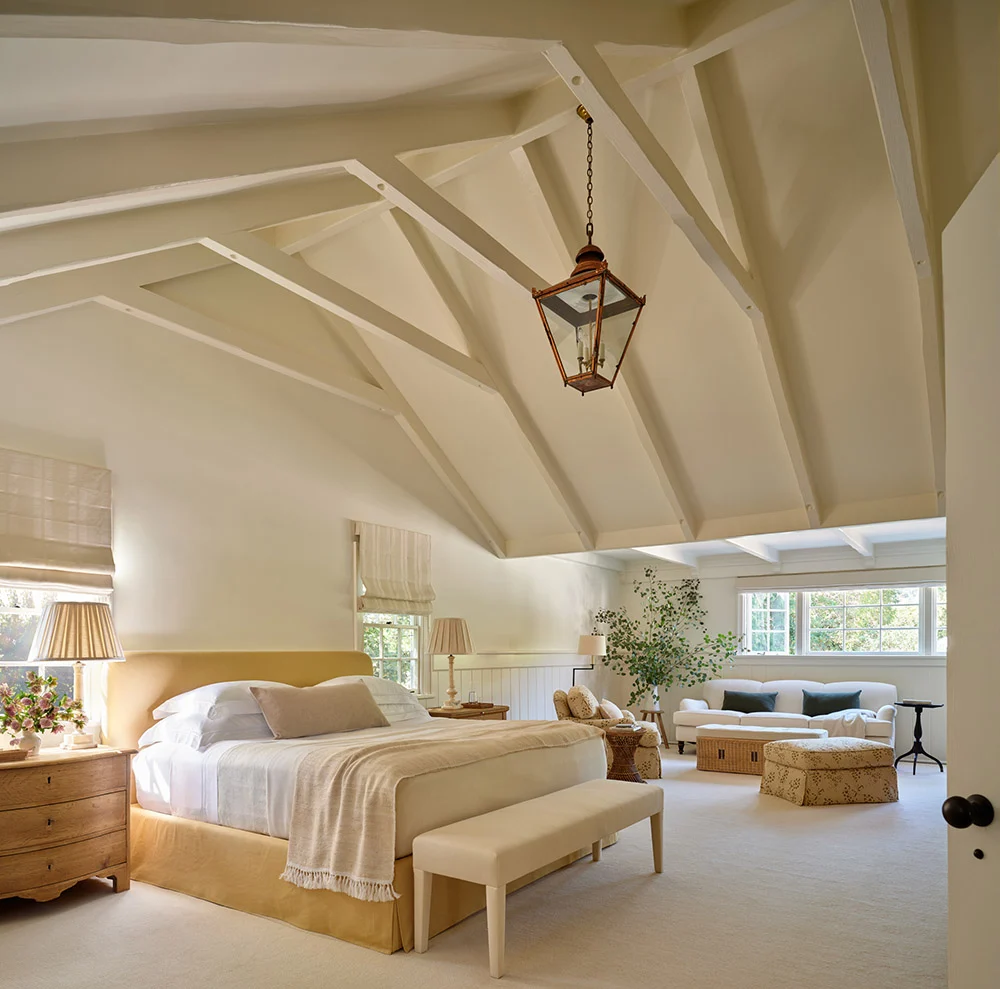
Veteran filmmaker Nancy Meyers has long been celebrated for her distinctive ability to craft on-screen living spaces that are not merely backdrops, but characters in their own right. Her filmography is replete with iconic residences that have profoundly influenced interior design trends and captured the public imagination. From the sun-drenched Hamptons beach house in Something’s Gotta Give to the charming English cottage and Mediterranean-modern manse in The Holiday, Meyers’ aesthetic—characterized by inviting comfort, elegant simplicity, and a palpable sense of lived-in warmth—has become synonymous with aspirational yet attainable home décor. This visual lexicon, often featuring crisp white slipcovers, expansive kitchen islands, and a harmonious blend of classic and contemporary elements, has spawned a vibrant ecosystem of social media trends and online searches dedicated to “Nancy Meyers homes.”
Now, this celebrated design legacy is being carried forward by her daughter, Annie Meyers-Shyer, who has channeled her own passion for home curation into a burgeoning career as a “self-proclaimed accidental influencer.” In 2023, Meyers-Shyer launched the Instagram account @ThisOakHouse, documenting the comprehensive two-year renovation and decoration of a 1946-era Gerard Colcord-designed family residence in Beverly Hills. The account has rapidly garnered a significant following, amassing nearly a quarter million engaged users. The choice of a Colcord home is particularly resonant, given the architect’s storied history in Hollywood; residences designed by Colcord have been home to luminaries such as Harrison Ford, Reese Witherspoon, and Dean Martin. Famously, Colcord also transformed producer Jerry Wald’s garage into a coveted guesthouse for Audrey Hepburn, underscoring the enduring appeal and architectural significance of his work.

Meyers-Shyer’s own cinematic pedigree is evident in the visual language of her Instagram feed. Her photographs exhibit a keen eye for composition, a meticulous attention to detail, and an intuitive understanding of lighting, all contributing to an aesthetic that is both effortless and welcoming. Her preference for natural materials and her ability to orchestrate a highly skilled creative team—including architects Karen Putman and Brian Covington, interior designer Mike Moser, and landscape designers Patricia Benner and Chris Cummings—demonstrate a sophisticated design sensibility that echoes her mother’s celebrated approach.
A New Chapter: "This Oak House" the Book and Beyond
The culmination of Meyers-Shyer’s immersive renovation journey is the release of her debut book, This Oak House, published by Chronicle on September 15. The book is poised to offer readers an in-depth look at her design process, filled with practical tips, creative solutions, and valuable resources. This literary venture follows closely on the heels of a highly anticipated product launch: on September 13, Meyers-Shyer unveiled an eight-piece collection of home accessories for Target, with all items priced under $35. The collection features her signature style, including favored glass hurricane candle holders and sought-after linen lumbar pillows in unique sizes. Reflecting on her career trajectory, which previously included roles as an accessories editor at Harper’s Bazaar and a public relations executive for Chanel, Meyers-Shyer expressed a profound sense of fulfillment. “I had a pilot light on inside of me and this project has ignited something in me; I’m unbelievably excited about where things are going,” she shared, signaling a significant personal and professional evolution.
The Genesis of a Design Ethos: From Cinematic Sets to Personal Sanctuary
Meyers-Shyer’s formative years were steeped in the visual richness of her mother’s film sets, an environment that undoubtedly shaped her nascent design interests and visual vocabulary. “From a young age, I was interested in design, which led me to work in fashion for many years,” she explained in a recent interview. “And I grew up with parents who had a real visual taste. I was going to sets and understanding what the homes told you about the characters who lived there.” She elaborated on how specific film residences served as narrative devices, noting, “The Father of the Bride house says a lot about the Banks family. Then you go over to the MacKenzies, the in-laws, and they have the Dobermans and live in a mansion and that says something else.” This immersive experience was further cultivated by her parents’ own design practices: “My parents would tear pages out of magazines and make big books full of ideas. They would explain why they had to change the color of a room. Just by osmosis, by being there, I was influenced. It was part of my life that my parents both had wonderful taste and wonderful eyes.”

This profound influence has translated into her personal design philosophy, where her own home serves as a narrative extension of her life. “In a similar way, my home tells my story. You see that I have two kids, love antiques, and have plants in every room. My interests are reflected in my books. You can tell who my favorite artists are. When you go to a house and think, ‘Anybody could live here,’ that’s weird, you know?” This emphasis on personal storytelling and authenticity distinguishes her approach from a more generic, trend-driven design sensibility.
Echoes of the Silver Screen: Childhood Memories and Cinematic Influences
While Meyers-Shyer made brief cameos in films like The Parent Trap and Father of the Bride, her most vivid memories are tied to the environments her parents meticulously crafted for these productions. “No, I did not act in them! I made little cameos. I was on set, and my parents were like, ‘Put on a dress and walk down the aisle!’ [Her role was a flower girl in Father of the Bride]. For them, it was a photo from set for a memory.” However, her appreciation for these on-screen homes extends beyond childhood recollections. “My absolute favorite set is, without a doubt, in my mom’s new movie [Warner Bros.’ Paris Paramount starring Penélope Cruz, slated for release in late 2027]. I could arrive with a suitcase and live in that house. I wouldn’t change one thing.” She also recalled her awe upon visiting the set of Cameron Diaz’s character’s Los Angeles home in The Holiday: “I also remember being in Cameron Diaz’s L.A. house as Amanda Woods in The Holiday and thinking, ‘This is unbelievable!’” These experiences highlight the lasting impact of her mother’s ability to create environments that feel both aspirational and deeply resonant.
A Collaborative Design Dialogue: The Mother-Daughter Design Partnership
The creative synergy between Annie Meyers-Shyer and her mother, Nancy Meyers, is a cornerstone of her design process. Meyers-Shyer recounted how, during the renovation of This Oak House, she would often consult her mother, bringing an “L.L. Bean tote full of samples.” She described these interactions as invaluable: “For anybody working on a project, having someone whose taste you trust, who you can bounce an idea off of, is invaluable. I have my very own in-house expert, so I would be a fool not to ask for her opinion on things!” The alignment in their aesthetic sensibilities was remarkable: “I would say 99.99 percent of the time she loved what I presented to her. We were aligned. A couple times, she helped to unstick me, you know? We do that for each other in our family.” This supportive and collaborative dynamic extends to her sister, rising filmmaker Hallie Myers-Shyer, underscoring a strong familial bond centered around creative pursuits. “Those sessions were fun. She really dove into it with me.”

Defining an Aesthetic: Harmonious, Calming, and Authentically Lived-In
When asked to describe her design aesthetic, Meyers-Shyer emphasized a preference for spaces that foster a sense of well-being. “It’s hard to find words. I spend a lot of time at home. I work at home. I’m at home almost all day every day. I know what feels good to my eye: harmonious spaces with calming colors. I don’t want to live with a lot of bright colors or a lot of pattern.” She drew a parallel to interpersonal relationships: “When I talk to my kids about friendship, I say, ‘Go towards the friends who feel warm!’ That’s how I feel about my aesthetic choices.” This philosophy translates into a design that is both classic and adaptable. “I probably have classic taste, but that can mean so many things. My husband and I and our two boys are not fancy people. I have a sisal rug in my living room. We want to live in a way that feels easy and authentic and that’s the real through line of my Instagram.”
Navigating the Digital Landscape: Authenticity Over Fleeting Trends
In an era dominated by social media’s curated perfection, Meyers-Shyer’s approach to design champions authenticity and enduring style over transient trends. She acknowledged the challenges of maintaining this focus amidst a constant barrage of visually arresting content: “In the world of Instagram and Pinterest, when you’re fed beautiful images every time you open your phone, it can be challenging.” To counter this, she relied on guiding principles: “So I had a couple guiding questions I kept going back to when I felt myself getting swayed: Is this the choice that I will still love in 10 years?” She also credited her design team for reinforcing this long-term perspective. “My amazing designer, Mike Moser, would say, ‘I think this is a trend that you won’t love in the long term.’ I was on the hunt for things that will always stand the test of time.” This commitment to timelessness is a core tenet of her design philosophy, ensuring that the spaces she creates are not only beautiful but also possess lasting appeal.
Radical Transparency in Design: Sharing Sources and Expertise
Meyers-Shyer has embraced a refreshing level of transparency regarding her design sources, a practice less common in the interior design world compared to fashion or beauty. “I enjoyed that part. There’s so much transparency with beauty and fashion. You literally know who makes so-and-so’s concealer. But it’s never been that way with interiors.” Her motivation stems from a desire to empower others: “I wanted to share all the information I was learning on my journey, after going to the marble yards or understanding why different widths of plank make a floor feel more authentic. Information I wish I had had access to.” This commitment to sharing knowledge is driven by a meticulous approach to her work: “The other side is that I’m slightly obsessive, so I can figure out what the very best subway tile is, so you don’t have to.” This dedication to providing actionable insights positions This Oak House and her social media presence as invaluable resources for aspiring designers and homeowners alike.

The Soul of a Home: Antiques, Art, and Personal Histories
A defining characteristic of Meyers-Shyer’s design is the intentional incorporation of antique pieces and storied artwork, elements that imbue a room with character and depth. “I love your rule about having at least one antique piece in every room and you also have a lot of storied artwork. Elements that give a room soul.” She clarified that the value of these items lies not in their monetary worth but in their historical resonance: “Those pieces help make a room. They don’t have to be expensive antiques from 1stDibs. It can be something you found in your grandparents’ attic or a little trinket from the flea market. It’s the idea that these objects had lives before they lived in your house. So when they enter, they bring in a patina and a feeling that a piece that’s newly made will never be able to have.” This perspective aligns with her preference for authenticity over ostentation: “It’s like needing an old soul versus a new soul. It’s the same with art. I would rather have an original piece of art from a no-name artist than a Matisse print. It’s much more interesting.”
A Deeper Connection: Inherited Treasures and Familial Legacies
The integration of personal artifacts from her family’s history adds another layer of profound meaning to Meyers-Shyer’s home. She revealed that the Beatrice Whitney Van Ness watercolor hanging above her fireplace, which also appeared in Father of the Bride, was a cherished item from her childhood home. “It was in my childhood home and my parents brought it to set. When my dad passed away, he left it to me.” This sentimentality extends to other cherished mementos, such as the wedding cake topper from Father of the Bride, which also holds a place in her current residence.
Similarly, a Picasso lithograph in the living room, inherited from her father, serves as a welcoming beacon. “Without a doubt. After he passed, my sister and I went to his house, where he had a gallery wall with a lot of art. I have his paintings and sculpture in nearly every room and his pen holder on my desk with one of his pens in it. Those pieces are the most meaningful. It’s like having a little bit of his essence nearby.” The act of living with these pieces evokes a sense of continuity and connection: “I love sitting under the painting in my living room that I sat under as a kid.” Her father’s own refined taste and sentimental nature are evident in the “amazing bound scripts with all his notes in them” that she and her sister now possess, further solidifying the intergenerational artistic legacy.

A Final Reflection: The Joy of Purposeful Work
In closing, Meyers-Shyer offered a poignant reflection on a saying her parents often shared, which has now taken on profound personal meaning. “Well, my parents had a famous saying when I was growing up that I never related to, ever, until now. It was ‘Work is more fun than fun,’ by the English playwright Noël Coward.” This sentiment encapsulates her current professional and creative engagement, where the deep satisfaction derived from her work—from renovating her home to publishing a book and launching a product line—transcends mere enjoyment and speaks to a deeper sense of purpose and fulfillment. The enduring appeal of Nancy Meyers’ cinematic worlds has, it seems, found its natural successor in Annie Meyers-Shyer’s own beautifully curated and deeply personal domain.