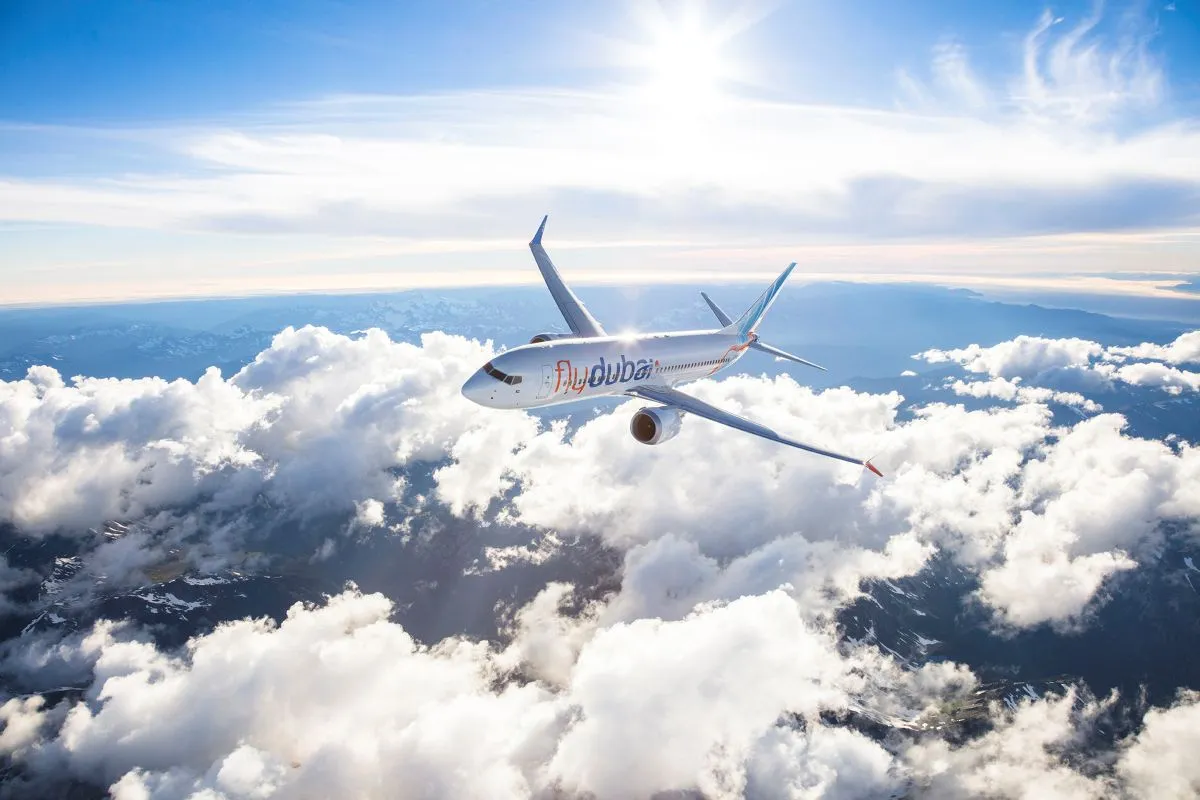
Flydubai, the Dubai-based carrier, has officially announced its strategic roadmap to fully restore its operational network and seat capacity to levels seen prior to the regional conflicts that disrupted Middle Eastern aviation in late 2023. Speaking on the sidelines of the Arabian Travel Market (ATM) in Dubai, Chief Executive Officer Ghaith Al Ghaith confirmed that the airline expects to reach 100% of its pre-conflict capacity, and potentially exceed it, before the end of the 2026 fiscal cycle. This recovery comes as the airline navigates a complex geopolitical landscape that forced significant adjustments to its flight paths and frequency over the past year.
According to Al Ghaith, the airline is currently operating at approximately 85% of its pre-conflict network strength, serving 130 destinations out of a previous 140. The CEO emphasized that while the goal is to return to full capacity by the end of the year, the timeline remains contingent on several external factors, including the delivery schedule of new aircraft and the stabilization of regional airspace. "Before the end of the year, we should go back to 100% of pre-war capacity, and even a little bit more because we will receive more aircraft," Al Ghaith stated, while acknowledging the inherent volatility of the current aviation environment.
The Impact of Regional Tensions on Operational Capacity
The disruption to Flydubai’s operations began in earnest in October 2023, following the outbreak of conflict in the Levant. As a carrier with a significant footprint in the Middle East, North Africa, and Central Asia, Flydubai was more acutely affected by regional instability than some of its long-haul peers. Data from OAG, a leading aviation analytics firm, highlighted the severity of this impact. In September 2024, reports indicated that Flydubai experienced the steepest decline in seat capacity among the top ten Middle Eastern airlines.
The airline saw an 18.3% year-on-year reduction in available seats, dropping its total capacity to 1.05 million seats for the period. This decline was attributed to the suspension of routes to conflict-affected zones and the necessity of rerouting flights to avoid restricted or hazardous airspace. Unlike its sister airline, Emirates, which focuses primarily on wide-body, long-haul international transit, Flydubai’s narrow-body fleet is heavily utilized for regional point-to-point travel, making it more sensitive to localized geopolitical shifts.
A Chronology of Disruption and Resilience
The timeline of Flydubai’s recent challenges reflects the broader instability of the Middle Eastern aviation sector over the last twelve months. Following the initial escalation of regional tensions in October 2023, the airline was forced to immediately suspend flights to several key destinations, including Tel Aviv, and modify its schedules to Beirut, Amman, and Baghdad.
By early 2024, the carrier began a phased approach to resuming operations where safety assessments permitted. However, the closure of airspace over various territories at different intervals necessitated a flexible and often costly operational strategy. Throughout the second and third quarters of 2024, Flydubai worked to optimize its remaining network, shifting focus toward growing markets in Eastern Europe, Central Asia, and the Indian subcontinent to offset the loss of regional seat blocks.
The current announcement at the Arabian Travel Market signifies a pivot from a defensive posture to an expansionary one. The airline’s confidence in a 2026 full recovery is bolstered by a stabilizing demand for travel into Dubai and the continued integration of its operations with Emirates, which provides a steady stream of connecting passengers.
Fleet Expansion as a Catalyst for Recovery
Central to Flydubai’s recovery plan is an aggressive fleet expansion strategy. The airline’s ability to return to 100% capacity is largely dependent on the delivery of Boeing 737 MAX aircraft. Despite global supply chain issues and delivery delays currently plaguing the aerospace industry, Flydubai remains a key customer for Boeing.
In late 2023, the airline made a landmark announcement at the Dubai Airshow, placing its first-ever order for wide-body aircraft: 30 Boeing 787-9 Dreamliners. While these aircraft are intended for longer-term growth and the opening of new, long-haul routes, the immediate recovery of the pre-conflict network relies on the arrival of additional narrow-body jets. As of mid-2024, Flydubai operates a fleet of over 80 Boeing 737s, and the scheduled arrival of new airframes before the end of the year is expected to provide the necessary seat volume to bridge the current 15% gap in its network.
Al Ghaith’s assertion that the airline might exceed pre-war capacity is rooted in this fleet growth. By adding more seats than were previously available on existing routes and reintroducing the ten suspended destinations, the airline aims to capitalize on the robust tourism growth Dubai has experienced in the post-pandemic era.
Strategic Synergy with Emirates and Dubai’s Tourism Goals
Flydubai’s recovery does not happen in a vacuum; it is a critical component of Dubai’s broader economic agenda, specifically the D33 Economic Agenda, which aims to double the size of Dubai’s economy over the next decade. As the sister airline to Emirates, Flydubai plays a vital role in feeding traffic into the Emirates hub at Dubai International (DXB) and providing access to secondary markets that cannot support wide-body operations.
The synergy between the two carriers has strengthened significantly. The codeshare agreement allows passengers to connect seamlessly between Flydubai’s regional network and Emirates’ global reach. This partnership has been a stabilizing force for Flydubai during the recent downturn, as the demand for Dubai as a destination remains at record highs. In 2023, Dubai welcomed 17.15 million international overnight visitors, and the 2024 figures are on track to surpass that milestone.
Analyzing the 18.3% Decline: A Comparative Context
The OAG data showing an 18.3% decline in seat capacity serves as a stark reminder of the challenges faced by regional carriers. While other airlines in the Middle East, such as Qatar Airways and Saudia, also faced rerouting challenges, Flydubai’s specific network density in the Levant and its high-frequency short-haul model meant that any route suspension resulted in a disproportionately high loss of total seat volume.
However, industry analysts suggest that this decline is temporary. The "steepest decline" noted in the OAG report reflects a proactive management decision to prioritize safety and operational integrity over volume during a period of peak uncertainty. The recovery to 130 destinations demonstrates a high level of agility. For comparison, many global airlines take years to restore 85% of a disrupted network; Flydubai has achieved this in less than a year since the height of the disruptions.
Official Responses and Industry Outlook
The reaction from the broader aviation community to Flydubai’s projections has been one of cautious optimism. Aviation analysts at the Arabian Travel Market noted that Flydubai’s recovery is a bellwether for the regional industry. If the carrier can successfully restore its full network by late 2026, it suggests a return to "business as usual" for Middle Eastern aviation hubs, despite lingering geopolitical concerns.
Statements from the Dubai Civil Aviation Authority (DCAA) have echoed the sentiment of support for the carrier’s expansion. Officials have highlighted that the infrastructure at Dubai International (DXB) and the upcoming expansion at Al Maktoum International (DWC) are designed to accommodate exactly this type of rapid recovery and subsequent growth.
Potential Headwinds: Fuel, Airspace, and Supply Chains
Despite the optimistic outlook, the CEO’s caveat that the recovery is "subject to many things" refers to a trio of primary risks: fuel price volatility, continued airspace restrictions, and Boeing’s delivery hurdles.
- Airspace Constraints: Continued conflict in parts of the Middle East requires airlines to fly longer, more circuitous routes. This increases fuel burn and flight times, effectively reducing the number of rotations an aircraft can perform in a day. Full capacity restoration requires a more efficient use of regional corridors.
- Supply Chain and Deliveries: The global aviation industry is currently facing a shortage of parts and delays in aircraft manufacturing. If Boeing fails to meet its delivery targets for the remainder of 2024 and 2025, Flydubai may find itself with the demand for seats but not the physical hardware to fulfill it.
- Economic Factors: While travel demand is currently high, inflationary pressures and fluctuating oil prices remain a concern for low-cost and hybrid carriers that operate on thinner margins than premium legacy airlines.
Conclusion: A Path Toward 2026
Flydubai’s commitment to restoring its pre-conflict network by the end of 2026 marks a significant milestone in the post-pandemic and post-conflict era of Middle Eastern travel. By leveraging its fleet expansion, strengthening its partnership with Emirates, and maintaining a flexible operational model, the airline is positioning itself to regain its status as one of the fastest-growing carriers in the region.
As the airline works toward reintroducing the final 15% of its network, the focus will remain on balancing rapid growth with the operational realities of a volatile geopolitical landscape. For the millions of passengers who rely on Flydubai for regional connectivity, the message from the Arabian Travel Market is clear: the carrier is moving beyond the disruptions of the past year and looking toward a future of expanded capacity and new horizons.