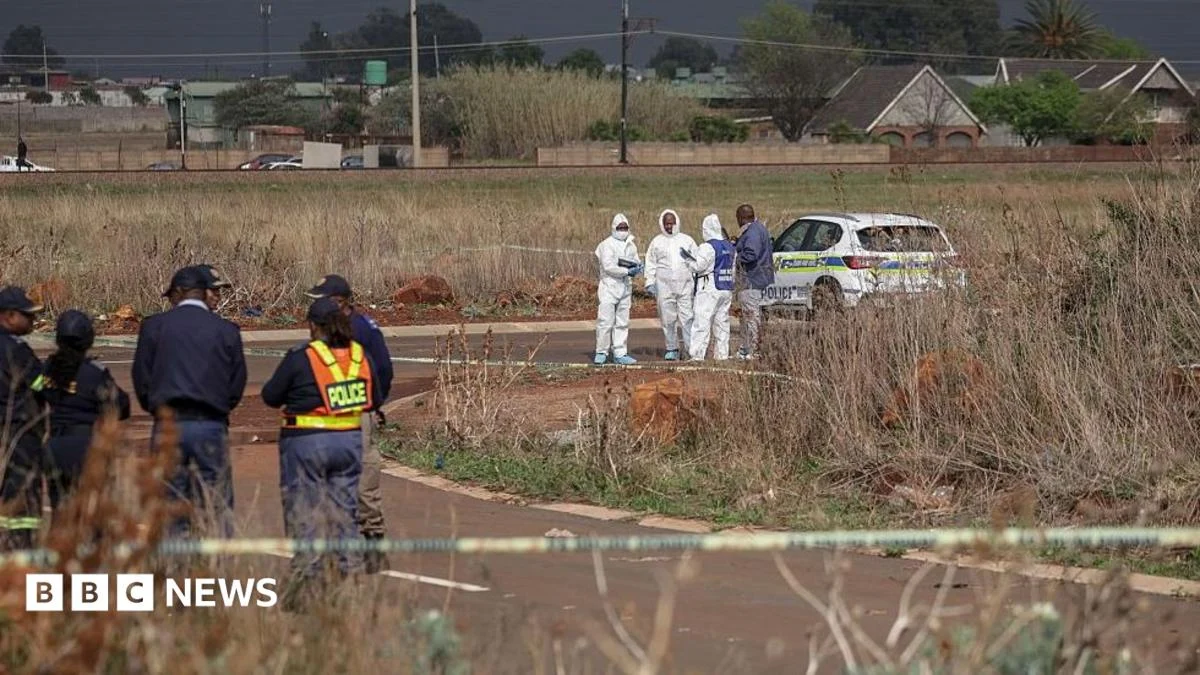
The unsettling discovery of yet another body in Ekurhuleni has intensified a climate of fear and anxiety, particularly among women, across the region and ignited a renewed national conversation about South Africa’s pervasive crisis of gender-based violence. The latest victim, a woman believed to be in her 30s, was found exhibiting visible signs of violence, including bruises and stab wounds, according to local media reports. This grim find is one in a series of similar incidents that have prompted a multi-faceted police investigation and drawn stark warnings from authorities regarding personal safety. The cumulative impact of these discoveries has been profound, transforming daily routines into fraught exercises in vigilance and chipping away at the sense of security fundamental to community well-being.
The geographical focal point of these disturbing events appears to be Ekurhuleni, an expansive metropolitan area in Gauteng province, with particular alarm concentrated around Kempton Park. Residents describe a palpable shift in the communal atmosphere, where once familiar streets now evoke apprehension. "We are scared to come out of our houses. We are scared to go to the shops. We are no longer free in a country where we are supposed to be safe as women," local resident Bongeka Sebela articulated to the BBC, echoing a sentiment of profound vulnerability that has permeated the community. This sentiment underscores a deeper societal wound, reflecting the grim reality that South Africa grapples with some of the world’s highest rates of gender-based violence (GBV), a crisis that was officially classified as a national disaster just last November.
Chronology of Disturbing Discoveries and Escalating Response
While the precise timeline of all related discoveries remains under active police investigation, the recent string of findings has developed into a critical public safety issue. The latest body marks a continuation of a pattern that has emerged in recent weeks and months, generating escalating concern. Each discovery, meticulously documented by forensic teams, adds another layer of complexity to the unfolding mystery and fuels public unease.
The initial reports of unidentified female bodies found in various locations within Ekurhuleni first began to surface, each account painting a picture of brutal violence. These early discoveries, though alarming, initially appeared as isolated incidents to the wider public, gradually building a narrative of concern. However, as the number of victims grew and the similarities in their circumstances, particularly the gender and the nature of the injuries, became more apparent, the community’s disquiet deepened. The discovery of the woman in her 30s, bearing clear signs of a violent struggle, served as a stark confirmation for many that a dangerous trend was underway, prompting immediate and intensified calls for action from both residents and local leaders.
In response to the growing crisis, police authorities have progressively escalated their investigative efforts. The formation of a multidisciplinary team, comprising seasoned detectives, intelligence officers, forensic experts, and other specialized personnel, signifies the gravity with which law enforcement is approaching these cases. This team’s mandate is comprehensive: to thoroughly investigate each death, meticulously piece together evidence, and, crucially, to establish whether there are definitive links between the cases. This coordinated approach aims to leverage diverse expertise to unearth patterns, identify potential suspects, and ultimately bring those responsible to justice. The ongoing nature of the investigation means that details are often tightly held to protect its integrity, but the visible mobilization of resources signals a heightened state of alert and commitment from the authorities.
Deep Dive into Gender-Based Violence in South Africa
The current spate of killings in Ekurhuleni does not occur in a vacuum; it is set against the grim backdrop of South Africa’s enduring and pervasive gender-based violence epidemic. The nation has long struggled with alarmingly high rates of violence against women, a crisis that has drawn both national and international condemnation. According to UN Women, the rate at which women are killed in South Africa is a staggering five times higher than the global average. This statistic alone paints a chilling picture of the daily risks faced by women across the country.
Beyond homicides, the spectrum of GBV in South Africa includes high rates of sexual assault, domestic violence, and emotional abuse, creating a climate of fear and insecurity that profoundly impacts women’s participation in society, their economic independence, and their overall well-being. Studies and reports from various national and international organizations consistently highlight the systemic nature of this violence, often rooted in deeply entrenched patriarchal norms, socio-economic inequalities, and a historical context of violence. For instance, data from the South African Police Service (SAPS) often shows tens of thousands of reported sexual offenses annually, with many more believed to go unreported due to fear, stigma, and lack of trust in the justice system. The psychological toll on survivors and the broader community is immense, leading to chronic stress, trauma, and a pervasive sense of helplessness.
Recognizing the gravity of the situation, the South African government took a significant step last November by classifying violence against women as a national disaster. This declaration followed a powerful online campaign that subsequently galvanized countrywide protests, with thousands of women and their allies taking to the streets to demand urgent and decisive action. The "national disaster" designation aimed to unlock additional resources, streamline governmental responses, and elevate the issue to the highest levels of national priority, acknowledging that the crisis requires a coordinated, multi-sectoral approach akin to responding to a natural catastrophe. This move underscored the government’s official recognition of the systemic nature and devastating impact of GBV, though the ongoing discoveries in Ekurhuleni serve as a stark reminder of the immense challenges that persist in translating policy into tangible safety for women on the ground.
Law Enforcement’s Coordinated Response and Official Statements
In the immediate aftermath of the escalating discoveries, official responses have been swift and assertive, aiming to reassure the public while simultaneously intensifying investigative efforts. Gauteng Premier Panyaza Lesufi addressed the escalating crisis on Thursday, delivering a resolute message: "Let’s not get emotional, the gloves are off." His statement underscored a firm commitment from provincial authorities to deploy every available resource to apprehend those responsible, adding that the government possessed the full capacity to deal with the killings. This strong rhetoric is intended to signal a zero-tolerance approach and to counter any perception of official complacency.
The South African Police Service (SAPS) has been equally vocal. In a statement issued on Thursday, SAPS acknowledged that the recent rise in serious and violent crimes against women remained a "matter of grave concern" for the nation. While emphasizing their commitment to thorough investigation, police also issued a series of critical safety advisories for women, urging them to remain vigilant about their personal safety. These recommendations included practical measures such as avoiding walking alone or using isolated routes, remaining alert to strangers and suspicious vehicles, and sharing their location or travel plans with trusted individuals. Additionally, SAPS cautioned against walking with earphones or earbuds at high volume, highlighting how this could significantly reduce awareness of one’s surroundings. The underlying message was clear: "Practising personal safety measures can save lives," a stark reminder of the individual responsibility women are unfortunately forced to bear in a high-risk environment.
Furthermore, authorities have demonstrated their commitment to solving these cases by offering a substantial reward of 400,000 rand (approximately $24,000 USD or £18,000 GBP) for information that could lead to arrests. This significant financial incentive is a testament to the urgency of the situation and an appeal to the public for assistance in cracking these complex cases. Police have also appealed directly to families with missing relatives, urging them to come forward and assist in identifying the remaining victims, a critical step in providing closure and advancing the investigations.
Acting Police Minister Firoz Cachalia has, however, introduced a note of caution amidst the heightened public discourse. He advised against rampant speculation, stating that investigators were currently dealing with what appeared, at this stage, to be "quite distinct, separate events." This statement is crucial as it seeks to manage public expectations and guide the narrative, particularly concerning the widespread speculation about a potential serial killer. While police have stated they are not linking the deaths to a single serial killer at this stage, they are actively investigating the possibility that a group of individuals might be behind the killings, which introduces a different, but equally sinister, dimension to the ongoing threat. This nuanced approach highlights the complexity of the investigative landscape, where multiple possibilities must be explored without premature conclusions. A "person of interest" is currently being pursued, though authorities have not disclosed which specific case or cases this individual may be connected to, maintaining operational secrecy critical for effective investigation.
Community Reaction and the Pervasive Climate of Fear
The discoveries have undeniably caused widespread alarm throughout Ekurhuleni, especially in the Kempton Park vicinity. The emotional toll on the community is profound, manifesting as heightened anxiety and a pervasive sense of insecurity. Women, in particular, find themselves grappling with an intensified fear that directly impacts their daily lives. The simple act of walking to a local shop, commuting to work, or even being alone in their homes has become fraught with apprehension. Parents worry for their daughters, and women rethink their routines, often resorting to restrictive measures such as avoiding evening outings, limiting travel, and constantly seeking companionship for even short errands.
This palpable fear is not merely anecdotal; it is a direct consequence of the perceived failure of the justice system to adequately protect women. When a resident like Bongeka Sebela articulates feeling "no longer free," it speaks to a fundamental erosion of personal liberty and safety that extends beyond the immediate threat of violence. It touches upon the broader societal contract where citizens expect to be protected by the state. Community leaders and women’s rights advocates have voiced deep concern, emphasizing that these incidents are not isolated criminal acts but symptoms of a larger societal malaise. They highlight the urgent need for not only effective policing and prosecution but also for comprehensive social interventions that address the root causes of gender-based violence, including toxic masculinities, economic disparities, and inadequate support systems for victims. The community’s response has also seen calls for increased police visibility, better street lighting, and the establishment of local safety forums where residents can collaborate with law enforcement to identify and mitigate risks.
Broader Societal and Political Implications
The Ekurhuleni killings carry significant broader societal and political implications for South Africa. Societally, these events reinforce the perception that the country remains a dangerous place for women, potentially deterring foreign investment and tourism as international perceptions of safety decline. Domestically, they deepen the existing trust deficit between citizens, particularly women, and law enforcement agencies. Despite official assurances and the deployment of specialized teams, repeated failures to curb GBV can lead to public disillusionment and a sense of abandonment.
Politically, the crisis places immense pressure on the government to demonstrate tangible progress in its fight against gender-based violence. The declaration of GBV as a national disaster in November 2023 set a high bar for accountability. The ongoing discoveries challenge the efficacy of current strategies and demand a re-evaluation of resource allocation, legislative frameworks, and enforcement mechanisms. Opposition parties and civil society organizations are likely to intensify their scrutiny of government actions, demanding not just rhetoric but concrete outcomes, including higher conviction rates, improved victim support services, and effective prevention programs. The upcoming electoral cycles will undoubtedly see GBV as a central issue, with political parties vying to present the most credible solutions to this national scourge.
Internationally, South Africa’s persistent struggle with GBV often draws criticism from human rights organizations and global bodies. Each new wave of violence against women further tarnishes the nation’s human rights record and undermines its standing as a democratic leader on the continent. The global community watches closely, expecting the South African government to uphold its constitutional commitments to equality and safety for all its citizens. The Ekurhuleni incidents serve as a stark and tragic reminder that despite significant strides in various sectors, the fundamental right of women to live free from violence remains an urgent and unmet challenge in South Africa. The resolution of these cases, and the broader fight against GBV, will be a defining measure of the nation’s commitment to justice and human dignity.