Rockhampton, Queensland – The Fitzroy River in Rockhampton, a city usually renowned as Australia’s ‘Beef Capital’, has been officially endorsed as the venue for rowing and canoe sprint events at the 2032 Brisbane Olympic and Paralympic Games. This decision, announced on Thursday following a comprehensive technical assessment, brings an unexpected international spotlight to a regional Queensland waterway that has traditionally hosted local school regattas without much fanfare. However, the approval has ignited a fervent debate, pitting concerns over sporting integrity and athlete safety against Queensland’s ambitious vision for regional development and the political will to deliver on its promises.
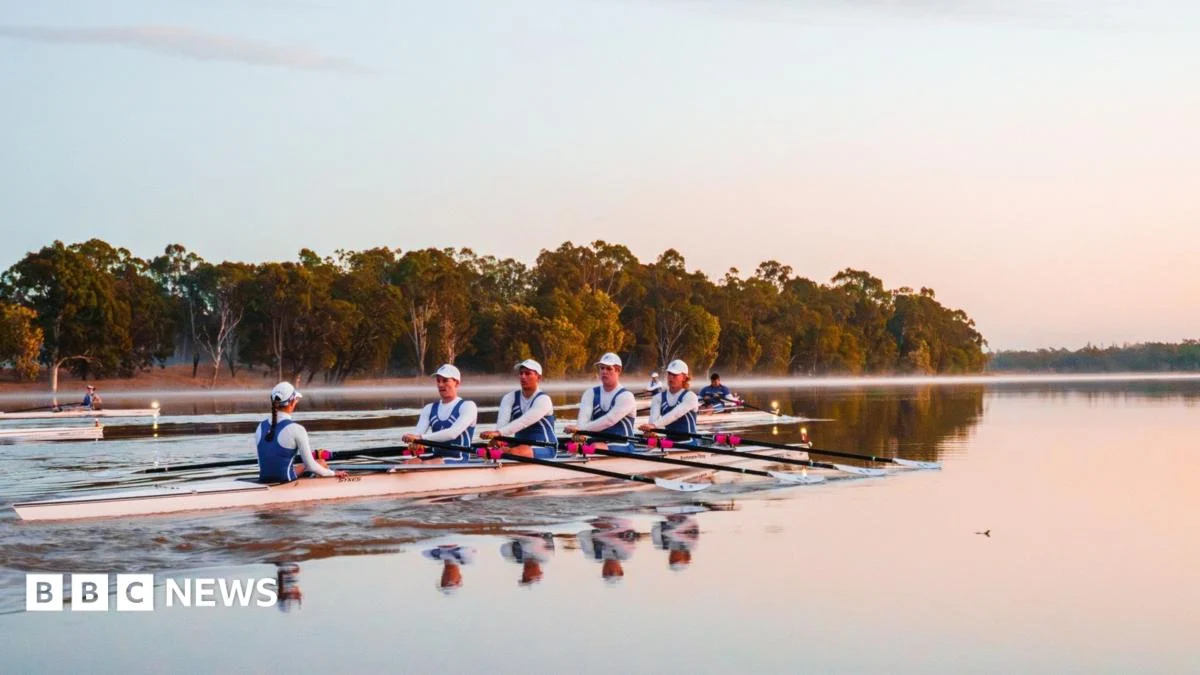
This weekend, more than 600 of Queensland’s most promising teenage rowers are navigating the very waters that will host future Olympic champions, competing in their annual regatta. For Anthea O’Loughlin, head of Rowing Queensland, the sudden media attention is unprecedented. "We’ve never had any media wanting to attend before," she remarked to the BBC, highlighting the stark contrast with the heightened scrutiny now focused on Rockhampton. The unassuming river, home to an estimated 500 saltwater crocodiles and subject to significant tidal influences, has become the epicentre of a complex dialogue involving elite athletes, international sports federations, and the Queensland state government.
The Path to Approval: Technical Assessment and Official Endorsement
The formal green light for the Fitzroy River came after an extensive technical assessment conducted by an independent engineering firm and the Games’ infrastructure authority. This evaluation delved deep into critical aspects such as the riverbed’s composition, the proposed competition course layout, natural river flows, anticipated water levels, and likely weather conditions during the Games period. Jean-Christophe Rolland, President of World Rowing, expressed confidence in the findings. "Based on the extensive analysis undertaken, we now know that the Fitzroy River is capable of providing fair competition conditions during the period of the Games," he stated, reassuring the international sporting community. Thomas Konietzko, President of Paddle Worldwide, the governing body for canoe sprint, echoed this sentiment, confirming "confidence" in the river for his athletes as well.
Queensland Premier David Crisafulli, a vocal advocate for Rockhampton, hailed the decision as a triumph for regional Queensland. Addressing parliament with an upbeat tone, Crisafulli declared, "The Fitzroy has passed with flying colours. It’s official. Signed, sealed and delivered." This enthusiastic pronouncement underscored the significant political capital invested in securing Rockhampton as an Olympic host city, a move that aligns with the broader strategy of decentralizing the 2032 Games and spreading economic benefits beyond the capital city of Brisbane.
A Storm of Concerns: Fairness, Flooding, and Formidable Reptiles
Despite the official seal of approval, the selection of the Fitzroy River has not been without robust opposition and persistent skepticism from within the elite rowing community. At last month’s World Rowing congress in Amsterdam, "fairness" emerged as the paramount concern, overshadowing even the more sensational issue of crocodiles. Tom Solesbury, chief executive of British Rowing, articulated the apprehension surrounding the tidal river’s natural bends and currents. Many experienced figures in the sport argue that these inherent characteristics could introduce uncontrollable variables, potentially compromising the integrity of elite competition where mere milliseconds can separate medalists.
Drew Ginn, an Australian rowing legend with three Olympic gold medals, voiced his apprehension to the BBC, citing concerns over potential flooding – a very real threat in the region – and the fundamental principles of "fairness and integrity" at the proposed venue. While acknowledging the presence of crocodiles, Ginn downplayed the immediate threat, stating, "Personally, I’m not fearful of the Australian animals but I’ve never had a crocodile near me. I’m sure I’d row faster, I’m sure all the athletes would row faster. That’s on the list of concerns, I don’t think it’s the highest priority in concerns but it was certainly cited very early on." His comments highlight a nuanced perspective among athletes, where competitive equity often takes precedence over perceived exotic dangers.
The president of the German rowing body, Moritz Petri, added another layer of complexity to the debate, questioning the sustainability of holding events some 600 kilometres (373 miles) from Brisbane, the primary host city. This logistical challenge raises concerns about athlete travel, spectator experience, and the overall environmental footprint of the Games. Simon Wickham, chief executive of Rowing New Zealand, further clarified that their objections stemmed purely from a desire for "the fairest possible course" for their athletes, who dedicate four years of their lives to training, "dreaming night [after] night of becoming an Olympic champion." Both Petri and Wickham firmly rejected any notion that their concerns were rooted in a preference for urban versus regional settings.
The Political Counter-Narrative: "Elites" vs. Regional Pride
Queensland Premier David Crisafulli vehemently dismissed these concerns, adopting a less diplomatic tone just days after the Amsterdam meeting. "Let’s be honest, let’s scratch beneath the surface and call it for what it is," he declared. "It is a group of interstate and overseas elites who are trying to bully their way because they don’t want to go to regional Queensland and that’s not right." This strong political retort framed the debate not as a technical or sporting issue, but as a cultural clash between a perceived metropolitan elite and the aspirations of regional communities.
The Premier’s "elites" remarks sparked further controversy, though rowing chiefs contacted by the BBC before Thursday’s decision largely declined to comment directly. However, Ginn, the decorated Olympian, offered a retort that underscored the depth of expertise within the sporting community. "If elite means having some expertise in the sport over 20 odd years, I’m proud of that," he stated, implicitly defending the professional integrity of those raising legitimate concerns. This exchange highlighted the tension between political imperatives to uplift regional areas and the specific, high-stakes requirements of Olympic-level competition.
The Crocodile Conundrum: Perception vs. Reality
While "fairness" dominated discussions among rowing federations, the image of crocodiles in the Olympic rowing arena captured significant public and media attention. The Fitzroy River is unequivocally within recognized "crocodile country." Saltwater crocodiles (Crocodylus porosus), known for their aggressive nature and impressive size, can grow to over four metres (13ft) long. While state government files spanning more than 40 years record no attacks by these reptiles on humans within the specific stretch of river designated for the regatta, the possibility of a sighting remains.
The safety management plan for this weekend’s school regatta, a precursor to the Olympic events, explicitly mentions the word "crocodile" 28 times. It states, "Event planning must therefore assume that a crocodile sighting is possible… No natural waterway in crocodile country can be guaranteed to be crocodile-free." Procedures in place for the school event include suspending racing and instructing competitors to return to the bank if a crocodile is spotted, with the official signal being the repeated call of "crocodile, crocodile, crocodile."
Despite these protocols, the official updates from the IOC and World Rowing regarding the technical assessment did not directly reference crocodiles, nor was the issue highlighted in their media releases. The technical report itself has yet to be made public, raising questions about the transparency of the assessment regarding this specific safety concern.
Those who argue that the "tabloid-friendly" crocodile debate is overblown point out that the largest and most dangerous saltwater crocodiles tend to inhabit downstream areas, closer to the river mouth. They suggest that any crocodiles sighted in the rowing arena would more likely be the less-dangerous freshwater crocodiles (Crocodylus johnstoni), which are smaller and generally less aggressive towards humans.
Hancock Prospecting, the company owned by Australia’s richest person, Gina Rinehart, and a significant financial backer of Rockhampton’s bid and Australian sports including rowing, dismissed the concerns as "fake media" exaggeration. A spokesperson stated, "The people of Rocky for many years have sent their own children to train in this river, and for competitions, without a single crocodile incident." This perspective underscores local familiarity and confidence in managing the natural environment.
Flooding Risks and a Ready Alternative
Beyond crocodiles, the risk of flooding in the Fitzroy River is another contested issue. Rockhampton is prone to significant flooding, and historical data supports this concern. Rowing Queensland’s Anthea O’Loughlin revealed that their schools event, originally scheduled for the Fitzroy in August 2024, had to be relocated because the course was "washed away." This real-world incident provides tangible evidence of the river’s volatility and the challenges it presents for reliable event hosting. While the Brisbane 2032 chief executive has assured that contingency plans are being developed "as we would for any venue," the inherent unpredictability of a major river system remains a key concern for event organizers.
Adding to the complexity is the existence of a world-class, purpose-built alternative: the Sydney International Regatta Centre (SIRC) at Penrith, which hosted the rowing events for the 2000 Sydney Olympics. This facility is fully equipped, consistently maintained, and regularly hosts international competitions, making it a ready and waiting backup. However, for Queenslanders, particularly the state government, utilizing a Sydney venue would be politically "unconscionable," representing a perceived capitulation and a failure to deliver on the promise of a truly Queensland-centric Games.
This reluctance to consider the Sydney option also runs counter to a 2025 report commissioned by the Queensland government itself. This report, whose findings were seemingly disregarded, reportedly concluded that the Fitzroy location was unsuitable and recommended the Sydney venue as the best option. The decision to override its own commissioned report further emphasizes the strong political will driving the Rockhampton selection.
Economic Aspirations and Legacy Implications for Rockhampton
For Rockhampton, a city with a population of approximately 80,000, hosting Olympic events represents an unprecedented opportunity for economic development and global recognition. Normally, the city experiences its peak number of guests every three years during Beef Week, a major agricultural expo that draws visitors from across the country and internationally to its cattle-producing hinterland. The prospect of an Olympic influx in 2032 promises to dwarf even this, bringing significant investment in infrastructure, tourism, and local services.
The state government’s push for Rockhampton is fundamentally tied to its "regional first" strategy for the Games, aiming to leave a lasting legacy beyond Brisbane. This includes substantial investment in new rowing facilities, upgraded transport links, and enhanced accommodation options. However, the question remains whether Rockhampton, despite its enthusiasm, can truly accommodate the massive influx of athletes, officials, media, and spectators that an Olympic event demands. The long-term sustainability and value for money of these investments will be crucial.
The Fitzroy River now needs to pass a final assessment covering its detailed design, value for money, and long-term community legacy. Given the Queensland government’s unwavering commitment to the venue, it is widely expected that it will clear this final hurdle.
Broader Implications for Future Olympic Games
The decision to approve the Fitzroy River has broader implications for how future Olympic Games venues are selected and assessed. It highlights a growing tension between the traditional demands of elite sports for perfectly controlled environments and the desire of host nations to spread the economic and social benefits of the Games more widely. The 2032 Brisbane Games are envisioned as "the Games for all of Queensland," and the Rockhampton decision is a clear manifestation of this philosophy.
This case sets a precedent, demonstrating that political will and a commitment to regional development can, under certain circumstances, override some technical concerns and even expert recommendations. It also underscores the power dynamics at play between local organizing committees, national governments, and international sporting federations like World Rowing and the IOC.
As the teenage rowers battle it out on the Fitzroy River this weekend, oblivious to the high-stakes political and sporting drama unfolding around their chosen course, the debate over Rockhampton’s suitability for the 2032 Olympics will undoubtedly continue. The city, its river, and its crocodiles are now firmly on the global map, poised to host an event that promises to be as challenging and memorable as the journey to its controversial selection.