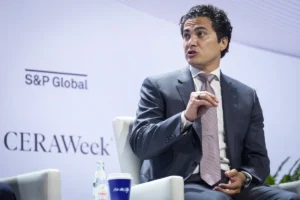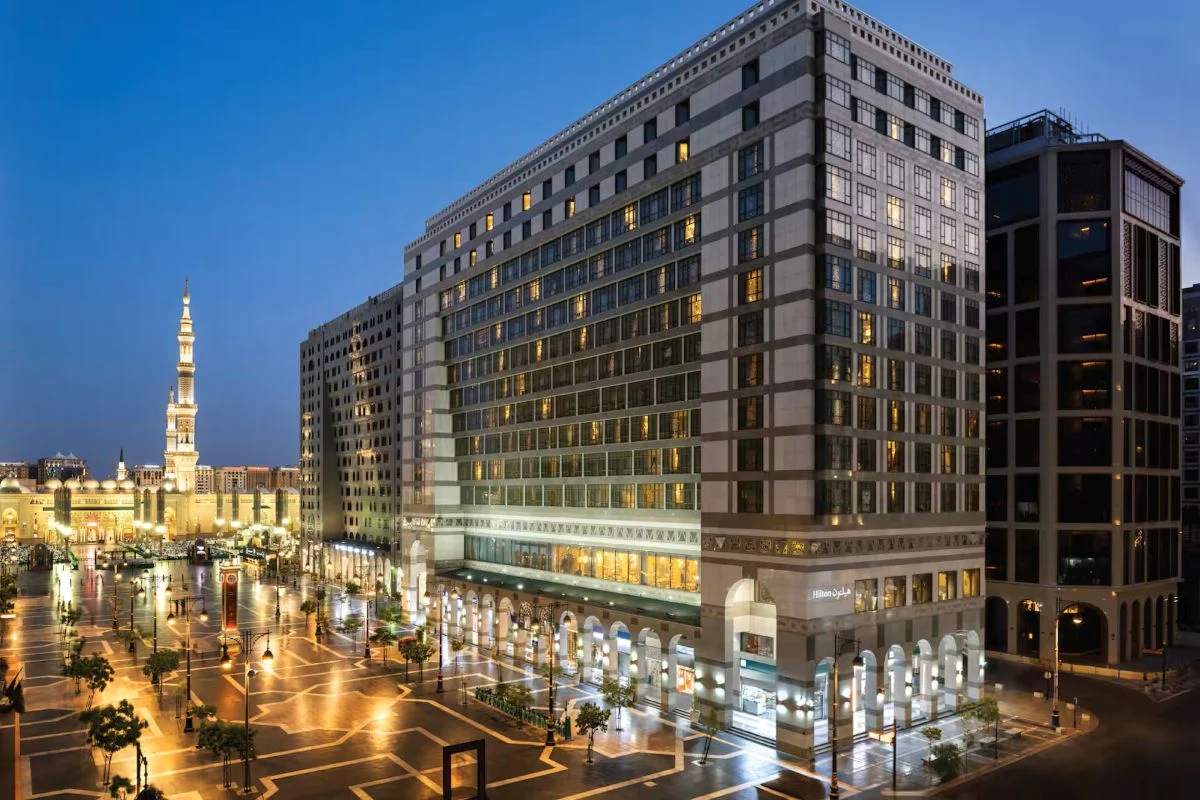
The global hospitality landscape is witnessing a strategic pivot in the Middle East as Hilton, one of the world’s largest hotel corporations, recalibrates its growth trajectory within the Kingdom of Saudi Arabia. After a decade-long intensive build-out of its luxury and upper-upscale portfolios in the region’s primary hubs, Hilton is now shifting its primary focus toward the mid-market segment and the expansion of its franchise model. According to Simon Vincent, Hilton’s President for Europe, Middle East, and Africa (EMEA), the high-end market in Saudi Arabia’s major metropolitan areas is reaching a state of maturity, paving the way for a more diverse hospitality ecosystem that caters to a broader demographic of travelers.
Speaking on the evolution of the Saudi market, Vincent highlighted that while the company’s prestigious brands—including Waldorf Astoria, Conrad, LXR, and Curio Collection—have established a firm foothold, the future of the Kingdom’s tourism sector lies in its "secondary" and "provincial" locations. This transition mirrors the historical development of other major hospitality markets where the initial entry of luxury flagship properties eventually gives way to high-volume, mid-scale brands that support the day-to-day needs of business travelers, domestic tourists, and religious pilgrims.
The Evolution from Luxury to Volume
For several years, the Saudi hospitality sector was defined by grand, high-profile projects. Hilton was a central player in this era, launching iconic properties that catered to the elite and international corporate sectors. Vincent remarked that the company has reached a point where brands like Conrad, Waldorf Astoria, and DoubleTree are well-represented across the Kingdom’s key cities. "We’ve got Conrads, Waldorfs, Hiltons, Curios, and DoubleTrees coming out of our ears over there," Vincent stated, emphasizing that the infrastructure for luxury is largely in place.
However, as Saudi Arabia moves forward with its Vision 2030 initiative—a socio-economic blueprint designed to diversify the economy away from oil—the demand for accommodation is no longer restricted to the ultra-wealthy. The National Tourism Strategy aims to attract 150 million visitors annually by 2030, a goal that requires a massive influx of affordable, reliable, and high-quality lodging. To meet this demand, Hilton is looking toward its Hilton Garden Inn and Hampton by Hilton brands. These brands are designed to provide consistent service at a lower price point, making them ideal for the burgeoning domestic travel market and the rising number of international visitors seeking value.
The Turkey Blueprint: A Historical Comparison
To illustrate the logic behind this strategic shift, Vincent pointed to Hilton’s long-standing history in Turkey. The company’s journey in Turkey began in 1955 with the opening of the Hilton Istanbul Bosphorus, which served as a landmark of luxury and international diplomacy for decades. However, the true scale of Hilton’s presence in Turkey—which now exceeds 100 hotels—was not achieved by simply building more luxury towers in Istanbul.
Instead, growth was driven by the expansion of mid-market brands into provincial towns and secondary cities. By introducing Hilton Garden Inn and Hampton by Hilton to areas that previously lacked international-standard accommodation, Hilton was able to capture a dominant market share. In many of these locations, a mid-market Hilton brand becomes the premier lodging option in the city, offering a level of reliability and service that local independent hotels may not provide. Vincent suggests that Saudi Arabia is currently on a similar trajectory. As the Kingdom develops its regional infrastructure, the demand for "the best hotel in town" will increasingly be met by mid-market international brands rather than 24-karat luxury suites.
Supporting the Vision 2030 Framework
The shift toward the mid-market is inextricably linked to the Saudi government’s massive investment in infrastructure and tourism. Under the leadership of Crown Prince Mohammed bin Salman, the Kingdom is investing over $800 billion into the tourism sector. Key components of this strategy include the "Giga-projects" such as NEOM, the Red Sea Project, and Diriyah Gate. While these projects often feature luxury components, the surrounding support infrastructure and the secondary cities feeding into these hubs require a vast network of mid-scale hotels.
Data from the Saudi Ministry of Tourism indicates that the Kingdom needs to add approximately 500,000 hotel rooms by 2030 to reach its targets. For this to be economically sustainable, a significant portion of these rooms must fall within the three- and four-star categories. Hilton’s pivot is a direct response to this economic reality. By focusing on brands like Hampton by Hilton, the company can scale more quickly and at a lower cost per key, aligning its corporate growth with the national interest of the Kingdom.
The Rise of the Franchise Model in the Middle East
A critical component of Hilton’s new strategy in Saudi Arabia is the increased use of the franchise model. Historically, international hotel chains in the Middle East operated primarily through management agreements, where the brand manages the day-to-day operations of the hotel on behalf of the owner. However, as the market matures and local owners become more sophisticated in hotel management, the franchise model is becoming more attractive.
Franchising allows Hilton to expand its footprint rapidly without the operational burden of managing every individual property. It empowers local Saudi developers and entrepreneurs to operate under a globally recognized brand while maintaining more control over their assets. This shift is expected to accelerate the rollout of Hilton Garden Inn and Hampton properties in cities like Tabuk, Abha, Al Khobar, and Jazan. By leveraging the franchise model, Hilton can tap into local expertise and capital, further integrating itself into the Saudi economy.
Religious Tourism and the "Missing Middle"
One of the most significant drivers of mid-market demand in Saudi Arabia is religious tourism. The Kingdom is the custodian of the Two Holy Mosques in Mecca and Medina, and the government plans to host 30 million Umrah pilgrims annually by 2030. While luxury hotels overlooking the Haram in Mecca are always in demand, the vast majority of pilgrims are middle-income individuals from across the globe who require clean, safe, and affordable accommodation.
Industry analysts have long noted a "missing middle" in the Saudi hospitality market, where the choice was often between expensive five-star hotels or low-quality unbranded budget lodging. By deploying mid-market brands, Hilton is positioning itself to capture this massive and consistent segment of the market. These hotels provide the "international standard" that global travelers expect, including standardized amenities, loyalty program benefits (Hilton Honors), and digital check-in capabilities, which are often absent in local independent mid-scale options.
Economic Implications and Job Creation
The expansion into mid-market and secondary cities also has profound implications for the Saudi labor market. As part of the "Saudization" (Nitaqat) program, the government is keen to see more Saudi nationals employed in the private sector, particularly in tourism. Mid-market hotels, which are often more labor-efficient than luxury properties but exist in higher volumes, provide a significant number of entry-level and mid-management opportunities for young Saudis.
Hilton has already committed to hiring thousands of Saudi nationals as part of its expansion. By opening hotels in provincial areas, the company is helping to distribute economic benefits away from the traditional power centers of Riyadh and Jeddah, supporting the government’s goal of balanced regional development.
Competitive Landscape and Future Outlook
Hilton is not alone in its pursuit of the Saudi mid-market. Competitors like Accor, Marriott International, and IHG Hotels & Resorts are also aggressively expanding their mid-scale and extended-stay brands in the Kingdom. For example, Accor has been heavily promoting its Novotel and Ibis brands, while Marriott is expanding its Courtyard and Residence Inn portfolios.
However, Hilton’s early move to establish a diverse brand presence and its explicit focus on the "Turkey model" of provincial expansion gives it a strategic advantage. The company’s ability to offer a "ladder" of brands—from the budget-friendly Spark and Hampton to the high-end Waldorf Astoria—allows it to capture the entire lifecycle of a traveler’s needs.
As the Saudi tourism market continues to evolve, the success of Hilton’s strategy will be measured by its ability to integrate into the fabric of smaller Saudi cities. The transition from being a provider of "prestige" to a provider of "ubiquity" represents a new chapter for the company in the Middle East. By focusing on the mid-market, Hilton is betting that the long-term stability and volume of the Saudi economy will be driven not just by the elite, but by the growing middle class and the millions of international visitors looking for a reliable place to stay.
In conclusion, the remarks by Simon Vincent signal a maturing of the Saudi Arabian hospitality sector. The "luxury phase" of development has successfully put the Kingdom on the global tourism map; now, the "infrastructure phase" begins. Through mid-market expansion and a shift toward franchising, Hilton is aligning its business model with the logistical and economic requirements of a nation that is rapidly transforming into a global travel destination. The next decade will likely see the Hilton logo become a common sight not just on the skylines of Riyadh, but on the main streets of towns across the entire Kingdom.