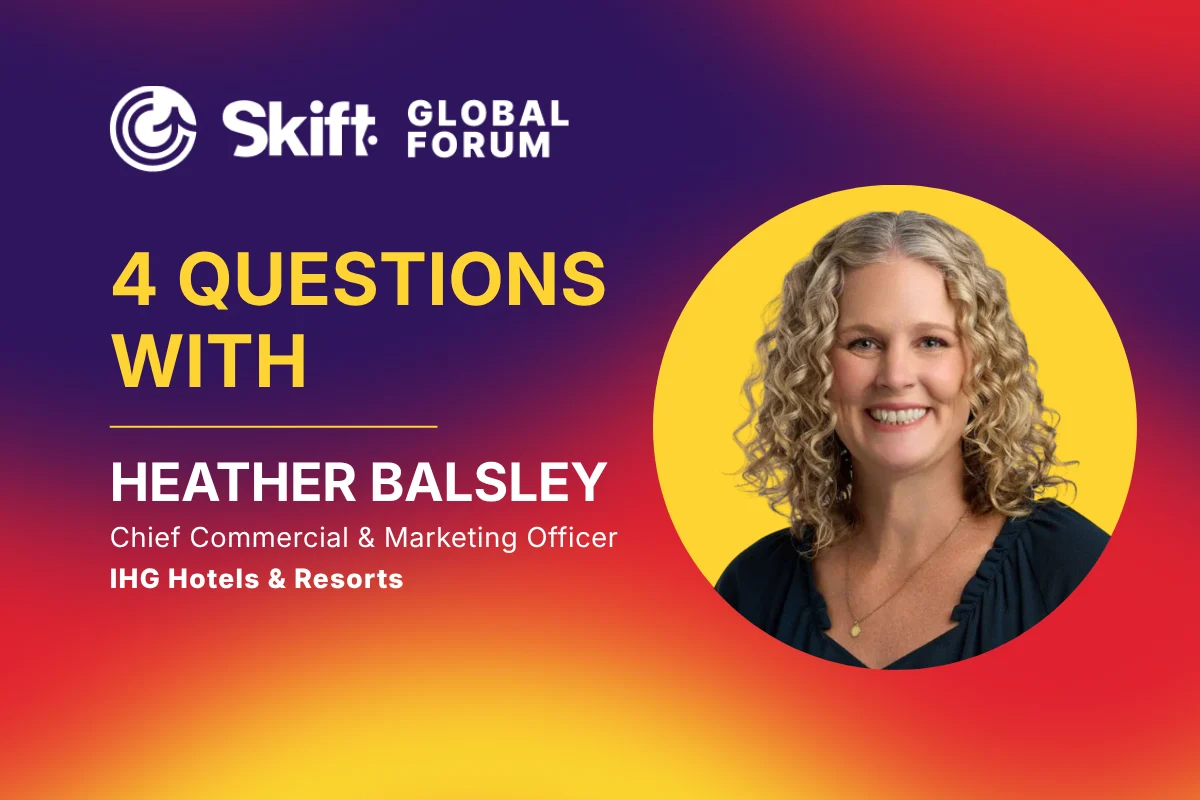
The global hospitality landscape is undergoing a fundamental shift as artificial intelligence moves from a back-end operational tool to the primary interface for traveler discovery. InterContinental Hotels Group (IHG), one of the world’s largest hotel companies, is responding to this evolution by fundamentally restructuring how it manages and presents property information. Heather Balsley, IHG’s Chief Commercial and Marketing Officer, has signaled a strategic pivot aimed at making the company’s vast portfolio of 19 brands and over 6,000 hotels "legible" to the large language models (LLMs) that now power AI travel assistants. This initiative, which includes the launch of a new content platform later this year, is designed to ensure that when a traveler asks an AI for a specific recommendation, IHG properties are not only visible but are accurately and persuasively represented.
The strategy represents a dual bet: first, that AI will become the "new front door" for travel planning, and second, that despite the power of these new intermediaries, the core relationship between a brand and its guests remains a proprietary asset that technology cannot easily disrupt. Balsley is scheduled to detail this overhaul at the Skift Global Forum in New York, scheduled for September 22–24, 2026. Her presentation will address the technical challenges of modernizing legacy content systems and the philosophical challenge of maintaining brand loyalty in an era of algorithmic curation.
The Evolution of the Digital Front Door
For nearly two decades, the "front door" of travel was defined by search engine optimization (SEO) for Google and the dominance of Online Travel Agencies (OTAs) like Expedia and Booking.com. Travelers typically engaged in a fragmented journey involving multiple tabs, price-comparison tools, and review sites. However, the rise of generative AI is streamlining this process into a conversational, single-interface experience. Instead of searching for "hotels in London," a modern traveler might ask an AI assistant to "find a quiet hotel in London near a park with high-speed Wi-Fi and a gym that is suitable for a three-day business trip."
This shift from keyword-based search to nuanced, natural language queries requires a different kind of data infrastructure. Traditional hotel databases are often structured around binary filters—checking boxes for "pool," "parking," or "breakfast included." AI models, however, draw from "rich content"—narrative descriptions, sentiment-laden reviews, and contextual information. If a hotel’s digital footprint does not contain the specific nuances the AI is looking for, it effectively ceases to exist for that traveler.
Balsley notes that AI tools are only as effective as the content they ingest. To earn a spot in the AI recommendation "shortlist," IHG is investing heavily in ensuring its property descriptions go beyond basic amenities. The goal is to provide a level of detail that allows an AI to understand what makes a Six Senses resort different from an InterContinental or a Holiday Inn Express, matching the specific "vibe" and service level to the user’s intent.
Technological Infrastructure: The 2026 Content Overhaul
The centerpiece of IHG’s strategy is a new proprietary platform set to debut in late 2024 and scale throughout 2025 and 2026. This platform is designed to transform how the group structures and manages hotel content. Currently, many global hotel chains struggle with fragmented data across thousands of properties, where descriptions might be outdated or inconsistent across different booking channels.
The new platform aims to solve several critical issues:
- Structured Data for LLMs: By tagging content with more sophisticated metadata, IHG can ensure that AI crawlers can easily parse through property details.
- Dynamic Content Delivery: The platform will allow hotels to update information in real-time, ensuring that if a renovation is completed or a new service is added, it is immediately reflected across all digital signals.
- Personalization at Scale: The infrastructure will give IHG greater flexibility in how content is delivered to different guest segments. For example, a business traveler and a family might see different highlighted features for the same hotel, depending on their search history and preferences.
This technological leap is not merely about staying current; it is about hotel performance. For the owners and franchisees who operate IHG properties, being "AI-ready" is becoming a prerequisite for maintaining occupancy rates. As Balsley emphasizes, the ultimate test for any new technology at IHG is whether it creates a better experience for the guest while simultaneously delivering tangible value for the hotel owner.
Historical Context: From OTAs to AI Assistants
The anxiety surrounding AI’s role as a new intermediary mirrors previous disruptions in the travel industry. In the early 2000s, the rise of OTAs created a similar sense of urgency. Hotel brands feared they would lose their direct connection to guests and be forced to compete solely on price within a third-party marketplace. This was followed by the "mobile revolution," which shifted the booking window and required hotels to optimize for small screens and on-the-go decision-making.
Balsley draws a direct parallel between these historical shifts and the current AI wave. In each instance—OTAs, mobile booking, and now AI—the discovery channel changed, but the fundamental drivers of the hospitality business remained the same. IHG’s view is that while the "discovery" phase may be outsourced to an AI, the "delivery" phase—the actual stay, the loyalty recognition, and the emotional connection—cannot be replicated by an algorithm.
This historical perspective informs IHG’s decision to remain present on every platform where travelers make decisions. Whether it is a "super app" in China or a social media platform in the United States, the strategy is to be ubiquitous during the discovery phase while aggressively funneling guests toward the IHG One Rewards ecosystem once the initial connection is made.
Strategic Philosophy: Brand Loyalty vs. Algorithmic Discovery
A significant portion of the industry debate centers on whether an AI assistant will eventually "own" the traveler, making brand names irrelevant. If an AI always picks the "best" hotel based on data, does it matter if that hotel is a Marriott, a Hilton, or an IHG?
Balsley argues that brands will remain the ultimate arbiter of trust. AI can narrow down options, but the traveler still seeks the confidence that comes with a known brand. This is where IHG’s loyalty program, IHG One Rewards, becomes a critical defensive and offensive tool. By using AI to enhance its own direct channels, IHG can offer personalized recognition that a generic AI assistant cannot provide.
The data supports this focus on loyalty. Industry-wide, loyalty members typically account for 40% to 60% of room night bookings for major chains. These guests are more profitable, as they book directly and have higher lifetime value. IHG’s strategy is to use AI to find new guests but use its brand experience to keep them. Balsley’s "simple test"—does the technology reduce friction and strengthen loyalty?—serves as a filter to avoid chasing tech trends that do not contribute to long-term brand equity.
Market Position and Financial Implications
The hospitality sector is currently in a high-stakes arms race regarding AI investment. Competitors like Marriott International and Hilton have also announced significant digital transformations aimed at personalization and operational efficiency. However, IHG’s specific focus on "content legibility" highlights a crucial realization: the battle for the customer starts long before the booking, at the moment of digital inspiration.
Financially, the stakes are high. IHG manages a massive global footprint, and even a small shift in "search-to-book" conversion rates can result in millions of dollars in incremental revenue. By improving the digital signals that help hotels be surfaced by AI, IHG is essentially performing SEO for the next generation of the internet. For franchisees, this support from the corporate brand is a key reason for remaining within the IHG system rather than operating independently.
Furthermore, the integration of AI is expected to streamline the customer journey, which Balsley describes as becoming "longer and more fragmented" yet simultaneously "more streamlined." This paradox is explained by the fact that while travelers may spend more time in the "inspiration" phase across various apps, the path to the final transaction is becoming shorter thanks to integrated mobile experiences and AI-led narrowing of choices.
The Future of the Guest Journey
As the travel industry moves toward the late 2020s, the guest journey will likely be defined by "invisible" technology. The goal for IHG is to reach a point where the AI assistant acts as a seamless conduit, passing a well-informed traveler into the hands of a hotel that is perfectly suited to their needs.
The upcoming Skift Global Forum will serve as a platform for Balsley to address the remaining questions about this transition:
- How will IHG handle the "black box" nature of AI algorithms that may prioritize certain brands over others?
- What role will guest reviews play when AI can summarize thousands of opinions into a single sentence?
- How can hotels maintain a human touch when the first several points of contact are entirely automated?
While the pace of change is accelerating, IHG’s leadership maintains that the fundamentals of hospitality—service, comfort, and reliability—are the only things that will ultimately drive long-term trust. AI may transform how guests find a hotel, but the brands that consistently deliver meaningful experiences will be the ones that earn repeat business.
The content overhaul at IHG is more than a technical update; it is a declaration that in an automated world, the quality and clarity of a brand’s story are more important than ever. By making its hotels legible to machines, IHG is ensuring that its human-centric hospitality can be discovered by a new generation of travelers. As Balsley joins other industry leaders like Booking Holdings CEO Glenn Fogel and Expedia Group CEO Ariane Gorin at the Skift Global Forum, the conversation will likely center on this delicate balance between algorithmic efficiency and the enduring power of the brand relationship.