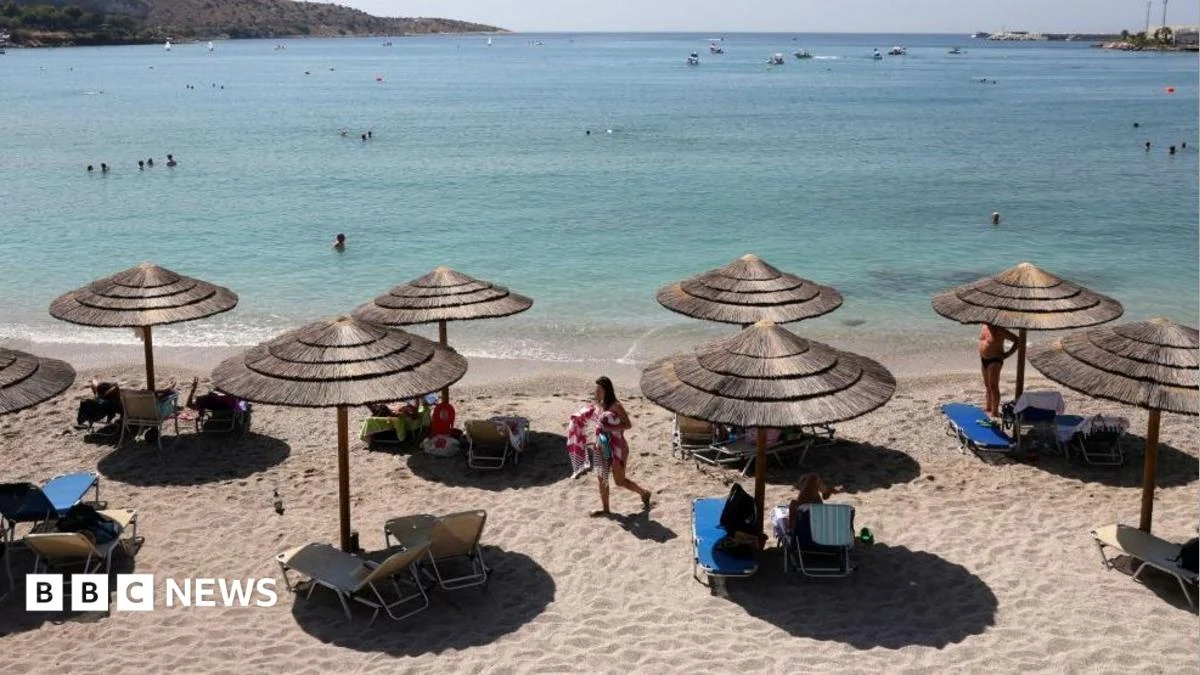
An 82-year-old man has tragically died following a violent altercation with a 76-year-old man over a sunlounger at the popular Vouliagmeni beach near Athens, Greece, according to widespread local media reports. The incident, which unfolded on a busy summer day, escalated rapidly from a verbal disagreement into a physical confrontation, eventually involving other individuals present at the scene. The elder man collapsed during the fight and, despite immediate efforts to resuscitate him, succumbed to his injuries after being transported to a local hospital. The younger man involved in the primary dispute, aged 76, has since been arrested in connection with the fatality. A 21-year-old woman, who was reportedly with the arrested individual and also sustained injuries, was initially detained but later released as authorities continue to piece together the sequence of events that led to this unprecedented tragedy on a seemingly idyllic Greek coastline. The shocking nature of the incident has cast a somber shadow over the peak tourist season, prompting broader discussions about public order and safety in crowded recreational areas.
Chronology of a Tragic Confrontation
The events leading to the fatal outcome began to unfold on a recent summer afternoon at Vouliagmeni beach, a highly frequented and often bustling stretch of coastline situated approximately 20 kilometers south of Athens. Eyewitnesses recounted to various Greek news outlets, including Kathimerini and Ta Nea, that the initial spark for the conflict was a dispute over the use or reservation of sunloungers. One witness specifically noted that the 82-year-old victim appeared to have reserved a sunlounger, possibly awaiting the arrival of companions, a common practice at organized beaches where amenities are often pre-booked or claimed early in the day, especially during periods of high demand.
The disagreement, initially verbal, quickly intensified. According to multiple accounts, the 76-year-old man challenged the 82-year-old’s claim to the sunlounger, leading to a heated exchange of words. This verbal sparring soon degenerated into a physical altercation, a shocking development given the age of the individuals involved. The precise details of the physical struggle remain a key focus of the ongoing police investigation, but reports suggest punches were thrown and a chaotic scene ensued. The fight reportedly "spiralled" beyond the two initial protagonists, drawing in other bystanders or companions, though the extent of their involvement is still under scrutiny. The sudden eruption of violence transformed a leisurely beach environment into one of panic and distress, with screams and shouts reportedly echoing across the beach, audible even from a considerable distance, as described by one eyewitness to Kathimerini.
During the peak of the confrontation, the 82-year-old man collapsed. Witnesses, alarmed by the sudden turn of events, immediately rushed to his aid. Several individuals, some with medical training, initiated cardiopulmonary resuscitation (CPR) and deployed an automated external defibrillator (AED) in an attempt to revive him. These critical first aid measures were applied swiftly, demonstrating the presence of concerned citizens willing to assist. Emergency services were promptly called, and an ambulance arrived shortly thereafter. Paramedics continued life-saving efforts before transporting the unconscious man to a nearby hospital, identified by local media as the Asklipieio General Hospital of Voula. Despite the best efforts of medical personnel, the 82-year-old was pronounced dead at the hospital a short time later, marking a tragic end to what began as a seemingly trivial dispute.
Witness Accounts and Initial Investigations
The immediate aftermath saw authorities, including officers from the Hellenic Police, descend upon Vouliagmeni beach to secure the scene and begin their preliminary investigation. The 76-year-old man, identified by police as the primary aggressor in the physical altercation, was arrested on site. Additionally, a 21-year-old woman who was reportedly accompanying the younger man was also detained. Witnesses told Ta Nea daily newspaper that this woman exhibited visible injuries, including a bloodied and swollen face, suggesting she may have been involved in the wider scuffle or sustained injuries during the chaotic scene. She was later released, pending further investigation, while the 76-year-old remains in custody, facing potential charges related to the death.
The police investigation is meticulously gathering witness statements, reviewing any available surveillance footage from the organized beach facilities, and collecting forensic evidence to establish a clear picture of the incident. A crucial element of the investigation will be determining the exact cause of the 82-year-old man’s death. While the collapse occurred during the physical altercation, investigators must ascertain whether his death was a direct result of injuries sustained during the fight, or if an underlying medical condition was exacerbated by the stress and physical exertion of the confrontation. A post-mortem examination by forensic pathologists is expected to provide critical insights into this aspect, which will be pivotal in determining the precise legal classification of the charges. Legal experts suggest that depending on the findings, the 76-year-old could face charges ranging from assault leading to death to manslaughter, with potential penalties varying significantly based on intent and direct causality.
Background Context: Vouliagmeni Beach and Greek Tourism Dynamics
Vouliagmeni beach is not merely a stretch of sand; it is a highly popular, organized beach on the Athenian Riviera, known for its pristine waters, well-maintained facilities, and often, a more upscale clientele. Situated in a scenic suburb, it attracts a diverse crowd, including families, elderly residents, and tourists seeking a convenient escape from the city heat. Organized beaches in Greece typically offer a range of services, including rented sunloungers and umbrellas, changing rooms, showers, and proximity to cafes and restaurants. These amenities, while enhancing comfort, also introduce a system of allocation and payment, which can occasionally lead to minor disputes, especially during peak season when demand outstrips supply and space becomes a premium commodity.
Greece, a nation heavily reliant on its tourism sector, experiences an immense influx of both domestic and international visitors during the summer months. Beaches like Vouliagmeni become magnets for relaxation and recreation, often operating at near-full capacity. This high density of people, combined with the heat and the sometimes relaxed holiday atmosphere, can occasionally create conditions where minor frustrations can quickly escalate. While incidents of violent crime are generally low in popular Greek tourist areas, the sheer volume of interactions means that personal disagreements, even over seemingly trivial matters such as sunlounger etiquette, can unfortunately turn sour. The incident serves as a stark reminder that even in seemingly tranquil holiday settings, underlying tensions can exist and erupt unexpectedly.
The practice of "reserving" sunloungers, whether through pre-payment or by placing towels and personal items, is widespread but not universally accepted without contention. At many organized beaches, there are specific rules regarding reservations and usage times, often displayed prominently. However, misunderstandings or perceived breaches of these rules can become flashpoints, particularly when individuals feel their space or right to an amenity is being infringed upon, or when others feel a spot is being unfairly held. This particular incident, stemming from such a dispute, highlights the need for clear communication and perhaps more vigilant oversight by beach management in mediating such minor conflicts before they have a chance to escalate into tragic confrontations.
Broader Implications and Public Safety Concerns
The tragic death at Vouliagmeni has resonated beyond the immediate vicinity, sparking public discussion across Greece and drawing international attention. The incident underscores several broader implications regarding public safety, tourism management, and societal behavior in crowded public spaces.
Firstly, it raises questions about public safety protocols in crowded recreational areas. While beach managers cannot prevent every personal dispute, the sheer scale of the chaos described by witnesses suggests that immediate intervention mechanisms might need review. The speed with which the disagreement escalated from verbal to violent, and then involved multiple individuals, indicates a breakdown in immediate conflict resolution or crowd control. Local authorities and tourism bodies may consider implementing clearer guidelines for beachgoers, increasing staff presence specifically trained in conflict de-escalation, or enhancing surveillance to deter such escalations and provide quicker responses. This incident serves as a stark case study for risk assessment in high-traffic public leisure areas.
Secondly, the incident serves as a grim reminder of the vulnerability of elderly individuals to physical confrontations. While the exact cause of death is pending forensic analysis, the physical stress and trauma of a fight could have severe, even fatal, consequences for someone in their 80s, regardless of pre-existing health conditions. The cardiovascular system of an elderly person is more susceptible to the sudden surge of adrenaline and physical exertion, potentially leading to cardiac events or other acute health crises. This aspect of the tragedy emphasizes the critical importance of de-escalation in any dispute, particularly when involving older persons, whose physical resilience is naturally diminished.
Thirdly, the legal ramifications for the 76-year-old man are significant. Depending on the findings of the investigation and the post-mortem, he could face serious charges that carry substantial prison sentences under Greek law. The case will likely be closely watched by legal professionals and the public, as it sets a precedent for how such "trivial" disputes, when they lead to fatal outcomes, are prosecuted. The involvement of the 21-year-old woman, even if she was later released, also highlights the complexities of establishing individual responsibility in a multi-person altercation, requiring meticulous forensic and testimonial evidence gathering.
Official Responses and Community Reactions
While no explicit official statements beyond the confirmation of arrests and ongoing investigation have been widely reported at the time of writing, it is logical to infer certain reactions. The Hellenic Police and the Public Prosecutor’s office would undoubtedly emphasize their commitment to a thorough and impartial investigation, ensuring that all facts are uncovered and justice is served according to Greek criminal law. Statements from hospital officials would typically confirm the patient’s arrival and the extensive efforts made to save his life, while respectfully adhering to patient confidentiality regarding specific medical details.
On a broader level, local authorities responsible for tourism and public spaces, such as the Municipality of Vouliagmeni or the Greek National Tourism Organization (GNTO), would likely express profound regret over the incident. While avoiding direct commentary on the specifics of an ongoing investigation, they would generally reiterate their unwavering commitment to ensuring the safety, enjoyment, and pleasant experience of all visitors and residents. Such incidents, though statistically rare in the context of millions of tourists, can momentarily tarnish the international image of a popular tourist destination, prompting proactive efforts to reassure the public and stakeholders about the overall safety of Greek holiday destinations.
Within the local community and on social media platforms, the incident has undoubtedly generated a mix of shock, sadness, and anger. Many would express disbelief that a sunlounger dispute could lead to such a tragic loss of life, especially involving elderly individuals who are typically seeking peace and relaxation. Discussions would likely revolve around the importance of patience, respect, and de-escalation in public spaces, and lament the perceived decline in civility that such an event might suggest. There would also be calls for greater vigilance and stricter enforcement of rules on organized beaches to prevent similar occurrences, reinforcing the idea that shared public spaces require collective responsibility and adherence to common courtesies.
The death of an 82-year-old man following a fight over a sunlounger on Vouliagmeni beach is a profoundly tragic event that underscores the potential for minor disagreements to spiral into fatal confrontations. As Greek authorities continue their meticulous investigation, seeking to understand the precise sequence of events and the ultimate cause of death, the incident serves as a sobering reminder of the fragility of life, the critical importance of conflict resolution, and the pressing need for maintaining public order and mutual respect in shared recreational spaces. The outcome of the investigation and subsequent legal proceedings will undoubtedly carry significant implications for the individuals involved and potentially influence public safety measures in popular tourist destinations across Greece. The summer sun, which usually symbolizes joy and relaxation in Greece, has been momentarily overshadowed by this deeply unfortunate and preventable loss.