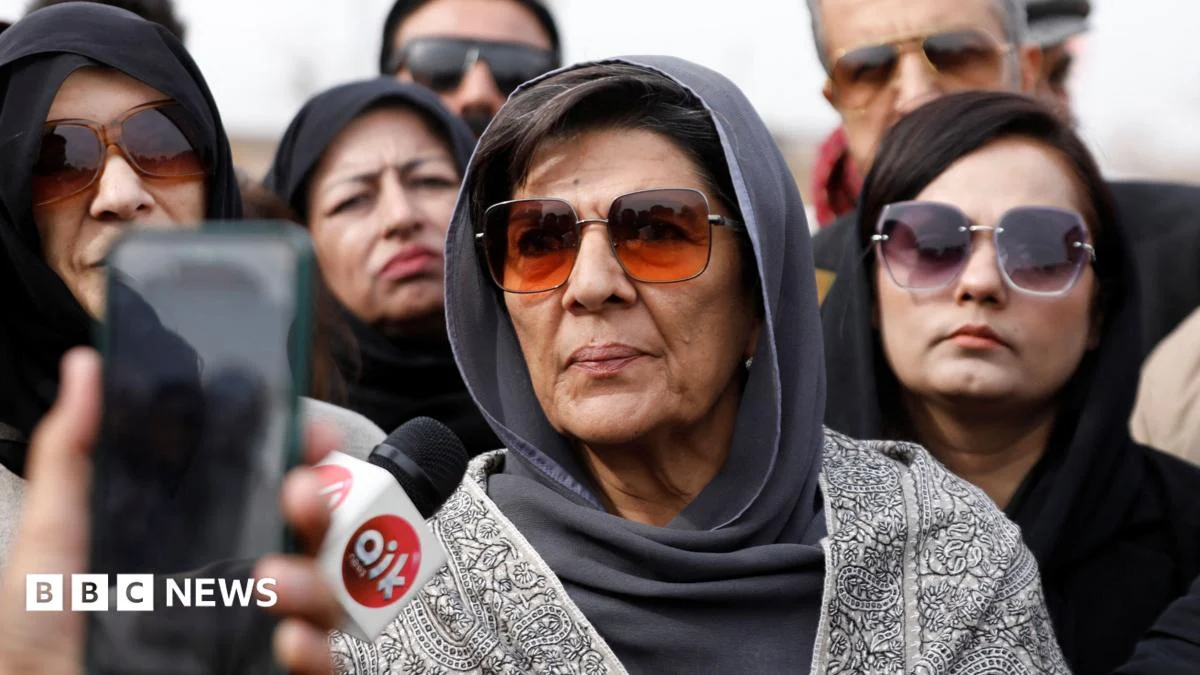
The political landscape in Pakistan has once again been roiled by a high-profile arrest, with Aleema Khanum, the sister of the nation’s imprisoned former prime minister, Imran Khan, being detained in Lahore. Her arrest on Sunday afternoon, confirmed by officials from Khan’s Pakistan Tehreek-e-Insaf (PTI) party, comes just days before a series of nationwide protests planned by his supporters for September 27th. The PTI has unequivocally condemned the arrest, labelling it an "illegal detention" and demanding her immediate release, a sentiment echoed by her son, Shahrez Khan. This development further intensifies the already fraught political climate in Pakistan, marked by ongoing crackdowns on the PTI and persistent legal challenges faced by its charismatic leader.
Details of the Arrest and Official Justification
Aleema Khanum’s detention took place in Lahore, the capital of Punjab province, on Sunday afternoon. According to PTI officials, the arrest was carried out without proper legal justification, leading to their strong denunciation. Her son, Shahrez Khan, took to the social media platform X (formerly Twitter) to express alarm, stating that the family had "no contact or news of her whereabouts" for a period and demanding the government "immediately disclose her whereabouts and ensure her safe return."
A police official subsequently confirmed Khanum’s arrest to the BBC, shedding light on the official grounds for her detention. The order for her arrest, issued by Lahore’s deputy commissioner, alleges that she has been actively "mobilising Imran Khan’s supporters through social media and public meetings." It further states that she is accused of inciting "law and order situations" and "raising/chanting objectionable slogans amongst the general public against the Government." The detention order specifies that Khanum is to be held for 30 days and will be transferred to Kot Lakhpat jail, a prominent correctional facility in Lahore. This preemptive measure by authorities underscores the government’s resolve to curb anticipated demonstrations, particularly those organized by the PTI.
Aleema Khanum: A Prominent Voice Amidst Political Turmoil
Aleema Khanum is not merely a familial relation to the former prime minister; she has emerged as a significant and vocal figure within the PTI and a staunch defender of her brother. In the absence of Imran Khan, who has been incarcerated since August 2023, and with many senior PTI leaders either arrested, in hiding, or having defected, figures like Khanum have stepped into the void, becoming key communicators for the party and its narrative.
Her public activities have included regular appearances before the media, where she consistently criticizes her brother’s detention, labels the numerous charges against him as politically motivated, and advocates for his release and the party’s right to political expression. She has also been instrumental in organizing and participating in public gatherings and social media campaigns aimed at galvanizing support for Imran Khan and the PTI. Her active role in mobilizing supporters, particularly through digital platforms and grassroots meetings, is precisely what the arrest order highlights as the reason for her detention, framing her activities as a threat to public order rather than legitimate political expression. Her arrest thus represents a direct targeting of a prominent and influential voice within the beleaguered PTI, signaling an escalation in the government’s efforts to control dissent.
The Looming Protests: A Test of Authority and Resilience
The timing of Aleema Khanum’s arrest is inextricably linked to the nationwide protests planned for September 27th. These demonstrations, organized by the PTI, aim to culminate in a march to the Pakistani capital, Islamabad, where supporters intend to voice their solidarity with Imran Khan and demand his release. The planned protests represent a significant challenge to the authority of the caretaker government, which has been in power since August 2023, tasked with overseeing the country until general elections are held.
In anticipation of these large-scale demonstrations, the government has taken extensive measures to secure Islamabad. Reports indicate that streets leading to key government buildings and vital arteries within the capital are already being lined with shipping containers, a familiar tactic used in Pakistan to block protest routes and control crowds. These physical barriers serve as a stark visual reminder of the government’s determination to prevent any unrest or perceived threats to public order.
Local media outlets have quoted Pakistan’s interior minister, who has reportedly asserted that the planned protests are detrimental to the country’s stability and economy. The minister has conveyed the government’s firm resolve to "do everything they can to stop them," indicating a strong likelihood of confrontation should protesters attempt to breach the security cordon. The government’s narrative frames these protests not as legitimate political expression but as attempts to create chaos and undermine national stability, a justification often employed to rationalize restrictions on fundamental rights such as freedom of assembly. The impending protests thus represent a critical juncture, testing both the government’s capacity to maintain order and the PTI’s ability to mobilize its support base despite facing significant state resistance.
Imran Khan’s Enduring Legal and Political Ordeal
The backdrop to Aleema Khanum’s arrest and the planned protests is the ongoing and multifaceted legal ordeal of Imran Khan himself, a saga that has deeply polarized Pakistani politics. Khan, a former cricket superstar who led Pakistan to a World Cup victory in 1992 before transitioning to politics, served as prime minister from 2018 until his ouster via a no-confidence vote in April 2022. Since then, he has faced an unprecedented barrage of legal cases, which he and his party consistently dismiss as politically motivated attempts to sideline him from the political arena.
A Chronology of Legal Battles:
- August 5, 2023: Khan was initially detained after being sentenced to three years in prison in the "Toshakhana case." This case involved allegations that he had not declared money earned from selling state gifts he received while in office, a violation of electoral laws. The conviction also led to his disqualification from holding public office for five years.
- May 2023: Prior to his August conviction, Khan was dramatically arrested from the premises of the Islamabad High Court by paramilitary forces on corruption charges related to a land deal involving Al-Qadir University Trust. This arrest sparked widespread, sometimes violent, protests across the country, leading to a significant crackdown on the PTI.
- August 9, 2023 (Disqualification): The Election Commission of Pakistan officially disqualified him for five years following his conviction in the Toshakhana case, effectively barring him from participating in the upcoming general elections.
- January 30, 2024 (14-Year Sentence): In a significant development, Khan was later sentenced to 14 years in prison along with his wife, Bushra Bibi, in a separate land corruption case. This was the longest sentence he had received to date and further solidified the perception among his supporters that he was being systematically targeted.
- January 31, 2024 (10-Year Sentence): A day later, a special court sentenced Khan and his foreign minister, Shah Mahmood Qureshi, to 10 years in jail in the "cypher case," alleging that Khan had illegally retained and disclosed a classified diplomatic cable.
In total, Khan has faced charges in over 100 cases, ranging from allegations of leaking state secrets and selling state gifts to accusations of terrorism and inciting violence. He has consistently maintained his innocence, portraying himself as a victim of a politically engineered campaign orchestrated by the establishment and his political rivals to prevent his return to power.
Health Concerns and Public Sentiment:
While incarcerated, concerns about Khan’s health have repeatedly surfaced. Last month, he reportedly had to visit a hospital for an examination, fueling worries among his supporters about his well-being in prison. Despite his physical absence from the political scene and the severe restrictions placed on his party, Imran Khan continues to command significant public support, particularly among the youth and urban middle class. His imprisonment has, for many, solidified his image as a martyr, further galvanizing his base and creating a deep chasm in Pakistani society.
Broader Political Climate and Crackdown on PTI
The arrest of Aleema Khanum is not an isolated incident but rather fits into a broader pattern of state action against the Pakistan Tehreek-e-Insaf since Imran Khan’s ouster. The political environment in Pakistan has become increasingly repressive, especially for opposition voices associated with the PTI.
Post-Ouster Instability: Since April 2022, Pakistan has experienced unprecedented political instability. The no-confidence vote that removed Khan from power triggered a constitutional crisis and set off a chain of events that has seen frequent changes in government, economic turbulence, and a significant escalation of political tensions. The current caretaker government, appointed to ensure free and fair elections, has been accused by the PTI of acting as a partisan entity, actively suppressing the opposition.
Crackdown on Dissent: The crackdown on PTI intensified dramatically following the May 9, 2023, protests, which saw attacks on military installations after Imran Khan’s initial arrest. Thousands of PTI workers and leaders have since been arrested, many under controversial anti-terrorism laws or maintenance of public order (MPO) ordinances, which allow for preventive detention. Key party figures have either been jailed, forced into hiding, or have publicly announced their departure from the party, citing insurmountable pressure. The party’s ability to hold rallies, conduct public meetings, and even use social media has been severely curtailed. This systematic dismantling of the PTI’s organizational structure and leadership aims to neutralize its political effectiveness ahead of the anticipated general elections, whose date remains uncertain but is constitutionally due.
Electoral Implications: The current environment raises significant questions about the fairness and credibility of any upcoming elections. With its leader in jail, its top brass decimated, and its ability to campaign severely restricted, the PTI faces an uphill battle. Human rights organizations and international observers have increasingly voiced concerns about the shrinking space for political dissent and the selective application of laws, which could undermine the democratic process.
Statements and Reactions: A Divided Narrative
The arrest of Aleema Khanum has predictably elicited strong and contrasting reactions from various stakeholders.
- Pakistan Tehreek-e-Insaf (PTI): The party leadership has vehemently condemned the arrest, calling it a politically motivated act designed to further suppress dissent and cripple the party ahead of the planned protests. They reiterate their stance that all charges against Imran Khan and his family members are fabricated and part of a broader "witch hunt" orchestrated by the ruling establishment. They demand her immediate release and uphold the right to peaceful protest.
- Aleema Khanum’s Family: Her son, Shahrez Khan, through his public statements, has expressed deep concern for her safety and whereabouts, emphasizing the emotional toll on the family and demanding transparency from the government.
- Government and Law Enforcement: Officials justify the arrest by citing concerns over "law and order," accusing Khanum of inciting public unrest and chanting "objectionable slogans." Their narrative centers on maintaining stability and preventing chaos, particularly in the context of the upcoming protests. The use of the MPO ordinance underscores their intent to preemptively neutralize perceived threats to public peace.
- Human Rights Organizations (Inferred): While specific statements may not yet be available regarding this particular arrest, human rights watchdogs typically express concerns over arbitrary detentions, the use of vague public order laws to suppress political dissent, and the curtailment of freedom of assembly and speech. They would likely call for due process, transparent legal proceedings, and adherence to international human rights standards.
- International Community (Inferred): International bodies and diplomatic missions often advocate for political stability, adherence to democratic principles, and respect for human rights in Pakistan. They would likely monitor the situation closely and potentially issue calls for all parties to exercise restraint, ensure fair legal processes, and uphold fundamental freedoms.
Implications and Future Outlook
Aleema Khanum’s arrest carries significant implications for Pakistan’s political trajectory, further deepening the ongoing crisis.
- Escalation of Tensions: The detention of Imran Khan’s sister is likely to inflame political tensions further, potentially galvanizing his supporters and intensifying their resolve to participate in the September 27th protests. It could be perceived as a direct provocation, leading to larger or more passionate demonstrations.
- Impact on PTI Mobilization: While intended to deter, such arrests can sometimes backfire, transforming individuals into symbols of resistance and rallying cries for a disillusioned populace. The government’s strategy of suppressing PTI voices risks creating more martyrs and potentially increasing public sympathy for the party.
- Rule of Law and Democratic Space: The consistent use of preventive detention laws and allegations of politically motivated charges raise serious questions about the rule of law, due process, and the shrinking democratic space in Pakistan. Critics argue that such actions undermine the credibility of state institutions and erode public trust in the justice system.
- Electoral Integrity: With general elections looming, the systematic crackdown on the PTI, including the targeting of family members of its leader, casts a long shadow over the fairness and transparency of the electoral process. Concerns about a level playing field are likely to intensify, potentially leading to questions about the legitimacy of future electoral outcomes.
- Imran Khan’s Enduring Influence: The fact that family members like Aleema Khanum continue to play a crucial role in mobilizing supporters, even with Imran Khan incarcerated, underscores his enduring political capital and popular appeal. His narrative of victimhood resonates with a significant portion of the electorate, making him a formidable force even from behind bars.
In conclusion, the arrest of Aleema Khanum ahead of planned nationwide protests marks another critical moment in Pakistan’s turbulent political landscape. It highlights the government’s firm stance against dissent and the PTI’s continued struggle for political space. As the nation approaches the September 27th protests, the interplay between state authority, public mobilization, and judicial processes will determine the immediate future of political stability in a country already grappling with profound economic and governance challenges. The episode serves as a stark reminder of the deep divisions and high stakes in Pakistan’s ongoing political saga.