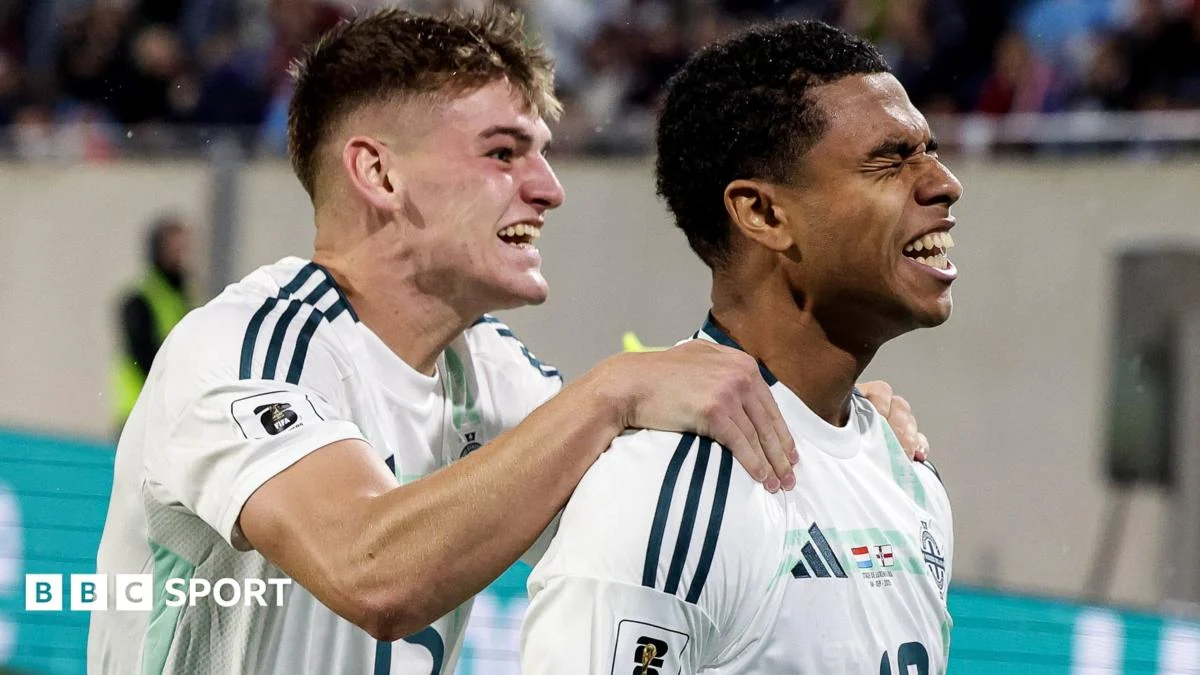
Northern Ireland is set to embark on a demanding international schedule, facing four matches within a single international window for the first time since June 2022. This intensive period, which commences with an away fixture against Georgia on September 25th and concludes with a home tie against the same opponent on October 5th, will also see Michael O’Neill’s squad host Hungary at Windsor Park and travel to Slovakia to face Ukraine. The expanded fixture list necessitates a larger squad, with manager O’Neill calling up 28 players, a significant increase from the 23 selected for the double-header of friendlies against Guinea and France in June.
O’Neill acknowledged the formidable challenge posed by this packed schedule, stating that the team "must deal" with the shift in format, particularly as this four-game window will be a recurring feature in the upcoming Euro 2028 qualifying campaign. "I think for a smaller association, it poses more challenges if I’m honest," O’Neill commented. "If a player picks up a calf strain the Saturday before we meet up, he’s going to miss four games. It’s a window that, I believe, is more beneficial for the bigger nations." He further elaborated on the potential pitfalls: "I’m sure within the period, players will get injured, two bookings and I think you’re suspended as well. It will be challenging, but it’s the way the window will be going forward."
This upcoming campaign represents a significant step up in both the quantity and quality of opposition Northern Ireland will face. The task is amplified by the presence of Georgia’s Khvicha Kvaratskhelia, a player O’Neill describes as "one of the best in the world." While Northern Ireland has engaged in friendly matches against established footballing nations such as Spain, France, Sweden, and Denmark over the past two and a half years, and also faced Germany in World Cup qualifying, these fixtures mark their return to the second tier of the UEFA Nations League since 2020. Their previous foray into League C saw them top their group, which included Luxembourg, Belarus, and Bulgaria, securing a pathway to the World Cup play-offs. Although that journey ended with a 2-0 defeat to Italy in Bergamo, the promotion to League B signifies a more competitive environment. Achieving promotion in League B would guarantee a safety net for Euro 2028 qualification, and a top-two finish in their group would place them within the second band of seeds for the qualifying draw scheduled for December.
Navigating a Tough Group in League B
O’Neill expressed his assessment of the upcoming Nations League group: "I do think it’s a group that is quite well matched in terms of where the teams are." He added a note of cautious optimism, stating, "Obviously some of the teams are ranked a lot higher than us, I don’t think we should be frightened by that. I think the games will be extremely tough, but I think it’s a great challenge." The Nations League structure offers a tiered competitive framework designed to provide more meaningful matches for all European nations, offering pathways to major tournaments and improved seeding for future competitions. For Northern Ireland, League B represents an opportunity to test themselves against a higher caliber of opposition consistently, which is crucial for their development and long-term aspirations.
The Shadow of Injury: Missing Talismanic Figures
Adding to the tactical complexities, manager O’Neill will once again have to contend with the absence of key players, most notably Liverpool’s Conor Bradley. Bradley, who possesses a talismanic quality and has been a more consistent source of goals and attacking impetus than Isaac Price in recent times, has endured a frustrating period of unavailability. Since the beginning of 2025, the 23-year-old has missed seven Northern Ireland internationals due to a combination of injuries and suspensions. He remains sidelined following knee surgery in January and is expected to miss the entirety of this Nations League campaign. O’Neill himself indicated last month that Bradley’s return before the commencement of Euro 2028 qualifying in March would be considered a "bonus."
The statistical impact of Bradley’s absence is stark. Since Northern Ireland’s 1-0 victory over Scotland in March 2024, a match that also marked Bradley’s first international goal, the team has averaged 1.5 goals per game in the 16 internationals he has featured in. In the seven games he has missed during this period, that average drops significantly to just 0.7 goals per game. This highlights the critical role Bradley plays in the team’s offensive capabilities and the challenge O’Neill faces in finding an alternative creative spark to compensate for his absence. The team’s ability to generate scoring opportunities and convert them will be a key determinant of their success in this demanding campaign.
A Young Squad Poised for Future Growth
Despite the immediate challenges, the future of Northern Ireland’s international setup appears promising, largely due to the youthful demographic of the current squad. While there was understandable disappointment following the loss to Italy in March, the prevailing sentiment within the camp is that the team’s best chance of qualifying for major tournaments lies in the coming years. The starting eleven that faced Italy in Bergamo was notably young; only Hull City’s 31-year-old defender Paddy McNair is older than 26.
The average age of the 28-man squad named for the upcoming fixtures is a mere 24 years old. This youthful outlook is further accentuated by the inclusion of four teenagers: Ceadach O’Neill, Kieran Morrison, Braiden Graham, and Tom Atcheson. These emerging talents inject an element of fresh energy and potential into the panel. Beyond McNair, the only other players in the squad exceeding 30 years of age are the central striking options Dion Charles, aged 30, and the veteran Josh Magennis, 36.
Manager O’Neill is expected to continue placing his faith in 21-year-old Jamie Donley to lead the line, as he focuses on building for future qualification campaigns. Donley, a Tottenham Hotspur player, has scored twice in 10 international appearances and has started the last five matches for Northern Ireland. His club career has seen periods of fluctuating form, including a challenging 2025-26 season on loan at Stoke City and Oxford United. Despite featuring for Spurs during pre-season, he is set to spend the current year on loan at Luton Town, a move back to League One where he previously impressed for Leyton Orient during the 2024-25 season.
O’Neill defended Donley’s recent club experiences, stating, "What happened with Jamie last year was not really of Jamie’s doing. The game time at Stoke was, I think, unfair on the player, to be honest. The second loan he gets injured in his first game but the games he did play, he did well." The manager emphasized the importance of consistent playing time for Donley’s development: "I think the thing for Jamie is just to play regularly. I think he’s got all the attributes of a top, young player. He’s still a Tottenham player on a long-term contract and I think he’s gone to a good club (in Luton)." This investment in young talent suggests a strategic long-term vision for the national team, aiming to cultivate a core group of players capable of competing at the highest level in the years to come.
The Nations League Context: A Pathway and a Challenge
The UEFA Nations League, introduced in 2018, was designed to create a more competitive and engaging international calendar, reducing the number of meaningless friendly matches. It offers teams the chance to be promoted to higher leagues and gain direct qualification spots for the European Championship finals, while also providing a play-off route for teams that do not qualify directly. Northern Ireland’s previous success in topping their League C group was a testament to their resilience and effectiveness in that tier. However, League B presents a substantially higher level of competition.
The implications of performing well in League B are multifaceted. Beyond the direct pathway to Euro 2028, securing a top-two finish would grant Northern Ireland a more favorable seeding in the December qualifying draw. This could potentially lead to a less daunting group of opponents in the main Euro 2028 qualification phase, increasing their chances of automatic qualification. Conversely, a poor showing could lead to relegation back to League C, pushing them further away from direct qualification and potentially impacting their UEFA coefficient ranking, which influences future seeding.
The managerial insights from O’Neill’s role with Fifa’s Technical Study Group at the recent World Cup offer a valuable perspective. He noted a trend where matches were frequently decided by "individual brilliance" rather than the overwhelming superiority of one team. This observation underscores the importance of having match-winners within the squad, a role that Conor Bradley has increasingly filled. His prolonged absence therefore presents a significant tactical puzzle for O’Neill, who must find alternative sources of individual inspiration and collective creativity to overcome the challenges posed by their League B opponents. The upcoming four-game window will serve as a critical barometer of Northern Ireland’s readiness to compete at this elevated level and their capacity to adapt to the evolving demands of international football.