Houston, Texas – The spirit of space exploration, a beacon of human ingenuity and international cooperation, descended upon Hermann Park in Houston on September 12-13 as NASA’s Johnson Space Center (JSC) brought the wonders of the cosmos to the annual Japan Festival. For over three decades, this vibrant cultural event has served as a pivotal platform for immersing attendees in the rich traditions of Japan, featuring an eclectic array of food, dance, martial arts, and music. In its fourth consecutive year as an exhibitor, JSC’s presence underscored not only its commitment to public engagement but also the profound and evolving partnership between the United States and Japan in the realm of space. The festival, which draws tens of thousands of visitors annually, provided an unparalleled backdrop for NASA to connect with a diverse audience, fostering inspiration and educating the public about the ambitious endeavors that define the next chapter of human spaceflight.
A Gateway to the Stars: Johnson Space Center’s Engaging Exhibit
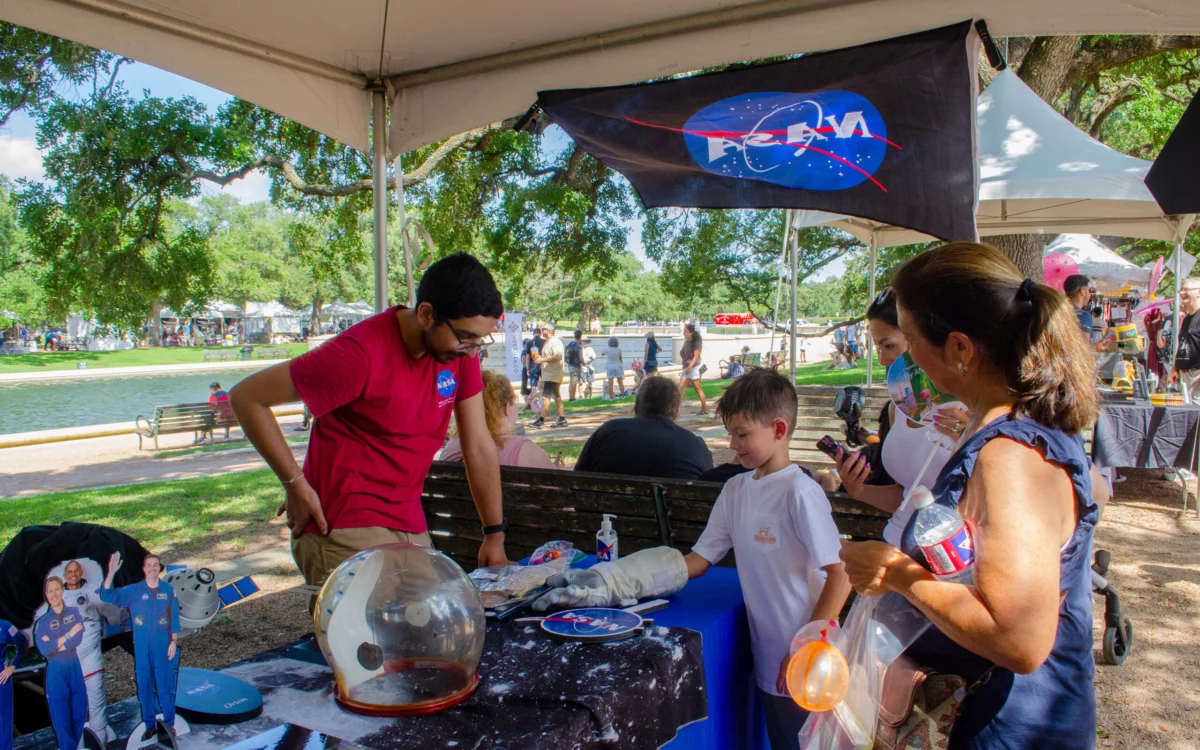
Central to JSC’s captivating exhibit was a comprehensive showcase of NASA’s bold plans for the future, with a particular emphasis on the upcoming Artemis III mission and the foundational concepts for a sustainable Moon Base. This initiative represents a monumental step towards returning humans to the lunar surface and establishing a long-term presence there, a goal that resonated deeply with festivalgoers. The booth was meticulously designed to be both informative and interactive, featuring high-fidelity models of iconic spacecraft such as NASA’s Orion crew capsule, the designated vehicle for transporting astronauts to the Moon, and the International Space Station (ISS), a testament to decades of multinational collaboration in low Earth orbit. These tangible representations provided visitors with a concrete sense of the complex machinery and engineering marvels that underpin space travel.
Beyond the visual spectacle, JSC’s exhibit offered a truly immersive experience. Interactive stations allowed attendees to delve into the practicalities of astronaut life, including sampling specially prepared space food – a perennial crowd-pleaser that offers a taste of extraterrestrial dining. Perhaps the most popular attraction was the opportunity for individuals, especially children, to try on an authentic astronaut glove and helmet. This hands-on experience offered a tangible connection to the rigorous demands and thrilling realities of space exploration, transforming abstract concepts into personal moments of wonder. The gleam in the eyes of children donning the helmet, imagining themselves gazing back at Earth, epitomized the festival’s success in inspiring future generations.
Over the two-day period, more than 3,000 festivalgoers directly engaged with dedicated Johnson Space Center employees. These interactions were far more than casual encounters; they were opportunities for detailed discussions about NASA’s current initiatives, ranging from the Artemis program’s lunar ambitions to scientific research on Earth and beyond. The JSC team, comprising engineers, scientists, and outreach specialists, distributed NASA stickers and pins, mementos that served as tangible reminders of the agency’s mission. More importantly, they served as enthusiastic ambassadors, sharing their passion and expertise, and nurturing the seeds of curiosity that could blossom into the next generation of aerospace innovators and explorers. Brendan King, a software engineer for Johnson’s Flight Dynamics Division, articulated the profound impact of these interactions: "It was amazing to see students as early as high school so passionate about NASA and asking questions on how to prepare for a NASA career." This sentiment was echoed by many JSC employees, who universally cited the unbridled joy and excitement on the faces of both children and adults as they explored the exhibits as the undeniable highlight of the weekend.
A Parallel Vision: JAXA’s Contributions and Collaborative Spirit
Strategically positioned adjacent to NASA’s booth was the exhibit of the Japan Aerospace Exploration Agency (JAXA), a deliberate arrangement that symbolized the enduring and deepening partnership between the two leading space agencies. JAXA’s display offered a fascinating glimpse into Japan’s significant contributions to space exploration. A prominent feature was a detailed model of the HTV-X1 cargo spacecraft, the successor to the highly successful H-II Transfer Vehicle (HTV), designed to resupply the International Space Station and eventually the lunar Gateway outpost. This exhibit highlighted Japan’s crucial role in logistics and sustainment for human spaceflight endeavors.
Further complementing JAXA’s showcase were examples of Japanese space food, providing a cross-cultural comparison to NASA’s offerings, and compelling images illustrating the conceptual design of JAXA’s pressurized rover. This advanced lunar vehicle, developed in collaboration with Japanese industry partners like Toyota, is envisioned to support both future crewed and uncrewed exploration on the Moon, offering astronauts an extended range and enhanced mobility while operating in a shirt-sleeve environment. The rover represents a significant technological leap that could dramatically expand the scope of lunar surface science and exploration.
A particular highlight at the JAXA booth was the presence of esteemed JAXA astronaut Akihiko Hoshide. A veteran of multiple space missions, including long-duration stays on the International Space Station where he served as commander, Hoshide’s participation generated immense excitement. He graciously signed autographs and posed for photographs with a continuous stream of festival attendees, providing a direct link between the public and the heroes of spaceflight. His presence not only elevated the profile of JAXA’s exhibit but also underscored the tangible human element of international space collaboration, demonstrating that the pursuit of space exploration is a shared global endeavor.
The Enduring Alliance: NASA and JAXA’s Collaborative Journey
The close proximity and complementary nature of the NASA and JAXA booths were no mere coincidence; they served as a powerful visual metaphor for the robust and long-standing partnership between the two nations in space. This collaboration is deeply rooted, stretching back decades and encompassing a wide array of projects that have significantly advanced humanity’s understanding of the cosmos and our capabilities to explore it.
One of the most prominent examples of this enduring alliance is the Japanese Experiment Module, known as Kibo (meaning "hope" in Japanese), aboard the International Space Station. Kibo is the largest single module on the ISS and provides unique capabilities for scientific research, education, and technology demonstrations. Its addition to the space station represented a monumental engineering feat and a testament to Japan’s commitment to contributing to global space endeavors. Through Kibo, Japanese astronauts and researchers have conducted groundbreaking experiments in microgravity, benefiting science and technology worldwide.
More recently, this partnership has been further solidified through Japan’s enthusiastic signing of the Artemis Accords. Launched in 2020, the Artemis Accords are a set of non-binding principles designed to guide civil space exploration and foster a common understanding of safe, peaceful, and sustainable operations in outer space. Japan was an early and key signatory, affirming its commitment to transparency, interoperability, and the responsible utilization of space resources. This adherence to shared values underpins the future success of lunar exploration and ensures that humanity’s expansion into the solar system is conducted in a cooperative and mutually beneficial manner.
Furthermore, Japan is playing a pivotal role in the development of critical lunar surface hardware for the Artemis program. Beyond the pressurized rover concept, Japanese industry and JAXA are contributing expertise and technology to various aspects of lunar infrastructure, including potential contributions to habitats, transportation systems, and resource utilization technologies. These contributions are not merely supportive; they are integral to establishing a sustainable human presence on the Moon, illustrating that the ambitious goals of the Artemis program are truly an international undertaking, leveraging the best minds and technologies from around the globe. The commitment of both NASA and JAXA to innovation and international collaboration continues to propel the frontiers of exploration forward, proving that complex challenges are best overcome through shared vision and collective effort.
Inspiring the Artemis Generation: Broader Implications and Public Engagement
The participation of NASA’s Johnson Space Center in events like the Houston Japan Festival transcends mere public relations; it is a fundamental component of the agency’s broader mission to inspire, educate, and engage. As the undisputed hub of human spaceflight operations, JSC bears a unique responsibility to connect the public, particularly younger generations, with the awe-inspiring realities and aspirations of space exploration. These events provide invaluable opportunities for the Johnson community to share NASA’s rich history, detailing the pioneering efforts that led to the Moon landings and the establishment of the ISS. They also serve as vital conduits for informing the public about ongoing work, from cutting-edge scientific research to technological advancements.
Crucially, these festivals offer a direct window into future missions, allowing the public to envision humanity’s next giant leaps, whether that involves returning to the Moon, venturing to Mars, or unraveling the mysteries of the universe. By bringing space exploration directly to communities, NASA demystifies complex scientific and engineering endeavors, making them accessible and relatable. This direct engagement is essential for nurturing the "Artemis Generation" – the diverse cohort of students and young professionals who will carry forward the torch of exploration. By sparking curiosity and demonstrating clear pathways to STEM careers, NASA helps ensure a continuous pipeline of talent vital for future missions.
Moreover, these local engagements serve as powerful reminders to Houstonians that "Giant Leaps Start Here," right in the heart of their city. Johnson Space Center is not just a government facility; it is a vibrant ecosystem of innovation, a place where dreams of space are meticulously planned and executed. The personnel, expertise, and infrastructure at JSC are central to America’s, and indeed the world’s, human spaceflight capabilities. Events like the Japan Festival reinforce this local pride and underscore Houston’s enduring legacy as Space City. They transform abstract national goals into tangible community connections, fostering a sense of shared ownership in humanity’s journey to the stars.
The success of NASA and JAXA’s combined presence at the Houston Japan Festival is a microcosm of the larger global effort required for sustained space exploration. It highlights the critical role of public outreach in garnering support, inspiring future generations, and celebrating the achievements that result from international collaboration. As the Artemis program progresses towards its ambitious goals, and as humanity looks towards establishing a permanent presence on the Moon and eventually Mars, such festivals will continue to be vital platforms for sharing the excitement, the challenges, and the boundless possibilities that await us beyond Earth. The synergy displayed in Hermann Park was a testament to a future where space exploration is not just a national endeavor but a truly global human enterprise, built on shared dreams and collective effort.