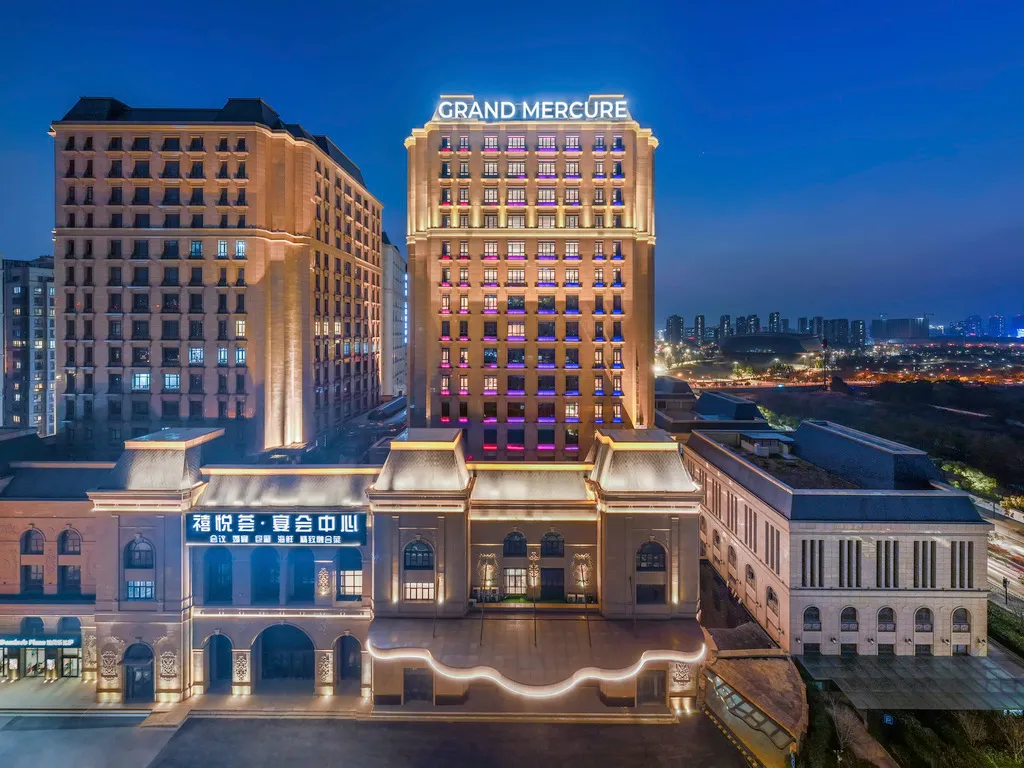
The global hospitality landscape is undergoing a seismic shift as Accor, one of the world’s largest hotel operators, abandons the traditional "one-size-fits-all" expansion model in favor of a highly localized, multi-pronged strategy across the Asian continent. Recognizing the distinct economic drivers and consumer behaviors of individual nations, the French multinational is tailoring its growth engine to meet the specific demands of China, India, and Vietnam. This strategic evolution comes at a time when Asia Pacific has become the primary theater for international hotel development, accounting for nearly half of Accor’s global pipeline.
Duncan O’Rourke, Accor’s CEO for the Middle East, Africa, and Asia Pacific, recently outlined this nuanced vision, emphasizing that while the overarching goal is massive scale, the tactical execution varies significantly by border. "China, India, and Vietnam are very big for us," O’Rourke noted in a briefing with industry analysts. However, he clarified that the development models required to capture these opportunities are markedly different, ranging from master franchise agreements in the North to developer-led surges in the Southeast.
The China Blueprint: Scaling Through Strategic Alliances
In China, Accor’s strategy is defined by its deep-rooted partnership with H World Group (formerly Huazhu Group). This alliance, which has matured over the past decade, serves as the cornerstone of Accor’s ambition to double its footprint in the Chinese market to 1,600 hotels. By leveraging H World’s local operational expertise and massive distribution network, Accor has managed to penetrate lower-tier cities that often prove challenging for Western brands to navigate independently.
The partnership focuses heavily on the midscale and economy segments, particularly through brands like Ibis, Novotel, and Mercure. Under this arrangement, H World acts as a master franchisee, allowing Accor to maintain an "asset-light" profile while benefiting from rapid, large-scale expansion. This model has proven resilient even amidst fluctuating economic conditions in East Asia, as local travelers increasingly seek out recognizable international brands that offer consistent quality at a mid-market price point.
Industry data suggests that the Chinese middle class remains the world’s largest engine for domestic tourism. By aiming for 1,600 properties, Accor is positioning itself to capture the "lifestyle" shift in Chinese travel, where the demand for standardized yet stylish accommodation is outpacing the supply of traditional luxury hotels.
The India Frontier: Seeking New Synergies in a High-Growth Market
While China relies on a consolidated partnership, India represents a landscape of diversification for Accor. The company is currently in an active phase of seeking new partners to complement its long-standing relationship with InterGlobe Hotels, which has been instrumental in establishing the Ibis brand across the subcontinent.
The Indian hospitality sector is currently experiencing a "perfect storm" of growth factors: a surging domestic economy, a significant increase in infrastructure spending (including the modernization of regional airports), and a burgeoning corporate travel sector. To capitalize on this, Accor is looking beyond its traditional strongholds. The strategy in India involves a two-track approach: maintaining dominance in the midscale segment while aggressively introducing luxury and premium brands like Fairmont, Sofitel, and Pullman to cater to the elite "destination wedding" and MICE (Meetings, Incentives, Conferences, and Exhibitions) markets.
Recent reports indicate that India’s hotel supply is struggling to keep pace with demand, leading to record-high Average Daily Rates (ADR) in major hubs like Mumbai, Delhi, and Bengaluru. Accor’s search for new partners suggests a move toward more localized ownership groups who can navigate the complex land acquisition and regulatory environment of various Indian states.
Vietnam’s Unexpected Surge: The Developer-Led Model
Vietnam has emerged as the "dark horse" of Accor’s Asian portfolio. Unlike the partnership-heavy model of China or the diversified approach in India, Vietnam’s growth is being propelled by massive domestic real estate developers. These conglomerates are integrating high-end hospitality into large-scale urban and coastal developments, viewing international brands as essential anchors for their projects.

The surge in signings in Vietnam has caught many industry observers by surprise. The country’s post-pandemic recovery was initially slow, but a pivot toward high-quality tourism and a government-backed push for infrastructure development in regions like Phu Quoc, Danang, and Ho Tram has created a fertile ground for Accor’s premium brands. Developers in Vietnam are increasingly opting for "conversions"—rebranding existing or nearly completed properties under Accor’s flags—to bring them to market faster and tap into Accor’s global loyalty program, ALL (Accor Live Limitless).
Statistical Overview: The Dominance of Midscale and Economy
The sheer volume of Accor’s activity in the region is reflected in its recent performance metrics. In the last fiscal year, Accor signed nearly 11,000 rooms across Asia. A critical takeaway from this data is the composition of these signings: approximately 70% are in the midscale and economy segments.
This focus is a calculated response to global economic trends. While luxury brands often garner the most headlines, the "volume play" in Asia lies with the middle class. By securing a dominant position in the mid-tier market, Accor ensures a steady stream of recurring revenue and brand loyalty from the fastest-growing demographic of travelers in the world. Furthermore, Asia Pacific now accounts for 49% of the company’s total development pipeline, signaling a definitive shift in the company’s geographic center of gravity from Europe to the East.
The Rise of Conversions and Franchising
A significant trend supporting Accor’s rapid expansion is the move toward franchising and hotel conversions. Historically, international hotel chains in Asia preferred management contracts, where they maintained direct control over operations. However, the market is maturing. Local owners are becoming more sophisticated and often prefer the flexibility of franchising.
Conversions have become particularly attractive in the current economic climate. With the cost of new construction rising due to inflation and supply chain disruptions, rebranding an existing hotel is a more capital-efficient way to grow. For Accor, this means they can quickly increase their room count and market share by absorbing independent hotels or those currently underperforming under local brands. This "conversion engine" is a key reason why the company is confident in its ability to reach the 1,600-hotel milestone in China and beyond.
Chronology of Accor’s Asian Expansion (2014–2026)
- 2014–2016: Accor enters into a groundbreaking strategic alliance with Huazhu (now H World Group), laying the foundation for the master franchise model in China.
- 2018–2019: The company aggressively expands its premium footprint in Southeast Asia, with a focus on Thailand and Vietnam.
- 2020–2022: Despite the global pandemic, Accor restructures its regional operations, consolidating the Middle East, Africa, and Asia Pacific under a single leadership structure to streamline development.
- 2023–2024: Post-pandemic travel boom leads to a record number of signings. The "Lifestyle" division, including brands like Ennismore, begins to gain traction in Asian urban centers.
- 2025: Accor reports that nearly 50% of its global development is concentrated in the Asia Pacific region.
- 2026 (Current): CEO Duncan O’Rourke confirms the multi-strategy approach, targeting 1,600 hotels in China and seeking new joint ventures in India to sustain momentum.
Broader Implications for the Global Hospitality Industry
Accor’s strategy in Asia serves as a blueprint for how global corporations must adapt to a multipolar world. The "standardized" approach of the 20th century is being replaced by a sophisticated "glocal" model—global in brand standards and loyalty reach, but local in partnership and execution.
The implications for competitors like Marriott International and Hilton Worldwide are significant. As Accor locks in master franchise agreements and deepens ties with local developers, the "moat" around its Asian business grows. For travelers, this means a greater variety of branded options in secondary and tertiary cities, supported by a global infrastructure.
Furthermore, the focus on midscale and economy brands suggests that the future of Asian travel is not just about the ultra-wealthy, but about the democratization of quality travel. As Accor continues to double down on these segments, it is effectively betting on the long-term stability and growth of the Asian middle class.
Conclusion: A Future Defined by Flexibility
As Accor moves toward the end of the decade, its success will likely be measured by how well it manages the complexities of these diverse partnerships. The 1,600-hotel goal in China is ambitious, but with H World’s engine behind it, it remains within reach. In India and Vietnam, the challenge will be to maintain brand integrity while moving at the "speed of Asia."
By embracing a strategy that values market-specific nuances over corporate uniformity, Accor is not just expanding its footprint; it is rewriting the rules of international hospitality management in the 21st century. The next few years will determine if this localized approach can deliver the sustained profitability that investors expect from the world’s most dynamic tourism market.