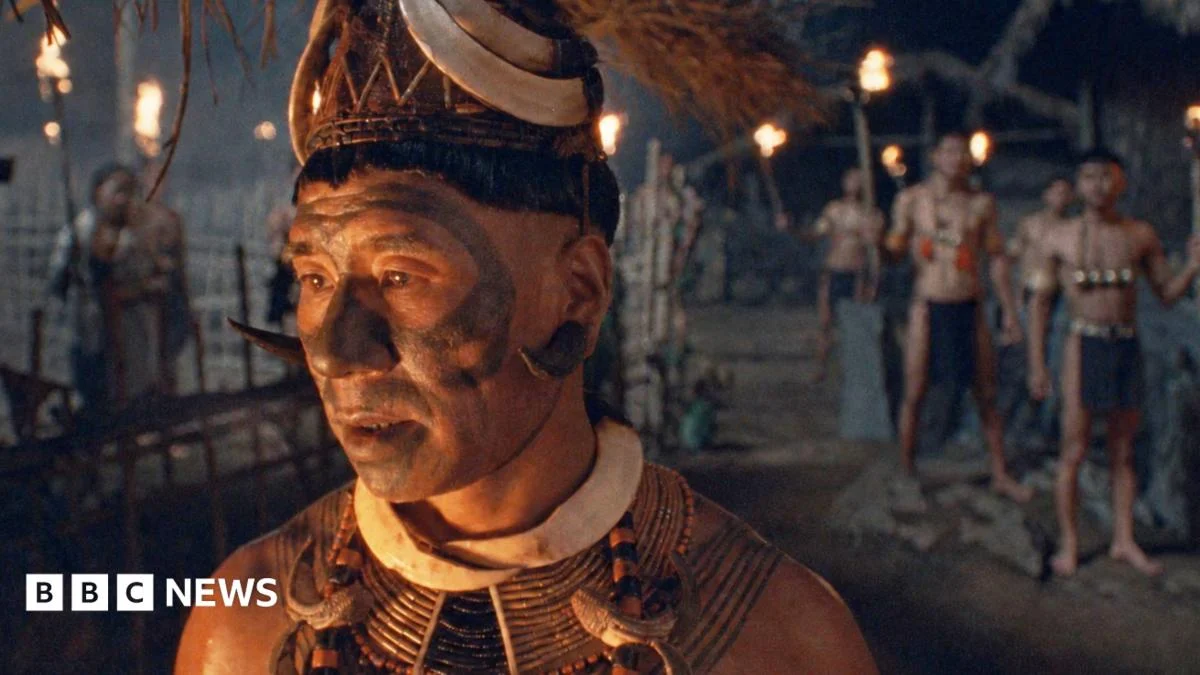
The world of international cinema recently witnessed a profoundly significant and, by many accounts, improbable triumph with "Angh," a Konyak-language feature film from India’s remote northeastern state of Nagaland, securing the prestigious Platform Prize at the Toronto International Film Festival (TIFF). This victory, announced earlier this month, has not only propelled director Theja Rio’s debut feature into the global spotlight but also carved an unusual pathway toward potential Academy Awards consideration, marking a monumental moment for indigenous storytelling and independent cinema from underrepresented regions.
An Unlikely Ascent: The Toronto Triumph
"Angh" emerged victorious from a highly competitive lineup at TIFF, a festival renowned as a crucial launchpad for Oscar contenders and a barometer of global cinematic trends. The Platform Prize, established in 2015, specifically seeks to recognize films that exhibit a particularly distinctive directorial voice and push the boundaries of cinematic expression. Previous juries for this esteemed award have included luminaries like Oscar-winning director Bong Joon-ho, underscoring its weight and influence within the industry. The jury for "Angh" lauded director Theja Rio’s "refreshing perspective" and the film’s evocative portrait of a world rarely encountered on the international screen, highlighting its unique cultural and narrative contribution. The award carries a cash prize of CAD 20,000, providing vital support for the filmmakers.
The sheer improbability of "Angh"’s success cannot be overstated. Originating from Nagaland, a mountainous state with a population of fewer than two million people situated on India’s far northeastern frontier, the film is entirely in Konyak, a tribal language spoken by an estimated 300,000 people, a fraction of India’s vast linguistic landscape, let alone by international audiences. For Theja Rio, "Angh" represents his inaugural feature film, and remarkably, the vast majority of its cast members were facing a camera for the very first time. This confluence of factors – a debut director, an unfamiliar language, a cast of newcomers, and a remote setting – makes its international recognition at such a high level truly extraordinary. Its triumph stands in stark contrast to the usual dominance of films from established cinematic hubs, amplifying voices from the periphery.
A Direct Path to the Oscars: Reshaping International Feature Film Qualification
Beyond the immediate prestige of the TIFF win, "Angh" has gained a significant advantage in its journey towards the 2027 Academy Awards. Under new, recently implemented rules by the Academy of Motion Picture Arts and Sciences, winners of designated top prizes at six specific international festivals – including TIFF’s Platform Prize – can automatically qualify for consideration in the International Feature Film category. These new regulations, aimed at broadening the scope of eligible films and promoting global diversity, were introduced to address concerns about the often opaque and politically charged national selection processes for the category.
This groundbreaking provision allows "Angh" to bypass the traditional and often challenging process of being selected as India’s official submission, offering an independent route to the Oscars that has historically been unavailable to films outside established national film industries. Historically, India’s Oscar submissions have predominantly been from mainstream Bollywood or major regional language industries, with independent and regional films often struggling to gain traction. While this does not automatically make "Angh" an Oscar nominee, it significantly streamlines its path to the shortlist, placing a Konyak-language film from one of India’s smallest and culturally distinct states squarely within a global cinematic conversation from which such narratives have been almost entirely absent. This rule change reflects a broader movement within the Academy to diversify representation and open doors for compelling stories from regions often overlooked by mainstream cinema. For films like "Angh," which might struggle to gain traction against the lobbying power and resources of larger national film bodies, this new pathway is a game-changer, fostering greater equity in global film recognition.
The Architect of "Angh": Theja Rio’s Diverse Influences and Humble Beginnings
Director Theja Rio, still sounding somewhat astonished by the whirlwind of events following the TIFF announcement, recently reflected on his unexpected triumph. Speaking in Delhi just days after the win, amidst a flurry of interviews and travel, Rio admitted his own surprise, despite his producers’ confidence. "There were a lot of good films in the competition," he noted, many from far more seasoned directors, indicating his genuine humility. His producers, he revealed, were more assured, believing in the film’s distinct power.
Rio’s personal journey to filmmaking is as distinctive as his directorial voice. Before immersing himself in cinema, his aspirations leaned towards music, specifically rap. He humorously describes his earlier ambition as wanting to be "a kid from Compton instead of a kid from Nagaland," a testament to his wide-ranging cultural appreciation for global artistic expressions. His artistic tastes remain eclectically diverse, spanning from the lyrical prowess of Black Thought, the lead rapper of American hip-hop group The Roots, to the contemplative humanism of his favourite filmmaker, the acclaimed Iranian director Abbas Kiarostami. These varied influences – the raw storytelling of hip-hop, the introspective gaze of Kiarostami – subtly converge in "Angh," lending it a unique rhythm and a deeply empathetic perspective. For his debut feature, however, Rio chose to turn his gaze inwards, focusing on the rich tapestry of his own cultural heritage, recognizing the untold stories in his immediate surroundings.
A Glimpse into a Changing World: The Narrative Core of "Angh"
Set in the early 1960s, "Angh" meticulously follows the poignant narrative of Anghba, the aging hereditary chief of a Konyak village, and his young son. Their lives unfold against a backdrop of profound and irreversible change sweeping through their traditional world. The Konyaks, one of Nagaland’s seventeen major tribes, are primarily concentrated in the eastern district of Mon. Within their societal structure, hereditary chiefs are known as Anghs, figures of significant authority, spiritual custodianship, and administrators of traditional law. Even today, echoes of their ancestral past persist, with some older Konyak men bearing the distinctive facial tattoos historically associated with the tribe’s former practice of headhunting – a powerful visual reminder of a bygone era that informs the film’s rich cultural texture and symbolizes a deep connection to their past identity.
The film’s central conflict crystallizes around Anghba and his son, who find themselves among the last in their region clinging to an ancestral faith as the tide of Christianity steadily spreads across the Naga Hills. This spiritual and cultural crossroads is personified by the arrival of an American missionary, portrayed by the Scottish actor Douglas Henshall. The elder Anghba, deeply rooted in tradition and the sacred duties of his chieftaincy, resists this new influence, perceiving it as a threat to his people’s identity. In contrast, his son, representative of a younger generation, is drawn by curiosity and the promise of a new future, embodying the inevitable pull of modernity. This intergenerational tension, fraught with both love and conflict, forms the emotional bedrock of "Angh."
Rio’s inspiration for the film struck him a few years prior during a visit to Mon for a different project. He was profoundly moved by the palpable coexistence of different generations within single families – a grandfather, perhaps a former headhunter with tattooed face, living alongside a grandson who plays guitar in a rock band. This stark generational juxtaposition, where the past and present seemed to not just meet but intimately coexist, sparked the idea for "Angh." "It feels like you’ve jumped on a time machine," Rio observed, encapsulating the film’s temporal fluidity and its exploration of how historical layers exist simultaneously in contemporary society.
Nagaland’s Historical Crossroads: Statehood and the Spread of Christianity
The chosen timeframe of the early 1960s is not arbitrary; it is a period of immense historical significance for Nagaland. Earlier part of Assam state under British India, Nagaland formally achieved statehood within the Indian Union in December 1963. This era was characterized by not only significant political restructuring, as Naga communities transitioned into a modern administrative framework, but also profound social and cultural upheaval, marked by periods of insurgency and peace efforts.
The seeds of Christianity had been sown and were actively spreading among Naga communities for decades prior to statehood. Missionaries, primarily Baptist, arrived in the late 19th century, introducing not just a new faith but also Western education, healthcare, and new social norms. By the 1960s, Christianity had become a dominant force, bringing changes that extended far beyond mere religious belief, permeating customs, rituals, governance structures, and the fabric of everyday life. Traditional animistic practices and intricate tribal belief systems began to wane, replaced by new forms of communal worship and social organization. This period marked a critical transition, moving Naga society from animistic traditions and distinct tribal identities towards a more unified Christian identity, albeit one still deeply influenced by indigenous practices and cultural expressions.
Dr. B Amo Konyak, a distinguished scholar of Konyak society, articulates the depth of these changes during this transformative period as almost akin to a "disappearance." Many traditional practices, rituals, and knowledge systems – such as specific farming techniques tied to animistic beliefs, elaborate coming-of-age ceremonies, or oral histories – were either lost entirely or "survived in fragments" – preserved only in the fading memories of elders, in cherished family heirlooms, or in isolated pockets of resistance. What had once been an integral part of daily communal life gradually receded into the realm of heritage, something to be remembered rather than actively lived. However, Dr. Konyak emphasizes that culture did not simply cease to exist. Instead, people adapted, carrying parts of their ancestral ways into their new religious and social worlds. Traditions evolved, their meanings shifting as their forms transformed, illustrating the resilience and adaptability of indigenous cultures in the face of profound external influence.
It is this precise moment of intense transition and cultural fluidity that Theja Rio aimed to meticulously capture in "Angh." He observes that "the past 50 or 60 years have brought extraordinary churn," creating significant distances between generations, even within the same family. Through the intimate relationship between Anghba and his son, "Angh" explores how deep love and care can persist even as their individual worlds begin to diverge, highlighting the universal human experience of navigating tradition amidst change. Critic Siddhant Adlakha keenly observed the film’s masterful handling of this ambiguity, noting that "progress and tradition can be nonlinear, even entwined, rather than strictly opposing forces." This nuanced portrayal avoids simplistic dichotomies, offering a complex and humanistic exploration of cultural evolution that respects the agency of the people experiencing it.
Reversing the Gaze: Authenticity and Indigenous Perspective
A brief glimpse into the film’s trailer reveals Rio’s masterful construction of this world: mist-shrouded, steep green hills, figures moving gracefully through ancient forests and winding village paths, firelight and lamplight illuminating faces against the darkness. The landscape is not merely picturesque scenery; it is an active character, a small world intricately held together by ritual, family bonds, and its unique geography, even as larger external forces press in from beyond its visible edges. Critic Adlakha particularly commended the quiet close-ups of Anghlong Konyak, the first-time actor portraying the chief, and Rio’s "gentleness" in capturing his "subdued rage," revealing profound emotion through subtle performance and genuine empathy.
Crucially, the film’s perspective is revolutionary. Konyak people, like many indigenous communities globally, have long been subjects of an "outsider gaze." Dr. Konyak points to a historical legacy of explorers, colonial officials, missionaries, and photographers who were drawn to the exoticism of tattooed faces, elaborate ornaments, traditional weapons, and the sensationalized practice of headhunting. In these portrayals, the rich, complex lives and inner worlds of the people themselves often receded from view, replaced by anthropological curiosity, colonial narratives of "primitivism," or missionary zeal.
Theja Rio was acutely conscious of inheriting this historical lens. He acknowledges that "there have been several films and documentaries made about Nagaland," but these, he states, "tend to follow the gaze of the explorer rather than the subject." With "Angh," his deliberate intention was to reverse this gaze, compelling viewers to "step inside the shoes of these characters," to experience their world from an internal, empathetic perspective. This shift is subtle yet profoundly consequential. The Konyaks are no longer presented as an exotic remnant of the past but as living, breathing individuals navigating universal human experiences: "love, grief, conflict, faith, uncertainty, and generational change," as Dr. Konyak eloquently puts it.
To achieve this authentic portrayal, "Angh" employed extensive collaboration with Konyak advisers on dialogue, costume, and production design. The vast majority of the cast was drawn from first-time Konyak performers, many of whom were from the Mon district itself, ensuring an innate understanding of the cultural nuances and local dialects. The forest, too, is treated with reverence, not just as a backdrop but, as Adlakha observes, "as a home with a history," much as an urban filmmaker might portray the iconic streets of Mumbai or New York. This elevates the setting to an emotional and historical space, integral to the characters’ identities and their deep connection to the land.
**Crafting the Atmosphere: 16mm Film and On