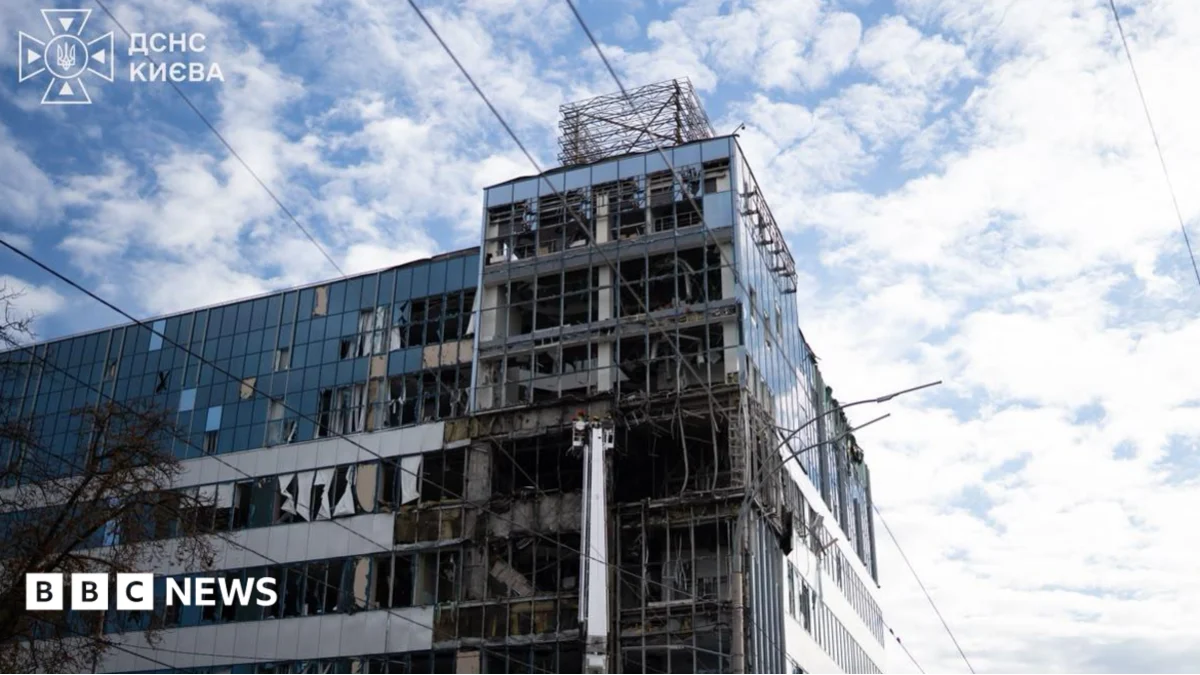
President Volodymyr Zelensky has confirmed a significant escalation in Russia’s military strategy, asserting that Moscow has broadened its attacks to explicitly target Ukraine’s critical digital infrastructure, including data centers and internet providers. This strategic shift, according to Zelensky, aims to inflict maximum disruption on the daily lives of ordinary citizens, directly impacting their ability to connect, study, and work. The deliberate targeting of these civilian-critical assets marks a worrying new phase in the ongoing conflict, underscoring Russia’s intent to destabilize the nation beyond traditional military engagements.
Escalation of Digital Warfare and Immediate Impact
The recent wave of assaults has brought the digital battlefield to the forefront, with tangible consequences for Ukrainian civilians and businesses. On Friday, a Russian drone strike devastated a business center in the capital, Kyiv, resulting in the deaths of four individuals and causing significant damage to a co-located data center. This incident was followed by a separate attack that claimed the life of a 14-year-old boy, identified by Israel’s foreign ministry as an Israeli citizen, highlighting the indiscriminate nature of these strikes. Russian authorities, in a rare admission, confirmed their targeting of a data center site, claiming it was being utilized by Ukrainian military intelligence.
These attacks have not been isolated incidents. On Wednesday, approximately 100,000 households across Kyiv and its surrounding region experienced widespread internet outages due to similar strikes. The ripple effect was felt even in the north-western city of Lutsk, where electronic information boards at public transport stops ceased functioning on Friday. City officials explicitly attributed this disruption to "damage caused by a Russian attack on data centers in Kyiv," illustrating the interconnectedness of Ukraine’s digital ecosystem and the far-reaching impact of targeted assaults on central infrastructure.
The strategic importance of these targets cannot be overstated. Data centers are the backbone of modern society, housing the servers, storage systems, and network equipment essential for everything from government operations and financial transactions to healthcare services, educational platforms, and emergency communications. Disrupting them can cripple a nation’s ability to function, sow panic, and undermine public trust. As Ukraine’s Foreign Minister Andrii Sybiha articulated, Russia’s objective is to disrupt the flow of "life-saving information." Sybiha emphasized that "rapid alerts about missile and drone threats are essential – they save lives. This is critical civilian infrastructure… It is not a military target. It is essential to keeping everyday life functioning." His statement underscores the humanitarian implications of these attacks, transforming digital infrastructure into a matter of life and death.
Ukrainian Resilience and Defensive Measures
Despite the escalating threat, Ukraine is demonstrating remarkable resilience. Some companies, anticipating further attacks or responding to existing damage, have already initiated the process of relocating sensitive data from compromised servers to secure facilities abroad. This proactive measure aims to safeguard critical information and ensure business continuity amidst the conflict.
President Zelensky, in a social media post on Friday, condemned Russia’s expanding "escalation operation," stating that "American and other businesses, data centers, internet providers – for Russia, all ordinary life is simply a target." He called for a robust international response, urging the world to ensure "Russia feels the response to its terror." Later that evening, Zelensky convened a crucial meeting with Ukraine’s top defense and security officials. Following this assembly, he announced that "additional decisions" had been made to bolster the protection of the country’s data centers and other critical communications facilities, with the explicit goal of ensuring their continuous and uninterrupted operation.
Serhii Beskrestnov, Zelensky’s top adviser on defense technologies, offered a pragmatic assessment on Thursday. While acknowledging that "there may be local disruptions" following Russian attacks and that the cost of internet services might increase to cover repair expenses, he stressed a crucial advantage: Ukraine’s internet network is highly decentralized. This inherent architectural strength, Beskrestnov asserted, means the country "will not be left without internet access," a testament to Ukraine’s strategic foresight in developing a robust and distributed digital infrastructure capable of withstanding concentrated attacks.
The data center specifically targeted by Russia on Friday was operated by Datagroup. The company swiftly confirmed that its specialists were assessing the damage from the daytime assault, but crucially, all services "continue to operate from backup sites." This rapid activation of contingency plans highlights the preparedness of Ukrainian digital service providers. Russia’s defense ministry later corroborated that it had indeed struck the Datagroup site, reiterating its claim that it was being used by Ukrainian military intelligence. Footage independently verified by the BBC showed the extensive damage to the Inkom business center, which housed Datagroup’s facilities. The Russian defense ministry further enumerated a list of other data processing and telecommunications centers it claimed to have targeted in recent days, including New-Telco, United DC, Kyivstar, and Parkovyi, indicating a widespread and coordinated campaign against Ukraine’s digital backbone.
Broader Geopolitical Context and International Reactions
The intensified targeting of digital infrastructure occurs within a broader context of Russia’s evolving war strategy. In recent weeks, Moscow has significantly ramped up its strikes on Ukraine’s energy and railway infrastructure, a calculated move to inflict maximum damage as the harsh winter months approach. This pattern suggests a concerted effort to cripple Ukraine’s logistical capabilities, energy supply, and now, its digital communications, aiming to break civilian morale and undermine the country’s ability to sustain its defense. Ukraine’s military, in turn, has continued its own counter-offensive, targeting Russian oil refineries and logistics hubs, asserting these are legitimate targets that help finance Russia’s ongoing war effort.
The conflict, initiated by Russian President Vladimir Putin’s full-scale invasion in 2022, has seen Moscow establish control over approximately 20% of Ukrainian territory. Amidst this backdrop of intensified hostilities, diplomatic signals remain fraught with contradiction. Speaking to reporters late on Friday, Putin indicated that Moscow would "give careful thought" to the idea of resuming direct peace negotiations with Kyiv. However, this seemingly conciliatory remark was immediately qualified by his stern emphasis that Ukraine "must feel our retaliatory strikes," citing what he termed last week’s "massive" Ukrainian attack on Moscow and other recent strikes. Putin stressed that any decisions would be taken "based on the Russian Federation’s interests," a caveat that historically precedes further aggressive actions rather than genuine de-escalation. President Zelensky had previously expressed readiness for trilateral talks that would include the United States, signaling a desire for a more internationally mediated path to peace. Kyiv and its European allies have consistently accused Putin of rejecting sincere peace negotiations, viewing his rhetoric as a tactic to buy time and consolidate territorial gains. Putin also reiterated his long-standing position that Moscow had "no plans" and "no reason" to attack Europe, a statement chillingly reminiscent of his assurances about Ukraine prior to the 2022 invasion.
In a separate but related development on Friday, the European Union reaffirmed its unwavering support for Ukraine. The bloc agreed to release a substantial €6.6 billion aid package for Ukraine, a move celebrated by Estonia’s Prime Minister Kaja Kallas as "good news for Ukraine and bad news for Russia." This financial commitment includes €900 million allocated to the EU’s Military Assistance Mission for Ukraine and an additional €1 billion fund specifically earmarked for the joint procurement of military equipment. Kallas, in a statement on X, directly linked this support to Russia’s aggressive tactics, asserting, "Moscow’s hybrid attacks try to intimidate Europe into scaling back its support for Ukraine. Europe is doing the opposite."
The threat of Russian hybrid warfare extends beyond Ukraine’s borders. In Poland, prosecutors launched an investigation into what they suspect was an arson attack on a Starlink satellite station in Wola Krobowska on Wednesday. The national prosecutor’s office stated there was "reasonable suspicion… that the perpetrators acted on the orders of the Russian special services." Moscow has not commented on this specific incident. This Starlink station is crucial, transmitting internet traffic through Poland to countries including Ukraine, relying on SpaceX systems for connectivity. This incident, if confirmed as state-sponsored, would represent a direct attack on critical infrastructure supporting Ukraine’s communication capabilities within a NATO member state.
These events align with broader warnings issued by several European NATO members in recent weeks, expressing concerns that Russia might be preparing hybrid attacks to test their commitment to supporting Ukraine. Moscow has consistently denied these allegations. Earlier this month, Germany publicly blamed Russia for an attempted drone attack on Leipzig/Halle Airport, a significant logistical hub. Similarly, France has ordered a comprehensive plan to protect its critical infrastructure and defense industry sites, indicating a widespread awareness and preparation for potential Russian destabilization efforts across the continent.
The Human and Economic Toll
The human toll of these digital infrastructure attacks is immediate and severe. Kyiv Mayor Vitaliy Klitschko reported on Friday evening that seven people had been killed and 59 injured after Russian overnight attacks, underscoring the direct physical danger posed by strikes on urban centers housing these facilities. Beyond the tragic loss of life and injuries, the disruption to internet services directly impacts daily existence. It impedes access to information, hinders communication with loved ones, disrupts remote work and education, and complicates the delivery of essential services. For a population already enduring the stresses of war, the loss of connectivity adds another layer of hardship and uncertainty.
Economically, the impact is multifaceted. The cost of repairing damaged infrastructure, coupled with the potential increase in internet service charges to cover these expenses, places an additional burden on businesses and households. Companies like Datagroup, while demonstrating resilience through backup systems, still face significant operational challenges and financial outlays for assessment and repair. The broader economic implications include potential reductions in productivity, delays in financial transactions, and a chilling effect on foreign investment, as the reliability of Ukraine’s digital backbone comes under direct assault. The long-term costs of rebuilding and fortifying this infrastructure will be substantial, requiring sustained international support.
Future Outlook and Digital Defense
The escalation of attacks on Ukraine’s digital infrastructure signals a worrying expansion of Russia’s war aims, moving beyond traditional military targets to explicitly target the civilian digital realm. This strategy aims to erode social cohesion, undermine the government’s ability to communicate with its citizens, and complicate Ukraine’s overall war effort.
Ukraine’s response, characterized by swift defensive measures, strategic decentralization of its network, and proactive data migration, highlights its determination to maintain digital sovereignty. However, the sustained nature of these attacks underscores the critical need for ongoing international assistance, not only in terms of military and financial aid but also in advanced cybersecurity support, intelligence sharing, and technology transfers to bolster Ukraine’s digital defenses. The incident in Poland and the broader warnings from NATO members also serve as a stark reminder that the digital front of this conflict extends far beyond Ukraine’s borders, posing a significant challenge to European security and the stability of global digital networks. As the conflict grinds on, the battle for digital resilience will remain a pivotal, and increasingly dangerous, dimension of modern warfare.