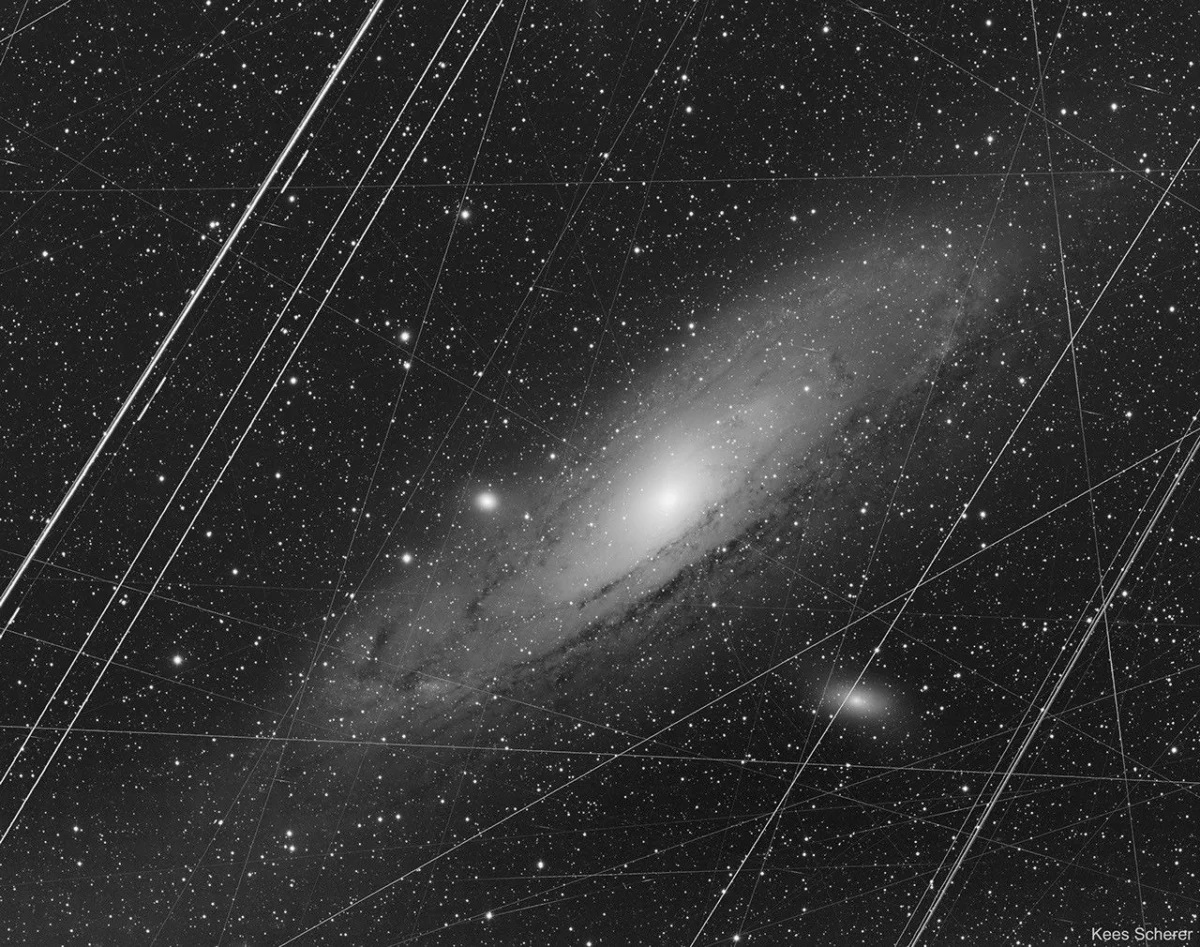
The vast expanse of the cosmos, with its glittering galaxies and nebulae, often appears in public consciousness through meticulously crafted images. One such image, recently featured by NASA’s renowned Astronomy Picture of the Day (APOD) program, showcased the stunning Andromeda galaxy (M31) – not just in its ethereal beauty, but also through a compelling "before and after" demonstration of the intensive image processing required to unveil its true form. This feature underscores a critical aspect of modern astrophotography: the meticulous effort to strip away terrestrial and digital imperfections, revealing the universe as it genuinely appears, unmarred by the trappings of Earth.
The initial image, a composite of 223 long-exposure frames, captured M31 from a garden observatory in Portugal during 2019. While a testament to dedicated amateur astronomy, it also served as a stark reminder of the challenges inherent in capturing deep-sky objects from Earth. This raw compilation was riddled with various artifacts, each a distinct challenge to the clarity of the celestial subject. Bright parallel streaks, unmistakably identified as airplane trails, cut across the field of view, remnants of human air traffic traversing the night sky. Longer, continuous lines were attributed to orbiting satellites, a rapidly growing concern for both amateur astrophotographers and professional observatories due to the proliferation of low-Earth orbit mega-constellations. Beyond these anthropogenic intrusions, shorter, erratic streaks bore the signature of cosmic rays – high-energy particles originating from distant supernovae or other violent cosmic events, striking the camera’s sensor. Finally, minute blemishes, known as "bad pixels," represented inherent imperfections within the digital camera’s sensor itself. These combined elements created a visual cacophony that, while interesting in demonstrating the realities of astrophotography, obscured the intrinsic grandeur of Andromeda.
The subsequent "after" image presented a dramatically different scene: a pristine Andromeda, its spiral arms and central bulge free from any earthly or digital interference. Crucially, this transformation was not achieved through superficial photo manipulation, but through a rigorous, multi-stage process involving specialized astronomical image processing software. Programs such as Astro Pixel Processor, DeepSkyStacker, and PixInsight were employed to systematically identify, isolate, and mitigate these imperfections. This approach, distinct from general-purpose image editors like Adobe Photoshop, is rooted in scientific principles designed to extract maximum signal from noisy data. The stacking of 223 individual 300-second exposures is itself a fundamental technique to improve the signal-to-noise ratio, effectively allowing the faint light of distant galaxies to emerge from the background noise inherent in any digital sensor. Once stacked, advanced algorithms within these software packages analyze the entire dataset to differentiate transient artifacts (like moving airplanes or satellites) from static celestial objects, or to map and correct for persistent sensor defects. This methodology ensures that the final image is not a "digital fantasy" but a faithful, enhanced representation of the astronomical object, minimizing distortions caused by factors unrelated to the galaxy itself.
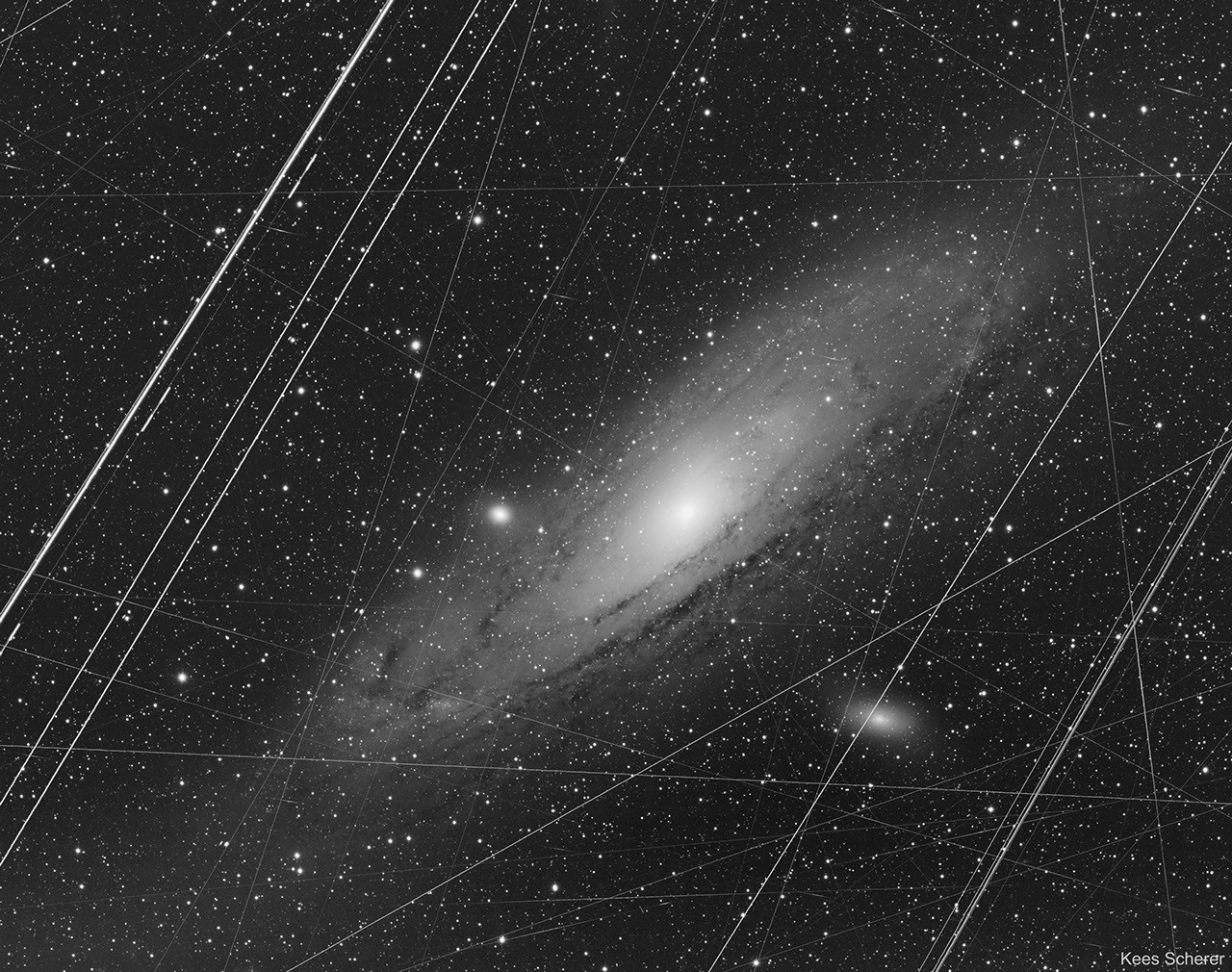
The subject of this meticulous imaging, the Andromeda galaxy (M31), holds a special place in astronomy. As the closest major spiral galaxy to our own Milky Way, it is a magnificent cosmic island, approximately 2.537 million light-years away. Spanning an estimated 220,000 light-years in diameter, it is significantly larger than the Milky Way, containing roughly a trillion stars compared to our galaxy’s estimated 200-400 billion. Andromeda is also notably brighter and more massive, making it a prominent target for both professional research and amateur observation. Its proximity allows astronomers to study galactic structure, stellar populations, and cosmic evolution with a level of detail unattainable for more distant galaxies. Furthermore, Andromeda is on a collision course with the Milky Way. In approximately 4.5 billion years, these two colossal galaxies are predicted to merge, forming a new, larger elliptical galaxy often dubbed "Milkomeda." This impending cosmic ballet provides a unique perspective on galactic dynamics and the long-term fate of the universe’s grand structures. The ability to capture such a detailed, artifact-free image of Andromeda, as demonstrated by APOD, enhances our understanding and appreciation of this dynamic neighbor.
The pursuit of such high-quality astronomical imagery is often a labor of love for dedicated astrophotographers, who blend technical skill with artistic vision. The original image, captured by Kees Scherer from a garden observatory, exemplifies the significant contributions of amateur astronomers. Utilizing personal equipment and often facing challenging conditions like light pollution and unpredictable weather, these individuals devote countless hours to collecting data. Their work not only contributes to the public’s fascination with space but occasionally provides valuable data points for professional research, especially in areas requiring long-term monitoring or wide-field surveys. The increasing accessibility of sophisticated amateur telescopes, digital cameras, and powerful processing software has democratized astrophotography, allowing a global community of enthusiasts to contribute to the visual narrative of our universe.
Since its inception in 1995, APOD has served as a cornerstone of public science communication. Co-founded by Robert Nemiroff and Jerry Bonnell, APOD’s mission is elegantly simple yet profoundly impactful: to feature a different image or photograph of our fascinating universe each day, accompanied by a brief, accessible explanation written by a professional astronomer. This daily commitment to "discover the cosmos" has made APOD an invaluable educational resource, inspiring generations of scientists, educators, and space enthusiasts worldwide. By curating visually stunning and scientifically accurate content, APOD bridges the gap between complex astronomical research and the general public, fostering a deeper understanding and appreciation for the wonders beyond Earth. The careful explanation accompanying each image, including the recent Andromeda feature, ensures that the visual spectacle is underpinned by factual, expert insight.
The technological advancements underpinning modern astrophotography are remarkable. From the early days of long-exposure film photography, which was highly susceptible to reciprocity failure and chemical development inconsistencies, the field has transitioned to highly sensitive digital sensors (CCD and CMOS). These sensors, coupled with precision equatorial mounts that counteract Earth’s rotation, advanced optics, and sophisticated cooling systems to minimize thermal noise, allow for the capture of incredibly faint light over extended periods. The evolution of processing software, as demonstrated by the tools used for the Andromeda image, is equally significant. These programs have moved beyond simple image enhancement, incorporating complex algorithms for noise reduction, deconvolution, star alignment, gradient removal, and artifact rejection. This technological synergy allows astrophotographers, both amateur and professional, to push the boundaries of what is observable and present the universe with unprecedented clarity.
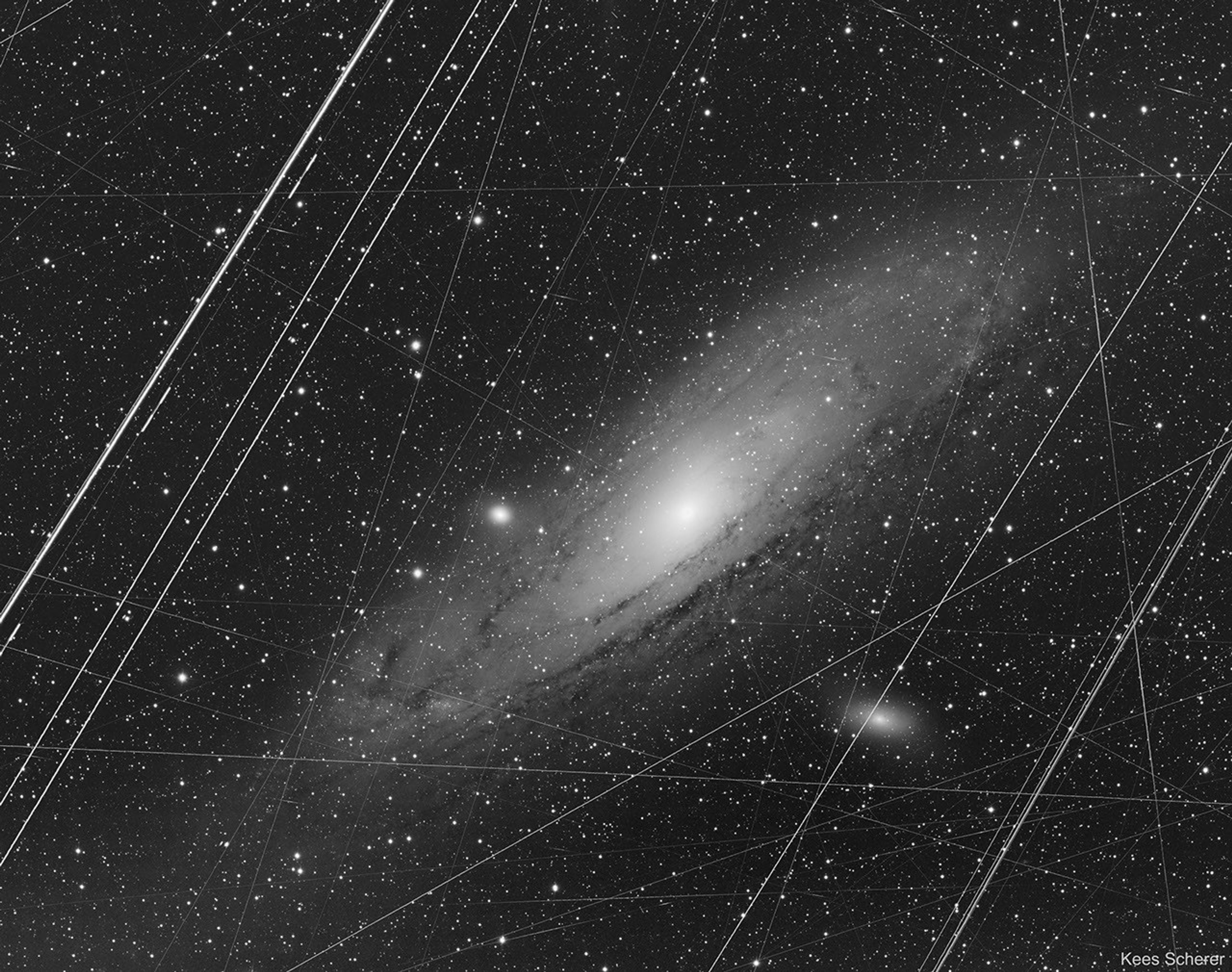
The implications of such refined astrophotography extend beyond mere aesthetics. For scientific research, clean, artifact-free images are paramount. They allow astronomers to precisely measure galactic structures, identify new phenomena, and track changes in celestial objects without confounding terrestrial noise. The ability to distinguish genuine cosmic features from human-made or digital artifacts is crucial for accurate data interpretation. Furthermore, for public engagement, high-quality images are powerful tools for inspiring curiosity and supporting science literacy. In an era where light pollution from urban centers increasingly obscures the night sky and mega-constellations of satellites pose new challenges to ground-based observation, the commitment to meticulously clean astronomical images becomes even more vital. It serves as a reminder of what we stand to lose if we do not safeguard our dark skies and carefully manage our technological footprint in orbit. The dedication to presenting a "real likeness" of cosmic objects helps to anchor public understanding in scientific reality, countering potential misconceptions.
In a practical update for its community, APOD recently announced a change to its email address for image submissions, guiding aspiring astrophotographers to its updated submission guidelines page. Furthermore, the main NASA site hosting APOD is in the process of migrating from its traditional apod.nasa.gov domain to science.nasa.gov/apod, a move aimed at consolidating NASA’s scientific content under a unified portal. Looking ahead, the program teased its next feature, promising an exploration of "cosmic latte," a reference to the average color of the universe.
The APOD feature of the Andromeda galaxy serves as a powerful testament to the intricate dance between human endeavor and cosmic wonder. It highlights not only the breathtaking beauty of our universe but also the scientific rigor and technological sophistication required to perceive it accurately. By meticulously removing the fingerprints of Earth and our digital tools, astrophotographers and image processors perform a vital service, allowing us to truly "discover the cosmos" in its most pristine and awe-inspiring form, fostering both scientific understanding and profound wonder.