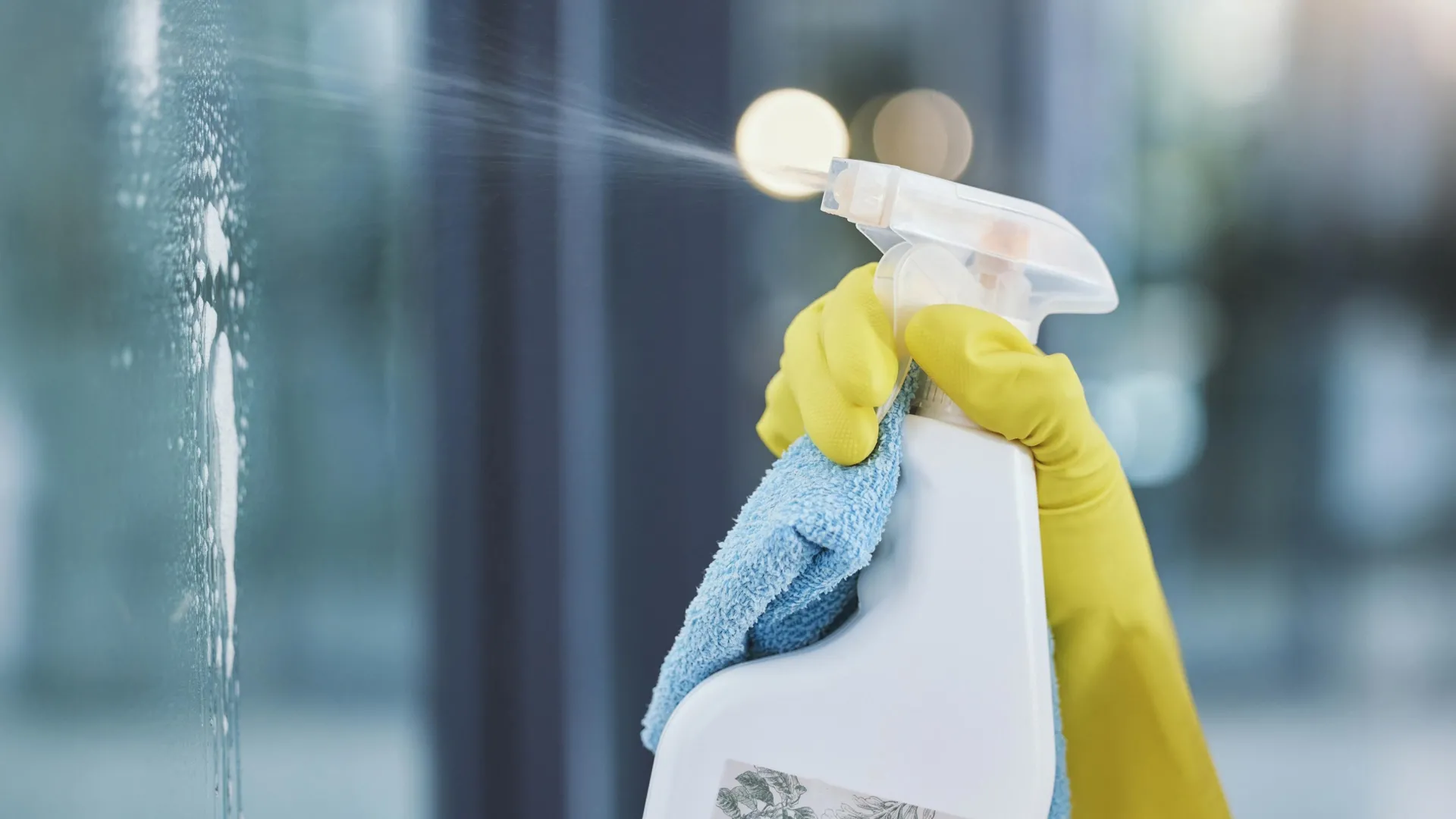
The ubiquitous scent of citrus, pine, or flowers in a freshly cleaned room has long been a comforting signal of hygiene and order. However, new research from Purdue University reveals that these familiar fragrances, often derived from both conventional cleaning agents and botanical essential oils, are not merely masking odors but are actively participating in chemical reactions that generate invisible air pollution in the form of nanoparticles. These extremely small particles, when inhaled, can penetrate deep into the lungs, raising significant concerns about indoor air quality and human health.
The groundbreaking study, led by Brandon Boor, an Assistant Professor of Civil and Construction Engineering at Purdue University, demonstrated that volatile organic compounds (VOCs) released by scented cleaning products react with ozone, a common indoor oxidant, to rapidly produce nanoparticles. This phenomenon occurs within minutes of cleaning, leading to particle concentrations that can rival or even exceed those experienced when standing outdoors near a busy road. The research was presented at the fall meeting of the American Chemical Society (ACS) during the "Healthy Indoor Spaces: Bridging the Microbiome and Chemistry" symposium held at McCormick Place.
The Invisible Threat: Nanoparticle Formation from Scented Cleaners
Boor and his team’s investigation into the impact of cleaning agents on indoor environments gained momentum during the COVID-19 pandemic. As widespread disinfection practices became paramount, the pervasive use of fragranced products stood out. "Many of the products people use to clean and disinfect indoor spaces contain strong fragrances," Boor explained. "That’s often to create a pleasant smellscape in the indoor space. But clean air should not smell like highly concentrated citrus fruit. It should not really smell of anything."
The underlying chemistry, Boor noted, is similar to processes observed in natural environments. Atmospheric scientists have long understood that plant-derived compounds, such as terpenes like pinene from pine trees, can react with ozone to form tiny airborne particles. These particles, over time, can coalesce and grow, eventually contributing to cloud formation in the atmosphere. However, in natural settings, the concentration of terpenes is generally low, and these reactions proceed relatively slowly.
Indoors, the scenario is dramatically different. Scented cleaning products release significant quantities of terpenes and other fragrance compounds as they evaporate from sprayed droplets or cleaned surfaces. Common cleaning liquids contain compounds such as pinene (pine), limonene (citrus), thymol (thyme), and linalool (lavender). During cleaning activities, the airborne concentrations of these compounds can surge to tens or even hundreds of times higher than those typically measured in outdoor forested environments.
Simulating Real-World Conditions: The Purdue "Tiny House" Experiment
To accurately assess the implications of these elevated concentrations under realistic conditions, the Purdue researchers utilized a purpose-built "tiny house" on campus. This miniature dwelling, complete with a functional kitchen, wood flooring, and a bathroom, allowed for the recreation of ordinary household cleaning tasks. By employing conventional liquid cleaning products and botanical-based disinfectant sprays and wipes, the team could meticulously measure the resulting atmospheric changes.
The experiments revealed that the same fundamental chemistry responsible for nanoparticle formation in outdoor environments occurs indoors, but at a significantly accelerated pace and with much higher concentrations. Routine activities such as mopping floors, spraying countertops, and wiping surfaces with scented products were found to generate billions or even trillions of nanoparticles, with the exact number depending on the specific product used.
The Scale of the Problem: Billions of Nanoparticles
A concerning aspect of these findings is the sheer number of particles produced. The majority of these were nanoparticles or ultrafine particles, measuring between 1 and 30 nanometers in diameter. This minuscule size is critical because such particles often fall below the detection thresholds of standard at-home air quality monitors. Consequently, homeowners may remain entirely unaware that indoor particle concentrations have dramatically increased.
The research indicated that typical cleaning activities could temporarily elevate ultrafine particle levels beyond those found outdoors. The health implications of these ultrafine particles are substantial. Due to their extremely small size, they can deposit throughout the respiratory tract, reaching the deepest regions of the lungs. Once embedded, they can trigger irritation and inflammation, potentially contributing to respiratory ailments. Furthermore, some ultrafine particles may even possess the capability to enter the bloodstream, leading to systemic health concerns.
One of the most surprising discoveries was the speed at which these particles form and grow. The process was observed to occur within minutes. "By the time you finish cleaning up an indoor space, you’ve already formed a lot of nanoparticles and inhaled them," Boor stated. This rapid generation means that the beneficial act of cleaning can, paradoxically, lead to immediate exposure to a significant invisible pollutant.
Ozone: A Catalyst for Nanoparticle Intensification
Further research by Boor and his colleague Ernest Blatchley, also a Professor at Purdue, explored the synergistic effects of scented cleaners and germicidal far-UV (UV-C) lamps, which are increasingly used for indoor air disinfection. This combination proved particularly conducive to nanoparticle formation.
The interaction of UV-C lamps with oxygen in the air generates ozone. During experiments conducted within the tiny house, ozone concentrations rose to approximately 20 to 40 parts per billion. While these levels were comparable to, and slightly below, the outdoor ozone concentrations measured during the experimental period, their presence alongside high concentrations of terpenes from scented cleaners created a potent environment for nanoparticle production. This confluence of factors led to even more intense nanoparticle generation, amplifying concerns about the potential inhalation dose for occupants.
Mitigating Exposure: Practical Strategies for Consumers
Boor emphasized that the objective of this research is not to discourage cleaning, which remains a vital practice for eliminating viruses and bacteria from surfaces. Instead, the goal is to empower consumers with knowledge and suggest practical measures to reduce exposure to the secondary pollutants generated during the cleaning process.
The researchers outlined several key recommendations for consumers:
- Opt for Unscented Products: Choosing fragrance-free cleaning products is the most direct way to minimize the release of reactive VOCs that drive nanoparticle formation.
- Enhance Ventilation: Improving air circulation is crucial. This can be achieved by using exhaust fans in kitchens and bathrooms or by opening windows and doors when weather permits. Adequate ventilation helps dilute and remove airborne particles.
- Avoid Ozone-Generating Devices: Care should be taken to avoid using devices that produce ozone, such as certain air purifiers or germicidal UV lamps, concurrently with scented cleaning products. The synergistic effect can significantly increase nanoparticle production.
Boor’s statement, "Importantly, cleaning removes viruses and bacteria from surfaces, but it can also generate invisible air pollution. There’s no visible dust or smoke in the air, but these particles are forming," underscores the critical need for awareness regarding this hidden aspect of indoor air quality.
Broader Implications for Indoor Air Quality and Public Health
The implications of this research extend beyond individual homes. Public spaces, offices, hospitals, and schools, where cleaning products are frequently used, could also be subject to similar nanoparticle formation events. The cumulative exposure to these ultrafine particles over time could contribute to a range of respiratory and potentially systemic health issues.
The study’s abstract highlights the significant "inhalation dose rates comparable to or exceeding those from primary combustion sources such as traffic emissions," a stark comparison that emphasizes the magnitude of the problem. It also points to the need for improved building ventilation strategies, advanced air cleaning technologies, and a re-evaluation of product formulation by manufacturers to mitigate exposure to these secondary pollutants.
The research, funded by a National Science Foundation Faculty Early Career Development Program (CAREER) grant and the Alfred P. Sloan Foundation, represents a critical step forward in understanding the complex chemistry of indoor environments. By shedding light on the invisible byproducts of common household activities, this work provides a scientific basis for making more informed choices about the products we use and the environments we inhabit, ultimately contributing to healthier indoor spaces for everyone. The collaborative effort involved numerous graduate and undergraduate students at Purdue, whose contributions were instrumental in conducting the detailed experiments and analyses.