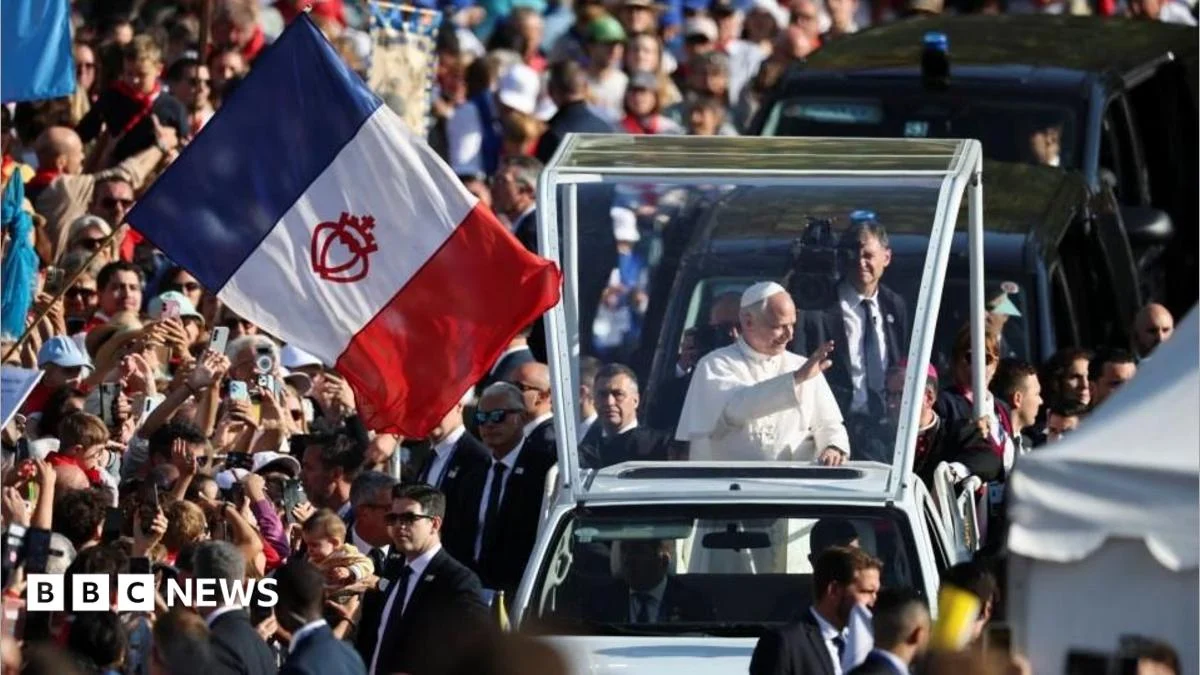
Pope Leo, during a pivotal moment of his four-day official visit to France, issued a fervent call to French bishops, imploring them to "maintain the greatest vigilance" in their ongoing efforts to root out the "scourge" of sexual abuse within the Roman Catholic Church. The Pontiff’s powerful directive was delivered during a private meeting with the episcopal conference at the sacred Sanctuary of Our Holy Lady of Lourdes, a revered pilgrimage site in southern France, underscoring the gravity of the issue just hours before a scheduled private encounter with abuse survivors. This pronouncement comes against a backdrop of staggering revelations from a landmark 2021 inquiry, which exposed that an estimated 330,000 individuals had been abused as children by clergy or lay members of the Church in France over a 70-year period, casting a long shadow over the Church’s moral authority and public trust.
The Pope’s Stern Admonition in Lourdes
The setting for Pope Leo’s address to the French episcopate was profoundly symbolic. Lourdes, famed for its miraculous healings and spiritual solace, became the stage for a stark confrontation with one of the Church’s deepest wounds. Speaking to the assembled bishops before celebrating Mass in front of thousands of faithful, the Pope acknowledged the difficult path they had already embarked upon. "You have faced with determination the painful scourge of abuse of minors committed by members of the clergy or within an ecclesial context," he stated, commending their initial efforts but simultaneously emphasizing the need for unyielding perseverance. His words, later released to reporters after the closed-door gathering, stressed the imperative to "persevere along the path you have begun, maintaining the greatest vigilance." This directive went beyond mere acknowledgment, signaling a demand for proactive and sustained action, not just reactive measures. The phrase "root out the scourge" is particularly potent, invoking a sense of urgent, systematic eradication rather than superficial reforms. It implies a deep-seated institutional commitment to purge the Church of this profound moral failing, addressing both past transgressions and preventing future abuses.
The Shadow of the Sauvé Report: A National Reckoning
The Pope’s words in Lourdes resonate with particular intensity in France due to the groundbreaking findings of the Independent Commission on Sexual Abuse in the Church (CIASE), often referred to as the Sauvé Report, published in October 2021. Chaired by Jean-Marc Sauvé, a former senior civil servant, the commission’s two-and-a-half-year investigation meticulously uncovered the systemic nature and horrific scale of abuse. Its conclusions were devastating: between 1950 and 2020, an estimated 216,000 children and adolescents were abused by approximately 3,000 priests and religious men in France. When lay people involved in Church activities were included, the number of victims soared to an estimated 330,000.
The report detailed not only the sheer numbers but also the institutional mechanisms that enabled such widespread abuse: a culture of silence, a lack of accountability, inadequate canonical processes, and a pervasive prioritization of the institution’s reputation over the welfare of victims. It highlighted the profound psychological, emotional, and spiritual trauma inflicted upon survivors, many of whom carried their pain in silence for decades. Crucially, the Sauvé Report also issued 45 recommendations, encompassing canonical, civil, and pastoral measures, including calls for financial reparations to victims, reforms in clergy training, mandatory reporting to civil authorities, and greater lay involvement in Church governance to ensure transparency and oversight. The report’s release provoked a national reckoning, forcing the French Catholic Church to confront its past failures and initiating a painful but necessary process of introspection and reform. For many, Pope Leo’s visit and his explicit comments were seen as an acknowledgment from the highest authority of the Vatican of the report’s devastating findings and the urgent need for a comprehensive response.
A Papal Pilgrimage: Unpacking the French Visit
Pope Leo’s four-day visit to France was multifaceted, designed to address both the spiritual needs of the faithful and the pressing societal challenges facing the nation and the Church. The visit commenced with significant public engagement in Paris, underscoring the Pope’s global appeal and the enduring presence of Catholicism in French society.
-
Friday: Diplomatic Engagement in Paris
The papal visit began on Friday with a formal meeting with French President Emmanuel Macron. This high-level diplomatic encounter at the Élysée Palace provided an opportunity for discussions on a range of topics, including international peace, social justice, migration, and the role of religion in contemporary society. Such meetings are standard practice for papal visits to sovereign nations, reinforcing diplomatic ties and allowing the Pontiff to convey the Holy See’s perspectives on global affairs. While the specifics of their private conversation were not fully disclosed, it is highly probable that the challenges facing the Catholic Church in France, including the abuse crisis, were touched upon. The meeting symbolized the ongoing, albeit sometimes complex, relationship between the secular French state and the Vatican. -
Saturday: Public Acclaim in the Capital
The second day witnessed an extraordinary public display of faith and enthusiasm in Paris. An estimated 700,000 people converged on the iconic Place de la Concorde to hear the Pontiff speak, transforming one of the city’s most famous public spaces into a vast open-air sanctuary. The sheer scale of the crowd underscored the deep connection many French citizens still feel towards the Catholic Church, despite declining attendance rates and the recent abuse scandals. Before addressing the multitude, Pope Leo rode down the historic Champs-Élysées Avenue in his open-topped popemobile, greeting followers who cheered and waved enthusiastically. This public procession, a hallmark of papal visits, allowed for direct engagement with the faithful, projecting an image of pastoral care and accessibility. The Pope’s address in Paris likely touched upon themes of hope, unity, and the importance of faith in navigating modern challenges, offering a moment of spiritual uplift for many. -
Sunday: Lourdes – A Site of Healing and Confrontation
The culmination of the Pope’s itinerary shifted from the bustling capital to the tranquil, yet profoundly significant, Sanctuary of Our Holy Lady of Lourdes. This transition was deliberate and meaningful. Lourdes, a site of Marian apparitions in 1858 and a global destination for pilgrims seeking healing and spiritual renewal, offered a poignant backdrop for the Pope’s direct engagement with the abuse crisis. Celebrating Mass in front of thousands of worshippers in Lourdes, Pope Leo reiterated the core messages of faith and redemption. However, it was the private meeting with the French bishops and the subsequent scheduled encounter with abuse survivors that truly defined this leg of the visit. By choosing Lourdes for these critical discussions, the Pope implicitly linked the Church’s healing mission with its urgent need for moral cleansing and accountability regarding past abuses. The act of meeting survivors privately, away from the public gaze, conveyed a sense of personal pastoral care and a willingness to listen directly to those most harmed by the Church’s failures.
Reactions and Implications: A Path Forward Amidst Challenges
The Pope’s strong words and actions during his French visit, particularly his focus on the abuse crisis, elicited a range of reactions from various stakeholders, each with their own perspectives and expectations.
-
French Bishops: For the French episcopate, the Pope’s message serves as both an affirmation and a renewed challenge. Having already initiated reforms following the Sauvé Report, including the establishment of independent bodies for victim recognition and financial reparations, and revisions to seminary training, the bishops are now under increased pressure to demonstrate tangible and sustained progress. The Pope’s emphasis on "greatest vigilance" implies that ongoing systemic changes, transparency, and collaboration with civil authorities are non-negotiable. They face the complex task of rebuilding trust within their communities, managing financial reparations, and implementing reforms that often clash with long-standing canonical traditions. The unity of the episcopal conference in addressing these issues will be crucial for their credibility.
-
Abuse Survivors and Advocacy Groups: For survivors of abuse and their advocacy groups, the Pope’s direct engagement, particularly the private meeting, holds immense significance. While words of condemnation are welcomed, the primary expectation remains concrete action: full transparency, robust accountability for perpetrators and complicit bishops, adequate and swift financial reparations, and comprehensive preventative measures. Survivors often express frustration with the pace of reform and the perceived reluctance of some church leaders to fully embrace the recommendations of reports like Sauvé. The Pope’s recognition of their suffering and his call for vigilance offer a glimmer of hope, but survivors will undoubtedly measure the success of this visit by the lasting institutional changes it precipitates.
-
The Vatican and Global Church: From the Vatican’s perspective, Pope Leo’s strong stance in France reinforces the Holy See’s stated commitment to combating abuse, a cornerstone of his pontificate. His consistent messaging across various nations facing similar crises (e.g., Germany, Ireland, Australia) aims to establish a universal standard of accountability and care for victims. However, the implementation of these directives varies significantly by local Church and national context, posing a significant challenge to the Vatican’s central authority. The French experience, with its comprehensive independent inquiry, often serves as a model or a benchmark for other national churches grappling with similar issues, making the Pope’s engagement there particularly impactful for the broader Catholic world.
-
The French Public and Government: For the broader French public, especially those who may have grown disillusioned with the Church, the Pope’s visit and his explicit focus on abuse could contribute to a slow rebuilding of trust. The government, having supported the creation of the Sauvé Commission, will likely view the Pope’s words as a positive step towards accountability and a recognition of the secular state’s efforts to ensure justice. However, a cynical segment of the population may remain skeptical, demanding more than just pronouncements, but tangible, verifiable reforms and justice for victims.
The Long Road Ahead: Institutional Reform and Spiritual Renewal
Pope Leo’s address in Lourdes marks another significant moment in the Catholic Church’s ongoing, painful journey to confront and rectify the pervasive issue of sexual abuse. His call for "greatest vigilance" is not merely a moral exhortation but an institutional imperative. It implies the need for continuous self-assessment, transparent reporting mechanisms, rigorous background checks and psychological evaluations for clergy, and an unwavering commitment to prioritize the safety and well-being of minors above all else.
The challenge for the French Catholic Church, and indeed the global Church, is immense. It requires not just changes in policy and procedure but a profound cultural shift—one that moves away from secrecy and clericalism towards transparency, humility, and genuine service. The process of healing for survivors is a lifelong journey, and the Church’s response must reflect a sustained commitment to their needs, including spiritual support, psychological care, and material reparations. Furthermore, the crisis has prompted broader discussions about the structure of the Church, the role of celibacy, the distribution of power, and the involvement of laypeople in governance. While the Pope’s visit offered a moment of hope and renewed determination, the true measure of its impact will be seen in the coming years, as the French Church endeavors to translate papal directives into lasting, systemic change, ultimately striving for a future where such a "scourge" can never again take root.