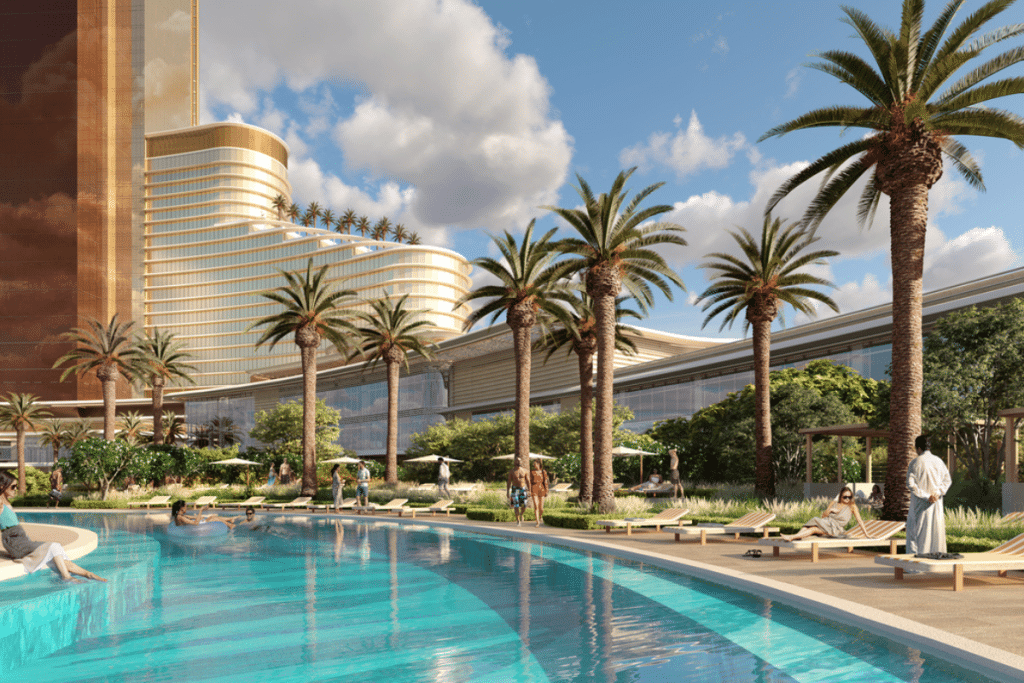
The hospitality landscape of Ras Al Khaimah is currently navigating a profound structural shift as existing properties initiate comprehensive renovations and strategic pivots in anticipation of the region’s first integrated gaming resort. Wynn Al Marjan Island, a multibillion-dollar project scheduled to debut in September 2027, is acting as a catalyst for a broader maturation of the emirate’s tourism sector. According to Alison Grinnell, CEO of Marjan Hospitality—the dedicated hospitality arm of the master developer Marjan—neighboring hotels are increasingly moving away from traditional all-inclusive models toward more premium, niche offerings to align with the expected influx of high-net-worth international travelers.
As the 2027 deadline approaches, the "Wynn effect" is already visible across Al Marjan Island and the wider Ras Al Khaimah (RAK) coastline. Existing operators are recognizing that the arrival of a global luxury brand with a gaming component will fundamentally alter the demographic of the typical visitor. Consequently, the current focus is on elevating service standards, modernizing physical assets, and diversifying the guest experience to ensure competitiveness in a significantly more sophisticated market.
Strategic Renovations and the Maturation of Asset Lifecycles
A significant portion of the current hotel inventory in Ras Al Khaimah was developed during the initial surge of the emirate’s tourism expansion over a decade ago. As these properties reach their 10-year operational lifecycle, owners are leveraging the upcoming opening of Wynn Al Marjan Island as the primary impetus for large-scale capital expenditure.
Among the most notable transformations is the Rixos Al Mairid Ras Al Khaimah. The property is currently refurbishing 323 rooms within its main building. This renovation is not merely aesthetic; it represents a strategic repositioning toward a more premium segment of the market, with completion expected by December. By upgrading its core inventory, the Rixos brand aims to maintain its market share in an environment where "new and shiny" properties will soon become the standard.
Similarly, the Pullman Resort Al Marjan Island is undergoing a significant metamorphosis. The resort is refurbishing 300 rooms and has announced a major shift in its business model: it will reopen as an adults-only property in the second quarter of 2027. This transition is a direct response to the anticipated demand for sophisticated, child-free environments that complement the high-energy entertainment and gaming atmosphere promised by the Wynn development.
Grinnell noted that these upgrades are essential for the ecosystem. "When you’ve new, shiny hotels coming into the market, neighboring hotels want to make sure that they have done a normal lifecycle upgrade," she stated. The overarching strategy for Marjan Hospitality has been to ensure that the existing portfolio completes its renovation cycle well before the Wynn resort begins its operations, thereby avoiding a disjointed experience for visitors to the island.
The Shift Away from All-Inclusive Models
For years, Ras Al Khaimah has been synonymous with the all-inclusive resort model, particularly popular with European and Russian families seeking value-driven sun-and-sand vacations. However, the entry of a $3.9 billion integrated resort is prompting a reevaluation of this strategy.
The all-inclusive model, while effective for high-volume family tourism, often limits the potential for ancillary revenue from high-end food and beverage (F&B) outlets, luxury spas, and boutique retail. As Wynn Al Marjan Island introduces a wealth of world-class dining and entertainment options, neighboring hotels are likely to offer fewer all-inclusive packages. This shift is designed to encourage guests to explore the island’s diverse offerings and to attract a demographic that prioritizes bespoke experiences over pre-paid, mass-market dining.
Industry analysts suggest that by reducing the reliance on all-inclusive deals, hotels can drive up their Average Daily Rates (ADR) and Revenue Per Available Room (RevPAR). This transition is crucial for the emirate as it seeks to position itself as a luxury destination capable of competing with established hubs like Dubai and Abu Dhabi, while maintaining its unique identity as a nature-focused and adventure-centric locale.
Background: The Significance of Wynn Al Marjan Island
Wynn Al Marjan Island is not merely another luxury hotel; it is a landmark project for the United Arab Emirates. As the first resort in the Middle East to feature a licensed gaming area, it represents a historic shift in the country’s regulatory and economic landscape. The project is a joint venture between Wynn Resorts, Marjan, and RAK Hospitality Holding.
The resort is designed to be a massive architectural statement, featuring a 300-meter-tall tower, approximately 1,542 rooms, suites, and villas, and a high-end shopping esplanade. Beyond the gaming floor, the resort will include a state-of-the-art events center, a massive theater for unique production shows, and more than 20 restaurants and bars.
The timeline for the project has remained consistent since its announcement, with construction progressing rapidly on the man-made island. The establishment of the General Commercial Gaming Regulatory Authority (GCGRA) at the federal level in the UAE has provided the necessary legal framework to support the project, further boosting investor confidence in the region’s hospitality and real estate sectors.
Economic Impact and Tourism Objectives
The transformation of Al Marjan Island is a central pillar of the Ras Al Khaimah Tourism Development Authority’s (RAKTDA) "Vision 2030." The emirate has set an ambitious goal of attracting 3 million visitors annually by 2030. To achieve this, the government is focusing on diversifying its source markets and enhancing its luxury infrastructure.
The economic data supporting this expansion is compelling. In 2023, Ras Al Khaimah reported its highest-ever visitor numbers, welcoming 1.22 million overnight arrivals, an 8% increase over the previous year. This growth was supported by a 24% increase in international visitors. The hospitality sector has responded by expanding its pipeline; currently, there are over 4,600 rooms in development across various stages, with several global brands including Nobu, Le Méridien, and W Hotels slated to join the market alongside Wynn.
The influx of capital is not limited to hospitality. The real estate market on Al Marjan Island has seen unprecedented demand, with land prices and residential property values surging. Investors are keen to capitalize on the expected demand for short-term rentals and branded residences that will cater to the workforce and regular visitors of the integrated resort.
Inferred Reactions from Stakeholders and Market Analysis
While official statements from individual hotel owners remain focused on the "enhancement of guest experience," the underlying sentiment among stakeholders is one of urgent adaptation. Local operators recognize that the "Wynn effect" will create a bifurcated market: those who upgrade to meet the new luxury standard and those who may struggle to compete.
Financial analysts specializing in Middle Eastern markets suggest that the pivot to adults-only and premium positioning is a defensive yet opportunistic move. By specializing, properties like the Pullman can carve out a niche that the massive, multi-purpose Wynn resort might not fully occupy. For instance, while Wynn will cater to the high-energy gaming and entertainment crowd, an adults-only Pullman might offer a more tranquil, boutique-style retreat for the same high-spending demographic.
Furthermore, the reduction in all-inclusive offerings is expected to stimulate the local "off-site" economy. If guests are not tied to their hotel’s dining hall, independent restaurants, beach clubs, and retail outlets on Al Marjan Island will see increased footfall. This creates a more vibrant, "city-like" atmosphere on the island, moving away from the isolated resort clusters of the past.
Chronology of Development
To understand the scale of the current transformation, it is necessary to look at the timeline of events leading toward 2027:
- January 2022: Wynn Resorts announces its entry into Ras Al Khaimah, marking the first time a global gaming operator chooses the UAE for a major development.
- Early 2023: Major infrastructure works begin on Al Marjan Island to support the increased utility and transport demands of the Wynn project.
- September 2023: The UAE federal government establishes the GCGRA, providing the regulatory clarity required for gaming operations.
- Late 2023 – Early 2024: RAK reports record-breaking tourism figures, confirming the emirate’s growing appeal as a standalone destination.
- Mid-2024: Existing hotels, including Rixos and Pullman, announce major renovation plans and strategic shifts in their business models.
- December 2024: Expected completion of the Rixos Al Mairid room refurbishments, marking the first major "new era" upgrade to go live.
- Q2 2027: Pullman Resort Al Marjan Island scheduled to relaunch as an adults-only property.
- September 2027: Scheduled grand opening of Wynn Al Marjan Island.
Broader Implications for the UAE Hospitality Industry
The evolution of Ras Al Khaimah’s hospitality sector serves as a microcosm for the broader changes occurring within the UAE. As the country looks to diversify its economy away from oil, tourism and entertainment have become paramount. The introduction of gaming in RAK is a bold step that differentiates the emirate from its neighbors while adding a new dimension to the UAE’s overall tourism appeal.
For the hospitality industry, this necessitates a move toward "experiential luxury." Modern travelers are increasingly seeking authenticity and unique concepts rather than standardized luxury. The shift in RAK—from the Rixos’s premium rooms to the Pullman’s adults-only focus—reflects this global trend.
As 2027 approaches, the pressure on the supply chain, human resources, and infrastructure will likely intensify. The need for specialized talent, particularly in gaming operations and high-end hospitality management, will create new opportunities and challenges for the local labor market. Marjan Hospitality and RAKTDA are expected to continue their collaborative efforts to ensure that the transition is seamless and that the "New Ras Al Khaimah" is ready to receive the world.
In conclusion, the renovations and strategic realignments currently underway in Ras Al Khaimah are more than just routine maintenance; they are a proactive response to a seismic shift in the region’s tourism DNA. By the time Wynn Al Marjan Island opens its doors, the surrounding hospitality ecosystem will have been entirely redefined, moving from a family-centric value destination to a sophisticated, multi-faceted luxury hub.