

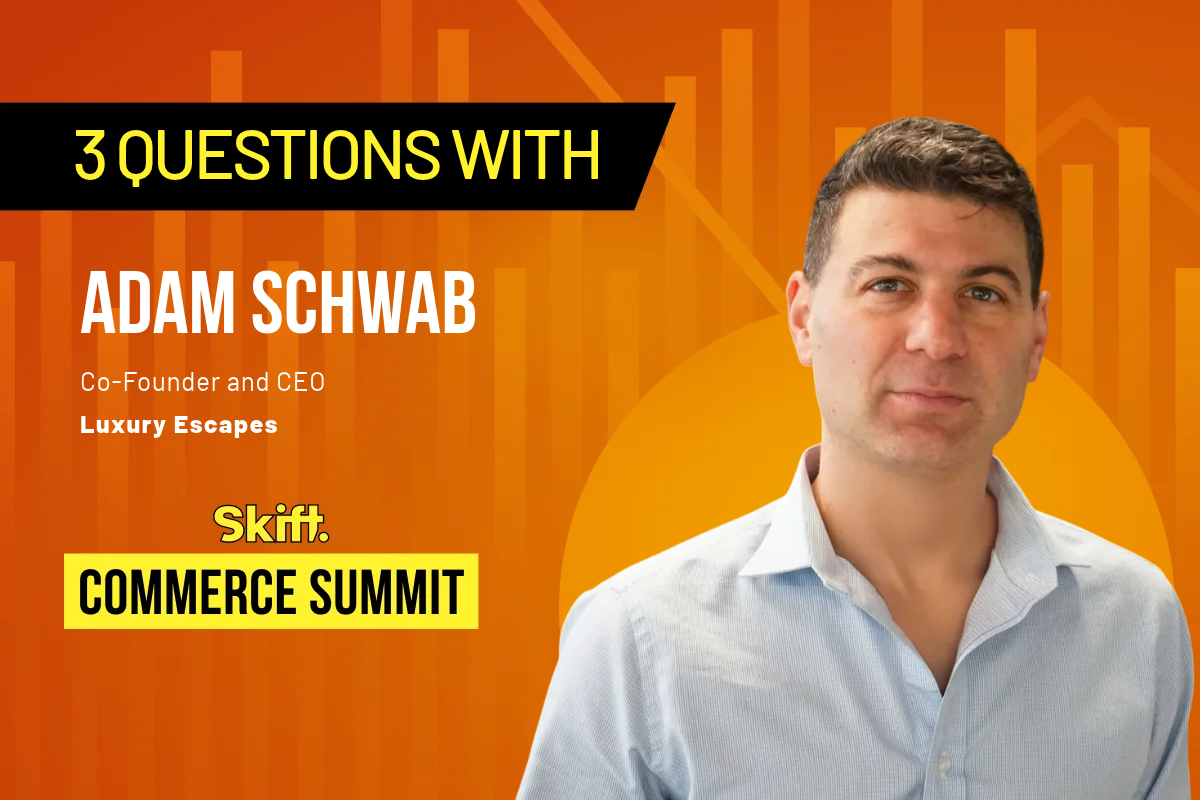
The global travel landscape is undergoing a fundamental shift as traditional online travel agencies (OTAs) grapple with the dual pressures of commoditization and the rapid ascent of artificial intelligence. At the center of this evolution is Luxury Escapes, an Australian-born travel platform that has successfully transitioned from a regional startup into a global powerhouse with a membership base exceeding nine million individuals. Adam Schwab, the co-founder and CEO of Luxury Escapes, is set to take the stage at the Skift Commerce Summit on November 11, 2026, at Apella by Alexandria in New York City. His upcoming address is expected to provide a roadmap for how travel intermediaries can survive and thrive by pivoting toward direct customer relationships and exclusive, paywalled inventory.
Since its inception in 2013, Luxury Escapes has expanded its footprint across key international markets, including the United States, the United Kingdom, India, and various regions throughout Asia. The company’s growth trajectory has been defined by its ability to move beyond the transactional nature of standard travel bookings. By introducing Societe, its foundational loyalty program, and LuxPlus, a premium paid tier, the company has created a tiered ecosystem designed to foster long-term engagement. Schwab’s participation in the Skift Commerce Summit comes at a critical juncture for the industry, as travel brands face the "existential risk" of AI agents capable of automating the research and booking layers that have traditionally been the domain of human-centric platforms.
The Evolution of Luxury Escapes: A Chronological Overview
The journey of Luxury Escapes reflects the broader transformation of the digital travel economy over the last decade. Founded in Melbourne in 2013, the company initially focused on the Australian domestic market, leveraging high-end curated deals to attract a niche audience of affluent travelers. By 2017, the platform began its aggressive international expansion, recognizing that the demand for curated luxury was a global phenomenon.
By 2020, despite the global paralysis of the travel industry due to the COVID-19 pandemic, Luxury Escapes utilized the downtime to refine its technological infrastructure and loyalty offerings. This period saw the strengthening of Societe, which provided the data necessary to understand shifting consumer preferences in a post-pandemic world. In 2023 and 2024, the company launched LuxPlus, a subscription-based model priced at approximately US$175 per year plus a joining fee. This move signaled a departure from the "open-web" pricing strategy used by giants like Expedia and Booking.com, instead opting for a "closed-loop" system that protects hotel partner margins while offering deep value to members.
As of late 2026, Luxury Escapes has solidified its position as a dominant player in the luxury segment. The upcoming Skift Commerce Summit serves as a platform for Schwab to detail how this evolution from a "deal site" to a "membership club" has insulated the business from the volatility of search engine algorithms and the rising costs of customer acquisition on third-party platforms.
The Strategic Value of the Direct Relationship
A central theme of Schwab’s recent industry commentary is the difficulty—and necessity—of owning the customer relationship. In a sector where brand loyalty is often secondary to the lowest price, Luxury Escapes has sought to create "stickiness" through its multi-layered loyalty program. Schwab argues that while global OTAs face low switching costs, a direct relationship allows a company to move beyond selling just "land and air" components.
The direct-to-consumer (DTC) model enables Luxury Escapes to communicate with its nine million members on a near-daily basis. This high-frequency engagement is not merely about pushing sales; it is about data collection and brand reinforcement. By maintaining a constant presence in the consumer’s inbox and app, the platform can offer a broader range of products, including ancillary experiences and tours that occur both during and outside of traditional travel windows. This strategy effectively transforms the travel provider into a lifestyle brand, reducing the reliance on Google Search or Meta for traffic—a move that industry analysts suggest is vital for maintaining healthy margins.
LuxPlus and the Power of the Genuine Paywall
The introduction of LuxPlus has been described by Schwab as "transformational." Unlike "soft" membership programs that offer marginal discounts in exchange for an email address, LuxPlus operates as a genuine paywall. This distinction is critical for hotel and cruise partners who are often wary of "rate parity" violations on public-facing sites. By hiding the most aggressive pricing behind a subscription, Luxury Escapes allows its partners to clear inventory without devaluing their brand in the general market.
Furthermore, the subscription model introduces a "network effect" rarely seen in the travel intermediary space. In traditional retail, companies like Costco or Amazon Prime use membership fees to drive volume and secure better wholesale pricing. Luxury Escapes applies this logic to travel: as the member base grows, the company gains the leverage to negotiate more exclusive inclusions—such as spa treatments, airport transfers, and room upgrades—which in turn attracts more members. This virtuous cycle creates a competitive moat that is difficult for smaller startups or unspecialized OTAs to replicate.
Addressing the Threat of AI and "The OTA Layer"
Perhaps the most provocative aspect of Schwab’s recent insights involves the future of travel agents—both human and artificial. He references a famous observation by Steve Hafner, the co-founder of Kayak, who described the metasearch engine as essentially a user experience (UX) layer sitting on top of a data repository. Schwab warns that AI agents have the potential to "upend a chunk of travel bookings" by effectively replacing that UX layer.
The risk for travel companies is commoditization. If an AI agent can find the same hotel room across ten different sites, the intermediary becomes irrelevant unless it offers something the AI cannot easily access. This is where exclusive inventory and brand equity become paramount. Schwab’s thesis is that if a company does not possess a "genuine moat"—such as a proprietary membership base or exclusive contracts—it risks being "washed away" by new technology. The lesson for travel leaders is to avoid becoming a mere "data wrapper" and instead focus on being a curator of experiences that cannot be found elsewhere.
Supporting Data: The Subscription Economy in Travel
The shift toward subscription models in travel is supported by broader economic data. According to industry reports from 2025, the "subscription economy" has grown by over 400% in the last decade. In the travel sector specifically, the "Travel-as-a-Service" (TaaS) market is projected to grow at a CAGR of 12% through 2030. Consumers are increasingly willing to pay for "curated convenience," a trend that Luxury Escapes has successfully capitalized on.
Data indicates that paid members of travel platforms tend to spend 2.5 times more than non-members and have a 35% higher retention rate. For Luxury Escapes, the US$175 annual fee for LuxPlus serves as a qualifying mechanism, ensuring that the platform is catering to high-intent, high-value travelers. This demographic is particularly attractive to luxury hotel brands, which are looking for "qualified" leads rather than bargain hunters who may not spend on on-site amenities.
Industry Reactions and Market Implications
Industry analysts have noted that Luxury Escapes’ approach challenges the traditional "growth at all costs" mentality of Silicon Valley-funded travel startups. By focusing on profitability and member retention, the company has carved out a sustainable niche. Competitors in the space, including traditional luxury travel agencies and newer digital platforms, are reportedly watching the LuxPlus model closely as a potential template for their own loyalty structures.
Hotel partners have expressed a cautious but generally positive reaction to the paywall model. A spokesperson for a major global hotel group, speaking on the condition of anonymity, noted that "closed-user-group pricing is the only way we can offer 40% to 50% discounts without destroying our public price integrity. Platforms that can prove their members are ‘behind a wall’ are our preferred partners for distressed inventory."
Looking Ahead to the Skift Commerce Summit
The Skift Commerce Summit in New York City will bring together a diverse array of leaders to discuss the intersection of travel, technology, and finance. Joining Adam Schwab on the agenda are notable figures such as Abhinav Anand of Citi and Cindy Estis Green of Kalibri Labs. The summit will delve into how travel brands can navigate a world where the lines between fintech, commerce, and hospitality are increasingly blurred.
For Schwab, the event is an opportunity to advocate for a more outward-looking travel sector. He has frequently criticized the industry for being "too insular," noting that travel businesses often fail to look at innovation in other sectors like finance or retail. By pointing to the lack of a "great trip planner product" as a failure of the industry, Schwab highlights the urgency for travel leaders to rethink their value proposition.
As the industry moves toward 2027, the success of Luxury Escapes suggests that the future of travel commerce lies not in the breadth of inventory, but in the depth of the relationship with the traveler. Whether through the implementation of genuine paywalls or the strategic use of AI to enhance—rather than replace—the human element of discovery, the goal remains the same: to provide value that transcends the transaction. The insights shared by Schwab at the upcoming summit will likely serve as a definitive guide for those seeking to build a resilient travel brand in an era of unprecedented technological change.