


A catastrophic high-speed train collision in central Spain has resulted in the deaths of at least 68 people and left dozens more injured, plunging the nation into a state of shock and mourning. The incident, which occurred on Wednesday morning, saw a train traveling from Madrid to Seville violently impact a stationary train on the tracks, causing several carriages to derail and plummet down an embankment. This devastating event marks one of Europe’s most severe modern rail disasters and Spain’s deadliest train tragedy in 13 years, prompting urgent calls for accountability and a thorough review of the country’s advanced rail infrastructure.
The Catastrophic Collision: A Chronology of Events
The harrowing incident unfolded shortly after 09:00 local time (08:00 GMT) approximately 140 kilometers (100 miles) south of the capital, Madrid. The chain of events leading to the collision began with a computer failure affecting a train operated by the private rail company Iryo. This train, carrying 147 passengers, had come to a halt on the tracks due to the system malfunction.
Spain’s Transport Minister, Óscar Puente, revealed that following the computer failure, a 24-hour control center located in Madrid assumed operational oversight. However, in an "inexplicable" decision, the control center then issued instructions for trains to resume movement without imposing any speed restrictions. It was during this critical window that a second train, operated by Spain’s state-owned railway company Renfe and carrying a significantly larger number of 397 passengers, approached the halted Iryo service from behind.
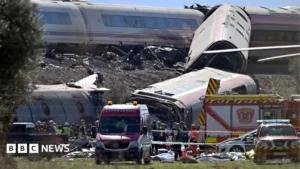
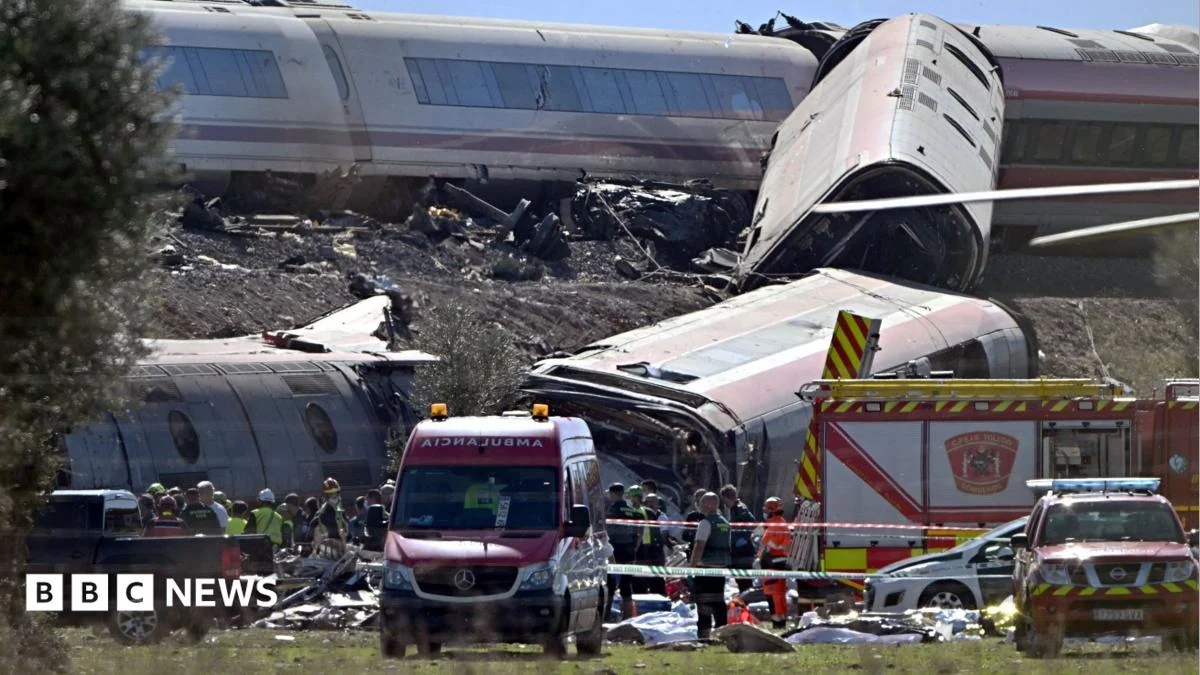
The Renfe-operated train, reportedly traveling at high speed, then "struck from behind" the stationary Iryo train with immense force. The impact was described by survivors as "brutal," leading to the immediate derailment of multiple carriages. Several of these carriages were flung off the tracks and down a steep embankment adjacent to the railway line, compounding the severity of the disaster. Emergency services were immediately alerted, initiating a massive rescue and recovery operation that would continue for many hours.
Scenes of Horror and Heroism: Survivor Accounts
The immediate aftermath of the collision was a scene of utter devastation and chaos, vividly recounted by those who survived. Passengers described being thrown violently into the air upon impact, their bodies propelled by the sudden, immense deceleration. Salvador Arriza, a 62-year-old passenger on the Renfe train, recounted the "brutal" force of the crash, stating that people were "thrown into the air" and subsequently trapped within the mangled wreckage.
Many survivors instinctively reacted by smashing windows to escape the confines of the damaged carriages, seeking safety amidst the debris. Arriza told Reuters that "some people couldn’t move because they were trapped amongst the seats," painting a grim picture of the immediate challenges faced by those caught in the disaster. One of the carriages tragically caught fire, adding another layer of terror and urgency to the situation. Passengers described heart-wrenching scenes of trapped individuals crying out for help, bleeding profusely, and some buried under twisted metal and shattered components. The sheer scale of the destruction was underscored by photographs from the scene, which showed a long piece of railway track having speared through one of the carriages, a testament to the unimaginable forces at play.
Spanish journalist Antonio Jiménez Barca, who works for El País newspaper, was walking towards the Renfe train’s cafeteria when the crash occurred. He described feeling "like I was being pushed from behind, like I was being thrown to the ground." Barca sustained a head injury, stating, "I hit my head horribly… I was covered in blood." He also noted the immediate suffering of others around him, observing, "There were people on top of me. One person had an injured arm, and another had a head injury."
Another survivor, 46-year-old Sebastián Herrero, shared his terrifying experience with El Mundo newspaper. He spoke of seeing "many people with broken noses, broken arms" and emphasized the "terrible, terrible impact." Herrero vividly recalled being "in the air for about four or five seconds," a duration that felt like an eternity in the midst of the unfolding catastrophe. The emotional toll was profound, with many passengers in visible shock. One survivor, sobbing during an interview with a local television station, recounted the tragic moment a woman died in his arms, describing her as "very cold and she was all alone." The raw grief was so palpable that the show’s presenter also broke down in tears, reflecting the collective sorrow gripping the nation.
The Rescue Effort and Identification Challenges
In the wake of the disaster, a massive emergency response was mobilized. Dozens of ambulances, fire engines, and police vehicles converged on the remote crash site. Medical personnel worked tirelessly to triage and treat the injured, while firefighters battled the blaze and painstakingly cut through the mangled metal to free trapped passengers. Helicopters were deployed to evacuate those with the most critical injuries to hospitals in nearby cities, ensuring rapid access to specialized medical care. The coordinated effort involved multiple regional and national emergency services, highlighting the scale of the operation.
As the immediate rescue phase transitioned into recovery, the grim task of identifying the deceased began. Spain’s Civil Guard indicated that DNA samples from relatives would be necessary to identify some of the victims, a testament to the severe nature of the injuries sustained and the impact forces involved. The process of victim identification is often protracted and emotionally taxing for families, adding to the already immense grief.
Official Reactions and Demands for Accountability
The tragic incident immediately drew widespread condemnation and calls for a thorough investigation. Prime Minister Pedro Sánchez swiftly traveled to the crash site, expressing the nation’s profound grief. "The whole of Spain is grieving," he stated, adding, "Lives have been shattered, families have been torn apart, the pain is immense." Sánchez cancelled all public engagements, including campaigning for next month’s parliamentary elections, as did other leading Spanish politicians, signaling the gravity of the national tragedy.
The Transport Minister, Óscar Puente, was quick to attribute the collision to a "computer failure followed by human error," specifically pointing to the "inexplicable" decision by the Madrid control center to allow trains to move without speed restrictions. This initial assessment, however, immediately sparked controversy and demands for deeper accountability.
Alberto Núñez Feijóo, leader of the main opposition People’s Party, voiced public sentiment by declaring, "Spain has the right to know what is happening with its infrastructure." His statement underscored the expectation for transparency and a comprehensive explanation of the failures that led to the disaster.
The Spanish trade union CSIF went further, demanding the transport minister’s resignation. The union accused Puente of "scapegoating" a traffic manager by blaming human error in the control room, instead of "taking responsibility" at a higher level. This highlights the political tensions and the potential for blame-shifting in the aftermath of such a major incident.
Prime Minister Sánchez, acknowledging the public’s concern and the severity of the situation, declared it "unacceptable" for Spain to experience two serious train crashes within a single year. He vowed to "get to the bottom of this" and determine if there was any negligence involved. "If there have been failures in the security system, they will be addressed with the utmost firmness," he pledged, attempting to reassure a shaken public.
Broader Context: Spain’s Rail Network and Previous Disasters
Spain boasts one of Europe’s most extensive and modern high-speed rail networks, celebrated for its efficiency and safety record. The country has invested heavily in its AVE (Alta Velocidad Española) system, connecting major cities at speeds often exceeding 300 km/h (186 mph). Historically, the Spanish rail network has maintained a strong safety reputation, making the occurrence of two significant high-speed rail disasters in one year particularly alarming and unprecedented.
This latest tragedy follows another high-speed rail disaster near Córdoba in January, which, according to reports, killed 46 people. While further details about the Córdoba incident remain sparse in comparison to other major crashes, its occurrence on the same rail line, albeit much further south, raises immediate questions about systemic issues or specific vulnerabilities within the network. The fact that the country is grappling with a second major incident involving high-speed trains within months has intensified public scrutiny and pressure on authorities.
However, the most significant modern rail disaster in Spain’s history, prior to this week’s event, occurred in 2013 on the outskirts of Santiago de Compostela in north-west Spain, where 80 people died. That incident involved a high-speed Alvia train derailing on a sharp curve, with investigations largely attributing the cause to the driver’s excessive speed and a failure of the safety systems to adequately enforce speed limits at that specific point. The Santiago de Compostela crash led to extensive reviews of safety protocols, signaling systems, and driver training across the Spanish rail network. Lessons from that tragedy were supposed to have been integrated, making the current string of incidents all the more perplexing and concerning.
The involvement of two different operators—the state-owned Renfe and the newer private entrant Iryo—in this latest collision also adds a layer of complexity to the investigation. Ensuring seamless communication, standardized safety protocols, and effective coordination between multiple operators sharing the same infrastructure is paramount for rail safety. The inquiry will undoubtedly examine these inter-operator dynamics in detail.
Implications for Rail Safety, Public Trust, and Future Investment
The immediate implications of this disaster are profound. Beyond the tragic loss of life and the immense suffering of the injured and their families, the incident casts a long shadow over Spain’s reputation for modern and safe transportation. Public trust in the high-speed rail network, a source of national pride and a key economic asset, is likely to be significantly eroded.
The ongoing investigation will be critical in establishing the definitive causes, assigning responsibility, and identifying any systemic flaws. This will involve detailed forensic analysis of the wreckage, examination of black box data recorders, review of control center communications, and scrutiny of maintenance records and operational procedures for both Renfe and Iryo. The findings will undoubtedly lead to a comprehensive overhaul of safety protocols, particularly concerning computer system failures, manual override procedures, and communication protocols between control centers and train operators.
Furthermore, the political ramifications are significant. With parliamentary elections looming, the government faces immense pressure to provide clear answers and demonstrate decisive action. The opposition’s demands for accountability and the trade union’s call for the transport minister’s resignation underscore the highly charged political atmosphere surrounding the incident.
In the long term, this tragedy, combined with the earlier Córdoba incident, could necessitate substantial new investments in upgrading existing safety systems, enhancing human oversight mechanisms, and potentially re-evaluating the entire operational framework of Spain’s high-speed rail network. The paramount objective will be to restore public confidence and ensure that such a devastating loss of life never happens again on Spain’s tracks. The nation awaits a thorough, transparent, and uncompromising investigation to understand what went wrong and to implement the necessary changes to safeguard the future of its advanced rail transport system.