


Major tech firms, including industry behemoths like Nvidia, SpaceX, and Tesla, experienced a precipitous decline in market value, shedding hundreds of billions of dollars collectively, in the immediate aftermath of a significant Democratic victory in the recent midterm elections. This sharp downturn, observed across a broad spectrum of the technology and artificial intelligence (AI) sectors, was largely attributed to burgeoning investor anxieties regarding the prospect of more stringent regulatory oversight under an invigorated Democratic legislative landscape. Particularly pronounced were concerns stemming from Democrat triumphs in pivotal data center states such as Texas, Ohio, and Georgia, where campaigns explicitly targeted the rapid, often unbridled, expansion of these crucial technological hubs.
The market’s visceral reaction saw the tech-heavy Nasdaq Composite stock index plummet by more than 5.5%, marking its most severe one-day decline in 19 months. The ripple effect extended across the broader market, with other key US stock indexes also registering substantial losses. This dramatic shift in investor sentiment has prompted some prominent tech leaders to acknowledge a fundamental disconnect with public perception, signaling an urgent need for the industry to redouble its efforts in advocating for the benefits of data centers and AI technology to local communities.
Market Tremors: A Day of Significant Losses
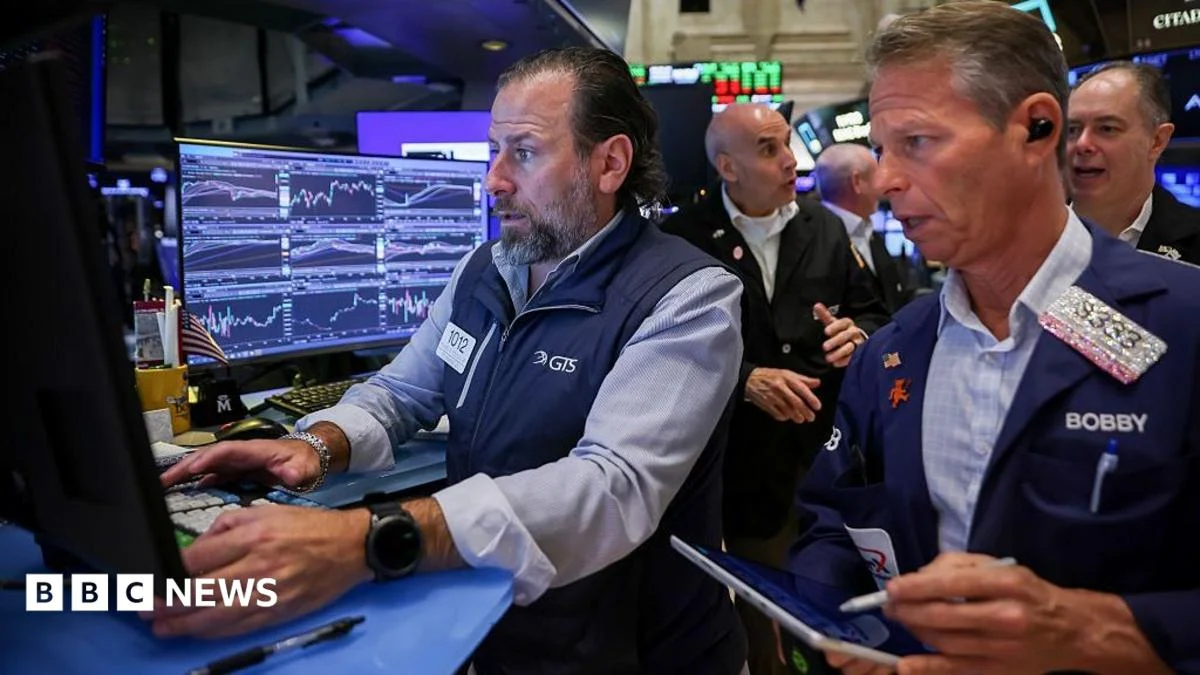
The financial markets on Thursday, following Tuesday’s election results, presented a stark picture of investor apprehension. The Nasdaq Composite, a bellwether for technology and growth stocks, bore the brunt of the sell-off, its 5.5% fall representing a staggering loss of market capitalization that sent shockwaves through the global financial system. This decline was not isolated; the S&P 500 index, which tracks the performance of 500 of the largest US publicly traded companies, closed down by 4.4%, while the Dow Jones Industrial Average, after enjoying a brief uptick on Wednesday, erased those gains to finish more than 3.4% lower. The magnitude of the Nasdaq’s fall was such that it officially entered what market watchers term "correction territory," a technical indicator signaling a drop of at least 10% from its recent high, underscoring the severity of the market’s reaction.
Individual companies at the forefront of the AI and semiconductor revolution were particularly hard hit. Nvidia, a critical supplier of graphics processing units (GPUs) essential for AI computation and data centers, saw its shares slide by more than 9%, wiping over $400 million from the firm’s market value. The pain was widespread among chipmakers, with Advanced Micro Devices (AMD) and Micron Technology both experiencing drops exceeding 17%. Intel shares also fell significantly, down 10.3%, while memory card manufacturer SanDisk plunged more than 22%. The Philadelphia Semiconductor Index (SOX), a key benchmark tracking 30 major companies involved in semiconductor production, mirrored these individual losses with a collective decline of over 12%, highlighting the concentrated investor concern within this vital sector.
Beyond the semiconductor realm, companies founded by the enigmatic entrepreneur Elon Musk also faced considerable pressure. Shares in his space exploration venture, SpaceX, and electric vehicle giant, Tesla, plummeted by 8% and nearly 11% respectively, collectively shaving more than $300 million off their combined market capitalization on Thursday. These losses were particularly poignant given Musk’s significant financial contributions to Republican campaigns leading up to the midterms, including an estimated $450 million in total backing, with at least $45 million specifically directed towards Ken Paxton’s unsuccessful bid for a Texas senate seat. The "Democratic tsunami," as some termed the election outcome in Texas, which saw the state turn blue, added a layer of political irony to Musk’s companies’ market woes.
The Democratic Sweep and the Regulatory Cloud
The Democratic Party’s stronger-than-expected performance in the midterms, culminating in what many analysts described as a significant electoral sweep, particularly resonated in states crucial for the tech industry’s expansion. In states like Texas, Ohio, and Georgia, which have become burgeoning hubs for data center development due to favorable land costs, energy infrastructure, and tax incentives, Democratic candidates successfully leveraged public apprehension regarding the environmental and social impacts of these facilities. Their campaigns often centered on promises of increased regulation, greater environmental scrutiny, and even moratoriums on new construction, directly addressing local community concerns.
A prominent example was Texas Governor-elect Gina Hinojosa, whose campaign heavily emphasized a commitment to imposing a moratorium on new data center construction within the state. This pledge, now backed by electoral success, sent a clear signal to investors and industry stakeholders about the shifting political landscape and the potential for a more restrictive operating environment. The Democratic platform, in many areas, articulated concerns about the massive energy consumption of data centers, their significant water usage, the strain they place on local power grids, and their contribution to urban sprawl. These issues, once perhaps considered secondary by the rapidly expanding tech industry, have now moved to the forefront of the political discourse, threatening to complicate future development plans.
The broader implications of Democratic control or increased influence in these key states extend beyond mere construction freezes. Investors are now anticipating a raft of potential new regulations covering a spectrum of issues, including data privacy, algorithmic transparency, antitrust measures, and environmental compliance. Such regulations, while aimed at addressing societal concerns, could significantly increase operational costs, stifle innovation, and slow down the pace of expansion for tech firms, directly impacting their profitability and growth projections. The fear is that the regulatory environment, previously seen as relatively permissive for the tech sector, especially concerning emerging technologies like AI, is poised for a substantial shift towards greater oversight and accountability.
Behind the Plunge: Investor Concerns and the AI Bubble
The dramatic market sell-off was not solely a reaction to political outcomes but also intertwined with pre-existing investor anxieties about the valuation of AI-related companies. For months, market commentators and financial analysts had been debating whether the massive influx of capital into the AI sector was inflating an "AI bubble" that was due for a correction. The argument posited that while AI’s long-term potential is undeniable, the immediate returns on the vast sums being poured into AI infrastructure, research, and development might not materialize as quickly or as profitably as current valuations suggested.
Susannah Streeter, chief investment strategist at Wealth Club, articulated this sentiment clearly, stating, "Fresh panic over the AI trade has hit Wall Street hard." She further elaborated on the converging factors driving this panic: "Fears that the vast sums poured into AI infrastructure may not deliver the returns investors have been banking on are now colliding with the prospect of a sharp slowdown in data center construction." This confluence of factors—exuberant valuations meeting the cold reality of potential regulatory headwinds—created a potent cocktail for a market downturn.
Investors, particularly those with significant exposure to companies heavily reliant on AI data centers, such as crucial chipmakers and semiconductor manufacturers, had already been growing wary. The midterms provided a concrete catalyst for these latent concerns to manifest in widespread selling. The prospect of reduced demand for the specialized hardware that powers AI, owing to slowed data center expansion or increased regulatory burdens, directly threatened the revenue streams and growth forecasts of these companies. This shift underscores a broader re-evaluation of the risk-reward profile within the high-growth tech sector, prompting a move away from speculative investments towards more stable, less politically exposed assets.
Tech Leaders’ Admissions: A Disconnect with Communities
The market’s reaction, coupled with the electoral outcomes, served as a stark wake-up call for many in the tech industry. Several prominent tech leaders publicly admitted to being caught off guard by the intensity of the backlash against data centers and AI in the midterm elections. This sentiment suggests a significant disconnect between the industry’s self-perception as a driver of progress and the growing concerns of local communities about the tangible impacts of technological expansion.
Speaking at the WSJ Tech conference in Napa, California, OpenAI president and co-founder Greg Brockman openly acknowledged the industry’s surprise. "A lot of our shift over the course of this year has really been to realise that from San Francisco trying to build infrastructure in Texas, Georgia, and other places, you can’t just tweet and say: ‘This is going to be good.’ You need to be in those communities," Brockman stated. His comments highlighted a critical strategic pivot for the industry: moving beyond a purely technological focus to one that actively engages with and addresses the concerns of the communities directly affected by its operations. The implication is that the "build it and they will come" mentality, or the assumption that technological advancement inherently garners public support, is no longer viable.
Echoing this sentiment, Meta’s president Dina Powell McCormick emphasized the need for a more proactive and persuasive communication strategy. "I think we need to double and triple down on telling the story," she told the WSJ conference. Her statement underscores the realization that the benefits of AI, often framed in abstract terms, need to be translated into tangible, relatable advantages for everyday people and local economies. This involves not only explaining the transformative potential of AI but also addressing legitimate concerns about job displacement, ethical implications, and the environmental footprint of the underlying infrastructure. The industry’s past approach, often characterized by a rapid, unannounced expansion, is clearly no longer sustainable in the face of growing public scrutiny and political will.
Elon Musk’s Political Gambit and Market Repercussions
Elon Musk’s foray into political financing, particularly his substantial backing of Republican campaigns, added a unique dimension to the market’s reaction. His personal investment of nearly $450 million in support of various Republican candidates, including a notable $45 million for Ken Paxton in Texas, represented a significant personal and corporate alignment with a political party that, in these midterms, saw its fortunes diminish in key states. The outcome in Texas, where the Democratic Party achieved a significant victory, effectively turning a traditionally red state blue in a "Democratic tsunami," directly contradicted Musk’s political investment.
The subsequent sharp declines in the share prices of SpaceX and Tesla – 8% and nearly 11% respectively – were not just part of the broader tech sell-off but also carried specific implications related to Musk’s public persona and political activism. Investors may have viewed his substantial political spending as a misallocation of resources or a strategic misstep, particularly when the favored candidates failed to secure victory. Furthermore, Musk’s outspoken political views and sometimes controversial public statements have, on occasion, been linked to volatility in his companies’ stock performance. The midterms, therefore, served as a stark reminder that the intersection of business, technology, and politics can have direct and immediate financial consequences, especially for high-profile leaders whose personal brand is inextricably linked to their corporate ventures.
The Broader Economic Landscape: Ripple Effects and Future Outlook
The impact of the midterm elections and the ensuing tech sell-off extended far beyond the immediate losses on Wall Street. The Nasdaq’s plunge into "correction territory" signals a broader recalibration of investor expectations and risk appetites across the entire market. Such significant corrections can trigger ripple effects, influencing consumer confidence, corporate investment decisions, and the availability of capital for startups and innovation. The tech sector, often a leading indicator for economic trends, is now facing a period of introspection and potential restructuring.
Susannah Streeter’s observation that the steep sell-off was "sending shockwaves into other markets" highlights the interconnectedness of the global financial system. A downturn in US tech stocks can affect international markets, particularly those with significant exposure to technology and growth companies. Moreover, the renewed debate about an "AI bubble" could temper enthusiasm for future investments in the sector, potentially leading to a more conservative allocation of capital and a greater emphasis on demonstrable returns rather than speculative growth.
Looking ahead, the tech industry, particularly companies involved in AI and data center development, must navigate a complex landscape defined by shifting political winds, increasing public scrutiny, and evolving regulatory frameworks. The era of unchecked expansion, driven solely by technological imperative, appears to be drawing to a close. Instead, future growth will likely hinge on the industry’s ability to demonstrate its commitment to sustainable practices, ethical development, and genuine community engagement.
Navigating the Future: Policy, Innovation, and Public Perception
The outcomes of the recent midterms and the subsequent market reaction represent a critical juncture for the tech industry. It is a moment that calls for a fundamental re-evaluation of how technology companies engage with society, policymakers, and local communities. The imperative is clear: the industry can no longer afford to operate in a vacuum, expecting its innovations to be universally embraced without addressing the legitimate concerns they may raise.
Policy discussions surrounding AI and data centers are expected to intensify. This could involve more rigorous environmental impact assessments, stricter zoning laws, greater transparency requirements for AI algorithms, and potentially even new taxation structures to offset the strain on local resources. For tech firms, this means a likely increase in compliance costs and a more protracted development timeline for new projects, which will require strategic adjustments to business models and investment plans.
From an innovation perspective, the challenge will be to continue pushing the boundaries of AI and data center technology while simultaneously integrating principles of sustainability, ethics, and community benefit. This might spur new research into energy-efficient computing, renewable energy integration for data centers, and AI applications that directly address societal challenges in ways that resonate with the public.
Ultimately, the future success of the tech sector, particularly in the sensitive areas of AI and data center infrastructure, will depend not only on its technological prowess but also on its ability to rebuild trust and foster a more collaborative relationship with the public and governmental bodies. The candid admissions from tech leaders like Greg Brockman and Dina Powell McCormick suggest an emerging understanding within the industry that "telling the story" of AI and proactively engaging with communities is no longer just a public relations exercise, but an essential component of sustainable growth and long-term viability in a politically charged and increasingly scrutinizing world. The midterms have, in effect, ushered in a new era where the social license to operate will be as crucial as market capitalization.