

Last Wednesday’s collision, involving a state-owned Renfe train carrying 397 passengers and a stationary private Iryo train with 147 passengers, has ignited a fervent national debate over railway safety protocols and the critical interface between automated systems and human decision-making. The incident, occurring on a vital stretch of Spain’s expansive railway network, saw the Renfe service strike the Iryo train from behind, an event precipitated by a reported failure in the automatic signalling system that had brought all traffic to a halt. As investigations commence, the publication of leaked audio recordings between train drivers and a Madrid control centre minutes before the disaster has revealed a startling sequence of events, suggesting that the Renfe train was cleared to proceed at "normal speed" despite explicit knowledge that another train was immobilised ahead on the track.
The Anatomy of a Collision: A Breakdown of Events
The incident unfolded on a segment of the high-speed rail corridor near Urda, in the province of Toledo, Castilla-La Mancha, a crucial artery for both passenger and freight traffic. The initial catalyst was a widespread computer failure affecting the automatic signalling system, a sophisticated network designed to prevent collisions by controlling train movements and maintaining safe distances. This system malfunction immediately triggered a protocol requiring all trains on the affected section to cease movement. It is a standard safety measure, designed to freeze traffic until the system can be restored or alternative, manual operating procedures can be safely implemented.
However, the subsequent events, now brought to light by leaked audio, paint a picture of confusion and potentially catastrophic miscommunication. The recordings, published across prominent Spanish media outlets, capture critical exchanges that took place just minutes before the collision. These three distinct conversations, primarily between the Madrid control centre and the drivers of the two involved trains, suggest a perilous deviation from standard safety practices.
The core revelation from these recordings is the instruction given to the Renfe train. This service, which was reportedly experiencing some technical difficulties itself, was cleared by a control centre operator to resume its journey. The operator explicitly stated: "Continue your journey and then proceed under [Lateral Signalling Block], at normal speed with normal operation." The Renfe driver, perhaps sensing the gravity or unusual nature of the instruction given the prevailing system failure, sought clarification, asking: "At normal speed?" To which the controller unequivocally responded: "Yes." This instruction to maintain "normal speed" under a fallback system designed for degraded operations, especially when another train was known to be stationary, stands as a central point of contention for investigators and safety experts alike.
The "Lateral Signalling Block" is a crucial backup system. It is designed to be used when primary automatic signalling or data transmission systems fail, allowing trains to move cautiously, typically at reduced speeds, with increased vigilance and often under direct, prescriptive orders from control centres. The instruction to proceed at "normal speed" under such a system, particularly with foreknowledge of an obstruction, is highly unusual and has been universally flagged as a critical error by initial analyses.
Concurrently, the driver of the stationary Iryo train was also in communication with the control centre. In one recording, the Iryo driver clearly states that communication with the train-control system had been lost, and the train was not moving. "The train is stationary in front of the entry signal at Urda," the driver informed the control centre operator. Following a series of exchanges, this driver was initially told to "resume the journey" normally, an instruction that, like the Renfe directive, appears to have been given without full appreciation of the ongoing system failures or the Iryo train’s actual inability to move.
A later recording, however, provides an even more alarming detail. The Iryo driver contacted the control centre again, reiterating their predicament. "The train won’t allow me to control the [security] system. That’s why I am still stopped in front of the entry signal," the driver explained. This second communication is pivotal, as it strongly suggests that the control centre had been unequivocally notified that the Iryo train remained stationary and immobile due to a security system lock-out, even as the Renfe train was approaching, having been cleared to proceed at "normal speed." It was shortly after this last exchange that the Renfe train struck the Iryo carriages from behind, as confirmed by Iryo officials.
Chronology of a Critical Failure
To fully comprehend the sequence of events that culminated in Wednesday’s collision, a detailed chronology is essential:
- Pre-Incident (Time T-X): Both the Renfe and Iryo trains, along with other services, are operating normally on the affected stretch, relying on the sophisticated automatic signalling system.
- System Failure Detected (Time T-0): A critical computer failure impacts the automatic signalling system on a specific section of the high-speed line. This failure immediately renders the primary safety mechanism inoperative.
- Automatic Halt Protocol (Time T+1): As per standard safety protocols, all trains on the affected stretch are automatically instructed to halt their movements. This is a failsafe to prevent collisions when the primary signalling is down.
- Iryo Train Immobilized (Time T+5): The Iryo train stops at the entry signal for Urda. Its driver reports to the Madrid control centre that communication with the train-control system has been lost, and the train is unable to move.
- Initial Control Centre Instruction to Iryo (Time T+10): The Iryo driver is, paradoxically, instructed by the control centre to "resume the journey normally," indicating a potential initial misjudgment or lack of comprehensive information regarding the Iryo train’s actual status.
- Renfe Train’s Status and Communication (Time T+15): The Renfe train, also stopped due to the signalling failure and reportedly experiencing some technical difficulties, establishes communication with the control centre.
- Critical Instruction to Renfe (Time T+20): The Madrid control centre operator instructs the Renfe driver to "Continue your journey and then proceed under [Lateral Signalling Block], at normal speed with normal operation." The driver confirms, "At normal speed?" and the controller affirms, "Yes."
- Iryo’s Second Notification (Time T+25): Crucially, the Iryo driver contacts the control centre again, providing an updated and more urgent status: "The train won’t allow me to control the [security] system. That’s why I am still stopped in front of the entry signal." This communication confirms the Iryo train’s continued immobility due to a security system lockout, making it impossible for it to move, even as the Renfe train is now proceeding.
- Collision (Time T+30-T+X): The Renfe train, proceeding under the "normal speed" instruction, collides with the stationary Iryo train from behind.
- Immediate Aftermath (Post-Collision): Emergency services are alerted, passengers are evacuated, and initial damage assessments are made. Thankfully, early reports indicated no fatalities, though some passengers sustained minor injuries.
Spain’s Railway Landscape: A Context for the Incident
Spain boasts one of Europe’s most modern and extensive high-speed rail networks (AVE), with over 3,400 kilometres of track designed for speeds up to 310 km/h. This network is primarily managed by ADIF (Administrador de Infraestructuras Ferroviarias), the state-owned infrastructure manager, while train operations have historically been dominated by Renfe, the national operator. However, recent years have seen the liberalization of Spain’s railway market, with new private operators like Iryo (a consortium involving Trenitalia, Air Nostrum, and Globalvía) and Ouigo (SNCF) entering the fray, fostering competition and offering more services. This incident highlights the increasing complexity of operational coordination when multiple operators share the same critical infrastructure, particularly during degraded modes of operation.
Spain’s rail safety record is generally strong, aligning with the European Union’s reputation for having one of the safest railway systems globally. Advanced signalling systems, such as the European Train Control System (ETCS/ERTMS), are widely deployed on high-speed lines to ensure safe train separation and prevent human error. The automatic signalling system failure reported in this incident, therefore, represents a rare and serious lapse in the primary layer of defence. The reliance on backup systems like the Lateral Signalling Block, while necessary, underscores the absolute criticality of precise communication and stringent adherence to safety protocols during such contingencies. The "normal speed" instruction under these circumstances directly contradicts the inherent caution required when primary safety systems are compromised.
Official Reactions and the Path Ahead for Investigation
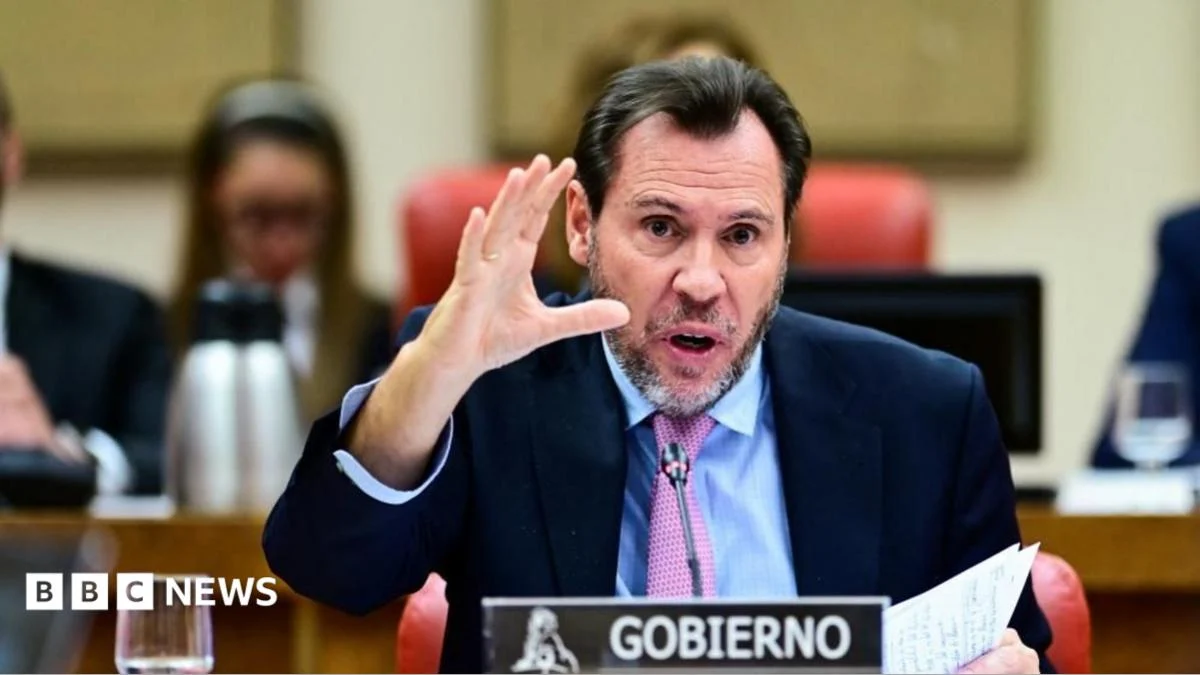
The immediate aftermath of the collision has been met with swift and strong condemnation from official quarters. Óscar Puente, Spain’s Minister of Transport and Sustainable Mobility, publicly stated last week that the decision to instruct the trains to move again, without any speed restrictions, was "inexplicable." This official stance underscores the perceived gravity of the alleged instructions given by the control centre.
Both Renfe and Iryo have pledged full cooperation with the ongoing investigations. Renfe, as the operator of the colliding train and a state-owned entity, will face intense scrutiny regarding its operational procedures, driver training, and communication protocols during system failures. Iryo, whose train was stationary, will also contribute to the investigation, providing data from its onboard systems and driver testimony. Their statement that its carriages were "struck from behind" clearly delineates their position in the incident.
ADIF, as the infrastructure manager responsible for the signalling system and the control centre operations, will be central to the investigation. Their role in maintaining the signalling infrastructure, managing traffic flow, and providing instructions to operators in degraded modes will be thoroughly examined. The focus will be on understanding why the automatic signalling system failed, the robustness of its backup procedures, and critically, the decision-making process within the control centre.
The investigation will be led by independent bodies, such as the Spanish Commission for the Investigation of Rail Accidents (CIAF), to ensure impartiality and technical expertise. This independent inquiry will meticulously analyse all available data, including train black box recorders, control centre logs, and the leaked audio recordings. Expert opinions from railway safety engineers, human factors specialists, and signalling system experts will be crucial in piecing together the full picture.
Railway worker unions are also expected to weigh in, potentially raising concerns about staffing levels, training adequacy for controllers and drivers in emergency situations, and the potential for pressure to maintain schedules even when safety systems are compromised.
Broader Implications and Future of Rail Safety
The Spanish train collision carries significant implications that extend far beyond the immediate incident:
- Public Trust in Rail Safety: Despite its generally excellent safety record, incidents like this, especially those involving potential human error or system mismanagement, can erode public confidence in rail travel. Rebuilding this trust will require transparency, accountability, and demonstrable improvements in safety protocols.
- Review of Degraded Mode Protocols: The most immediate and critical implication is an inevitable, comprehensive review of all operational protocols for degraded modes of operation. This includes the use of backup signalling systems, communication procedures between control centres and train drivers, and the authority structure for issuing movement orders during failures. The instruction to proceed at "normal speed" under a Lateral Signalling Block when a stationary train was known to be ahead will be a focal point.
- Human Factor vs. System Reliance: The incident reignites the perennial debate about the balance between advanced automation and the human element in safety-critical systems. While modern rail systems are highly automated to reduce human error, this event underscores the continued importance of well-trained human operators and controllers, particularly when automation fails. It will prompt questions about controller training, workload, and decision support tools during emergencies.
- Inter-Operator Coordination in a Liberalized Market: With multiple operators now sharing Spain’s rail infrastructure, the incident will highlight the need for robust and seamless coordination protocols. Ensuring consistent safety standards and communication procedures across different operators and the infrastructure manager is paramount.
- Regulatory Oversight and Enforcement: National and potentially European railway safety agencies will intensify their scrutiny of safety management systems within ADIF, Renfe, and Iryo. The findings could lead to new regulations or stricter enforcement of existing ones, particularly concerning manual override procedures and emergency operations.
- Legal Consequences: Depending on the findings of negligence or systemic failure, the incident could lead to significant legal consequences, including criminal charges for individuals found responsible and substantial civil lawsuits for damages and injuries.
- Investment in System Resilience: While the initial failure was a computer issue, the subsequent events highlight the need for not only robust primary systems but also exceptionally resilient and foolproof backup systems, coupled with clear, unambiguous operational directives. Further investment in system redundancy and advanced diagnostic capabilities might be advocated.
The Spanish train collision serves as a stark reminder that even with sophisticated technology and rigorous safety standards, vigilance, precise communication, and unwavering adherence to protocol are indispensable in preventing disaster. The ongoing investigation will not only seek to understand what went wrong but also to forge a path forward to prevent similar "inexplicable" decisions from jeopardizing passenger safety on the rails.