


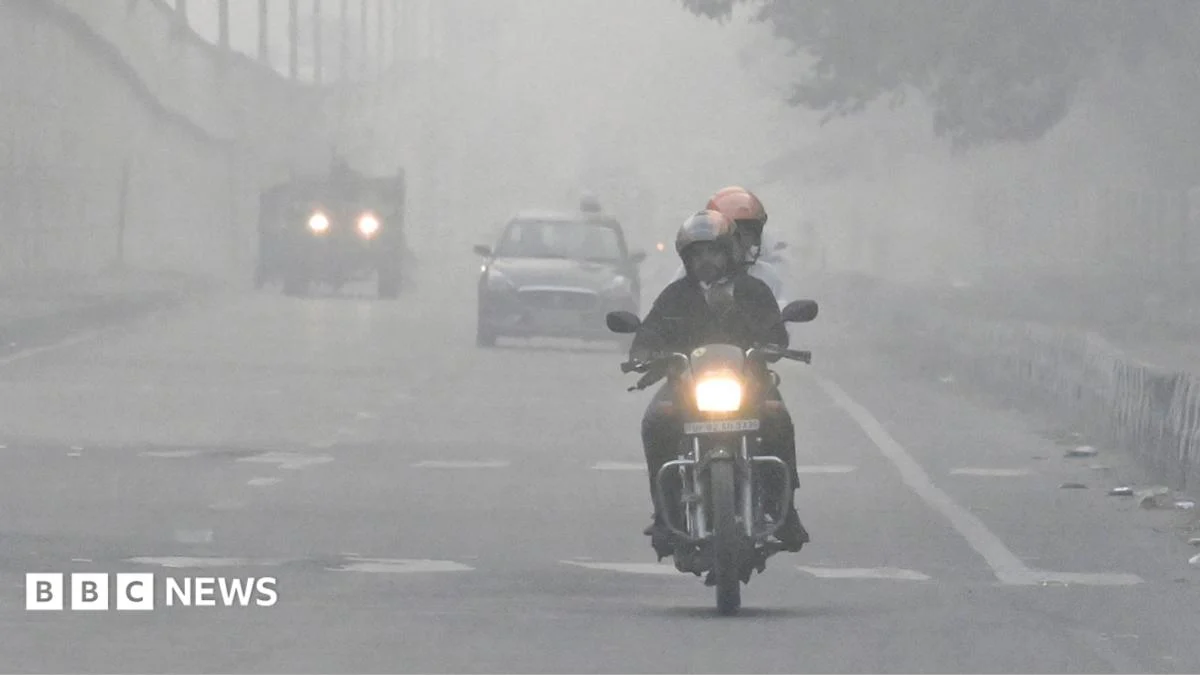
In Meenu Rana’s Delhi living room, two cardboard boxes tell a stark tale of life in India’s capital. One brims with the vibrant optimism of Diwali decorations and twinkling lights, ready to illuminate the festive season. The other, however, holds a more sobering reality: a collection of air purifiers, silent sentinels against an invisible enemy. "The mornings have already started feeling stuffy. It will get worse in the coming days, so it’s better to be prepared," says the 43-year-old teacher, her words echoing a sentiment shared by millions across the sprawling metropolis.
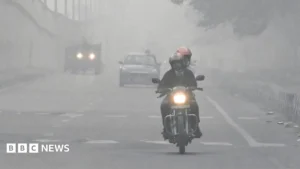
Rana’s proactive measures are not an anomaly but a grim annual ritual for Delhiites. As winter descends, bringing with it a festive cheer for some, it ushers in months of severely polluted air for residents of India’s capital and its satellite cities. This predictable descent into a toxic haze has become a defining feature of Delhi’s colder months, transforming the very act of breathing into a health hazard. The city consistently records some of the world’s highest pollution levels, but as winter sets in, the air often becomes not just poor, but unbearably noxious, triggering widespread alarm and a familiar, exasperated question: why does this crisis return year after year, and despite repeated pledges, why hasn’t a definitive solution been implemented?
The Annual Descent: Understanding Delhi’s Smog Cycle
Delhi’s unique geographical and meteorological conditions, combined with a confluence of anthropogenic factors, create a perfect storm for severe air pollution during the winter months. As temperatures drop and wind speeds slacken, a phenomenon known as temperature inversion occurs. This traps pollutants close to the ground, preventing their dispersal into the upper atmosphere. Unlike the warmer months when convection currents help lift and scatter particulate matter, winter’s still, cool air acts like a lid, concentrating the harmful substances.
Adding to this natural vulnerability are numerous human-made sources. A significant contributor is the widespread practice of crop residue burning in the agricultural states of Punjab, Haryana, and Uttar Pradesh, which border Delhi. Farmers, often pressed for time between harvesting Kharif crops (like paddy) and sowing Rabi crops (like wheat), resort to burning stubble in their fields. This generates massive plumes of smoke that travel hundreds of kilometers, blanketing Delhi in a thick, acrid haze. While satellite monitoring has shown some reduction in farm fires in recent years due to government incentives and awareness campaigns, the problem persists, particularly in late October and November.
Beyond agricultural fires, Delhi’s own burgeoning population and rapid development contribute immensely. Vehicular emissions from an estimated 13 million registered vehicles – a number that grows by thousands each month – pump out nitrogen oxides, carbon monoxide, and fine particulate matter (PM2.5 and PM10). Industrial emissions from surrounding factories, often operating with outdated technology and inadequate pollution control, add to the cocktail of airborne toxins. Construction dust, generated by the city’s ceaseless infrastructure projects and real estate development, forms another major component of the particulate load. Finally, firecrackers used lavishly during festivals like Diwali, despite bans and restrictions, release a sudden burst of harmful gases and heavy metals, often pushing air quality from "severe" to "hazardous" overnight.
The Alarming Numbers: A Deep Dive into Air Quality Metrics
The impact of this annual pollution cycle is most starkly illustrated by the Air Quality Index (AQI) readings, which often breach critical thresholds. The AQI is a measure of how clean or polluted the air is, indicating potential health concerns. In India, an AQI between 0-50 is considered "Good," 51-100 "Satisfactory," 101-200 "Moderate," 201-300 "Poor," 301-400 "Very Poor," and 401-500 "Severe." Anything above 500 is classified as "Severe-plus" or "Emergency," though India’s official scale technically caps at 500, meaning readings beyond this point are simply recorded as 500+, obscuring the true extent of the hazard.
During winter, government monitoring stations in Delhi frequently record AQI readings well above 300 ("very poor"). On particularly bad days, often exacerbated by stubble burning peaks or festival fireworks, these readings can soar to 400-500, pushing the air into the "severe" category. International trackers, such as those by Swiss-based IQAir, which have a higher maximum range, have sometimes recorded readings close to 1,000, indicating air quality so poor it is almost off the charts by global standards. To put this into perspective, a "good" AQI in many Western cities rarely exceeds 50.
The primary culprit in Delhi’s toxic air is often fine particulate matter, specifically PM2.5 – particles with a diameter of 2.5 micrometers or less. These particles are incredibly small, about 30 times smaller than the width of a human hair, allowing them to penetrate deep into the lungs and even enter the bloodstream. The World Health Organization (WHO) recommends an average PM2.5 level over 24 hours should not exceed 15 micrograms per cubic meter (µg/m³). In Delhi, during the peak pollution season, these levels are often reported at more than 25 times that limit, routinely exceeding 300-400 µg/m³ on bad days. Such prolonged exposure to extremely high concentrations of PM2.5 poses a severe public health crisis.
Government’s Response: Delhi’s Winter Action Plan and GRAP
Recognizing the gravity and predictability of the crisis, the Delhi government this year announced its Winter Action Plan months before the worst of the smog arrived, a departure from previous years when measures were often reactive rather than proactive. The plan is in effect from November 1 to February 28, specifically targeting the months when pollution usually spikes. Experts have largely welcomed this earlier intervention as a step in the right direction, though they caution that its success hinges entirely on rigorous enforcement and a more holistic approach.
The Winter Action Plan outlines several key measures:
- Vehicle Restrictions: It restricts the entry of older, more polluting vehicles registered outside Delhi. Furthermore, vehicles without a valid Pollution Under Control (PUC) certificate, which verifies they meet emission standards, are denied fuel at petrol pumps. This aims to curb emissions from a major source within the city.
- Construction Ban: Demolitions and outdoor construction work that generate significant dust are temporarily banned. Construction sites are also mandated to use anti-smog guns and cover materials to prevent dust dispersal.
- Discouraging Private Vehicle Use: The government has advised private offices to allow up to half of their employees to work from home. For its own staff, staggered office timings have been introduced to reduce peak-hour traffic. Parking charges have been doubled to disincentivize personal vehicle use.
- Promoting Public Transport and EVs: Efforts are being made to strengthen public transport networks and promote the adoption of electric vehicles (EVs) through subsidies and charging infrastructure development.
- Pollution Monitoring and Enforcement: The plan includes strengthening monitoring mechanisms and increasing fines for violations of environmental norms.
These measures are complemented by the Graded Response Action Plan (GRAP), a federal initiative overseen by the Commission for Air Quality Management (CAQM). GRAP introduces restrictions in stages, with stricter measures kicking in as pollution levels worsen. For instance, Stage 1 might involve banning construction activities in certain areas, while Stage 4, triggered during "Severe-plus" conditions (AQI above 450), can lead to a complete ban on private vehicles (odd-even scheme), closure of educational institutions, and a halt to all non-essential construction. This week, as the grey haze returned, GRAP’s second stage was activated, restricting the use of diesel generators and banning the burning of coal and firewood.
Expert Perspectives: Strengths, Weaknesses, and the Path Forward
While the early implementation of Delhi’s Winter Action Plan and the robust framework of GRAP are lauded on paper, environmental experts frequently point to a critical gap between policy formulation and on-ground execution. Parthaa Bosu, strategic adviser at the Environmental Defense Fund, a non-profit group focused on climate solutions, articulates this frustration: "There are a lot of positive changes as far as planning is concerned, but when it comes to execution, we probably still stand at the same level." This sentiment underscores a recurring theme – ambitious plans often falter due to inadequate enforcement, lack of coordination, and insufficient resources.
Beyond enforcement, critics argue that the problem requires a far more fundamental and comprehensive approach. Manoj Kumar, an analyst at the Centre for Research on Energy and Clean Air, emphasizes the need for sector-specific targets. "If we want to reduce pollution, we need to set targets for every sector – including power generation, industry and transport – not just vehicle entry, construction and stubble burning," he states. Kumar highlights that detailed data exists on each sector’s and state’s contribution to pollution, allowing for the setting of actionable, measurable targets over a five-year horizon. This would move beyond temporary bans to structural changes in how these sectors operate.
Another often-overlooked aspect, as pointed out by Bosu, is the issue of secondary pollutants. These are not directly emitted but form in the atmosphere when gases react with sunlight, water vapor, and other substances. Such complex chemical reactions can generate harmful particles that significantly contribute to the overall pollution load. Bosu further expands on the multitude of sources often overshadowed by the focus on stubble burning and vehicles: "Pollution is not just caused by biomass burning or vehicles. Dust being stirred up from the ground, coal and fly ash, materials burned at brick kilns and the large-scale burning of urban waste are also contributing to the problem. And much of this is still not being stopped." The widespread practice of open waste burning, particularly in informal settlements and on city outskirts, releases highly toxic dioxins and furans, along with particulate matter.
Crucially, Delhi’s pollution problem cannot be solved in isolation. As Bosu explains, pollutants travel into Delhi from neighboring states and other parts of northern India, worsening the situation significantly. This means that measures taken solely by Delhi can only achieve so much. Tackling the problem effectively requires a coordinated, regional approach, necessitating robust cooperation among Delhi, Haryana, Punjab, Uttar Pradesh, and Rajasthan, involving synchronized policies on industrial emissions, vehicular pollution, and agricultural practices.
The Health Catastrophe: A Silent Killer
The human cost of Delhi’s toxic air is immeasurable, manifesting as a severe public health crisis. Dr. Manoj Goel, head of the pulmonology unit at Fortis Memorial Research Institute near Delhi, warns of the insidious nature of PM2.5 particles: "These tiny particles can penetrate deep into the lungs and enter the bloodstream, triggering inflammation and affecting multiple organs." Even short-term exposure can cause immediate symptoms like throat irritation, persistent coughing, wheezing, and breathlessness. It also exacerbates existing heart and lung conditions, turning chronic ailments into acute emergencies. Children, the elderly, and those with pre-existing respiratory or cardiovascular diseases are particularly vulnerable.
The long-term implications are even more chilling. Prolonged exposure to high levels of air pollution is linked to a heightened risk of chronic bronchitis, asthma, lung cancer, heart attacks, strokes, and developmental problems in children. A sobering 2025 report by the Energy Policy Institute at the University of Chicago estimated that air pollution could reduce life expectancy in Delhi by up to 8.2 years. This makes Delhi’s air pollution one of the most significant threats to public health and longevity in the region, akin to a silent, slow-acting epidemic. The economic burden of healthcare costs, lost productivity due to illness, and premature deaths further compounds this crisis.
Socio-Economic Disruptions: Beyond the Air We Breathe
The challenge for Delhi residents extends beyond simply breathing toxic air; the restrictions implemented to combat pollution also disrupt everyday life and economic activity. Delhi is inextricably linked to its satellite towns like Noida and Gurugram, with hundreds of thousands of people commuting between them daily for work. When pollution levels trigger stricter GRAP stages, restrictions on vehicle entry and movement lead to long queues at city borders as vehicles are stopped and checked, leaving commuters stranded in traffic for hours. This not only causes immense frustration and lost time but also impacts business operations and supply chains.
The economic implications are broad. Beyond healthcare costs, industries face operational challenges due to bans on certain activities or increased costs for compliance. The city’s image as a global business and tourism hub is also tarnished, potentially deterring foreign investment and visitors. Socially, the pollution crisis exacerbates inequalities. While affluent families like Meenu Rana’s can afford multiple air purifiers, masks, and the flexibility of working from home, a vast majority of Delhi’s population, particularly daily wage earners and those in informal sectors, have no such recourse. They are forced to work outdoors, unprotected, bearing the brunt of the toxic air, highlighting a stark environmental justice issue.
A Cycle of Frustration: Public Sentiment and Political Accountability
The annual return of severe pollution has solidified a cycle of frustration among Delhi’s populace. Protests, often led by environmental activists and citizen groups, have become a regular feature. Political arguments between the Delhi government (Aam Aadmi Party) and the federal government (Bharatiya Janata Party), as well as neighboring state governments, frequently erupt, each blaming the other for the crisis. Court interventions, including directives from the Supreme Court and the National Green Tribunal, have also become a predictable part of the annual saga, often ordering governments to take stricter action.
Despite public pressure, political promises, and judicial oversight, the pollution returns every winter, creating a sense of resignation among many. Meenu Rana encapsulates this feeling of being trapped: "I would have left the city long ago had there been an option, but my son has his school, my husband and I have our jobs as well, which makes it practically impossible." Her poignant conclusion, "What option do we have? It is unfair but we will have to live with it," reflects the grim reality for millions who are bound to the city by circumstances, forced to endure an environmental injustice that impacts their health and quality of life daily.
Tackling pollution was among the promises made by the governing Bharatiya Janata Party during its election campaign last year. The early rollout of the winter action plan is now seen as a major test of that pledge. However, as the familiar grey haze descends once more, the effectiveness of these measures will be judged not just by their design, but by their ability to deliver tangible, sustained improvements in air quality for Delhi’s long-suffering residents.
Looking Ahead: A Collective Responsibility
The challenge of Delhi’s air pollution is monumental, requiring not just temporary fixes but systemic, long-term solutions. It demands a coordinated effort across multiple levels of governance – municipal, state, and federal – and active participation from citizens, industries, and agricultural sectors. The path forward necessitates:
- Regional Cooperation: A unified strategy among Delhi and its neighboring states to address stubble burning, industrial emissions, and vehicular pollution across the National Capital Region.
- Sector-Specific Targets: Implementing clear, enforceable emission reduction targets for power generation, industries, transport, and waste management.
- Sustainable Urban Planning: Promoting green infrastructure, robust public transport, non-motorized transport, and better waste management practices.
- Technological Solutions: Investing in cleaner industrial technologies, promoting electric vehicles, and exploring innovative solutions for agricultural waste management.
- Public Awareness and Behavioral Change: Educating citizens about the sources and impacts of pollution, and encouraging sustainable practices.
While the complexities are immense, the urgency is undeniable. For Meenu Rana and countless others, the hope for clean air remains a distant dream, yet it is a dream that demands relentless pursuit. The health and future of millions depend on breaking this annual cycle of toxic air and forging a collective commitment to a breathable future for India’s capital.