


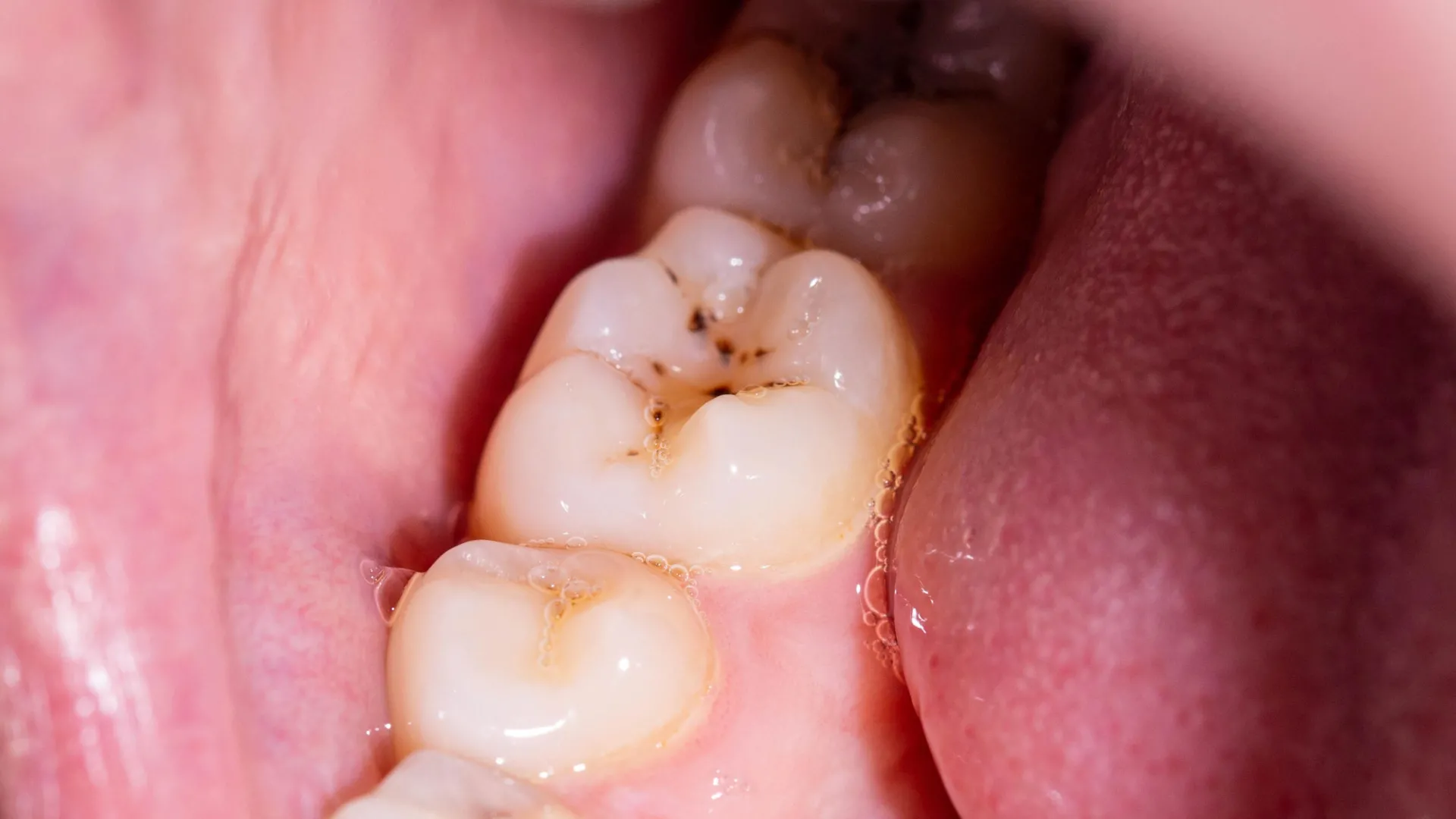
Scientists at the University of Nottingham have unveiled a groundbreaking gel that could fundamentally alter the landscape of dental medicine, offering the prospect of regrowing damaged tooth enamel – a feat previously considered impossible. This innovative biomaterial mimics the natural biological processes of enamel formation, presenting a significant leap forward in combating tooth decay, sensitivity, and wear. Unlike bone, which possesses a remarkable capacity for self-repair, tooth enamel, the body’s hardest tissue, lacks the ability to regenerate once lost, making it a persistent challenge in dental care. This new development offers a tangible pathway to rebuilding this crucial protective layer, strengthening teeth from within, and proactively preventing future oral health issues.
A Paradigm Shift in Enamel Repair
The genesis of this revolutionary treatment lies within the collaborative efforts of researchers from the University of Nottingham’s esteemed School of Pharmacy and Department of Chemical and Environmental Engineering. Their pioneering work, detailed in the prestigious journal Nature Communications, centers on a novel material engineered to address enamel weakened by demineralization or erosion, and to fortify existing healthy enamel. This innovation moves beyond the limitations of current treatments, which primarily focus on protection and superficial repair, and instead aims to restore the actual structural integrity of tooth enamel.
The Science Behind the Gel: Epitaxial Mineralization
At the heart of this scientific breakthrough is a remarkably simple yet effective application method. Dentists could potentially administer the gel using a procedure akin to existing fluoride treatments, integrating it seamlessly into routine dental check-ups and procedures. This ease of application is a crucial factor in its potential widespread adoption.
What sets this gel apart from conventional fluoride-based products is its absence of fluoride. Instead, it harnesses the power of proteins that meticulously replicate the critical characteristics of natural proteins responsible for guiding enamel formation during early childhood development. Upon application, the gel forms a thin, yet remarkably durable, coating that permeates the tooth’s surface. This coating acts as a scaffold, filling microscopic fissures and voids, and providing a precisely organized framework for the rebuilding of enamel’s mineral structure.
The gel’s regenerative capacity is driven by the interaction with calcium and phosphate ions, two essential mineral components naturally abundant in saliva. The gel actively attracts these minerals and orchestrates their assembly into new mineral crystals. This organized growth is termed "epitaxial mineralization," a process where new mineral crystals align and grow in harmony with the existing enamel structure. This precise alignment is paramount, as the exceptional hardness and durability of natural enamel are directly attributable to the ordered arrangement of its mineral crystals. Simply depositing minerals onto a tooth surface is insufficient to recreate the complex, robust structure that defines healthy enamel. By guiding this crystal growth, the new gel effectively restores both the microscopic architecture and the essential physical properties of pristine enamel.
Addressing Tooth Sensitivity and the Wider Implications of Enamel Loss
The researchers have also demonstrated the gel’s efficacy on exposed dentine, the layer beneath enamel that, when unprotected, leads to significant tooth sensitivity. The delicate tubules within dentine can transmit sensations to the tooth’s nerves, causing discomfort when exposed to thermal, chemical, or mechanical stimuli. As enamel erodes or gum recession occurs, exposed dentine becomes a prevalent cause of sensitivity for millions worldwide.
This new gel shows promise in encouraging the formation of an enamel-like mineral layer over exposed dentine. This not only promises to alleviate tooth sensitivity but also has the potential to improve the bonding of dental restorations, such as fillings, thereby enhancing the longevity and success of these treatments.
The significance of this development cannot be overstated, considering the pervasive nature of enamel deterioration. Enamel loss is a primary driver of tooth decay, a condition that affects nearly half of the global population. These issues can manifest as pain, infections, and ultimately, tooth loss, with profound impacts on an individual’s quality of life. Furthermore, poor oral health is increasingly recognized as being linked to systemic health problems, including diabetes and cardiovascular disease, underscoring the broad public health implications of effective enamel regeneration.
Historically, one of the most formidable challenges in dentistry has been the absence of cellular mechanisms within fully developed teeth capable of self-repair. While saliva can offer some limited remineralization in the earliest stages of enamel damage, the body’s natural capacity is insufficient to rebuild substantial enamel loss. Existing treatments, such as fluoride varnishes and over-the-counter remineralization products, can provide a degree of protection and repair early-stage mineral loss. However, they fall short of fully reconstructing enamel that has already been worn away. This new technology directly addresses this critical unmet need by promoting the formation of new mineral tissue that closely mimics the properties of original enamel.
Rigorous Testing: Regenerated Enamel Mimics Natural Strength
To validate the potential of their innovation, the research team subjected the regenerated enamel to rigorous testing designed to simulate real-world conditions. These experiments meticulously evaluated the mechanical strength and durability of the newly formed material under stresses encountered during everyday activities, including brushing, chewing, and exposure to acidic foods.
The results of these laboratory trials were highly encouraging. The regenerated enamel demonstrated mechanical properties that were comparable to those of healthy, natural enamel. This suggests that the material offers more than just a superficial protective barrier; it actively contributes to the tooth’s structural integrity.
Dr. Abshar Hasan, a postdoctoral fellow and the study’s lead author, elaborated on the critical importance of recreating enamel’s intricate internal structure. "Dental enamel has a unique structure, which gives enamel its remarkable properties that protect our teeth throughout life against physical, chemical, and thermal insults," Dr. Hasan stated. "When our material is applied to demineralized or eroded enamel, or exposed dentine, the material promotes the growth of crystals in an integrated and organized manner, recovering the architecture of our natural healthy enamel. We have tested the mechanical properties of these regenerated tissues under conditions simulating ‘real-life situations’ such as tooth brushing, chewing, and exposure to acidic foods, and found that the regenerated enamel behaves just like healthy enamel."
These findings are a significant indicator that the gel could eventually offer a method to restore the strength and protective function of damaged enamel, rather than merely slowing its further deterioration. While these laboratory results are promising, further clinical trials will be essential to determine the long-term performance of the treatment in human patients.
Towards Commercialization: A New Era for Dental Products
Beyond its remarkable regenerative capabilities, the development team has consistently emphasized the practical considerations for dental applications. The gel has been engineered for safety, ease of use, and scalability, paving the way for its eventual widespread adoption in dental practices. Its versatility also opens avenues for incorporation into a diverse range of dental products, potentially benefiting patients of all ages experiencing enamel erosion, tooth sensitivity, or other conditions related to exposed dentine.
Professor Alvaro Mata, Chair in Biomedical Engineering & Biomaterials at the University of Nottingham and the lead researcher on the study, expressed his optimism regarding the translation of this discovery into tangible clinical products. "We are very excited because the technology has been designed with the clinician and patient in mind," Professor Mata commented. "It is safe, can be easily and rapidly applied, and it is scalable. Also, the technology is versatile, which opens the opportunity to be translated into multiple types of products to help patients of all ages suffering from a variety of dental problems associated with loss of enamel and exposed dentine. We have started this process with our start-up company Mintech-Bio and hope to have a first product out by next year; this innovation could soon be helping patients worldwide."
The researchers have already embarked on the commercialization pathway through their startup company, Mintech-Bio, with the ambitious goal of launching an initial product within the next year. While further research and extensive clinical validation are crucial steps before this technology becomes a standard dental treatment, its demonstrated ability to recreate the structure and strength of natural enamel represents a monumental stride forward.
Should this approach prove successful in clinical settings, it has the potential to fundamentally redefine how dentists approach enamel loss. It opens the door to rebuilding tooth surfaces that, until now, could only be managed through protective measures or restorative procedures utilizing conventional dental materials. This revolutionary gel signals the dawn of a new era in dental care, one where regeneration, not just repair, becomes a tangible reality for patients worldwide. The timeline for development, from initial discovery to potential market availability within approximately a year, highlights the urgency and dedication of the research team in addressing a critical global health challenge. The implications for preventative dentistry, restorative treatments, and the overall quality of life for individuals suffering from dental ailments are immense.