


Wynn Resorts, the Las Vegas-based global developer of high-end integrated resorts, has announced that a definitive decision regarding the operational format of its landmark project in the United Arab Emirates will be reached in early 2025. Speaking during the company’s third-quarter earnings call on Thursday, CEO Craig Billings informed investors and analysts that the firm expects to finalize the specific configuration and "opening playbook" for Wynn Al Marjan Island by February. This decision marks a critical juncture for the $5.7 billion development, which is poised to become the first legally sanctioned gaming destination in the Middle East and North Africa (MENA) region.
The project, situated on a man-made archipelago in the emirate of Ras Al Khaimah, remains on track for its scheduled debut in September 2027. However, the exact nature of its debut—whether it involves a comprehensive launch of all facilities or a more nuanced, market-specific strategy—is currently under internal review. Billings noted that the decision-making process is heavily influenced by the evolving mix of source markets the company intends to target. "We will make a decision about the format in which we open, and we’ll probably make that decision around February," Billings stated, adding that the company has already developed "playbooks for every single iteration" of the opening strategy.
Strategic Reassessment of Opening Logistics
The timeline for this decision represents a subtle shift in the company’s public-facing strategy. As recently as August 2024, Wynn executives had expressed a preference for a non-phased, all-at-once rollout. At that time, Billings suggested that the resort would follow the traditional Wynn model of opening all doors and amenities simultaneously to ensure a premium guest experience from day one. The current consideration of various "iterations" suggests that Wynn is meticulously analyzing global economic conditions, travel patterns, and regional regulatory milestones to optimize the resort’s initial impact.
The "format" of the opening likely refers to the allocation of resources between gaming and non-gaming amenities, the scale of initial marketing campaigns in specific international jurisdictions, and the sequence of unveiling its luxury retail, dining, and convention spaces. By deferring the final decision until February, Wynn allows itself more time to observe the progress of the General Commercial Gaming Regulatory Authority (GCGRA), the federal body established by the UAE to oversee gaming activities.
Project Scope and Economic Significance
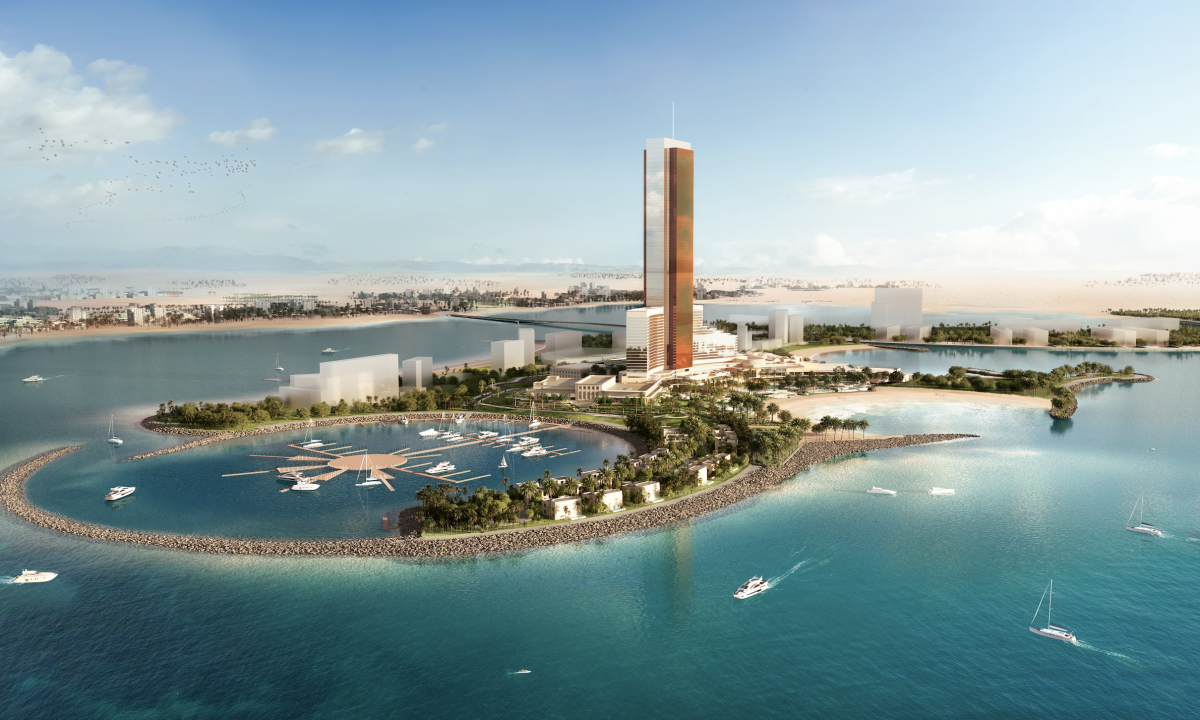
Wynn Al Marjan Island is not merely a hotel; it is a massive infrastructure undertaking that signifies a paradigm shift in the UAE’s tourism and economic diversification strategy. With a total estimated project cost of $5.7 billion, it stands as one of the most expensive integrated resort developments in the world. The resort is being developed through a joint venture between Wynn Resorts, Marjan LLC, and RAK Hospitality Holding.
The architectural plans for the site are ambitious. The resort is expected to feature a 300-meter-tall tower, housing approximately 1,542 rooms, suites, and high-end villas. Beyond the gaming floor—which is expected to be a significant but minority portion of the overall footprint—the property will include:
- A 20,000-square-meter gaming area.
- More than 22 distinct dining, lounge, and bar experiences.
- Extensive convention and event facilities totaling 15,000 square meters.
- A high-end shopping esplanade.
- A signature spa and wellness center.
- Daily light and laser shows, along with diverse entertainment programming.
The economic implications for Ras Al Khaimah are profound. The emirate has set an ambitious goal of attracting 3 million visitors annually by 2030. Analysts suggest that the Wynn development could be the primary catalyst in achieving this target, potentially contributing significantly to the emirate’s Gross Domestic Product (GDP) and creating thousands of jobs in the hospitality, service, and construction sectors.
Regulatory Milestones and the GCGRA
A pivotal moment for the project occurred in early October 2024, when Wynn Resorts officially announced it had been issued a "Commercial Gaming Facility Operator license" by the GCGRA. This was the first license of its kind granted in the UAE, providing the legal certainty required for the project to proceed as a true "integrated resort."
The GCGRA is led by industry veterans, including Chairman Jim Murren, the former CEO of MGM Resorts International, and CEO Kevin Mullally, a former executive at the Missouri Gaming Commission. The presence of these figures has instilled confidence in international investors that the UAE’s gaming framework will align with global best practices regarding transparency, anti-money laundering (AML) protocols, and responsible gaming.

The issuance of the license has cleared the path for Wynn to finalize its financial structures. During the Q3 call, Billings confirmed that the company had contributed roughly $18.2 million in additional equity to the joint venture during the quarter, bringing its total equity contribution to date to approximately $530 million.
Analysis of Source Markets and Global Competition
The "mix of source markets" mentioned by Billings is a critical factor in the resort’s eventual success. Unlike Las Vegas, which relies heavily on domestic US travel, or Macau, which is dominated by mainland Chinese visitors, Wynn Al Marjan Island is expected to draw from a highly diverse geographic pool.
- The GCC Region: While local gaming regulations for citizens remain a subject of discussion, the UAE’s massive expatriate population and visitors from neighboring Gulf nations are expected to drive significant non-gaming revenue.
- India: Located just three to four hours away by air, India represents a massive and growing market of high-net-worth individuals who currently frequent gaming hubs in Singapore and London.
- Europe and the UK: Ras Al Khaimah has already established itself as a popular destination for German, British, and Russian tourists. The addition of a world-class integrated resort is expected to increase stay durations and average daily spend from these markets.
- China and East Asia: Leveraging Wynn’s strong brand recognition in Macau, the UAE property could serve as a "midway" destination for Chinese travelers heading to Europe or Africa.
The operational decision in February will likely dictate how Wynn positions its marketing offices and partnership agreements in these key regions. If the "format" leans toward a high-roller/VIP focus initially, the marketing strategy will differ significantly from a format that prioritizes "mass-market" tourism and large-scale conventions.
Construction Progress and Financial Outlook
Construction at the Al Marjan Island site is progressing rapidly. As of late 2024, the resort’s foundation work and initial podium structures are well underway. The project is being built on a 62-hectare site that offers expansive views of the Arabian Gulf, a feature Wynn plans to utilize through floor-to-ceiling glass architecture and outdoor terrace dining.
From a financial perspective, Wynn Resorts appears to be in a strong position to fund its portion of the development. In the third quarter of 2024, the company reported solid performance across its existing portfolio. While Macau saw some fluctuations due to broader economic trends in China, the Las Vegas operations continued to show resilience. The UAE project represents the company’s most significant growth lever for the late 2020s.
Investment analysts at firms like CBRE and J.P. Morgan have noted that the RAK project could generate an estimated $1 billion to $1.40 billion in annual Gross Gaming Revenue (GGR). Given the favorable tax environment in the UAE compared to jurisdictions like Macau or New York, the flow-through to EBITDA (Earnings Before Interest, Taxes, Depreciation, and Amortization) is expected to be industry-leading.
Broader Implications for the UAE and Middle East
The success of Wynn Al Marjan Island is being closely watched by neighboring emirates and countries. For decades, gaming was a strictly prohibited activity across the Arabian Peninsula. The UAE’s move to regulate and license the industry reflects a broader trend of social and economic liberalization intended to maintain the country’s status as the premier tourism and business hub of the Middle East, especially as Saudi Arabia ramps up its "Vision 2030" tourism projects.
Other major hospitality players are already positioning themselves. MGM Resorts is currently developing a massive complex in Dubai, which, while not currently licensed for gaming, has been designed with a "gaming-ready" footprint should the Dubai government choose to follow Ras Al Khaimah’s lead.
As February 2025 approaches, the global hospitality industry will be looking toward Wynn’s headquarters for the final blueprint of this historic venture. Whether the opening is a "grand bang" or a strategically phased rollout, the project has already succeeded in fundamentally altering the landscape of luxury travel in the Middle East. By September 2027, the sands of Al Marjan Island will host a property that bridges the gap between the traditional hospitality of the Gulf and the high-stakes excitement of international integrated resorts.