


Breakthrough Research Uncovers Potential Psoriasis Treatment in Vitamin B5 Derivative
October 27, 2023 – Beijing, China – A novel therapeutic avenue for psoriasis, a chronic autoimmune skin condition affecting millions worldwide, has emerged from research conducted in China. Scientists have identified pantethine, a widely accessible nutritional supplement derived from vitamin B5, as a potential agent capable of modulating the immune system and alleviating psoriasis symptoms. The findings, published in the prestigious Journal of Experimental Medicine (JEM), detail how pantethine can quell the overactive immune cells implicated in autoimmune inflammation, demonstrating a remarkable ability to prevent psoriasis development in preclinical models and showing encouraging results in a preliminary human clinical trial.
This groundbreaking research uncovers an unexpected and significant connection between cholesterol metabolism and immune system regulation. By intervening in this intricate metabolic pathway, pantethine shows promise in curbing the excessive immune activity that drives psoriasis and potentially other autoimmune disorders.
The Immune System’s Role in Psoriasis: A Closer Look at Dendritic Cells
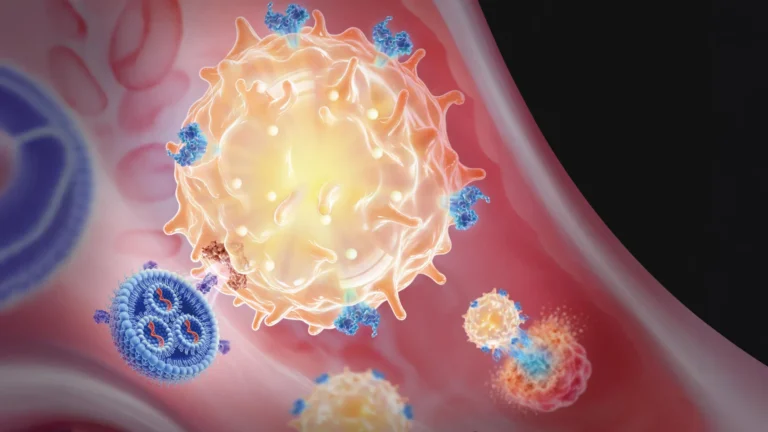
At the heart of this discovery lies the intricate role of dendritic cells, highly specialized immune cells crucial for orchestrating the body’s defensive responses. These cells act as master coordinators, diligently identifying potential threats and directing other immune cells, such as T cells, to mount an appropriate response. Their primary function involves capturing foreign substances, known as antigens, and presenting them to T cells, which are equipped to recognize specific invaders. Furthermore, dendritic cells release a cascade of chemical signals that recruit additional immune cells to the site of a perceived threat, thereby initiating and sustaining inflammation.
While this meticulous process is indispensable for combating infections and maintaining health, a malfunction can lead to detrimental consequences. When dendritic cells become excessively active or misdirected, they can transition from protectors to perpetrators, contributing to persistent inflammation and the development of autoimmune diseases like psoriasis. This condition, characterized by red, itchy, scaly patches on the skin, arises from the immune system mistakenly attacking healthy skin cells.
"Emerging evidence highlights that metabolic pathways and their associated metabolites play vital roles in regulating immune cell function and autoimmune progression," stated Wei-Na Zhang, a lead researcher at the State Key Laboratory of Biomedical Analysis in Beijing. "However, therapeutic strategies targeting metabolism in inflammatory diseases remain underexplored. Our work sheds light on a previously unrecognized metabolic axis that could be leveraged for therapeutic benefit."
The research team, a collaborative effort involving scientists from the State Key Laboratory of Biomedical Analysis in Beijing, including Qing Xia, Ai-Ling Li, and Tao Zhou, alongside Cheng-Xin Li from The First Medical Center of Chinese PLA General Hospital in Beijing, embarked on a journey to unravel the metabolic underpinnings of dendritic cell hyperactivation.
Unraveling the Link: Cholesterol Metabolism and Immune Dysregulation
The research team’s initial investigations revealed a striking observation: elevated levels of enzymes known as Vanins were consistently found in dendritic cells derived from individuals suffering from psoriasis and several other autoimmune diseases. Vanins are instrumental in regulating the metabolism of specific molecules involved in cellular energy production and other vital functions.
A critical turning point in the research came when scientists experimentally reduced Vanin levels in dendritic cells. This intervention resulted in a significant dampening of dendritic cell activity, diminishing their capacity to stimulate T cells. Furthermore, the application of a drug specifically designed to inhibit Vanin activity proved effective in preventing the development of psoriasis in a murine model.
Further in-depth analysis by the researchers sought to elucidate the precise mechanism by which Vanins exert their influence. They discovered that Vanins play a pivotal role in the conversion of pantethine into vitamin B5. Pantethine itself is a crucial precursor to coenzyme A, a vital molecule involved in numerous metabolic processes, including energy production. Notably, pantethine is already commercially available as a dietary supplement, frequently utilized for its established ability to help lower blood cholesterol levels by reducing cholesterol synthesis.
This interconnectedness between cholesterol and immune cell function is a particularly compelling aspect of the study. Cholesterol is not merely a circulating lipid; it plays an active role in modulating the behavior and function of immune cells. Previous research had already indicated that cholesterol can stimulate the activity of dendritic cells, and an elevated blood cholesterol profile has been identified as a significant risk factor for the development of psoriasis.
The critical insight emerged when the researchers connected these dots: excessive Vanin activity within dendritic cells leads to a depletion of available pantethine. As intracellular pantethine levels decline, the cells compensate by increasing cholesterol production. This surge in cholesterol within dendritic cells appears to be a key driver of their hyperactivation, thereby contributing to the chronic inflammation characteristic of psoriasis.
"We found that pantethine administration effectively alleviated psoriasis in mice, suggesting that insufficient pantethine levels may be the crucial contributor to hyperactivation of dendritic cells and autoimmune inflammation following the up-regulation of Vanins," explained Zhang. "By restoring pantethine levels, we were able to interrupt this detrimental cycle, reducing cholesterol accumulation within these immune cells and subsequently suppressing the excessive immune activation that fuels inflammation."
From Lab Bench to Bedside: Promising Results in a Human Trial
Buoyed by the compelling findings from their laboratory experiments and animal studies, the research team turned their attention to evaluating the therapeutic potential of pantethine in human subjects diagnosed with psoriasis. They initiated a small-scale, investigator-initiated clinical trial involving 24 participants who were living with the condition.
All participants in the trial were administered a standard topical treatment regimen comprising calcipotriene and betamethasone. Calcipotriene, a synthetic analog of vitamin D, is known for its ability to regulate skin cell growth and differentiation, while betamethasone, a potent corticosteroid, serves to reduce inflammation.
To assess the added benefit of pantethine, half of the participants were randomly assigned to also receive oral pantethine tablets for a duration of 12 weeks, in addition to their standard topical treatment. The other half received a placebo. This design allowed researchers to directly compare the efficacy of the standard treatment alone versus the standard treatment augmented with pantethine.
The results of the trial were encouraging. Patients who received pantethine tablets in conjunction with their prescribed topical ointment demonstrated significantly greater improvement in their psoriasis symptoms compared to those who received the placebo. The benefits of pantethine were particularly pronounced among participants who exhibited high blood cholesterol levels prior to the commencement of the study, further reinforcing the hypothesized link between cholesterol metabolism and disease severity.
These preliminary human data suggest that pantethine could potentially serve as a valuable adjunctive therapy for psoriasis, especially for individuals whose inflammatory processes may be influenced by dysregulated cholesterol metabolism.
Broader Implications and Future Directions
While these findings represent a significant stride forward, the researchers are cautious to emphasize the limitations of the current study. The human clinical trial, though promising, was small in scale, involving only 24 participants. Consequently, larger, more robust, and longer-term studies are imperative to definitively confirm the efficacy and safety of pantethine as a psoriasis treatment.
Moreover, the observed improvements in human patients, while mechanistically plausible given the preclinical data, do not definitively establish that the same biological pathway identified in laboratory experiments is the sole or primary driver of the therapeutic effect in humans.
"Our investigator-initiated clinical trial demonstrated encouraging therapeutic efficacy of pantethine as an adjunctive therapy in psoriasis, but these findings should be interpreted as proof-of-concept for clinical feasibility rather than direct mechanistic validation," stated Zhang. "Overall, our study uncovers the Vanin-pantethine-cholesterol axis as a key metabolic pathway governing dendritic cell activation and provides a foundation for therapeutic strategies targeting several dendritic cell-mediated autoimmune diseases."
The implications of this research extend beyond psoriasis. The identification of the Vanin-pantethine-cholesterol axis as a critical regulator of dendritic cell function opens up new avenues for exploring therapeutic interventions for a range of autoimmune conditions characterized by aberrant immune cell activity. Diseases such as rheumatoid arthritis, lupus, and inflammatory bowel disease, which also involve dysregulated immune responses, could potentially benefit from therapies targeting this metabolic pathway.
The accessibility and established safety profile of pantethine as a dietary supplement make it an attractive candidate for further clinical investigation. If future large-scale trials validate these initial findings, pantethine could offer a well-tolerated, potentially low-cost, and widely available treatment option for millions suffering from psoriasis and possibly other autoimmune disorders, representing a significant advancement in the management of chronic inflammatory diseases. The scientific community will be keenly observing the progression of this research as it moves towards larger clinical trials, potentially transforming the treatment landscape for autoimmune conditions.