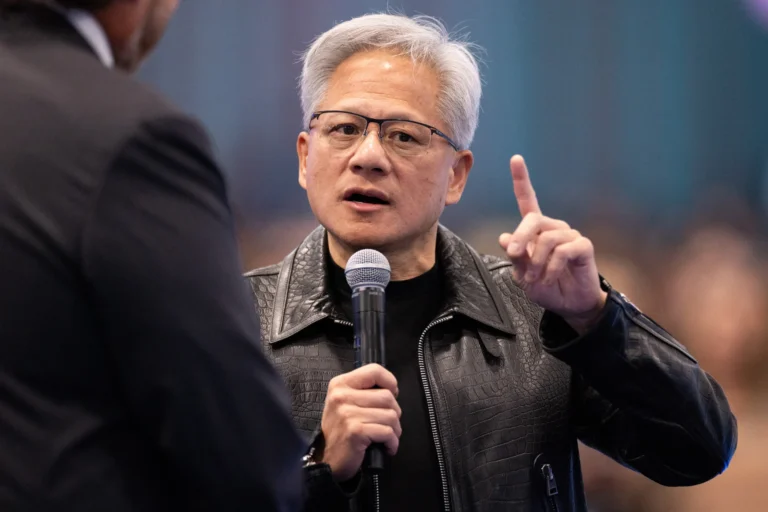


Nvidia CEO Jensen Huang engaged Heller Inc., a prominent crisis communications firm renowned for navigating high-stakes personal scandals, over a year before publicly acknowledging an extramarital affair with a woman suspected of spying for China, according to a recent report by Wired. This revelation has sent shockwaves through the global technology sector, casting a long shadow over one of the industry’s most influential leaders and raising significant national security concerns amidst escalating U.S.-China technological rivalry. The pre-emptive hiring of such a specialized firm suggests a calculated effort to manage a burgeoning crisis long before it broke into public discourse, highlighting the severe implications perceived by Huang and potentially Nvidia’s inner circle.
The scandal centers on Huang’s relationship with Alice Huang, identified as the CEO of Megaspeed, a previously obscure Singapore-based data center company with significant ties to China. Megaspeed garnered attention after a New York Times investigation in October 2025 reported its acquisition of nearly $2 billion worth of Nvidia chips, raising questions about potential circumvention of U.S. export restrictions aimed at curbing China’s technological advancement. The Times piece notably described Alice Huang standing alongside Jensen Huang at a Taipei gathering of Nvidia customers, a detail that now takes on profound significance.
A Deep Dive into the Chronology of a Crisis
The timeline of events leading to this explosive disclosure paints a picture of a carefully unfolding crisis, managed by experienced hands.
-
Early 2025: Heller Inc. Engaged. While the exact date remains undisclosed, Wired’s report indicates that Jensen Huang retained Heller Inc. at least a year prior to the public acknowledgment of the affair. This places the engagement sometime in early 2025. Risa Heller, the founder of Heller Inc., has built a formidable reputation for guiding high-profile individuals, particularly powerful men, through damaging personal scandals and allegations of misconduct. Her client roster reportedly includes controversial figures such as former congressman Anthony Weiner, celebrity chef Mario Batali, and former New Yorker writer Jeffrey Toobin, all of whom faced public disgrace over sexual or personal misconduct. The nature of Heller Inc.’s expertise strongly suggests that the issues at hand for Huang were anticipated to be deeply personal and potentially reputation-damaging.
-
October 9, 2025: The New York Times Investigation. A pivotal moment arrived with The New York Times’ exposé questioning whether Nvidia’s chip sales to Chinese-linked entities, specifically Megaspeed, were inadvertently or deliberately aiding Chinese companies in evading stringent U.S. chip export restrictions. The article highlighted Megaspeed’s rapid ascent and its substantial acquisition of Nvidia’s advanced semiconductors. Crucially, it was in this report that Alice Huang, Megaspeed’s CEO, was first publicly linked to Jensen Huang, albeit innocuously at the time, as merely sharing a stage at an industry event.
-
Shortly After October 2025: Internal Communications Directive. Following the New York Times report, Nvidia’s internal communications team received explicit instructions to copy Heller Inc. on all press inquiries pertaining to Jensen Huang. This directive underscores the immediate and heightened concern within Nvidia regarding the nascent narrative, indicating that the potential for a personal scandal to intersect with corporate operations and geopolitical sensitivities was already being actively managed. It signaled that the company was preparing for intense media scrutiny that transcended typical corporate PR.
-
November 8, 2026: Huang’s Public Acknowledgment. In a surprising move, Nvidia published a statement from Jensen Huang on Sunday, November 8, 2026. In this statement, Huang acknowledged an extramarital affair with a "former Megaspeed executive," though he conspicuously avoided naming Alice Huang directly. The omission of her name, despite the strong public linkage, might be a strategic attempt to control the narrative or manage legal implications.
-
November 8, 2026: Nvidia Board Launches Independent Investigation. Concurrently with Huang’s statement, Nvidia’s Board of Directors released its own separate announcement. The board declared an independent investigation into the matter, explicitly citing "reports that Huang has been the target of a foreign intelligence effort." This official corporate response elevated the crisis from a personal indiscretion to a matter of national security and corporate integrity, adding immense gravity to the situation.
Nvidia’s Pivotal Role in the Global Tech Landscape
Nvidia, under Jensen Huang’s visionary leadership, has grown from a niche graphics card manufacturer into a behemoth at the forefront of the artificial intelligence revolution. Its GPUs (Graphics Processing Units) are the indispensable engines powering AI research, data centers, and advanced computing across the globe. The company’s market capitalization has soared, reflecting its critical role in shaping the future of technology. As of late 2026, Nvidia’s valuation hovers around an estimated $3 trillion, making it one of the most valuable corporations worldwide. Its influence extends from supercomputing and autonomous vehicles to enterprise AI and the metaverse.
This immense stature means that any significant scandal involving its CEO has far-reaching implications, not just for the company’s stock price or reputation, but for the entire tech ecosystem and even national security. The integrity of Nvidia’s leadership, its supply chain, and its adherence to international regulations are paramount, especially given the strategic importance of semiconductors in modern geopolitical competition.
The Geopolitical Chessboard: US-China Tech Rivalry
The backdrop to this scandal is the intensely competitive and often confrontational relationship between the United States and China over technological supremacy. Semiconductors, particularly advanced AI chips, are at the heart of this struggle. The U.S. government has implemented increasingly stringent export controls to prevent China from acquiring cutting-edge chip technology that could be used for military modernization, surveillance, or to gain an unfair economic advantage. Companies like Nvidia operate on a tightrope, balancing global market ambitions with national security directives.
The implication that Jensen Huang, the CEO of America’s leading AI chipmaker, might have been compromised by a foreign intelligence effort through a personal relationship, strikes at the very core of these national security concerns. It raises questions about potential leakage of sensitive technological information, strategic decision-making, and compliance with export restrictions. The acquisition of $2 billion worth of Nvidia chips by a "little-known" Chinese-linked entity like Megaspeed, especially when the CEO of that entity is linked to Huang, fuels suspicions of deliberate evasion or compromised protocols.
The Crisis Communications Playbook: Heller Inc.’s Role

The involvement of Heller Inc. from an early stage is a critical detail. Risa Heller’s firm specializes in reputation management during times of extreme personal and professional duress. Their expertise lies in crafting narratives, managing media exposure, and advising clients on public statements during highly sensitive situations, particularly those involving sexual misconduct or ethical breaches that intersect with public perception. The fact that Huang sought their counsel long before the affair became public suggests a pre-emptive strategy, indicating either an awareness of the impending exposure or a desire to control the narrative surrounding a complex personal situation that had corporate and geopolitical ramifications.
While neither Heller Inc. nor Nvidia has offered immediate comment on the engagement or the unfolding scandal, the firm’s reputation precedes it. Their work often involves damage control, strategic leaks (or prevention of leaks), and positioning clients to navigate public backlash. The choice of Heller Inc., rather than a firm specializing in corporate financial or regulatory communications, further emphasizes the deeply personal and potentially scandalous nature of the anticipated crisis.
Statements, Reactions, and Market Tremors
The immediate aftermath of the revelations has been predictably turbulent. Nvidia’s stock experienced a significant downturn in early trading following the news, with shares dropping by an estimated 7-10% on Monday, November 9, 2026, wiping billions off its market capitalization. Analysts across Wall Street have begun downgrading Nvidia’s stock, citing increased uncertainty, corporate governance concerns, and the potential for regulatory scrutiny.
-
Nvidia (Investor Relations): While the company has not provided further comment beyond the board’s statement, investor relations teams are likely working overtime to reassure shareholders. A hypothetical statement might emphasize "full cooperation with the independent investigation" and "commitment to the highest standards of corporate governance and national security compliance."
-
U.S. Government Officials: The U.S. Commerce Department and intelligence agencies are expected to launch their own inquiries. Senator Maria Ramirez, Chair of the Senate Intelligence Committee, issued a statement expressing "deep concern over reports of foreign intelligence targeting key American technology leaders." She added, "We must ensure that our critical technology sectors are secure from all adversarial influence, and we will be closely monitoring this investigation." This indicates a potential for broader governmental intervention and tighter regulations on tech executives.
-
Industry Analysts: "This isn’t just a personal scandal; it’s a corporate governance nightmare intertwined with national security," commented Dr. Lena Chen, a leading tech industry analyst at Global Market Insights. "Nvidia’s board has a monumental task ahead to restore trust, both with investors and with the U.S. government. The implications for future export policies and the scrutiny on other tech CEOs with international ties are profound."
-
Heller Inc.: True to form, Heller Inc. has maintained a strict "no comment" policy, consistent with their practice of discretion for high-profile clients.
Corporate Governance Under Scrutiny
The independent investigation launched by Nvidia’s Board of Directors is a critical step, but it also places the board itself under intense scrutiny. Questions will inevitably arise about the board’s awareness of Huang’s personal conduct and his engagement of a crisis PR firm. Did the board know about the affair and the potential national security implications before the public revelations? If so, what actions were taken? If not, why were they not informed, and what does this say about the company’s internal controls and oversight mechanisms?
The investigation will likely delve into:
- The nature and duration of Huang’s relationship with Alice Huang.
- Whether company resources were used to facilitate the affair or its cover-up.
- Any potential transfer of sensitive information or undue influence on corporate decisions related to Megaspeed or China sales.
- The extent of the "foreign intelligence effort" and whether it compromised Nvidia’s operations or intellectual property.
- The board’s process for handling executive misconduct and national security risks.
The outcome of this investigation could have significant consequences for Jensen Huang’s leadership tenure and potentially lead to a restructuring of Nvidia’s executive team or board. The company’s ability to navigate this crisis will be a major test of its corporate resilience and ethical framework.
Broader Implications for the Tech Sector and Geopolitics
The Nvidia scandal is likely to have ripple effects across the entire technology industry. Companies, particularly those with significant international operations and exposure to geopolitical tensions, may re-evaluate their executive vetting processes, ethics policies, and crisis preparedness. There could be increased pressure on executives to disclose personal relationships that could pose conflicts of interest or national security risks.
Furthermore, the incident could embolden calls within the U.S. government for even tighter controls on technology exports and increased surveillance of foreign investments and partnerships, especially those involving critical technologies like AI chips. It adds another layer of complexity to the already strained U.S.-China relationship, potentially leading to a further decoupling of tech supply chains and heightened suspicion in cross-border collaborations.
The saga of Jensen Huang, Nvidia, and the suspected Chinese intelligence operation serves as a stark reminder of the intricate web of personal conduct, corporate responsibility, national security, and global geopolitics in the 21st century. As the independent investigation unfolds, the tech world watches with bated breath, knowing that the revelations could redefine leadership expectations and reshape the landscape of international technological competition.