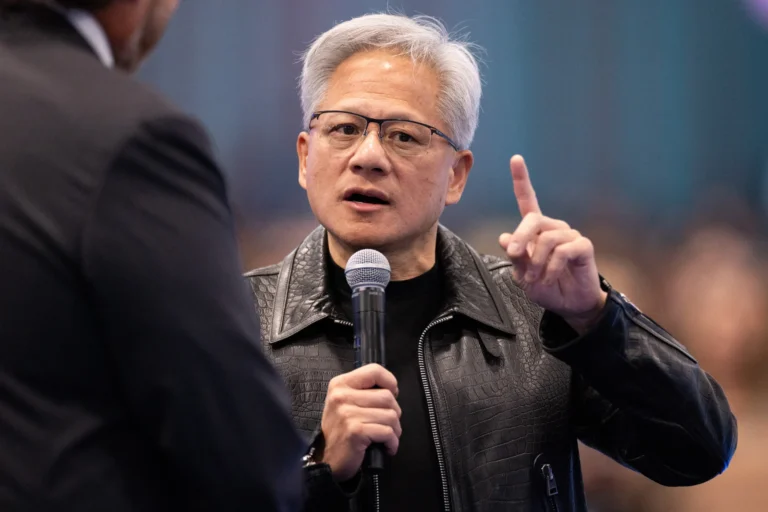



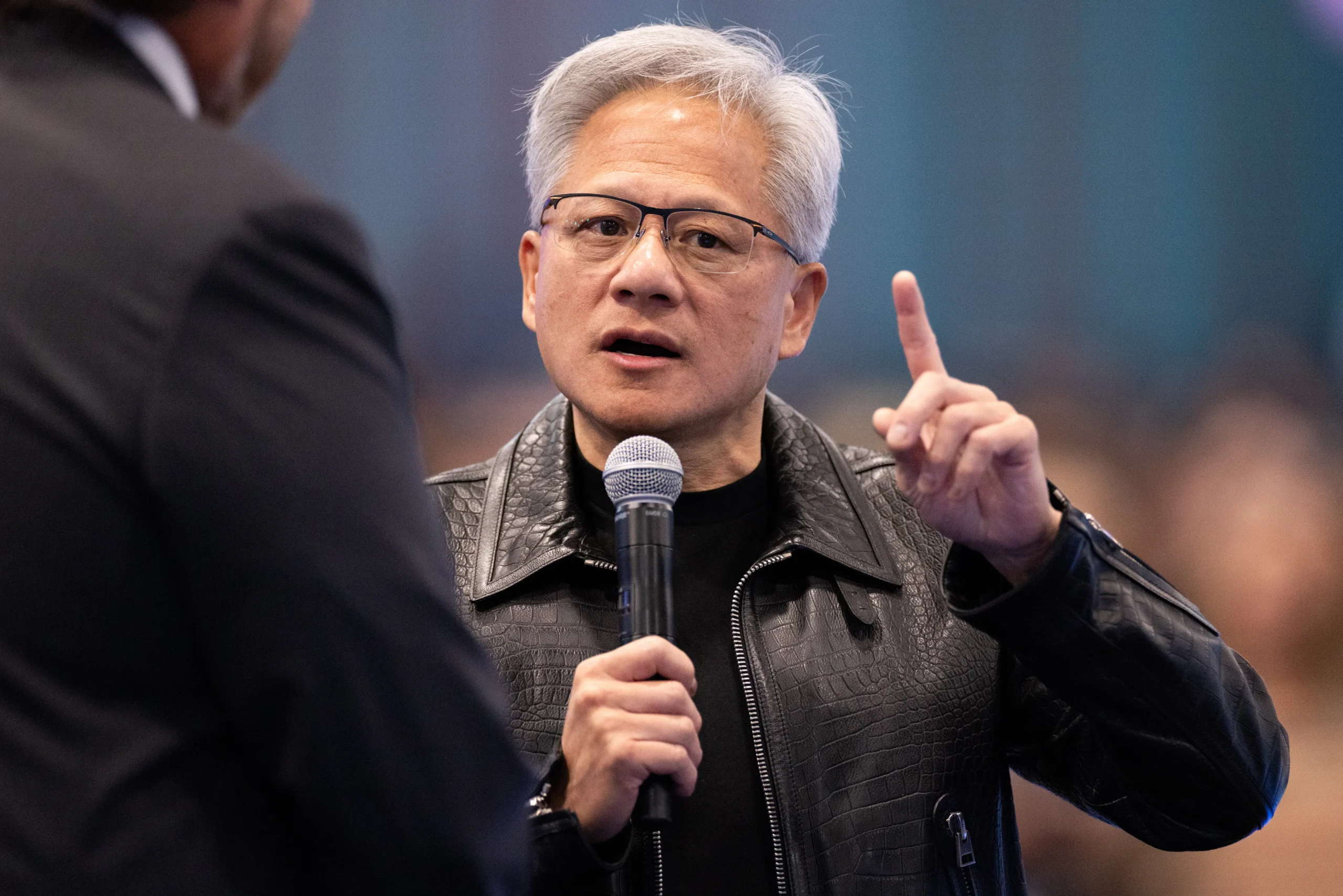
Nvidia’s board of directors announced Sunday that it has launched an independent investigation following explosive reports alleging that CEO Jensen Huang was targeted by a sophisticated Chinese spy operation. This development comes concurrently with a deeply personal admission from Huang himself, who published a message to the company confirming an extramarital affair with Alice Huang, a former executive at Singapore-based chip company Megaspeed. A classified U.S. intelligence memo, which circulated among policymakers earlier this year, claimed that Alice Huang had been recruited by China’s Ministry of State Security (MSS) with the express purpose of gathering intelligence on Nvidia’s influential chief executive. The confluence of these events has sent ripples through the technology sector, raising serious questions about corporate security, national interests, and the personal conduct of leaders at the forefront of the global artificial intelligence race.
The Genesis of the Crisis: Espionage Allegations and Intelligence Warnings
The core of the unfolding crisis lies in the U.S. intelligence community’s assessment, detailed in a memo circulated months prior to the public announcement. This memo posited that Alice Huang, identified as a former senior figure at Megaspeed, a Singapore-based semiconductor firm, was an asset of China’s Ministry of State Security. Her alleged mission was to cultivate a relationship with Jensen Huang to extract sensitive information pertaining to Nvidia’s technological advancements, strategic plans, and intellectual property. While the specific details of the alleged recruitment or the information sought remain under wraps, the implications are profound, touching upon national security concerns given Nvidia’s unparalleled dominance in the high-stakes field of AI-enabling semiconductors.
Nvidia’s initial stance on earlier reports regarding the relationship between its CEO and Alice Huang was dismissive, characterizing their interactions as “not unusual” for individuals within the tightly-knit semiconductor industry. The company further asserted at the time that it does not share classified information with customers or partners, implying that any personal relationship would not compromise corporate secrets. However, the formal launch of an independent investigation by the board signals a significant shift in the company’s approach, acknowledging the gravity of the allegations and the need for a thorough, unbiased review.
CEO Jensen Huang’s Public Apology and Personal Confession
In a striking move, Jensen Huang, a figure often celebrated for his visionary leadership and instrumental role in transforming Nvidia into a trillion-dollar technology titan, issued a candid apology to his employees and stakeholders. In a message published by Nvidia, Huang admitted to an affair, stating, “I owe my family and all of you an apology. I was unfaithful to my wife. My actions hurt her and our children. There is no excuse for what I did. I am deeply sorry.” While his message refrained from naming Alice Huang, the context provided by the board’s announcement and earlier intelligence reports made the connection clear.
Huang’s apology extended beyond his personal life, acknowledging a broader responsibility to the company he co-founded and has led for decades. He conveyed a sense of having “fallen short” of his obligations, telling his colleagues, board members, partners, and shareholders worldwide that “you deserve better from me.” This public confession, unusual for a CEO of such a prominent company, highlights the intense pressure and scrutiny under which Huang now operates, caught between a personal indiscretion and serious national security allegations.
A Chronology of Mounting Tensions
The events leading to Sunday’s announcement have unfolded over several months, escalating from whispers in intelligence circles to a full-blown corporate crisis:
- Earlier This Year (2026): A confidential U.S. intelligence memo begins circulating among policymakers. This document reportedly outlines claims that Alice Huang, a former executive at Megaspeed, was recruited by China’s Ministry of State Security to target Jensen Huang for intelligence gathering.
- Prior to Sunday’s Announcement: Reports begin to surface in the media, referencing the intelligence memo and the alleged relationship between Jensen Huang and Alice Huang. Nvidia, in its initial responses, downplays the significance of their interactions, describing them as "not unusual" and reiterating that the company does not share classified information with external parties.
- Sunday (November 9, 2026): Nvidia’s board of directors formally announces the launch of an independent investigation into the spy operation allegations. Simultaneously, Nvidia publishes a message from Jensen Huang to the company, in which he publicly apologizes for his infidelity and acknowledges an affair, implicitly confirming the personal relationship at the heart of the intelligence memo.
This timeline underscores a reactive progression, where initial denials or downplaying of reports have given way to formal corporate action, suggesting the increasing weight and credibility of the intelligence community’s concerns.
The Geopolitical Chessboard: US-China Tech Rivalry and AI Dominance
The allegations against Jensen Huang and Nvidia are inextricably linked to the intensifying technological arms race between the United States and China, particularly in the realm of artificial intelligence. Both nations view AI as a critical determinant of future economic prosperity and national security, leading to fierce competition for technological supremacy. Semiconductors, the foundational hardware for advanced AI systems, have become a primary battleground in this geopolitical contest.
Nvidia stands at the epicenter of this struggle. Its graphics processing units (GPUs), such as the H100 and the newer H200, are indispensable for training and deploying large language models and other sophisticated AI applications. The company holds an estimated 80-90% market share in the AI chip sector, making its technology a strategic asset of immense national importance. Consequently, access to Nvidia’s cutting-edge chips has been a major point of contention in U.S.-China relations, with the U.S. Department of Commerce implementing stringent export controls to restrict China’s access to advanced semiconductor technology. These controls aim to hobble China’s AI ambitions, particularly its military applications, by denying it the most powerful tools for development.
In this context, any attempt by a foreign intelligence service to compromise the CEO of Nvidia represents a direct assault on U.S. technological leadership and national security. The stakes are extraordinarily high, extending far beyond typical corporate espionage to touch upon state-sponsored efforts to gain a strategic advantage in a defining technological era. The reported close relationship between Jensen Huang and former President Donald Trump, a vocal proponent of American "superintelligence," further underscores the political sensitivity surrounding Nvidia’s leadership and its products.
Nvidia’s Response and the Path Forward
In its official announcement, Nvidia’s board of directors emphasized that the independent investigation would be conducted by independent directors working in conjunction with outside legal counsel. This approach is standard practice for sensitive corporate inquiries, designed to ensure impartiality and thoroughness. Crucially, the board stated that it currently has “no reason to believe” that either national security or company secrets were compromised as a result of the alleged spy operation or Huang’s personal conduct.
Furthermore, the board conveyed its “confidence in Jensen and his leadership team,” a critical endorsement intended to stabilize investor confidence and maintain operational continuity. It also noted that Huang “fully supports the review and has committed to cooperating with it,” signaling his willingness to address the allegations transparently. Despite these assurances, the mere existence of such an investigation at the pinnacle of one of the world’s most valuable and strategically important companies introduces a significant layer of uncertainty and scrutiny.
Broader Implications for Corporate Security and Leadership
The Nvidia scandal serves as a stark reminder of the evolving threats faced by technology companies and their leaders in an increasingly interconnected and adversarial global landscape. The fusion of personal vulnerabilities with national security interests highlights the sophisticated tactics employed by state actors in their pursuit of technological advantage.
Other companies deeply entrenched in the AI boom have already begun to issue warnings to their employees. OpenAI, for instance, has reportedly cautioned its staff about the potential for foreign intelligence services to target them, including through "honey trap" operations involving sex or romance. These warnings underscore a growing awareness across the industry that individual employees, particularly those with access to sensitive information or influence, can become unwitting pawns in geopolitical power struggles.
For Nvidia, the immediate implications could include heightened scrutiny from government regulators and defense agencies, potential impacts on stock performance if investor confidence wavers, and an internal period of introspection regarding security protocols and executive conduct policies. The investigation will need to meticulously examine not only the extent of any potential information compromise but also the robustness of Nvidia’s internal defenses against such sophisticated threats.
Beyond Nvidia, this incident is likely to prompt a broader re-evaluation of security measures and ethical guidelines for executives in critical technology sectors. Companies may need to implement more rigorous background checks, enhance cybersecurity training, and establish clearer protocols for managing personal relationships that could be exploited by hostile foreign entities. The episode also casts a spotlight on the immense pressure faced by tech CEOs, whose personal lives can now intersect dramatically with national security imperatives.
The independent investigation at Nvidia will be closely watched by the industry, governments, and the public. Its findings will not only determine the future trajectory of Jensen Huang’s leadership but also shape the understanding of corporate vulnerability in an era where technological dominance is synonymous with national power. The intertwining of personal ethics, corporate governance, and geopolitical espionage has rarely been so vividly illustrated, marking a pivotal moment for one of the world’s most critical technology companies.