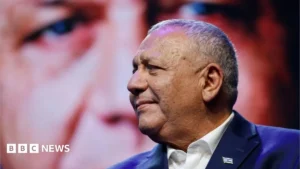


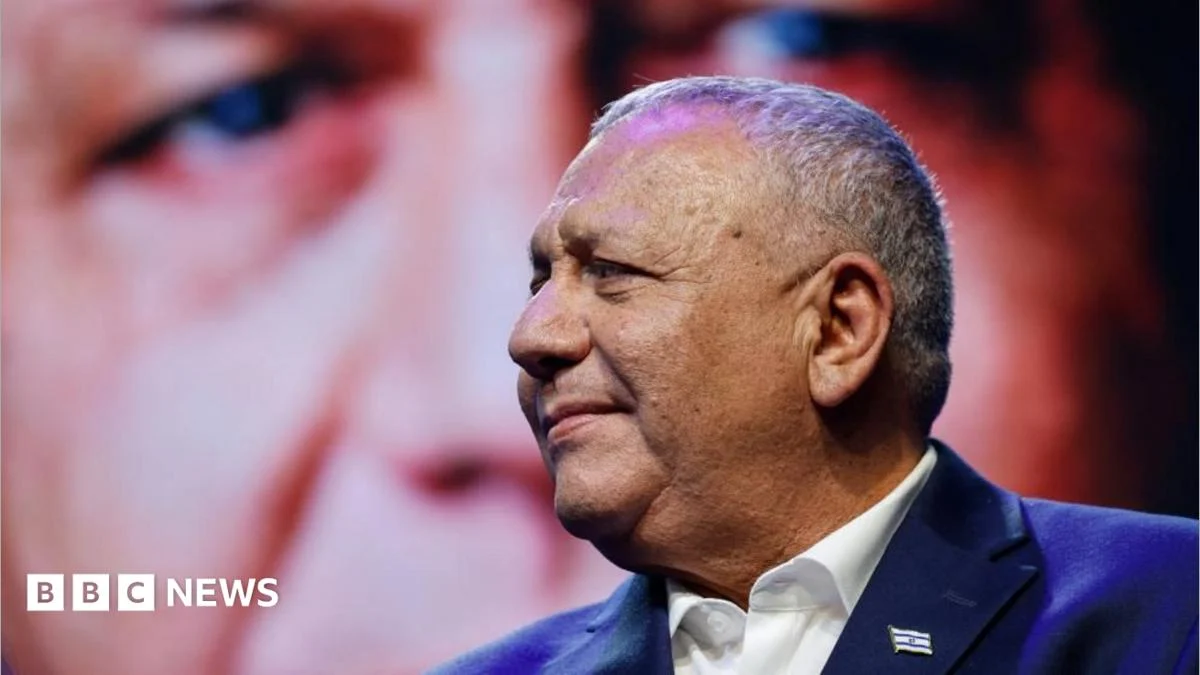
Israel’s political landscape is once again gripped by the intricate dance of coalition building, following President Isaac Herzog’s announcement that he will officially task opposition leader Gadi Eisenkot with forming the nation’s next government. This decision comes in the wake of last week’s general election, which, true to Israel’s electoral history, failed to deliver a decisive majority to either of the two primary blocs led by Eisenkot or incumbent Prime Minister Benjamin Netanyahu. The mandate places a heavy burden on Eisenkot, who now faces a demanding 28-day period, with a potential 14-day extension, to navigate the complex web of ideological divides and competing interests that define Israeli politics and forge a stable ruling coalition.
The Israeli Political Labyrinth: Background and System
The State of Israel operates under a parliamentary democracy, where the Knesset, a 120-seat legislative body, is the epicenter of political power. Its electoral system, based on proportional representation, is notorious for fostering a multitude of political parties, each vying for representation with a relatively low electoral threshold. This system almost invariably leads to coalition governments, as no single party has ever secured an outright majority of 61 seats since the nation’s founding in 1948. The President of Israel, a largely ceremonial head of state, plays a crucial role in this post-election phase, responsible for consulting with all elected party representatives and then selecting the Member of Knesset most likely to succeed in assembling a governing coalition. This discretion is vital, as the president is not bound to choose the leader of the largest party, but rather the individual who demonstrates the greatest potential for forming a stable administration, as evidenced by the number of recommendations received during consultations.
This inherent fragmentation often translates into political instability, with Israel having endured five general elections between 2019 and 2022 alone. These successive electoral cycles underscored a profound inability of rival factions to bridge their differences and cooperate, leading to prolonged periods of caretaker governments and policy stagnation. The core ideological cleavages run deep, encompassing debates over national security, the Israeli-Palestinian conflict, the role of religion in public life, economic policy, and the controversial issue of judicial reform. These divisions are further complicated by a diverse electorate comprising secular and religious Jews, Ashkenazi and Mizrahi Jews, and a significant Arab minority, each with distinct concerns and political aspirations.
The Recent Electoral Landscape: Results and Blocs
The most recent election results painted a familiar picture of a deeply divided electorate. Prime Minister Benjamin Netanyahu’s right-wing bloc, anchored by his Likud party and supported by its far-right and ultra-Orthodox Jewish allies, secured 53 seats in the 120-member Knesset. This coalition, traditionally ideologically cohesive, fell short of the 61-seat majority required to form a government independently. On the opposing side, Gadi Eisenkot’s centrist Yashar party and its three other Jewish opposition allies within his bloc managed to garner 48 seats. This bloc represents a more diverse ideological spectrum, ranging from centrist to left-leaning parties, united primarily by their opposition to Netanyahu’s leadership and the policies of his right-wing allies.
Crucially, the election saw an unprecedented surge in turnout among Arab voters, leading to the two Arab-led alliances, the United Arab List and the Joint List, collectively securing 19 seats. This significant showing positioned them as potential "kingmakers" in the coalition negotiations, holding the numerical balance of power. However, their participation in a governing coalition has historically been a highly contentious issue within mainstream Israeli politics. Prior to the polls, nearly all Jewish parties, with the exception of one, explicitly pledged not to cooperate with Arab parties in forming a government, reflecting deep-seated political and ideological divisions, as well as historical tensions. This pre-election stance now presents a significant hurdle for Eisenkot, should he seek their support to reach the necessary 61-seat threshold.
A History of Deadlock: Israel’s Coalition Challenges
Israel’s political history is replete with examples of challenging coalition formations, a direct consequence of its multi-party system. The inability of any single party to command an outright majority necessitates intricate negotiations, often involving horse-trading and significant policy concessions among coalition partners. The period between 2019 and 2022 serves as a stark reminder of these difficulties, witnessing an unprecedented five national elections. Each election failed to produce a stable government, largely due to the inability of the two largest blocs, then led by Netanyahu and his centrist rival Benny Gantz, to form a functioning coalition, or their subsequent unity government collapsing.
The 2020 unity government, formed between Netanyahu’s Likud and Gantz’s Blue and White alliance, stands as a notable precedent for a grand coalition between ideologically disparate rivals. This power-sharing agreement, which included a rotation of the premiership, was hailed at the time as a necessary step to prevent further elections amidst the COVID-19 pandemic and acute political paralysis. However, it ultimately proved fragile, collapsing due to irreconcilable differences, particularly over budget approvals and judicial appointments, underscoring the inherent difficulties in sustaining such broad alliances. President Herzog, acutely aware of this recent history, has repeatedly stressed the imperative for factions to move beyond rigid commitments and campaign promises in the current climate, urging them to prioritize national stability over partisan interests to avert yet another round of elections. The public’s fatigue with political deadlock and the constant cycle of campaigns is palpable, adding pressure on all parties to find a resolution.
President Herzog’s Pivotal Role and Consultations
President Isaac Herzog’s role in the post-election period is constitutionally defined yet politically charged. As the neutral arbiter, his consultations with delegations from all incoming Knesset members are critical. These meetings involve each party recommending their preferred candidate for Prime Minister, providing the President with a clear indication of potential coalition alignments. In this instance, following a week of intensive discussions, the President’s office confirmed that Gadi Eisenkot received 67 recommendations for the premiership, significantly more than Benjamin Netanyahu’s 46. This numerical advantage, coupled with the President’s broad discretion to choose the candidate most likely to succeed, directly led to Eisenkot being granted the first opportunity to form a government.
In his public statements throughout the consultation process, President Herzog emphasized the gravity of the situation, calling for national unity and a spirit of compromise. He expressed his expectation that "factions and their representatives understand that, in the current reality, not every commitment and promise can be fulfilled." This statement was a clear appeal to party leaders to set aside some of their pre-election red lines and explore unconventional alliances to build a stable administration and prevent further political upheaval. His decision to task Eisenkot, despite Netanyahu’s Likud being the largest single party, underscores the President’s assessment that Eisenkot possesses a more viable path to assembling a 61-seat majority, primarily through potential cross-bloc negotiations or by leveraging the support of smaller, ideologically flexible parties. The President informed both Eisenkot and Netanyahu of his decision, setting the stage for the intense coalition negotiations to commence.
Eisenkot’s Path Forward: Coalition Scenarios and Hurdles
Gadi Eisenkot now faces a formidable task. His "national emergency government" declaration on X (formerly Twitter), where he wrote, "Now is the time to form a national emergency government. I will do everything to ensure we are worthy," signals his intent to pursue a broad-based administration. However, the pathways to achieving the elusive 61-seat majority are fraught with significant political and ideological hurdles.
The Grand Unity Government Dilemma
One of the most frequently discussed options is a national unity administration involving both Eisenkot’s centrist bloc and Netanyahu’s Likud. Such a government would command a substantial majority, offering a degree of stability and potentially allowing for the tackling of pressing national issues with broad consensus. The precedent of the 2020 Netanyahu-Gantz unity government, though ultimately short-lived, demonstrates the feasibility of such an alliance in times of perceived national crisis. However, the ideological chasm between the two leaders and their respective blocs remains vast. Key policy disagreements on issues such as judicial reform, the peace process, and the role of religious parties are significant. Furthermore, personal rivalries and a deep-seated distrust, cultivated over years of intense political campaigning, would make power-sharing negotiations exceptionally difficult. Eisenkot’s ascent as a key figure in the opposition has been largely predicated on his stance against Netanyahu’s policies, making a direct partnership a challenging proposition that could alienate parts of his own political base.
Navigating the Arab Party Question
Another potential pathway for Eisenkot involves securing the support of the Arab-led alliances, which collectively hold 19 seats. Numerically, this would provide Eisenkot with a comfortable majority, given his bloc’s 48 seats. However, this option presents immense political challenges. The pre-election pledges by nearly all Jewish parties in Eisenkot’s bloc not to cooperate with Arab parties create a significant barrier. Historically, Arab parties have rarely been included in governing coalitions, largely due to ideological differences, particularly concerning the Israeli-Palestinian conflict, and the perception among some Jewish parties that their inclusion would compromise national security or identity. While there has been speculation that an agreement could be reached, potentially through an external support arrangement where Arab parties do not formally join the government but vote with it on key issues, such a move would require substantial concessions from Eisenkot’s bloc and could lead to internal dissent from more right-leaning members of his alliance. Arab parties, in turn, would likely demand significant policy changes, including increased funding for Arab communities, addressing discrimination, and a more engaged approach to the Palestinian issue.
Wooing the Ultra-Orthodox Factions
A third, albeit difficult, avenue for Eisenkot could be to draw ultra-Orthodox parties away from Netanyahu’s bloc. Parties like Shas and United Torah Judaism have historically shown a degree of flexibility in joining governments, provided their core interests—such as funding for religious institutions, exemptions from military service for yeshiva students, and the preservation of religious status quo—are met. While they are ideologically aligned with the right-wing on many social and security issues, their primary concerns are often community-specific. However, these parties have been steadfast allies of Netanyahu for decades, and severing that bond would require an extraordinary offer from Eisenkot, potentially at the expense of his secular-leaning coalition partners. The concessions required could be substantial and might clash with the secular liberal values of many within Eisenkot’s centrist and left-wing bloc, making this a highly complex and sensitive negotiation. Furthermore, attempting to break up Netanyahu’s long-standing right-wing-religious alliance would be a Herculean task, given their deep-seated political and personal loyalties.
Reactions and Rhetoric from Key Players
Following President Herzog’s announcement, reactions from the various political camps have been swift and predictable, underscoring the deep divisions that persist. Gadi Eisenkot’s initial statement on social media, emphasizing a "national emergency government," seeks to frame his efforts as transcending partisan politics, positioning himself as a leader capable of uniting a fractured nation. This rhetoric aims to garner broader public support and put pressure on potential coalition partners to compromise for the sake of stability.
Benjamin Netanyahu and his Likud party are expected to challenge the legitimacy of Eisenkot’s mandate, arguing that as the leader of the largest single party, Netanyahu should have been given the first opportunity. They are likely to emphasize their bloc’s ideological cohesion and express skepticism about Eisenkot’s ability to form a stable government without making untenable concessions to ideologically distant parties. Netanyahu’s allies will undoubtedly highlight the numerical strength of the right-wing bloc and reiterate their commitment to their core principles, making any defection from their ranks highly unlikely.
The Arab-led parties are likely to reiterate their demands for concrete policy commitments addressing the needs of the Arab community and a more balanced approach to the Israeli-Palestinian conflict, should they be approached for support. Their stance will be crucial, as their participation, even external, would mark a significant shift in Israeli politics. Ultra-Orthodox parties will closely monitor negotiations, weighing any potential offers against their long-standing alliance with Netanyahu, prioritizing their community’s interests above all else. Their decisions could be pivotal, holding significant leverage in any coalition arithmetic.
Broader Implications for Israeli Society and Governance
The outcome of Eisenkot’s coalition efforts will have profound implications for Israeli society and governance. Failure to form a government would almost certainly lead to a sixth general election in just five years, further exacerbating public disillusionment and political fatigue. Such a scenario would deepen the sense of instability, potentially affecting Israel’s economy by deterring foreign investment and impacting market confidence. A prolonged period of political uncertainty could also impede the government’s ability to address critical domestic challenges, such as the rising cost of living, educational disparities, and infrastructure development.
On the security front, a weak or unstable government could face challenges in projecting a unified front in a volatile region. Decisions regarding national security, the ongoing conflict with Palestinians, and regional diplomacy (including the Abraham Accords) require strong and stable leadership. A government perpetually on the brink of collapse might struggle to implement long-term strategic policies, potentially creating vulnerabilities. Furthermore, the process of coalition formation often intensifies existing societal divisions. The rhetoric employed during negotiations can inflame tensions between religious and secular groups, between Jewish and Arab citizens, and across the political spectrum, further fragmenting the social fabric.
In conclusion, Gadi Eisenkot’s mandate marks a critical juncture in Israeli politics. The path to a stable government is fraught with challenges, requiring unprecedented levels of compromise and a willingness to transcend deeply entrenched political divides. The nation watches anxiously as Eisenkot embarks on this daunting task, hoping that a resolution can be found to usher in a period of much-needed stability and effective governance, preventing a return to the cycle of elections that has characterized recent years.