


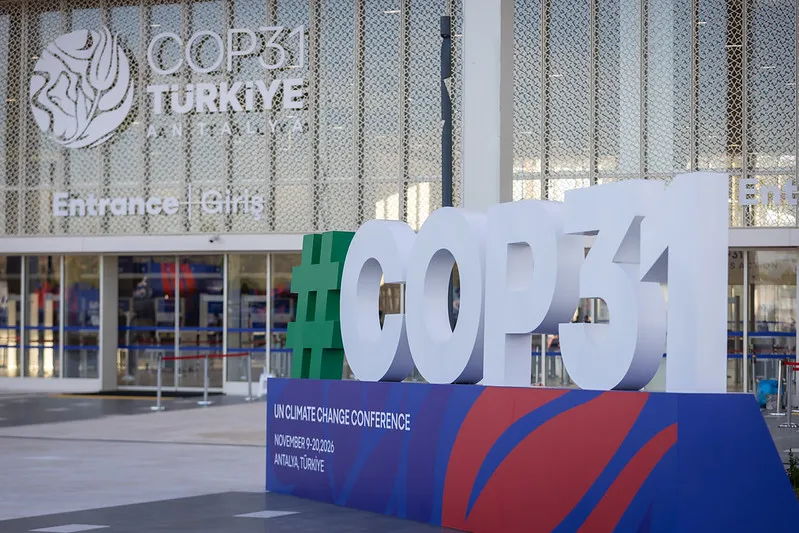
The 31st United Nations Climate Change Conference, widely known as COP31, is set to commence in Antalya, Türkiye, marking a critical juncture in the global effort to translate high-level climate pledges into verifiable local actions. Scheduled to run from November 9 to 20, the summit is being co-hosted by Türkiye and Australia, a partnership that highlights the shared climate vulnerabilities of the Mediterranean and the Indo-Pacific regions. After a series of summits focused on setting long-term targets, COP31 has been designated the "Implementation COP," a title reflecting a growing global impatience—particularly from the tourism sector—with rhetoric that lacks accompanying financial and structural transparency.
The transition to this implementation-focused approach follows a period of diplomatic friction during COP30 in Belém, Brazil, where parties struggled to reach a consensus on the specific mechanisms for phasing out fossil fuels and securing forest protections. While the Brazilian presidency of the previous year laid the groundwork for future action, the lack of a definitive breakthrough in South America has placed immense pressure on the Antalya summit to deliver concrete results. In anticipation of the opening gavel, the Brazilian COP30 presidency recently released a series of voluntary roadmaps designed to bridge the gap between international agreements and national policy execution.
The Tourism Industry Demands Accountability
For the global tourism industry, COP31 represents more than just a diplomatic gathering; it is a moment of reckoning for a sector that is both a contributor to and a victim of climate change. Industry leaders and operators have signaled a shift in their engagement with the UN process, moving away from general endorsements of sustainability toward a demand for "receipts." This metaphorical call for receipts refers to the need for clear evidence of how climate investments are being allocated and whether national policies are effectively decarbonizing the infrastructure upon which travel depends.
Tourism accounts for approximately 8% to 11% of global greenhouse gas emissions, with transportation, particularly aviation, being the primary driver. In Antalya, a city whose economy is deeply intertwined with international travel, the stakes are visible. Operators in the hospitality and travel sectors are increasingly concerned that without significant government-led investment in sustainable aviation fuels (SAF), green hydrogen, and climate-resilient infrastructure, the industry will struggle to meet its goal of net-zero emissions by 2050.
"The time for vague roadmaps is over," noted one prominent industry analyst monitoring the talks. "The tourism sector is looking for specific fiscal incentives and infrastructure commitments that allow businesses to transition without losing their competitive edge. They want to see the financial and regulatory receipts that prove the transition is actually funded and legally mandated."
Chronology of Climate Diplomacy: From Belém to Antalya
The path to COP31 has been defined by a complex timeline of negotiations and shifting priorities. To understand the current climate in Antalya, it is essential to trace the developments of the past three years:
- COP28 (Dubai, 2023): The "UAE Consensus" was reached, marking the first time a UN climate agreement explicitly mentioned "transitioning away from fossil fuels in energy systems." However, it left significant ambiguity regarding the timeline and the financial support for developing nations.
- COP29 (Baku, 2024): This summit focused heavily on climate finance, attempting to set a new collective quantified goal (NCQG) to replace the $100 billion annual pledge. The discussions were fraught with tension between the Global North and the Global South over the scale of financial transfers.
- COP30 (Belém, 2025): Hosted in the gateway to the Amazon, this summit was intended to be the "Nature COP." While it successfully elevated the importance of biodiversity, it failed to produce a binding agreement on the total phase-out of fossil fuels, leading to the "voluntary roadmaps" currently being utilized in Antalya.
- COP31 (Antalya, 2026): The current summit aims to synthesize the financial goals of Baku and the nature goals of Belém into a framework for national implementation.
The voluntary roadmaps released on Tuesday are central to this chronology. These documents are intended to serve as blueprints for policymakers, offering strategies to integrate climate commitments into national budgets and legislative agendas. They focus heavily on measurable results, providing a baseline against which the progress of individual nations can be judged during the Antalya proceedings.
Supporting Data: The Economic and Environmental Reality
The urgency of the Antalya talks is underscored by recent climate data. According to the World Meteorological Organization (WMO), the last decade has been the warmest on record, with global average temperatures hovering dangerously close to the 1.5°C threshold established by the Paris Agreement. For tourism-heavy nations like Türkiye and Australia, the physical impacts are already manifesting in the form of prolonged heatwaves, wildfires, and coral bleaching—events that directly threaten the viability of major tourist destinations.
Economic data further illustrates the necessity of the "Implementation COP." A report by the World Travel & Tourism Council (WTTC) suggests that the transition to a net-zero tourism economy will require an annual investment of approximately $200 billion globally through 2030. Much of this capital is expected to go toward retrofitting existing hotel stock and scaling the production of sustainable fuels.
Furthermore, the "Fossil Fuel Roadmap" published ahead of COP31 indicates that to stay within the 1.5°C limit, global coal use must fall by 80% by 2030, and oil and gas consumption must begin a precipitous decline. For the tourism sector, which remains heavily reliant on fossil fuels for long-haul travel, these figures represent a radical shift in operational reality.
The Australia-Turkey Partnership: A Strategic Co-Hosting
The decision to co-host COP31 between Türkiye and Australia is a strategic move designed to bridge geographic and economic divides. Australia, one of the world’s largest exporters of liquefied natural gas (LNG) and coal, faces intense pressure to reform its domestic energy policies while supporting its Pacific neighbors who are on the front lines of sea-level rise. Türkiye, acting as a bridge between Europe, Asia, and the Middle East, serves as a critical hub for energy transit and a major player in Mediterranean climate adaptation.
The partnership aims to highlight the diverse challenges of climate implementation. While Australia focuses on the technological aspects of the energy transition and the protection of the Great Barrier Reef, Türkiye is emphasizing the need for sustainable urban development and the protection of water resources in the face of increasing desertification.
Official statements from the Turkish Ministry of Environment and Climate Change suggest that Antalya was chosen specifically for its status as a global tourism center. The city serves as a living laboratory for the themes of the conference: how to maintain a thriving economic sector while drastically reducing its environmental footprint.
Official Responses and Industry Sentiment
As delegates arrive in Antalya, the sentiment among non-state actors is a mixture of cautious optimism and stern demand. The United Nations Framework Convention on Climate Change (UNFCCC) Secretariat has emphasized that COP31 must be the year that "National Determined Contributions (NDCs) become National Delivered Results."
In a statement released ahead of the summit, a coalition of international tourism operators expressed their expectations: "We are no longer satisfied with being told that a green future is possible. We need the regulatory certainty that allows us to invest in that future. This means clear carbon pricing, subsidies for renewable energy in the hospitality sector, and a global standard for sustainability reporting that prevents greenwashing."
Environmental NGOs have echoed this call for transparency, though their focus remains on the "Fossil Fuel Roadmap." Activists argue that the voluntary nature of the roadmaps released by the Brazilian presidency is a weakness that must be corrected in Antalya. They are pushing for the "Implementation COP" to turn these voluntary guidelines into mandatory national policies with clear penalties for non-compliance.
Broader Impact and Future Implications
The outcome of COP31 will have far-reaching implications for the global economy and the travel industry specifically. If the summit succeeds in establishing a framework for "seeing the receipts," it could trigger a massive reallocation of capital toward green technologies. For travelers, this may eventually manifest in "climate-positive" itineraries, where the environmental cost of a trip is fully mitigated through verified, transparent systems.
Conversely, a failure in Antalya to provide clear implementation pathways could lead to a fragmented global regulatory environment. In such a scenario, different regions might adopt conflicting standards for emissions and sustainability, creating a logistical nightmare for international travel and tourism operators.
As the talks begin, the focus remains on the transition from "what" to "how." The voluntary roadmaps are on the table, the tourism industry is watching with a critical eye, and the co-hosts, Australia and Türkiye, are tasked with leading the world toward a phase of climate action that is measured not by the boldness of its promises, but by the transparency of its results. The "Implementation COP" in Antalya may well be remembered as the moment when the world finally demanded to see the receipts for its climate future.