


Ukraine has endured its most extensive aerial assault since the full-scale invasion began four years ago, with Russia launching a staggering 948 drones across the country within a 24-hour period. This relentless barrage, which commenced overnight and escalated dramatically into an unusual daytime offensive on Tuesday, inflicted widespread death and injury, particularly across the western regions of the nation, areas previously considered relatively safer from the conflict’s most intense hostilities. The unprecedented scale of the attack, characterized by a complex combination of nocturnal and diurnal strikes, represents a significant escalation in Russia’s ongoing strategy to overwhelm Ukrainian air defenses and terrorize civilian populations.
The devastating 24-hour period saw more than 400 drones unleashed on Tuesday afternoon alone, an uncommon daytime tactic that caught many off guard and contributed to a rising casualty toll. These afternoon strikes followed a heavy overnight assault that had already claimed at least five lives. Cities across western Ukraine, including the historic city of Lviv, along with Ivano-Frankivsk, Vinnytsia, and Ternopil, bore the brunt of this intensified aggression. The attacks have not only caused tragic loss of life and severe injuries but also inflicted considerable damage to critical infrastructure, residential areas, and, alarmingly, sites of immense cultural and historical significance.
An Unprecedented Barrage: A 24-Hour Timeline of Terror
The coordinated assault unfolded in two distinct, yet interconnected, phases, demonstrating a calculated effort to maximize impact and strain Ukrainian defense capabilities. The initial phase began under the cover of darkness, a more typical pattern for Russian aerial attacks, with multiple waves of drones targeting various regions. While details of this overnight segment are still being fully assessed, it was reported to have resulted in at least five fatalities before dawn.
However, the true scale of the offensive became apparent with the daylight hours. Breaking from conventional tactics that often favor nighttime operations to exploit reduced visibility, Russian forces launched an additional 400-plus drones on Tuesday afternoon. This daytime surge was particularly unusual and underscored a potential shift in Moscow’s tactical approach, possibly aiming to test Ukraine’s daytime air defense readiness or to create a more profound psychological impact on the civilian population witnessing the attacks unfold in broad daylight.
Yurii Ihnat, spokesperson for the Ukrainian Air Force, confirmed the unprecedented nature of the assault, stating late on Tuesday that a "large number of drones" had penetrated Ukrainian airspace from the north of the country, "effectively moving in columns." He further elaborated on the geographical breadth of the attacks, noting that "the geography of the strikes during the daytime was broader than at night… It can be said this was one of the largest attacks within a 24-hour period." This assessment highlights not only the sheer volume of munitions but also the expansive reach of the Russian targeting, challenging Ukraine’s ability to protect its vast territory simultaneously.
Western Ukraine Under Siege: Detailed Impact on Cities
The choice of targets in western Ukraine, an area historically less impacted by the war’s direct hostilities compared to the eastern and southern frontlines, suggests a deliberate strategy to spread fear, disrupt logistical networks, and potentially deplete Ukraine’s air defense resources across a wider area.
Lviv: Historic Heart Under Fire
Among the most grievous impacts was the targeting of Lviv, a city renowned for its rich history and architectural heritage, recognized by UNESCO. Mayor Andriy Sadovyi reported that 22 people in his city were injured, a number he warned was likely to increase as rescue operations continued and the full extent of the damage became clear. The city’s authorities released harrowing images and videos, including footage showing a drone striking Lviv’s historic centre, a chilling reminder of the proximity of conflict to civilian life and cultural landmarks.
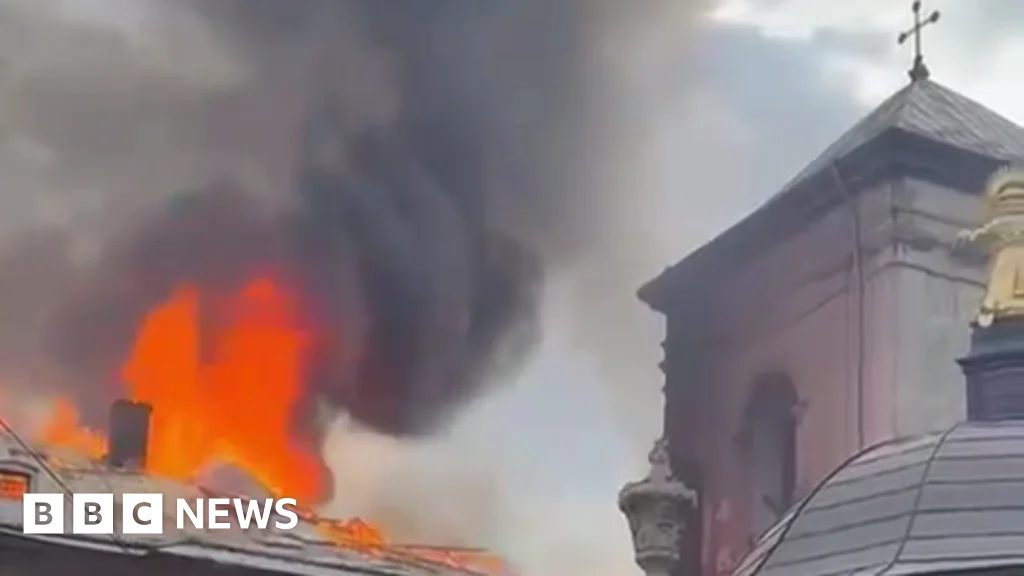
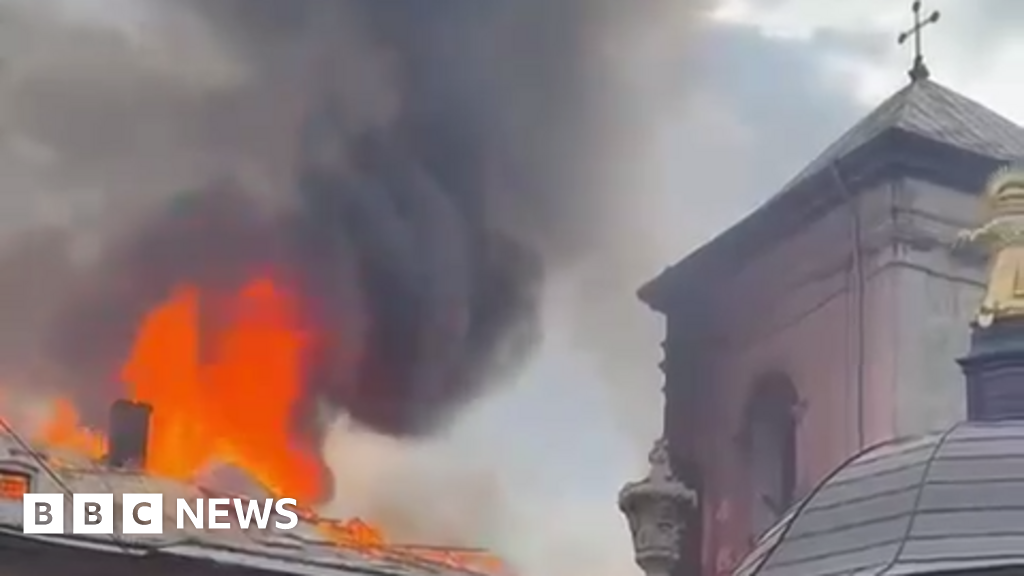
Critically, the region’s head, Maksym Kozytskyi, confirmed that the Bernardine Monastery, a magnificent 16th-century complex and a designated UNESCO World Heritage site, sustained damage. Videos posted by Lviv authorities depicted a fire raging through the roof of a residential building situated perilously close to the monastery, illustrating the indiscriminate nature of the attacks and the direct threat posed to irreplaceable cultural assets. The Bernardine Monastery, with its Baroque architecture and profound historical significance, serves as a poignant symbol of Ukrainian heritage, and its damage underscores the devastating cultural cost of the ongoing conflict. International heritage organizations and UNESCO itself are expected to condemn such attacks, which often constitute violations of international law concerning the protection of cultural property in armed conflict.
Ivano-Frankivsk: Civilian Casualties and Hospital Damage
Further south, in Ivano-Frankivsk, the regional head Svitlana Onyshchuk provided a grim update. The attacks there claimed the lives of two individuals and left four injured, including a six-year-old child, highlighting the devastating impact on the most vulnerable. Beyond the human toll, the city’s infrastructure suffered significantly, with various buildings sustaining damage. Most alarmingly, the local maternity hospital was also hit, an act that raises serious concerns about potential war crimes and the deliberate targeting of civilian and medical facilities. Attacks on healthcare infrastructure are a consistent feature of the conflict, exacerbating the humanitarian crisis and denying essential services to those in desperate need.
Vinnytsia and Ternopil: Echoes of Destruction
The city of Vinnytsia also faced a brutal afternoon, with reports confirming one fatality and 11 injuries. While specific details about the nature of the targets in Vinnytsia remain under investigation, the casualties add to the growing list of victims from this concentrated offensive. Ternopil, another western Ukrainian city, was also among those targeted, though immediate detailed reports of casualties or specific damage were less extensive at the time of reporting. The inclusion of these cities in the broad strike pattern confirms Russia’s intent to saturate a wide geographical area, stretching Ukrainian defenses thin and sowing terror far from the traditional frontlines.
The Evolving Landscape of Drone Warfare
This latest drone assault underscores Russia’s increasing reliance on unmanned aerial vehicles (UAVs) as a primary tool in its war against Ukraine. The sheer volume of 948 drones in 24 hours dwarfs many previous large-scale attacks, signaling a potential new phase in Russia’s air campaign. Russia primarily utilizes Iranian-made Shahed-136 drones, rebranded as "Geran-2," known for their relatively low cost, ease of production, and ability to be launched in swarms. While individually less sophisticated than cruise missiles, their deployment in such massive numbers presents a significant challenge for Ukraine’s air defense systems.
The strategy behind saturation attacks with drones is multi-faceted. Firstly, it aims to overwhelm and deplete Ukraine’s precious air defense munitions, which are costly and difficult to replace. Secondly, it serves as a form of psychological warfare, terrorizing civilian populations and disrupting daily life far from the front lines. Thirdly, these drones often act as "scouts" or "bait," forcing Ukrainian air defenses to reveal their positions, which can then be targeted by more potent missile strikes.
Ukraine’s air defense forces, equipped with a mix of Soviet-era systems and increasingly sophisticated Western aid like NASAMS, Patriot, and IRIS-T, work tirelessly to counter these threats. However, covering the vast expanse of Ukrainian airspace against such a continuous and widespread drone threat remains an immense challenge, demanding constant vigilance and substantial resources. The ability of Russian drones to enter Ukrainian airspace from the north and move "in columns," as described by Yurii Ihnat, suggests coordinated attack vectors designed to penetrate and bypass defensive layers.
Broader Context: Four Years of Relentless Conflict
Four years have passed since Moscow launched its full-scale invasion of Ukraine, and the war continues unabated, marked by Russia’s near-daily attacks on cities across the country. What began with attempts at rapid conquest has devolved into a protracted conflict, characterized by brutal trench warfare on the front lines and persistent aerial bombardments targeting Ukraine’s civilian infrastructure and population centers.
While the east and south of Ukraine, particularly regions bordering Russia or those under partial occupation, have endured the most intense and frequent attacks, the targeting of western cities in this latest barrage marks a notable escalation. The relative calm previously experienced in western Ukraine, which often served as a sanctuary for internally displaced persons and a conduit for Western aid, has now been irrevocably shattered. This shift underscores Russia’s determination to exert pressure across the entire country, leaving virtually no corner untouched by the conflict’s violence. It also highlights Russia’s capacity to adapt its tactics, utilizing its drone arsenal to extend its reach and impact.
In a mirrored development, the governor of Russia’s Kursk region reported on Tuesday that one man was killed and 13 people were injured in a Ukrainian drone attack on an agricultural enterprise. This incident serves as a stark reminder of the reciprocal nature of the conflict, with both sides employing drone technology to strike targets beyond their immediate front lines, further illustrating the widespread and complex nature of the ongoing hostilities.
Official Reactions and International Outcry
The scale and nature of the attacks elicited strong reactions from Ukrainian officials, who continue to rally international support and condemn Russia’s actions. Ukraine’s First Lady, Olena Zelenska, took to social media to articulate the profound human cost of the conflict, pleading with the global community not to succumb to war fatigue. "Amid the news the world is drowning in every day, we will not let Ukrainian grief get lost, become just another statistic, a headline that will be casually skipped over," she wrote, emphasizing the urgency of continued attention and empathy for the victims. Her statement serves as a powerful appeal to maintain focus on the humanitarian crisis and the suffering endured by the Ukrainian people.
Regional leaders like Mayor Sadovyi, Maksym Kozytskyi, and Svitlana Onyshchuk have been at the forefront of responding to the immediate aftermath, coordinating rescue efforts, providing aid, and communicating the severity of the situation to both national and international audiences. Their detailed reports provide critical, on-the-ground accounts of the devastation.
Internationally, attacks on civilian targets and UNESCO World Heritage sites are expected to draw strong condemnation. UNESCO will likely issue statements reiterating the protection of cultural property under the 1954 Hague Convention for the Protection of Cultural Property in the Event of Armed Conflict, which both Russia and Ukraine are signatories to. The United Nations and various human rights organizations will undoubtedly highlight the rising civilian casualty figures and the humanitarian impact. Western allies are anticipated to reiterate their unwavering support for Ukraine, possibly accelerating discussions on providing more advanced air defense systems and ammunition, which are crucial for countering Russia’s evolving aerial threats.
Geopolitical Ramifications and Stalled Peace Efforts
The timing of this massive assault also unfolds against a complex geopolitical backdrop, where broader international diplomatic efforts aimed at de-escalating conflicts appear increasingly fractured. The original article notes that "Talks brokered by the US and aimed at reaching at a peace settlement have stalled since the start of US-Israeli strikes on Iran in late February." While not directly linked as a cause for this specific drone attack, this context highlights the intricate web of global tensions that can impact the prospects for peace in Ukraine.
The diversion of international focus, or the perception of it, towards other critical global flashpoints could potentially embolden aggressors or diminish the urgency of diplomatic solutions for the Ukrainian conflict. The lack of progress on peace talks, coupled with the continued escalation of hostilities, reinforces the grim reality that a swift resolution to the war remains elusive, leaving Ukraine vulnerable to continued assaults and prolonging the suffering of its people.
The Human Cost and Long-Term Implications
The human cost of this unprecedented drone barrage is immediate and profound: lives lost, bodies injured, homes destroyed, and communities traumatized. Beyond the physical casualties, the psychological toll on a population living under constant threat of aerial attack is immense. The targeting of western cities, previously seen as a refuge, further erodes any sense of security and contributes to widespread fear and anxiety.
The long-term implications are equally severe. Damage to critical infrastructure, including hospitals, residential buildings, and historical sites, will necessitate immense reconstruction efforts, further straining Ukraine’s war-battered economy. The destruction of cultural heritage, such as the Bernardine Monastery, represents an irreversible loss not only for Ukraine but for humanity. These acts are often considered potential war crimes under international law, and investigations will be crucial for accountability.
This latest escalation underscores the urgent and ongoing need for sustained international support for Ukraine, particularly in bolstering its air defense capabilities. Without adequate protection against Russia’s persistent aerial bombardments, Ukraine’s cities and civilians will remain exposed to such devastating attacks. As the war enters its fifth year, the global community faces the imperative to ensure that Ukraine’s grief does not indeed "get lost" amid other headlines, and that concerted efforts are made to protect civilian lives, preserve cultural heritage, and ultimately work towards a just and lasting peace.