

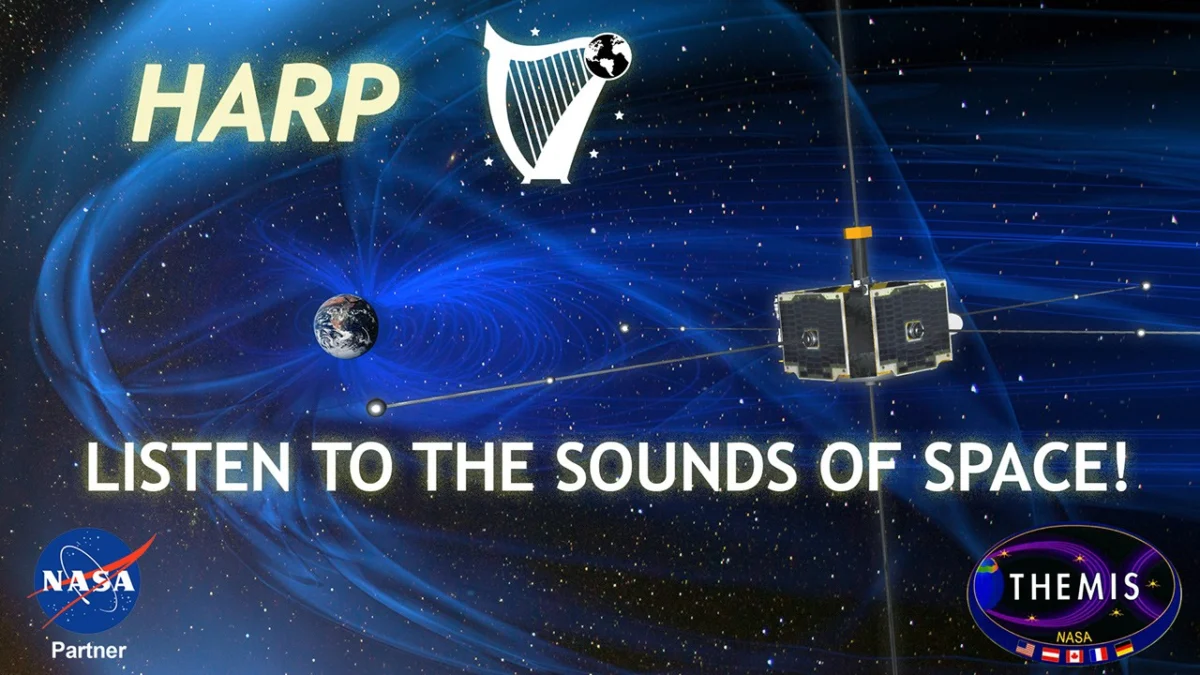
Our planet resides within a vast, dynamic magnetic cocoon, a protective shield known as the magnetosphere, which is constantly filled with an energetic soup of charged particles called plasma. This intricate environment, however, is far from static or serene. Activity originating from our Sun – ranging from powerful solar flares to colossal coronal mass ejections (CMEs) – can unleash torrents of energy and matter, sending shockwaves and disturbances rippling through this space. Some of these powerful waves inevitably propagate towards Earth, capable of penetrating our planet’s magnetic defenses and inducing phenomena collectively known as space weather. The consequences of severe space weather events can be profound, impacting critical technological infrastructure such as satellite communications, GPS systems, and even terrestrial power grids, leading to widespread disruptions and significant economic costs.
For decades, scientists have strived to unravel the complex behavior of these space-borne waves, seeking to predict their trajectory and potential impact with greater accuracy. A groundbreaking initiative, NASA’s Heliophysics Audified: Resonances in Plasmas (HARP) citizen science project, recently employed a uniquely innovative approach to this challenge: by metaphorically likening Earth’s vast magnetic field to an enormous, cosmic harp. The HARP team meticulously translated raw magnetic field measurements, gathered from advanced spacecraft, into audible sound. This ingenious "audification" technique allowed a global cohort of HARP project volunteers to leverage the remarkable sensitivity of the human ear to scrutinize a specific, crucial type of plasma wave that plays a pivotal role in the unfolding drama of space weather. The results of their collective auditory exploration proved to be genuinely surprising, challenging long-held scientific expectations and offering fresh insights into the intricate mechanics of our magnetosphere.
The Auditory Frontier: Translating Magnetic Fields into Sound
The core innovation of the HARP project lies in its novel method of data analysis. Traditional scientific methods often rely on visual representations of data, such as graphs and spectrograms, which can be immensely complex and require significant training to interpret. However, the human auditory system possesses an extraordinary capacity to discern subtle patterns, anomalies, and temporal variations within soundscapes that might be missed by the eye. Recognizing this potential, the HARP team developed sophisticated algorithms to convert fluctuations in magnetic field strength and frequency into corresponding changes in pitch and volume. This process effectively transformed abstract scientific data into an accessible, intuitive acoustic experience.
The analogy of Earth’s magnetic field as a "giant harp in space" is particularly apt. Just as a plucked string on a musical instrument vibrates at a specific frequency to produce a particular note, the plasma within Earth’s magnetosphere can "resonate" or vibrate in response to external stimuli, such as solar wind disturbances. These vibrations manifest as various types of plasma waves, each with its own characteristic frequency and propagation pattern. By assigning different pitches to different frequencies of these magnetic field fluctuations, the HARP project enabled volunteers to "listen" to the subtle symphony of the magnetosphere, allowing them to identify and categorize different wave phenomena simply by their sound. The project specifically focused on a class of waves known as Ultra-Low Frequency (ULF) waves, which are known to play a crucial role in the transport of energy and particles within the magnetosphere, directly influencing the intensity of geomagnetic storms.
Unveiling an Auditory Anomaly: A Scientific Surprise
Based on established theoretical models and previous observations, the scientific community had a clear expectation regarding the behavior of these plasma waves within the magnetosphere. It was generally anticipated that waves observed farther from Earth, in the outer regions of the magnetosphere, would exhibit lower pitches (lower frequencies) due to the sparser plasma density and larger characteristic scales of wave propagation. Conversely, waves closer to Earth, within the denser inner magnetosphere, were expected to manifest as higher pitches (higher frequencies). This gradient in pitch was considered a fundamental characteristic reflecting the changing physical properties of the plasma environment as one moved inward towards the planet.
However, when the HARP team played back the audified data, sourced from NASA’s Time History of Events and Macroscale Interactions during Substorms (THEMIS) mission, the volunteers encountered something truly unexpected. To their collective surprise, some of the plasma waves revealed a completely opposite pattern to the theoretical prediction. In these instances, the volunteers identified lower pitches closer to Earth, while higher pitches were distinctly heard farther away. This inverted frequency pattern was an anomalous finding, a deviation from the expected norm that immediately caught the attention of both the citizen scientists and the project’s lead researchers.
One volunteer vividly articulated the profound impact of this discovery, stating, "I only signed up for this group because my friend was participating, but now I think I’m going to change my major to physics – this was just too cool." This sentiment underscores the transformative power of citizen science, not only in generating new scientific knowledge but also in inspiring a new generation of scientists. The findings, validating the volunteers’ keen observations, have now been formally published in a new article in Frontiers in Astronomy and Space Sciences, marking a significant contribution to heliophysics.
The Broader Context: Understanding Space Weather and Its Threats
To fully appreciate the significance of this discovery, it is crucial to understand the broader context of space weather. Space weather refers to the variable conditions in space that can affect technological systems and human health. The primary driver of space weather originates from the Sun, which continuously emits a stream of charged particles known as the solar wind. Periodically, the Sun also releases much more powerful bursts of energy and matter, such as solar flares (intense bursts of radiation) and coronal mass ejections (CMEs, massive eruptions of solar plasma and magnetic field).
When these solar phenomena reach Earth, they interact with our planet’s magnetosphere. The magnetosphere acts as a complex, dynamic shield, deflecting most of the solar wind and protecting Earth’s atmosphere and surface from harmful radiation. However, during intense solar events, the magnetosphere can be severely compressed, distorted, and energized, allowing particles and energy to penetrate more deeply. This interaction can trigger geomagnetic storms, which are temporary disturbances of Earth’s magnetosphere.
The impact of severe geomagnetic storms can be substantial:
- Power Grids: Geomagnetic currents induced in the ground can flow into long conductors like power lines, overloading transformers and potentially causing widespread blackouts. A notable example is the 1989 Quebec blackout, which left millions without power.
- Satellites: Charged particles can damage satellite electronics, disrupt communications, and degrade orbital paths, leading to costly repairs or even mission failures. Our modern world relies heavily on satellites for GPS, weather forecasting, telecommunications, and national security.
- Aviation: High-altitude flights, particularly over polar regions, can experience communication outages and increased radiation exposure for passengers and crew.
- Pipelines: Similar to power grids, long pipelines can experience induced currents leading to corrosion.
- Astronauts: Space weather poses a direct radiation threat to astronauts on orbit and future deep-space missions.
Accurate prediction and understanding of space weather are therefore paramount for safeguarding our technological society. The behavior of plasma waves, like those studied by HARP, is central to how energy is transferred from the solar wind into the magnetosphere and subsequently to Earth. Any new insight into their dynamics directly improves our ability to model and forecast these potentially disruptive events.
The THEMIS Mission: A Foundation for Discovery
The data that fueled the HARP project’s remarkable discovery originated from NASA’s Time History of Events and Macroscale Interactions during Substorms (THEMIS) mission. Launched in 2007, THEMIS was a constellation of five identical satellites designed to resolve the century-old mystery of what triggers substorms, which are sudden reconfigurations of Earth’s magnetotail that release vast amounts of stored solar wind energy.
The THEMIS probes were strategically placed to make coordinated measurements of electric and magnetic fields, and particle distributions across different regions of the magnetosphere. This multi-point, multi-instrument approach allowed scientists to observe space weather phenomena simultaneously from various vantage points, providing an unprecedented "time history" of events. The mission successfully answered its primary objectives regarding substorms and has since continued to provide invaluable data for a wide range of magnetospheric studies, including those focused on plasma waves. Without the rich, high-resolution data provided by the THEMIS mission, the HARP project’s audification efforts and subsequent discovery would not have been possible. The longevity and strategic positioning of the THEMIS satellites have created a robust dataset that continues to be a cornerstone for heliophysics research.
Citizen Science: A Powerful Paradigm Shift
The HARP project stands as a shining example of the burgeoning field of citizen science, where members of the public actively participate in scientific research. This collaborative model offers numerous advantages:
- Scalability: Citizen science projects can process vast amounts of data that would be overwhelming for a small team of professional scientists. In the case of HARP, thousands of hours of audified data could be analyzed by a distributed network of volunteers.
- Unique Perspectives: Non-experts can sometimes identify patterns or anomalies that trained scientists, accustomed to looking for specific features, might overlook. The HARP anomaly is a testament to this "fresh eyes" phenomenon.
- Public Engagement and Education: Citizen science fosters scientific literacy, educates the public about complex research, and inspires interest in STEM fields. The volunteer who considered changing their major to physics perfectly illustrates this profound impact.
- Cost-Effectiveness: It leverages a global volunteer workforce, making large-scale data analysis more resource-efficient.
The HARP volunteers played a multifaceted and crucial role in the project’s success. Beyond simply listening, they actively contributed to developing the project’s audio analysis protocol, providing critical feedback during the beta testing of the graphical user interface (GUI), and meticulously identifying and labeling the myriad plasma waves within the audified data. Their collective efforts generated a meticulously curated dataset that the professional science team will continue to study and analyze for years to come, unlocking further secrets of the magnetosphere.
The HARP project was initially sponsored by NASA, highlighting the agency’s commitment to innovative research and public engagement. Its continued sponsorship by the National Science Foundation (NSF) further underscores its scientific merit and potential for long-term impact. While the project is no longer actively seeking new volunteers, its legacy in demonstrating the power of audification and citizen science in heliophysics is firmly established.
Implications and Future Research Directions
The discovery of plasma waves exhibiting an inverse frequency pattern – lower pitches closer to Earth and higher pitches farther away – carries significant implications for our understanding of magnetospheric physics and space weather forecasting.
- Refining Theoretical Models: This anomaly suggests that current theoretical models of plasma wave propagation and interaction within the magnetosphere may need revision or additional parameters. It challenges assumptions about plasma density and magnetic field gradients in certain regions.
- Enhanced Space Weather Forecasting: A more accurate understanding of how these waves behave and where energy is deposited within the magnetosphere is critical for improving the predictive capabilities of space weather models. If these waves play a role in accelerating particles or transporting energy to regions that affect our infrastructure, understanding their anomalous behavior becomes even more vital.
- New Avenues for Research: The finding opens new avenues for focused research. Scientists will now investigate the specific conditions (e.g., solar wind pressure, magnetospheric configuration, presence of other wave modes) under which this inverse pattern emerges. It prompts questions about wave-particle interactions, wave mode conversions, and the role of specific plasma populations.
- Validation of Audification: Beyond the specific scientific finding, the success of HARP powerfully validates audification as a legitimate and effective tool for data analysis in heliophysics and potentially other scientific disciplines. It demonstrates that the human ear can be a powerful scientific instrument.
The scientific community will now embark on detailed analyses of these anomalous waves, using sophisticated simulation models and cross-referencing HARP’s findings with data from other missions, such as NASA’s Magnetospheric Multiscale (MMS) mission, which provides ultra-high-resolution measurements of plasma dynamics. The goal will be to pinpoint the exact physical mechanisms responsible for this unexpected acoustic signature.
Conclusion: A Symphony of Collaboration and Discovery
The HARP project stands as a testament to the power of interdisciplinary thinking, combining astrophysics with acoustics, and the transformative potential of citizen science. By transforming the complex, silent data of Earth’s magnetic field into an audible symphony, it not only made cutting-edge research accessible to the public but also led to a significant, unexpected discovery. The volunteers, with their keen ears and dedication, became integral partners in the scientific process, demonstrating that curiosity and collaboration can unlock profound insights into the fundamental forces shaping our universe. As we continue to navigate an increasingly technology-dependent world, a deeper understanding of space weather, facilitated by such innovative projects, is not merely an academic pursuit but a critical endeavor for societal resilience and progress. The cosmic harp continues to play, and with each new note, we learn a little more about the dynamic, energetic environment that cradles our home planet.