

LIV Golf, the ambitious and often controversial golf tour launched in 2021 with significant backing from Saudi Arabia’s Public Investment Fund (PIF), is reportedly exploring a potential sale of the business. This development comes as the tour, co-founded by Yasir Al-Rumayyan, the PIF governor and its most influential figure, grapples with substantial financial losses and a strategic imperative to adapt to evolving market conditions. While maintaining a hopeful outlook for its international team-based model, LIV Golf is acknowledging the likelihood of a significant scaling back of its operations, signaling a potential shift in its aggressive expansion strategy.
Strategic Reassessment and Sale Exploration
Sources close to the situation have revealed that LIV Golf is actively seeking new financial backers and is "totally up for sale." This disclosure follows the recent postponement of its June event in New Orleans, a decision that highlights the tour’s current logistical and financial constraints. The cancellation means LIV Golf will have no tournaments scheduled in the United States between May 10th and August 6th, when it is slated to hold an event at Trump Bedminster in New Jersey. This void in the American schedule underscores the challenges the tour faces in establishing a consistent and robust presence within the United States, a key market for professional golf.
Despite the internal reassessment, LIV Golf’s international schedule remains partially intact, with tournaments planned for South Korea, Spain, and Britain during the aforementioned period. This focus on international venues suggests a continued commitment to its global aspirations, even as the tour contemplates significant operational adjustments. Executives are reportedly examining a range of opportunities to "reposition" the business, aiming to align its financial trajectory with more sustainable investment models. While projections indicate LIV Golf could earn $100 million more in 2026 compared to the previous season, officials concede that the current structure, featuring 14 events, is likely unsustainable. The number of tournaments is expected to be significantly reduced.
A History of Ambitious Investment and Financial Deep Dive
The formation of LIV Golf in 2021 marked a seismic shift in the professional golf landscape, challenging the established order dominated by the PGA Tour. Bankrolled by the PIF, which also holds a significant stake in English Premier League football club Newcastle United, the venture has been characterized by eye-watering financial injections. This year alone, the PIF injected an additional $267 million (£229 million) in fresh capital, pushing the overall investment in LIV Golf past the $5 billion (£3.8 billion) mark since its inception.
However, this substantial investment has not translated into profitability. The tour’s net losses in markets outside the US have escalated, reaching $462 million (£340 million) in 2024. Cumulatively, since its establishment, LIV Golf has incurred losses exceeding $1.1 billion (£810 million). When factoring in the considerable capital allocated to its US operations, the total financial deficit is expected to run into several billion dollars, a stark indicator of the economic realities confronting the nascent tour.
Timeline of Events and Strategic Shifts
The journey of LIV Golf has been a rapid and often turbulent one:
- 2021: LIV Golf is co-founded by Yasir Al-Rumayyan, signaling the PIF’s entry into professional golf. The initial vision is to create a team-based, innovative league that challenges traditional golf structures.
- 2022: The LIV Golf Invitational Series launches, attracting prominent players with lucrative contracts, leading to a significant schism within the professional golf world and widespread criticism from established tours and governing bodies.
- 2023: LIV Golf continues to operate its series of tournaments, signing more high-profile players and facing ongoing legal and regulatory scrutiny. Discussions around a potential merger or strategic alliance with the PGA Tour emerge but ultimately fail to materialize.
- Early 2024: Reports surface regarding LIV Golf’s financial performance and ongoing investment needs. The tour pivots to a more traditional 72-hole format for its events, a move seen by some as an attempt to integrate more seamlessly with the broader golf ecosystem.
- May 2024: The postponement of the New Orleans event is announced, followed by reports of LIV Golf exploring a sale and seeking new investors. The tour’s leadership informs team captains about upcoming plans to secure fresh financial backing.
Internal Communications and Player Briefings
In the face of mounting speculation and rumors of imminent collapse, LIV Golf chief executive Scott O’Neil had previously assured players that the 2026 season would proceed "as planned and uninterrupted." This statement, made earlier in May, aimed to allay player concerns, though it did not offer specific details about future financial arrangements or potential restructuring. The recent warning to team captains about impending announcements regarding new financial backers suggests a more concrete and immediate shift in strategy is underway. The tour has declined to comment on these developments.
Broader Market Context and PIF’s Strategic Evolution
The PIF’s involvement in LIV Golf is part of a broader Saudi Arabian strategy to diversify its economy and enhance its global image through major sporting investments. The fund has made significant forays into various sports, including football, Formula 1, and esports, alongside its substantial investment in golf. However, the PIF has also recently announced a new strategic direction, emphasizing more sustainable investments. This shift in focus could explain the increased pressure on LIV Golf to demonstrate a viable long-term financial model or to seek new ownership that can sustain its operations.
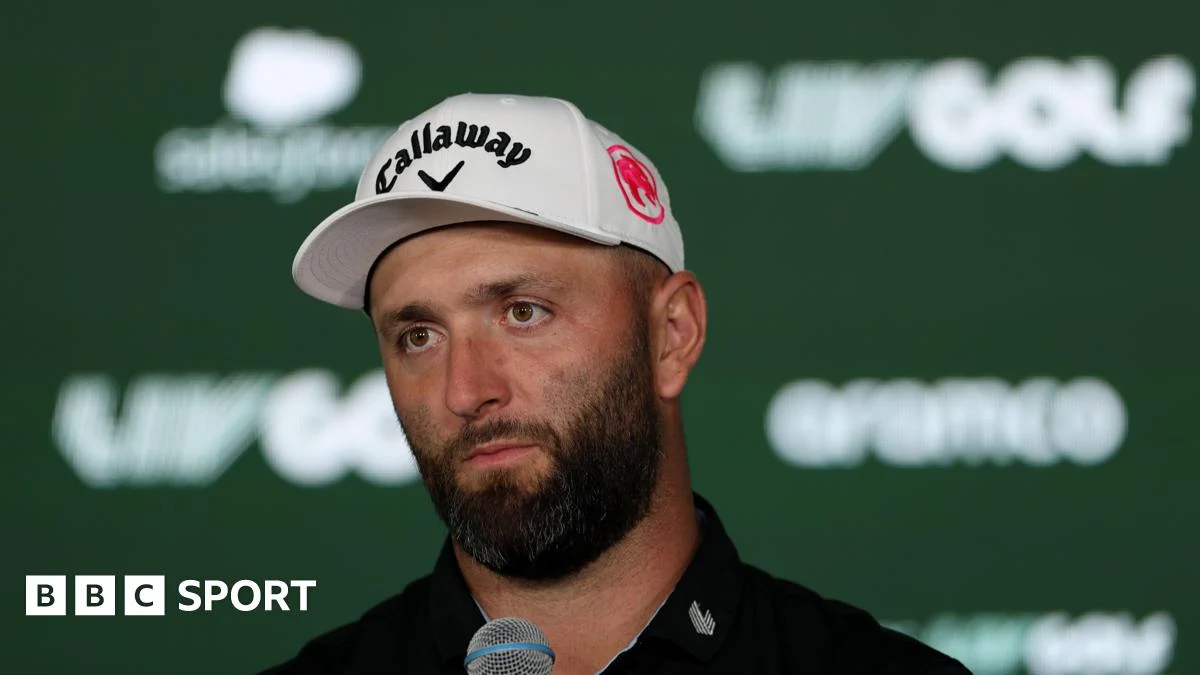
The inclusion of major winners such as Jon Rahm, Bryson DeChambeau, Phil Mickelson, and Cameron Smith on the LIV Golf roster highlights the tour’s ability to attract top talent, albeit at a considerable financial cost. The tour’s pivot to a more traditional 72-hole format this year was seen as an attempt to align more closely with established golf traditions, potentially making it more palatable to a wider audience and future investors.
Analysis of Implications and Future Outlook
The potential sale of LIV Golf, or a significant scaling back of its operations, would represent a major turning point for the professional golf world. It could lead to a recalibration of player contracts and prize money across the sport. For the PIF, it could signal a reassessment of its direct investment in sports leagues, perhaps favoring more passive or diversified investments in the future.
The ongoing financial losses, even with substantial backing, raise questions about the long-term viability of a sports league that operates at such a significant deficit. The "constructive" talks with potential investors, if successful, could lead to a restructured LIV Golf, potentially retaining its team format but with a more conservative financial approach. Alternatively, a complete sale could see a new entity take over, with its own strategic vision for the tour.
The current schedule, with tournaments slated for May 7th at Trump National Golf Club in Virginia, is proceeding as planned. However, the broader implications of the reported sale exploration and the PIF’s strategic shift suggest that the landscape of professional golf may be on the cusp of another significant transformation. The coming days and weeks will be crucial in determining the future trajectory of LIV Golf and its impact on the global sport. The PIF has been approached for comment regarding these developments.