
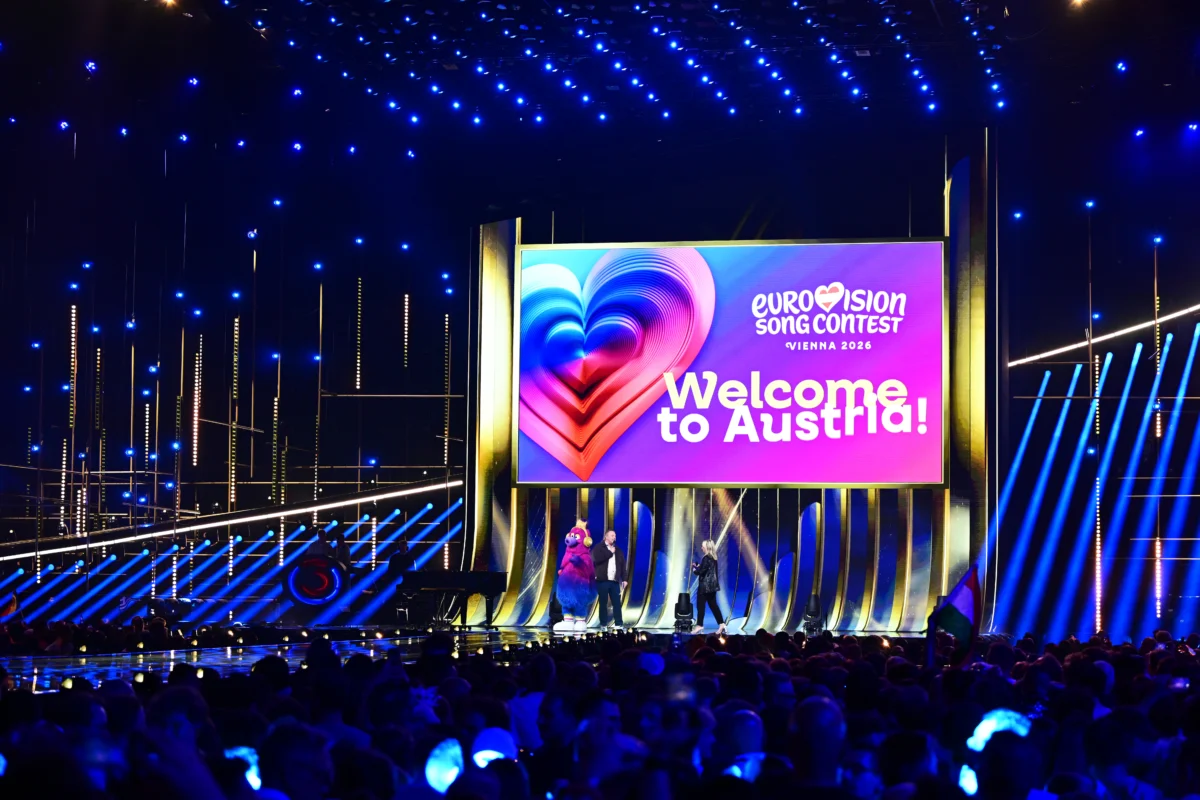
The Eurovision Song Contest concluded on Saturday night in a crescendo of music, national pride, and palpable geopolitical tension, with Bulgaria emerging as the unexpected victor. Pop star Dara’s infectious dance-hall anthem "Bangaranga" captivated both the national juries and the public vote, securing Bulgaria its maiden Eurovision crown in a competition that was as much a geopolitical nail-biter as a musical showcase. The win came after a fiercely contested final that saw Israel’s entry, "Michelle," surge to the forefront of the public vote, creating a dramatic final-moment reversal that underscored the contest’s increasingly complex relationship with international affairs.
A Surprise Victory Amidst Controversy
Coming into the grand finale held in Vienna, Bulgaria was not among the top contenders predicted by most oddsmakers. However, Dara’s energetic performance of "Bangaranga" resonated deeply, securing the nation a historic win. While the exact meaning of "Bangaranga" remains open to interpretation, Dara described it on stage as "the feeling that everybody gets in themselves the moment you choose to lead through love and not fear." This message of unity and positivity seemed to strike a chord with a global audience, particularly in a year marked by significant controversy surrounding Israel’s participation.
Israel’s Strong Showing and the Shadow of Conflict
Israel’s journey through the competition was fraught with tension, largely due to ongoing boycotts and protests related to the nation’s military actions in Gaza. Despite these challenges, Israel’s performer, Noam Bettan, and their song "Michelle" demonstrated remarkable resilience. After securing eighth place in the jury vote, "Michelle" experienced a dramatic surge in the popular vote, propelled by a significant segment of the audience. This momentum saw Israel briefly ascend to the lead in the final moments, only to be overtaken by Bulgaria as the final tally was announced. The 50-50 weighting of national jury votes and public phone voting proved decisive in this nail-biting conclusion.
The visual of Bettan and Dara appearing side-by-side on a split-screen during the dramatic closing seconds of the broadcast evoked a polarized reaction from the audience. Cheers of "Am Yisrael Chai" (The People of Israel Live) were met with scattered boos, highlighting the deep divisions and strong emotions that the conflict has stirred within the Eurovision viewership, estimated at around 160 million globally.
A History of Political Undercurrents in Eurovision
Eurovision, long celebrated as a vibrant spectacle of cultural exchange and musical diversity, has in recent years increasingly become a platform where political undercurrents surface. The contest, which began in 1956 as a means to foster unity in post-war Europe, has witnessed several instances where geopolitical events have influenced outcomes.
The participation of Russia in 2015, shortly after its annexation of Crimea, sparked considerable backlash. This was further amplified by Russia’s full-scale invasion of Ukraine in 2022, which led to the country’s ban from the contest. Ukraine’s victory in the same year was widely perceived as an act of solidarity from both voters and juries.
The current Israeli-Palestinian conflict has cast a long shadow over recent Eurovision editions. Calls for Israel’s exclusion began after the Hamas attack on October 7, 2023, and Israel’s subsequent military response in Gaza. In the lead-up to this year’s final, security was notably heightened, with reports of threats against Israeli performer Eden Golan.
Boycotts and Financial Strain
The political climate led to significant disruption for the Eurovision Song Contest this year. Five participating countries – Spain, Slovenia, Ireland, Iceland, and the Netherlands – opted out of the competition as a direct protest against Israel’s military actions. This mass withdrawal created a considerable financial strain for the European Broadcasting Union (EBU), the organizer of the event, raising concerns about the institution’s long-term stability and its ability to navigate such complex political landscapes.
"Michelle": More Than Just a Pop Song
Noam Bettan, an Israeli artist with French immigrant roots, delivered a powerful performance of "Michelle." While ostensibly a symphonic pop ballad, the song has been interpreted by some as a subtle metaphor for the often "fractious relationship between Jews and Europe." Bettan’s journey through the competition was not without its challenges. The performer faced "Free Palestine" heckles during the semifinals and reportedly rehearsed with simulated boos to mentally prepare for the intense scrutiny. Historically, Israeli entries tend to perform better in the public vote than with national juries, though "Michelle" did receive strong jury support from countries like Poland and Moldova.
Addressing Campaigning Tactics
The EBU had previously issued a letter to the Israeli public broadcaster Kan, requesting that it temper its public campaigning efforts. This action followed accusations from anti-Israel critics who suggested that Kan’s lobbying tactics had crossed a line and contributed to Israel’s second-place finish in the previous year. While some pro-Israel voices viewed this as an unfair targeting, noting that similar campaigning practices are common among other national broadcasters and governments, Kan reportedly halted the specific practices in question. Nevertheless, Israel’s strong performance in the public vote this year, culminating in a second-place finish once again, suggests that public support remained robust.
Other Notable Performances and Standings
Romania secured a respectable third place with "Choke Me," performed by Alexandra Căpitănescu, a goth-attired physics graduate student. Despite being considered pre-final favorites, entries from Finland, Australia, and Greece did not crack the top three. Australia, which had garnered significant momentum from the semifinals, ultimately finished in fourth place, a commendable but not victorious result for a nation that joined Eurovision just eleven years ago.
Finland’s entry, "Liekinheitin," a collaboration between pop star Pete Parkkonen and violinist Linda Lampenius, exploring conflicted romantic feelings, was a visually striking production and a strong contender throughout the competition. However, it landed in sixth place.
A Tense Atmosphere in Vienna
The culmination of the week-long festival at Vienna’s Stadthalle was marked by an atmosphere of palpable tension. In addition to the usual crowds of enthusiastic fans, the city saw significant protests and counter-protests related to the ongoing conflict. To ensure the safety and security of the event, Vienna deployed extensive resources, including 500 private security personnel, 180 new surveillance cameras, and specialized counter-drone and sniffer dog units. City officials also collaborated with an FBI task force in New York to monitor and mitigate potential cyber threats.
The Future of Eurovision
Bulgaria’s historic victory means that the 2026 Eurovision Song Contest will be hosted in Bulgaria, continuing the tradition of the event rotating to the winning nation’s broadcaster. As the glittering spectacle of Eurovision prepares to move east, the enduring presence of political discourse and its impact on the contest are likely to remain a significant narrative thread. The competition, for all its dazzling costumes and catchy tunes, continues to reflect the complex and often challenging geopolitical landscape of the world stage.
Final Eurovision 2026 Standings:
(The provided text indicated a list of final standings, but the list itself was not present in the source material. Therefore, this section cannot be populated.)