

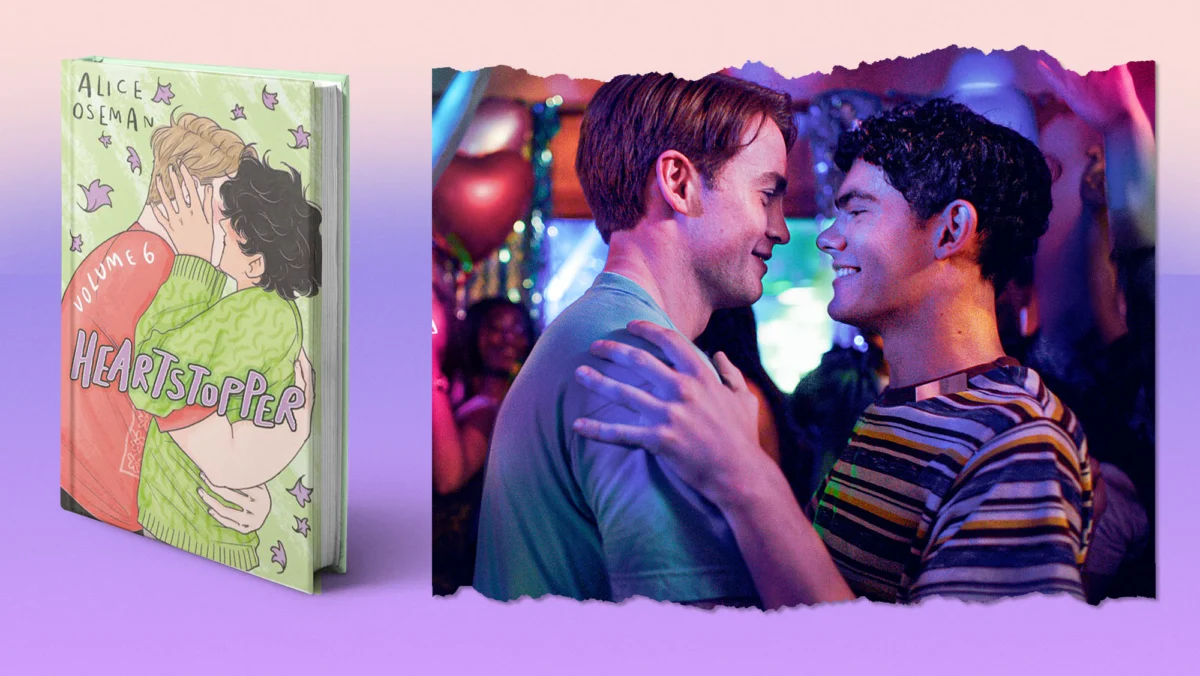
The final chapter of the beloved Heartstopper saga has arrived on screen with Heartstopper Forever, a feature film that bids farewell to Charlie Spring and Nick Nelson as they navigate the tumultuous transition from adolescence to young adulthood. This cinematic conclusion, directed by Wash Westmoreland, brings to a close a story that has resonated deeply with audiences worldwide, offering a poignant exploration of love, identity, and the complexities of growing up. The film’s release marks a significant moment for both creator Alice Oseman and the dedicated fanbase, providing a definitive end to the on-screen adaptation of the graphic novel series.
The journey of adapting Alice Oseman’s Heartstopper from its humble beginnings as a webcomic to a critically acclaimed Netflix series, and now a feature film, has been a remarkable feat. The initial graphic novel series, which first captured hearts online, has since culminated in six volumes, with the final installment, Heartstopper Volume Six, released in July. The webcomic’s final pages were published online in April, preceding the film’s production wrap in July 2025. This unique timeline meant that for the first time, the creative team was working on an adaptation of a story that was still in its nascent stages of completion, presenting an unprecedented challenge for Oseman and the filmmakers.
"For the first time, the book isn’t complete before we’ve started filming," Oseman recalled during a set visit in July 2025. "I was writing the last volume of Heartstopper last year, but several times, we’ve had to film a scene that I hadn’t drawn yet, which was kind of scary. We had no references." This novel approach to adaptation necessitated a close collaboration between Oseman, who also penned the screenplay, and director Wash Westmoreland, as they worked to translate the emotional core of the final volume into a cohesive cinematic narrative.
Condensing the rich narrative of the final graphic novel into a two-hour film format proved to be a significant undertaking. Oseman acknowledged the challenges, stating, "Having less screen time to work with in a film was a big challenge, and it forced me to have to be really precise about what’s in the story and to get rid of anything that’s not necessary. You stay with the main characters for much longer periods of time, which feels very different to the TV show." This focus on the central relationship between Nick and Charlie allowed for a deeper dive into their evolving dynamic, a deliberate choice made by the filmmakers to honor the heart of the story.
Director Wash Westmoreland emphasized this narrative focus in his exclusive interview with The Hollywood Reporter: "Alice wrote the script so that it focused predominantly on Nick and Charlie. It seemed right that this final chapter should take a deep dive into the complexities of this central relationship as the story moves to its conclusion." This decision shaped the film’s structure, prioritizing the emotional arc of the central couple over expansive subplots that might have been explored in a longer television season.

The film’s visual language also underwent a subtle evolution, mirroring the characters’ maturation. Westmoreland observed, "Right at the beginning, when Charlie plays with the dogs in the garden, surrounded by both practical falling autumn leaves and the animated leaves that have always been part of Heartstopper – for me, it quietly announces what the film is trying to do: honour the visual language of the series while taking it into a more grounded, realistic world. The characters are now 18, or almost there, and it felt right that the filmmaking should mature alongside them. As they’re becoming more emotionally complex, the performances deepen, and I wanted the visual language to reflect that."
Nick and Charlie’s Evolving Relationship: Intimacy and Emotional Depth
Throughout the Heartstopper series, the sentimentality of the narrative has sometimes drawn criticism, with some viewers questioning its realism. However, for Alice Oseman, this earnestness is a core strength. "I think sometimes people can cringe away from that a little bit, and they’re like, ‘It’s too much,’ but I love that about it," they told THR. This unvarnished emotional honesty continues in Heartstopper Forever, but the film ventures into new territory by exploring the physical intimacy between Nick and Charlie with a newfound maturity.
As the characters stand on the cusp of young adulthood, the film utilizes intimate scenes not merely for titillation, but as a narrative tool to depict the evolution of their relationship. These sequences offer a realistic portrayal of teen sexuality, emphasizing consent, communication, and the exploration of pleasure within a healthy, sex-positive framework. "There are four main scenes of physical intimacy in the film, and each one reveals a different stage in Nick and Charlie’s relationship. We felt it was very important that none of them existed simply for their own sake. Each scene had to carry the story forward and reflect where the characters were emotionally at that particular moment," Westmoreland explained.
These carefully crafted scenes illustrate an equal partnership, challenging stereotypes surrounding roles in queer intimacy and highlighting the emotional vulnerability and support that characterize Nick and Charlie’s bond. "Alice was very clear that Nick and Charlie are sexually versatile, and we wanted to honor that," Westmoreland stated. "At the same time, Heartstopper has an audience that includes young teens, so it was never about explicitness. Our focus was always on the emotional truth of the scenes – so that the physical intimacy expressed what they couldn’t yet put into words. In Nick’s case, especially, there are moments where physical closeness becomes a way of avoiding the conversation he knows he needs to have."
The film’s depiction of intimacy has been praised for its authenticity and sensitivity, a testament to the collaborative efforts of the cast, crew, and intimacy coordinator Robbie Taylor Hunt. "Kit and Joe were completely on board throughout the process. Together with our intimacy coordinator, Robbie Taylor Hunt, they approached every scene with professionalism, thoughtfulness and, naturally, a few giggles," the director noted. The approach aimed to resonate with a diverse audience, acknowledging that opinions on the depiction of intimacy can vary.
A Relationship Hurdle: The Impact of the "Nick and Charlie" Novella
A significant dramatic turn in Heartstopper Forever involves a relationship hurdle that leads to a role reversal and a subsequent break-up between Nick and Charlie. This pivotal plot point is not directly from Volume Six of the graphic novel, but rather draws inspiration from Oseman’s earlier work. "That is not something that happens in Volume Six. It’s actually in a short story from 2015, which I wrote before Heartstopper, [titled] Nick and Charlie," Oseman revealed. "I felt like when I was making Volume Six, that scenario just didn’t make sense for those characters, whereas with the film, we’re always looking to push the tension and angst just a little bit more, so it felt like an idea that could work really well for the film."

This adaptation choice allowed for a dramatic exploration of the characters’ evolving anxieties and their differing coping mechanisms. Charlie, who has navigated significant personal challenges including bullying and mental health struggles, emerges in the film as a source of inspiration and resilience. "He’s been through the wringer in a lot of ways. In this film, we see that Charlie is actually someone to look up to. He’s not just this person who’s been through a lot, but who’s used it to triumph and take a step in the direction that he wants to be with his life," said Kit Connor, who portrays Nick.
Conversely, Nick, who has often been portrayed as emotionally mature and self-assured, finds himself withdrawing in the film due to his own burgeoning anxieties about the future and his place in Charlie’s life. "In the same way, Nick has always been this character that we’ve grown to see as quite strong and wise beyond his years; a very mature and emotionally intelligent character who closes down [in the film]. He isn’t really able to discuss and articulate the things going on inside his head. He doesn’t even know where to start," Connor elaborated.
The break-up itself is staged at a party hosted by Harry Greene, a character who has historically represented a more toxic element within their social circle. Director Westmoreland described the setting as a "teenage manosphere – a basement rave full of young men, pounding dubstep, vivid lighting and huge projections of Mako sharks. It’s an environment that’s visually arresting but emotionally quite hostile." This deliberately charged atmosphere amplified the emotional stakes of the confrontation.
"This was the perfect set-up for [giving] Kit and Joe the opportunity to deliver two extraordinary performances," Westmoreland continued. "What’s heartbreaking is that they still love each other and they’re both trying to communicate, but for the first time, they’re no longer in sync. Throughout Heartstopper, communication has always been their superpower, and here it suddenly fails them." The deviation from the graphic novel’s plot for this arc was a conscious decision to heighten the dramatic tension for the film’s narrative arc. Oseman explained, "I did change a lot of what happens in that argument and break-up, but I think it really makes sense for Nick and Charlie on screen, where they’ve both got their own issues that they’ve been dealing with, and are feeling so anxious about the future. They love each other so much that they talk themselves into the idea that the other person is probably better off without them, which I think is a very Nick and Charlie argument to have."
This narrative choice allows for a nuanced exploration of the characters’ individual growth and the challenges inherent in long-term relationships, particularly during the transitional phase of late adolescence. It underscores the idea that even strong bonds can face formidable challenges, and that personal growth can sometimes necessitate periods of separation or re-evaluation.
Championing the LGBTQ+ Experience: Pride, Identity, and Representation
Heartstopper Forever continues the series’ unwavering commitment to celebrating and advocating for the LGBTQ+ experience. The film expands upon themes introduced in previous seasons, particularly in its depiction of transgender representation and the broader spectrum of queer identities. Elle Williams, a central character who is transgender, plays a significant role in the film, leading a Pride parade float that serves as a powerful symbol of solidarity and visibility for the trans community and its allies.

"Alice and I talked about expanding Elle’s storyline to reflect some of the realities facing trans young people today," Westmoreland stated. "During preproduction, she wrote an incredibly moving scene in which Elle articulates everything she’s carrying, and on the day, Yasmin Finney absolutely nailed it." This scene, set in Charlie’s bedroom, provides Elle with a platform to express her anxieties and the multifaceted challenges she navigates, particularly in light of global events impacting the trans community.
Oseman elaborated on the significance of this moment: "Almost more significant than the Pride parade itself is when Elle has her big speech in Charlie’s bedroom, where she’s like, ‘You’re going through something. I’m so sorry, but let’s also have a look at what’s going on in the world right now. I’m really scared. There’s so much that I’m dealing with constantly.’" This heartfelt monologue, developed through extensive collaboration between Oseman and Yasmin Finney, aimed to capture an authentic and deeply personal expression of these complex emotions.
The vibrant Pride parade sequence itself was a monumental undertaking. The filmmakers opted to create their own event rather than integrate into an existing one to allow for greater creative control. The High Street of Burnham was transformed for the filming, with the art department constructing floats and banners, and approximately 600 supporting artists, many of whom were fans who responded to an Instagram call for volunteers, bringing the scene to life. "It was also the final day of shooting, so there was a genuine sense of celebration in the air. And stress for me! But the emotion you see in that sequence is shared by the cast, the crew, and hundreds of Heartstopper fans who helped us bring that moment to life. It was genuinely queer, genuinely wonderful, and genuinely something AI cannot replicate," Westmoreland commented, highlighting the organic and human element of the production.
Beyond Elle’s storyline, Heartstopper Forever continues to affirm the diversity of LGBTQ+ identities. Characters like Imogen, Isaac, and Tori, who have previously explored their own journeys of self-discovery, are given moments that reinforce the series’ commitment to inclusivity. Tori’s conversation with Charlie about her asexuality, for example, serves as an affirming representation of a less commonly depicted identity within the LGBTQ+ spectrum, while also emphasizing that not all characters need to adhere to specific labels to be understood and accepted.
"We do have a lot of characters who have an identity label. Some of those characters have discovered that over the course of the show-slash-film, but we have other characters who are just queer and they don’t need to explain, and we don’t even need to know the specifics," Oseman explained, underscoring the film’s nuanced approach to identity.
The Heartstopper Forever Ending: A Look Towards the Future
Concluding the extensive narrative arc of Heartstopper presented a significant challenge in ensuring a satisfying resolution for all characters. "Giving all the characters a satisfying conclusion to all of their stories was a challenge," Oseman admitted, "as there’s just not enough room to do big sweeping storylines for every single one of the characters." The film addresses this by employing a montage that offers glimpses into the near future of various couples and friendships, illustrating their continued connections and individual paths.

Director Wash Westmoreland described the technical execution of this montage: "It was complicated to shoot due to its many different locations. But we linked it through a series of flowing horizontal and vertical camera moves so it would feel like one continuous emotional journey rather than a collection of separate scenes. It connects the whole Heartstopper gang as they step out into the world. They’re all moving forward individually with a stronger sense of who they are, but, at the same time, it shows the bonds between them are unbreakable."
Tara and Darcy, a long-standing couple within the series, choose to embark on a gap year together, deferring college plans to travel the world. Corinna Brown, who plays Tara, expressed her enthusiasm for this choice: "Tara has always lived her life as a people pleaser, but now she’s found herself and really steps into that. She doesn’t need any grade to define her. She thinks if I’m happy in this loving relationship, and I’m living my best life, why does that have to stop? She finally gets the courage to just make the jump and explore the world." This decision highlights a growing trend among young adults to prioritize experiences and personal growth over immediate academic pursuits.
Tao and Elle’s ending is intentionally left ambiguous. While they decide against pursuing a long-distance relationship during university, the film concludes with them reconnecting, leaving the audience to ponder whether they are reconciling or simply maintaining a close friendship. "We see them come back together one final time at the end. Does this mean they’re actually getting back together, or are they just friends? We don’t really know, and I don’t even really know for sure what I want the answer to be," Oseman shared. This open-ended conclusion reflects the evolving nature of relationships beyond adolescence, suggesting that their story is far from over and can continue to develop into adulthood. Oseman noted Elle’s continued passion for art, as evidenced by her painting of Tao, symbolizing the enduring presence of their connection.
For the central couple, Nick and Charlie, the ending is one of hope and commitment, albeit with a realistic acknowledgment of their recent break-up. Joe Locke, who plays Charlie, affirmed, "we always knew that they were going to end up together. It was always going to be a happy ending. And I think we were always aware that they were going to break up for a bit at some point. I’m really glad that the film almost doesn’t sugarcoat any of that." Kit Connor added, "One of the beauties of this ending is the fact that it doesn’t necessarily say that they’re going to be together forever. The slightly boring way would have been to flash forward, and they get married or something. The beauty is that they may end up together, and they may not, but they’ve had this amazing formative time together. They have found a way to be a part and still connect. It is accepting the fact that we can actually exist independently, but we love being together even more."
Director Westmoreland concluded that the ending signifies a deeper commitment: "needed to feel that, through everything they’d experienced in the break-up, they had reached a place where they were ready to make a deeper commitment to each other. Of course, none of us knows what the future holds, but as far as Nick and Charlie are concerned, they’re choosing to ride into it together."
The possibility of future installments in the Heartstopper universe remains open, with both Locke and Connor expressing interest in returning for compelling storylines. "If there was a good story and Alice wanted to, then never say never," Locke commented. Connor added, "If we were just EPing and if it was a good story, yeah, I’d be interested."

Heartstopper Forever serves as a powerful and poignant conclusion to a beloved franchise, offering a mature exploration of young love, identity, and the challenges of growing up, all while staying true to the heartfelt spirit that has defined the series. The film’s release on Netflix marks the end of an era for many fans, but also offers a hopeful outlook on the enduring power of connection and self-discovery.