


On July 30, 2026, the pioneering crowdsourcing service, Amazon Mechanical Turk (MTurk), will cease accepting new customers, signaling a gradual but definitive sunset for a platform that has profoundly influenced the digital gig economy and the development of artificial intelligence for nearly two decades. An announcement on the Mechanical Turk website, subsequently affirmed by Amazon Web Services (AWS), states that this decision was made after "careful consideration." While existing customers are assured they "can continue to use the service as normal" and AWS will "continue to invest in security and availability improvements," the critical caveat is clear: "we do not plan to introduce new features." This strategic halt in new customer acquisition and feature development positions MTurk in a state of suspended animation, effectively placing it on life support as Amazon pivots its resources elsewhere.
The Genesis of a Digital Workforce: From Hoax to High-Volume Tasks
Launched by Amazon in November 2005, Mechanical Turk was conceived as a digital marketplace designed to perform tasks that computers, at the time, struggled with but humans could complete effortlessly. These tasks, famously dubbed "Human Intelligence Tasks" (HITs), required cognitive abilities like pattern recognition, common sense, and nuanced understanding that were beyond the scope of early automation. The platform’s name itself is a nod to an 18th-century automaton, "The Turk," a chess-playing machine that toured Europe, captivating audiences with its seemingly intelligent operations, only to be later revealed as an elaborate hoax with a human chess master hidden inside. This historical reference proved eerily prescient, as Amazon’s Mechanical Turk would similarly operate as a hidden human layer behind many ostensibly automated processes.
Amazon’s vision was to create an "artificial artificial intelligence" – a service where businesses, known as "Requesters," could outsource small, discrete tasks to a global workforce of "Workers" who would complete them for micro-payments. Early tasks ranged from transcribing audio, identifying objects in images, categorizing products, and verifying data, to more complex assignments like sentiment analysis of text and content moderation. The beauty of MTurk lay in its scalability and efficiency; a large project could be broken down into thousands, even millions, of tiny HITs, distributed across a vast, anonymous workforce, and completed far more quickly and cheaply than traditional methods. It quickly became an invaluable tool for researchers, startups, and large corporations alike, creating a new paradigm for on-demand labor.
The Rise and Role of the Human Intelligence Task (HIT)
At its zenith, Mechanical Turk facilitated an enormous volume of micro-tasks. While Amazon has historically been reticent to release precise figures on its workforce or the total number of HITs completed, estimates suggest millions of registered workers from around the globe, with hundreds of thousands actively performing tasks at any given time. Tasks could pay anywhere from a few cents to a few dollars, often calculated to be far below minimum wage in developed countries when factoring in the time taken per task. Despite the low pay, the platform offered flexibility and a source of income for individuals, particularly in developing nations, who could work from home on their own schedules.
The platform’s accessibility and the sheer volume of human intelligence it could harness made it indispensable for specific applications. For instance, CAPTCHA challenges, designed to distinguish humans from bots, were sometimes processed by MTurk workers in bulk. Researchers utilized the platform extensively for data collection, psychological experiments, and linguistic analysis, leveraging its diverse demographic reach. The ability to quickly and cheaply gather human input on vast datasets was a game-changer for many fields.
Ethical Quandaries and the Gig Economy Debate
Despite its innovative nature, Mechanical Turk quickly found itself at the center of heated debates surrounding the ethics of crowdsourced labor and the nascent gig economy. Critics highlighted the precarious nature of the work, the lack of benefits, job security, or collective bargaining power for workers. The low pay rates, often far below minimum wage standards, led to accusations of exploitation, particularly given Amazon’s vast wealth. Workers frequently reported instances of "Requesters" rejecting completed tasks without payment, or offering insufficient compensation for the effort involved, with little recourse available through the platform’s dispute resolution mechanisms.
These concerns fueled academic research and public discourse on the future of work, the rights of digital laborers, and the responsibilities of platforms like Amazon. Books and articles emerged detailing the experiences of "Turkers," shedding light on the challenges of making a living through micro-tasking. The anonymity of the platform, while facilitating global reach, also contributed to a lack of transparency and accountability, making it difficult for workers to negotiate better terms or form communities to advocate for their rights effectively. The platform’s model inadvertently created a "race to the bottom" for labor costs, with workers competing globally for the lowest-paying tasks.
MTurk also briefly surfaced in mainstream news during the fallout of the Facebook-Cambridge Analytica scandal in 2018. While its role was minor, reports indicated that some of the initial data collection and categorization for personality quizzes, which later became central to the scandal, might have involved Mechanical Turk workers in their early stages. This connection underscored how deeply embedded the platform had become in the digital ecosystem, even in processes with significant ethical ramifications.
MTurk’s Intertwined Destiny with Artificial Intelligence
From around 2018 onwards, Amazon began to overtly position Mechanical Turk as a critical component for companies engaged in artificial intelligence development. It was marketed as a service for "annotating data to train neural networks" as part of its broader Amazon SageMaker AI service. This marked a significant evolution for MTurk, shifting its primary narrative from general micro-tasking to a specialized tool for the burgeoning AI industry. Data annotation – the process of labeling images, audio, or text with relevant tags – is a labor-intensive but crucial step in training machine learning models. Humans excel at this, providing the ground truth that algorithms learn from. MTurk, with its vast, on-demand human workforce, seemed perfectly suited for this role.
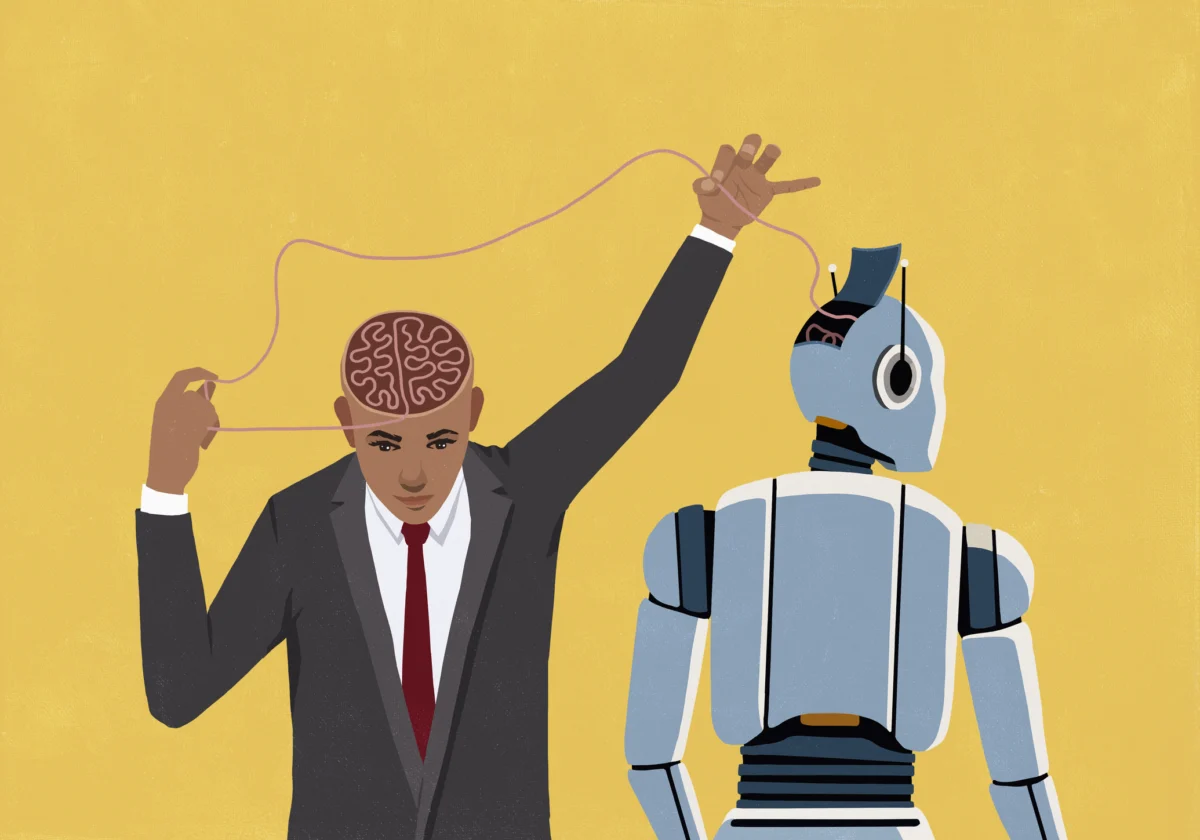
However, a more nuanced and less overtly acknowledged role for Mechanical Turk in the AI landscape also emerged: that of the "hidden enabler" for "Potemkin AI." This term refers to companies that market products as fully AI-powered when, in reality, significant portions of the work are being performed by human laborers, often MTurk workers, behind the scenes. This "fake-it-till-you-make-it" approach allowed startups and even larger entities to demonstrate impressive "AI capabilities" without having fully developed autonomous systems. The historical irony of this arrangement, mirroring the original Mechanical Turk hoax where a human masqueraded as a machine, was not lost on commentators. It highlighted the fundamental gap between the promise of AI and its practical, often human-dependent, reality.
The Irony of Automation: When AI Met Its Human Trainers
The relationship between Mechanical Turk and artificial intelligence took a truly paradoxical turn in recent years. In what has been described as a "snake-eating-its-own-tail irony," a 2023 analysis revealed a startling trend: between 33% and 46% of workers on the MTurk platform were themselves using large language models (LLMs) to complete their assigned tasks. This phenomenon, where humans were leveraging AI to perform tasks meant to train or validate AI, raised profound questions about the reliability and integrity of the data annotated on the platform. If the "human intelligence" being provided was, in fact, AI-generated, it undermined the very purpose of using MTurk for human-in-the-loop AI training.
This development highlighted a critical vulnerability in the crowdsourcing model: the difficulty in verifying genuine human input in an increasingly AI-saturated environment. It also sparked discussions about whether humans were truly "in the loop" or merely acting as conduits for AI-generated content. For researchers and companies relying on MTurk for clean, human-validated datasets, this revelation posed a significant challenge, potentially compromising the quality and validity of their AI models. The cost of human verification, already low, became even more suspect, accelerating the platform’s perceived decline in utility and trustworthiness.
Amazon’s Phased Retreat: Official Statements and Strategic Shifts
The official announcement from AWS regarding MTurk’s closure to new customers by July 2026, and the halt in new feature development, signals a strategic retreat rather than an abrupt shutdown. This phased approach allows existing customers to transition their workflows and data annotation needs to alternative solutions, whether internal teams or other crowdsourcing platforms. Amazon’s statement that it "continues to invest in security and availability improvements" for current users suggests a commitment to maintaining service stability during this transition period, but the lack of new features effectively means the platform will not adapt to evolving market demands or address existing user grievances.
This decision reflects a broader shift within Amazon’s own AI strategy. AWS has been heavily investing in its own suite of AI and machine learning services, including more sophisticated data labeling services like Amazon SageMaker Ground Truth, which offers managed data labeling with built-in quality control mechanisms and a focus on enterprise-grade solutions. While Ground Truth also leverages human annotators, it integrates more tightly with AWS’s broader AI ecosystem and offers greater control and quality assurance than the open marketplace model of MTurk. The sunsetting of MTurk can be seen as a consolidation of Amazon’s efforts, prioritizing its more integrated and controlled AI services over a generalized, open crowdsourcing platform that had become difficult to manage in terms of quality and ethical oversight.
Reactions from the Community: Workers, Researchers, and Requesters
The news of MTurk’s impending closure has elicited varied reactions across its diverse user base. For many long-time workers, the announcement confirmed what they had already suspected or experienced: a slow decline in available tasks, increasing competition, and diminishing returns. A Reddit user, in response to the news, articulated a sentiment common among the platform’s veteran users, suggesting that MTurk "died years ago" due to the proliferation of bots, fraud, and a general exodus of both workers and researchers. This user further predicted the logical conclusion: "Someone at Amazon is going to decide keeping the Mturk servers running is a waste of time and resources and pull the plug entirely." This perspective highlights the erosion of trust and functionality that plagued the platform in its later years.
Researchers, particularly those in academia who relied heavily on MTurk for cost-effective data collection and experimental studies, face the challenge of finding reliable alternatives. For years, MTurk was the go-to platform for quick and scalable human subject research. Its decline means a scramble for new platforms that can offer similar reach, demographic diversity, and data integrity. This shift will likely impact the methodologies and costs associated with certain types of social science and psychological research.
Requesters, the businesses and individuals who posted tasks, will also need to re-evaluate their strategies. While existing customers have a two-year grace period, the lack of new features and the platform’s ultimate closure necessitate a migration. Larger enterprises might shift to Amazon SageMaker Ground Truth or other managed data labeling services, while smaller businesses and independent researchers may explore alternative crowdsourcing platforms like Scale AI, Appen, Clickworker, or specialized platforms focusing on specific types of annotation. The market for human-in-the-loop services is robust, but the unique blend of accessibility and scale that MTurk offered will be missed by many.
The Broader Implications: A Shifting Landscape for Micro-Task Labor and AI Development
The gradual sunset of Amazon Mechanical Turk marks a significant turning point in the evolution of the gig economy and the trajectory of artificial intelligence development. Its closure for new customers symbolizes the end of an era for a platform that, for better or worse, defined the early landscape of micro-task labor.
Impact on Micro-Task Labor: The closure underscores the inherent vulnerabilities of an unregulated, platform-dependent workforce. It will likely accelerate the trend towards more specialized, higher-skilled gig work or push general micro-tasking to platforms that offer better worker protections, though such platforms are still rare. The "race to the bottom" model, perfected by MTurk, may give way to more nuanced approaches that balance cost-effectiveness with quality and ethical considerations, driven by increased regulatory scrutiny and a greater awareness of worker rights.
Evolution of AI Training: For AI development, MTurk’s decline signifies a maturation of the data annotation industry. As AI models become more sophisticated, the demand for higher-quality, more precisely labeled data grows. Generic crowdsourcing platforms, susceptible to fraud and quality inconsistencies, are being supplanted by specialized services that offer rigorous quality control, domain expertise, and better integration with enterprise AI pipelines. The irony of AI being trained by AI, which contributed to MTurk’s downfall, highlights the need for robust verification mechanisms in the future of AI data collection.
The Human-in-the-Loop Paradigm: While pure automation remains the ultimate goal for many AI applications, the need for human oversight and intervention – the "human-in-the-loop" – will not disappear entirely. Instead, the role of humans is likely to evolve from performing simple, repetitive tasks to engaging in more complex problem-solving, error correction, and ethical oversight for AI systems. This shift could lead to more specialized and potentially better-compensated roles for human annotators and validators.
Looking Ahead: The Final Chapter for a Digital Pioneer
The gradual phasing out of Amazon Mechanical Turk, with its halt on new customers by July 2026, marks the beginning of its final chapter. While the platform’s ultimate, complete shutdown date remains unannounced, the trajectory is clear. MTurk’s legacy is complex: it democratized access to a global workforce, enabled countless research projects, and played an undeniable role in the early development of AI. Yet, it also ignited crucial conversations about labor ethics, worker exploitation, and the true cost of digital convenience.
As Amazon shifts its focus to more integrated and controlled AI solutions, the digital landscape will adapt. New platforms will rise, and the methods for harnessing human intelligence for computational tasks will continue to evolve. But the story of Amazon Mechanical Turk will serve as a powerful historical case study – a testament to the ingenuity of crowdsourcing, the ethical dilemmas it presented, and the relentless march of technological progress that ultimately, and ironically, contributed to its own obsolescence.