



The Quantum Threat and the Vulnerability of Legacy Bitcoin
The threat of "Q-Day"—the point at which a quantum computer becomes powerful enough to crack modern encryption—has long loomed over the blockchain industry. Most digital signatures, including those used by Bitcoin, rely on the Elliptic Curve Digital Signature Algorithm (ECDSA). This system is based on the mathematical difficulty of the discrete logarithm problem. However, Shor’s algorithm, a quantum algorithm published in 1994, demonstrates that a sufficiently powerful quantum computer could reverse-engineer a private key from a public key.
According to data cited in Bitcoin Improvement Proposal 361 (BIP-361), approximately 34% of the total Bitcoin supply is currently stored in addresses where the public key has been exposed to the blockchain. This includes all "Pay-to-Public-Key" (P2PK) outputs—common in the network’s earliest years—and any address that has previously sent a transaction, thereby revealing its public key to the ledger. Once a quantum computer can derive a private key from these exposed public keys, it can generate a valid signature, making it impossible for the network to distinguish between the legitimate owner and a malicious attacker.
While hashing algorithms like SHA-256 are considered relatively "quantum-resistant" because Grover’s algorithm only provides a square-root speedup (effectively halving the security bits rather than breaking them entirely), the signature layer remains the network’s "Achilles’ heel."
The Mechanics of the Project Eleven Breakthrough
Project Eleven’s solution leverages the way modern Bitcoin wallets generate addresses. Since the implementation of BIP-32 in 2012, most wallets have used a Hierarchical Deterministic (HD) structure. In this system, a single "seed phrase" generates a master private key, which then derives a tree of child keys using a process known as "hardened derivation." This derivation involves feeding the parent key through a one-way hash function, specifically HMAC-SHA512.
The innovation funded by Project Eleven involves a zero-knowledge proof that allows a user to prove they possess the parent key (the "source" of the derivation) without actually revealing that key. By proving the mathematical relationship between a parent key and a specific address on the blockchain, a user can demonstrate ownership through the derivation path itself, rather than relying on a vulnerable ECDSA signature.
The performance metrics of this proof system are particularly notable. Running on a standard M5 MacBook Air, the system can generate a proof in just 243 milliseconds using four CPU cores. Verification of that proof takes a mere 40 milliseconds. The entire process requires approximately 2 gigabytes of memory and does not necessitate a graphics processing unit (GPU) or a "trusted setup," which is often a point of centralization or security concern in other ZK-proof systems.
Contextualizing BIP-361 and the "Freeze" Debate
The development of this recovery proof is inextricably linked to BIP-361, a controversial proposal published in April by Bitcoin developer Jameson Lopp and several co-authors. BIP-361 suggests a proactive "soft fork" to protect the network from quantum theft. The proposal outlines a timeline where:
- New deposits to quantum-vulnerable addresses are blocked after three years.
- All remaining funds in those addresses are "frozen" after five years.
The primary criticism of BIP-361 has been that it violates Bitcoin’s core promise of immutable, permanent ownership. Critics argue that freezing coins is akin to confiscation. However, Lopp and his colleagues have maintained that a freeze is a defensive measure to prevent an attacker from draining a third of the Bitcoin supply, which would likely crash the market and destroy the network’s credibility.
Project Eleven’s proof changes the nature of this debate. If a reliable, fast recovery path exists, a "freeze" is no longer a permanent loss of funds but rather a transition to a more secure verification method. It turns a "burn" into a "lock," where the key is the user’s original seed phrase or parent derivation material.
The Chronology of Wallet Evolution and the Satoshi Problem
To understand the limitations of this new proof, one must examine the history of Bitcoin wallet software.
- 2009–2011: Early versions of the Bitcoin core software generated keys randomly and independently. There was no "seed phrase" or master key. Each address was an isolated entity.
- February 2012: BIP-32 was introduced, establishing the standard for Hierarchical Deterministic wallets. This allowed for the tree-like structure that Project Eleven’s proof relies upon.
- Late 2013: BIP-39 was introduced, standardizing the use of mnemonic seed phrases (e.g., 12 or 24 words) to represent the master seed.
This timeline creates a significant technical gap. The coins mined by Satoshi Nakamoto—estimated at roughly 1.1 million BTC—were generated in 2009 and 2010. These coins are stored in P2PK outputs that have no "parent" key. Because they were created before the advent of HD wallets, there is no derivation path to prove. Consequently, Project Eleven’s recovery method is fundamentally incompatible with Satoshi’s coins and any other "legacy" wallets created before early 2012.
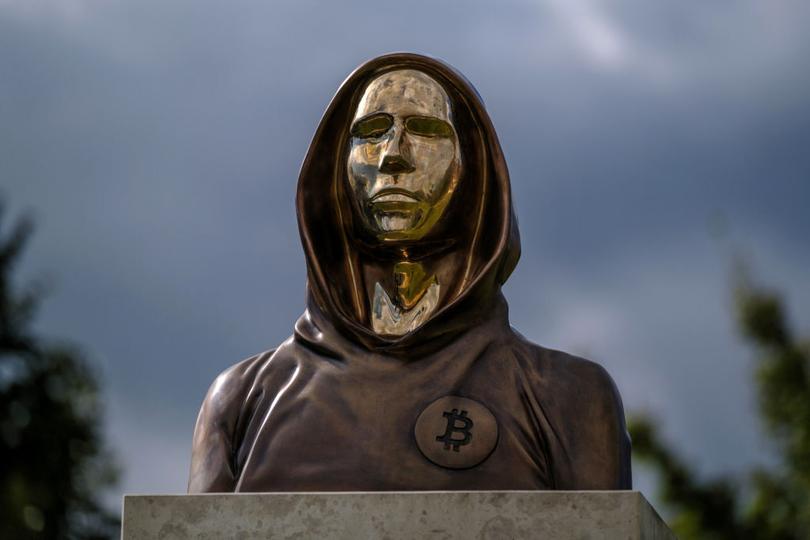
For these oldest and most dormant coins, the threat remains absolute. If a quantum computer can crack the public keys of the "Satoshi era," those coins can be moved by anyone with the necessary computing power, and there is currently no proposed ZK-proof recovery method that can verify ownership without a derivation history.
Technical Analysis and Benchmarking
The efficiency of the Project Eleven proof is attributed to the "Binius" system. Binius is a highly optimized proof system designed to work over binary fields, which are particularly efficient for the types of cryptographic hashes (like SHA-256 and HMAC-512) used in Bitcoin.
In comparative benchmarks, Project Eleven reported that its implementation is significantly faster than existing alternatives. When counting circuit construction, proof generation, and self-checking on a CPU, the system runs in approximately 910 milliseconds. The project claims this is 16 times faster than previous benchmarks for similar computations. When excluding the one-time setup costs—which a user would perform once and reuse—the gap in speed widens to roughly 60 times.
Despite these impressive figures, Project Eleven has issued several caveats:
- Audit Status: The prototype is currently unaudited and should be considered experimental.
- Address Support: It currently supports three common Bitcoin address types but does not yet include support for Taproot (BIP-341).
- Implementation: The proof currently roots at the "coin-type" level of the derivation tree rather than the absolute master seed, though this is a technical detail that could be adjusted in future iterations.
Broader Implications for the Blockchain Industry
The successful demonstration of a fast, laptop-compatible ZK-proof for wallet recovery has implications that extend beyond Bitcoin. As the global cryptographic community, led by organizations like the National Institute of Standards and Technology (NIST), works to standardize post-quantum cryptography (PQC), the "migration problem" remains the largest hurdle for existing blockchains.
Most PQC signatures, such as Dilithium or Falcon, result in much larger transaction sizes than ECDSA. If Bitcoin were to simply switch to a PQC signature scheme, the blockchain’s size would explode, leading to centralization as only high-end servers could maintain the ledger. Project Eleven’s approach suggests a "hybrid" future where ZK-proofs could be used to bridge the gap between legacy security and quantum-resistant standards without bloating the chain for every transaction.
Furthermore, this development reinforces the importance of "hardened" derivation in wallet security. It shifts the definition of digital ownership from "possessing a private key" to "possessing the provenance of a key." This philosophical shift could influence how future hardware wallets and custody solutions are designed, emphasizing the preservation of derivation metadata as much as the keys themselves.
Reactions and Future Outlook
The response from the Bitcoin developer community has been one of cautious optimism. Jameson Lopp, who has been a vocal advocate for addressing the quantum threat despite the unpopularity of BIP-361, noted that the existence of a working recovery proof makes the proposal more palatable.
"The objection to freezing coins assumes the freeze is final," the company stated in its release. "A working recovery proof makes the freeze a lock rather than a burn, and hands the key to anyone who still holds their seed phrase."
However, the "Satoshi Problem" remains the elephant in the room. The inability to recover the network’s oldest coins—which represent the foundation of Bitcoin’s supply—means that even with Project Eleven’s breakthrough, a significant portion of the network’s history remains at risk. As quantum research continues to accelerate, the pressure on the Bitcoin community to reach a consensus on a "quantum-ready" soft fork will likely intensify.
For now, Project Eleven has provided a tangible tool that proves post-quantum recovery is not just a theoretical possibility but a computationally feasible reality for the majority of modern Bitcoin users. The next steps will involve rigorous auditing of the Binius-based circuits and a broader community discussion on whether the network is willing to trade the "permanent" nature of legacy addresses for the collective security of the entire system.