


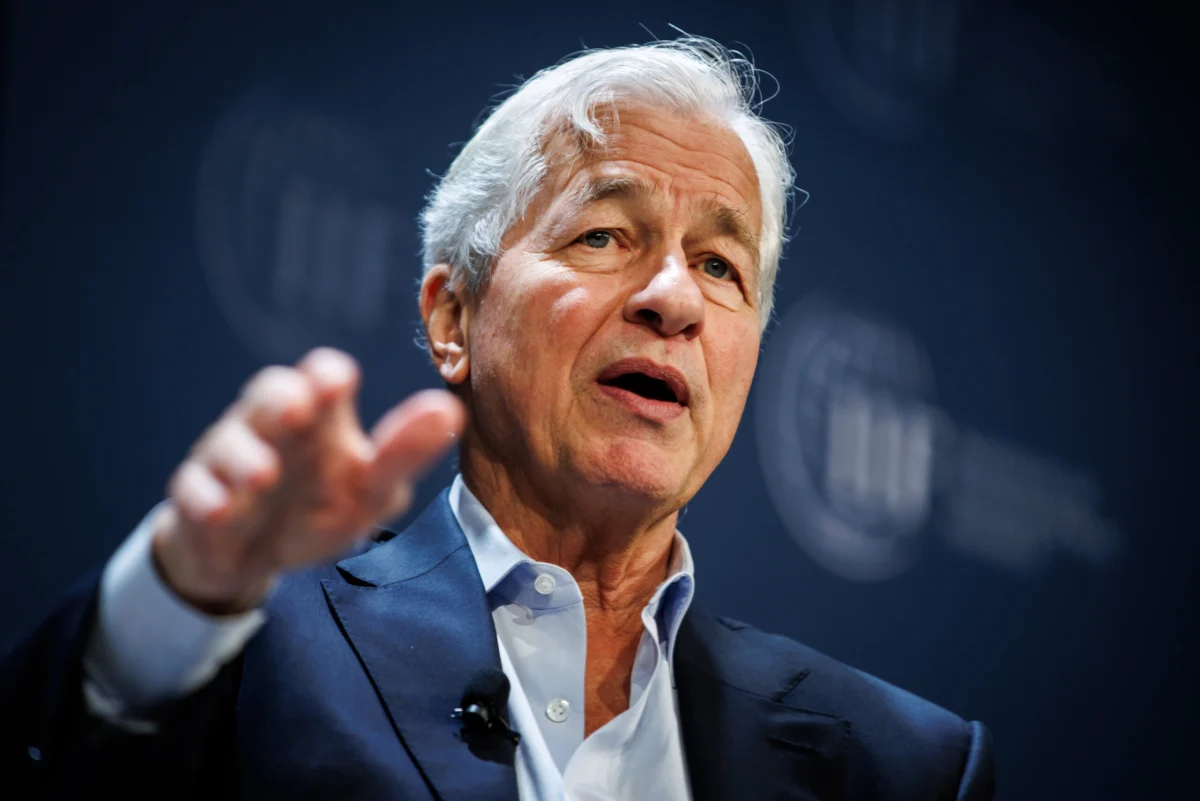
Jamie Dimon, the venerable chief executive officer of JPMorgan Chase & Co., has delivered a profound warning to investors, asserting that the global economy faces a confluence of underappreciated risks that render current equity and long-dated U.S. Treasury valuations unsustainable. In a wide-ranging, hour-long interview with Wilfred Frost for "The Master Investor Podcast," released late Monday, October 16, 2025, Dimon articulated a skeptical stance on market optimism, advising against purchases of either asset class at their present prices. His comments starkly contrast with the prevailing sentiment in financial markets, which have largely shrugged off geopolitical tensions and fiscal challenges to post robust returns throughout the year.
Dimon’s Core Concerns: A Deep Dive into Geopolitical and Fiscal Headwinds
Dimon’s assessment is rooted in a growing list of interconnected geopolitical and fiscal threats that he believes markets are failing to fully account for. He pointed directly to ongoing conflicts in Ukraine and the Middle East, the escalating strategic competition between the United States and China, and the global surge in military spending. These geopolitical flashpoints, according to Dimon, are not merely isolated incidents but rather symptoms of a more fractured and volatile world order, inherently increasing systemic risk.
The war in Ukraine, now in its extended phase, continues to disrupt global supply chains, particularly in energy and agriculture, and has imposed significant inflationary pressures. Similarly, the renewed hostilities in the Middle East introduce acute uncertainty into global oil markets and threaten regional stability, with potential spillover effects on international trade and investment. The strategic rivalry between the U.S. and China, encompassing technological competition, trade disputes, and territorial claims, adds another layer of complexity, fostering an environment of economic decoupling and protectionism that could stifle global growth.
Compounding these international instabilities is the burgeoning issue of government deficits, particularly in the United States. Dimon highlighted the paradox of increasing military expenditures occurring simultaneously with mounting national debt. The U.S. budget deficit has swelled in recent years, propelled by substantial fiscal responses to economic crises, demographic shifts, and sustained government spending. For fiscal year 2025, the Congressional Budget Office (CBO) projected a deficit exceeding $2 trillion, with the national debt rapidly approaching $38 trillion. This trajectory, Dimon argued, is unsustainable and will eventually demand a reckoning from markets. "I do think those risks are probably bigger than other people think," Dimon cautioned, encapsulating his deep concern about the cumulative effect of these formidable challenges.
The Underestimated Risks: Market Complacency vs. Reality
Dimon’s warnings about underpriced risks serve as a direct challenge to the current market narrative, which has seen investors largely overlook geopolitical turmoil and fiscal strains. The S&P 500, a bellwether for the broader U.S. equity market, has demonstrated remarkable resilience, returning nearly 10% year-to-date by mid-October 2025. This performance has been underpinned by several factors: continued robust consumer spending, which has defied expectations of a sharper slowdown; a moderation in inflation from its peak levels, fostering hopes for stable monetary policy; and a widespread investor embrace of the artificial intelligence (AI) trade, which has fueled significant gains in technology and related sectors.
Dimon acknowledged the difficulty in precisely quantifying what risks are already "baked in" to asset prices. However, he stressed the critical distinction between priced-in possibilities and the actual occurrence of adverse events. "It’s possible something’s baked in, but what’s not baked in is what actually happens," he remarked, underscoring the potential for a sudden, unexpected shock to reverberate through markets that have grown accustomed to absorbing bad news without significant corrections. This sentiment reflects a deeper concern that market participants may be exhibiting a degree of complacency, mistaking resilience for invulnerability.
The prevailing market optimism has led to a compression of risk premiums across various asset classes, implying that investors are demanding less compensation for taking on risk. This phenomenon, often observed during periods of extended market rallies, can leave portfolios vulnerable to sharp corrections if and when "what actually happens" deviates significantly from baseline expectations. Dimon’s comments serve as a powerful reminder that while markets can remain irrational longer than one can remain solvent, fundamental risks, if ignored, eventually assert themselves.
A History of Caution: Dimon’s Role as an Economic Cassandra
Jamie Dimon has long cultivated a reputation as a pragmatic, often prescient, voice of caution in the financial industry. Leading JPMorgan Chase, the world’s largest bank by market capitalization, he has a history of sounding alarms about potential economic pitfalls, earning him the moniker of an "economic oracle" or, at times, a "Cassandra." His warnings are often rooted in a deep understanding of financial markets, geopolitical dynamics, and the operational realities of a global banking giant.
This is not the first instance of Dimon publicly advising caution. In June 2022, he famously urged the public to "brace yourself for an economic hurricane" caused by the Federal Reserve’s quantitative tightening and the war in Ukraine. While the full force of that hurricane did not materialize in the immediate aftermath as some feared, the economy did experience elevated inflation, aggressive interest rate hikes, and a period of heightened uncertainty, proving his concerns about significant headwinds were well-founded. His previous warnings have covered a spectrum of issues, from the dangers of excessive leverage to the challenges posed by regulatory complexities and geopolitical fragmentation.
His consistent emphasis on risk management and prudence has become a hallmark of his leadership. This track record lends significant weight to his latest pronouncements, prompting serious consideration from institutional investors, policymakers, and the broader financial community. Dimon’s role, as he sees it, is not merely to report on current conditions but to anticipate and highlight potential dangers that others might overlook, guiding both his bank and, by extension, the wider market towards a more resilient future.
The Bond Market Reckoning: Deficits and Rising Rates
A central tenet of Dimon’s current warning pertains to the trajectory of U.S. budget deficits and their eventual impact on interest rates and the bond market. He articulated a clear view that the persistent accumulation of government debt will inevitably lead to a "reckoning," potentially driving interest rates significantly higher. When specifically asked if he would purchase long-dated U.S. Treasurys at their current prices, Dimon unequivocally stated, "Personally, no."

His rationale is straightforward: even if inflation were to successfully return to the Federal Reserve’s long-term target of 2%, the yield on the 10-year Treasury bond, a key benchmark for global interest rates, should logically be higher, perhaps in the range of 4% to 4.5%. At the time of his interview, the 10-year Treasury yield hovered closer to 3.8% to 3.9%, implying that current prices are too high and offer insufficient compensation for the inherent risks, especially those associated with inflation and fiscal stability.
Dimon’s concern evokes the concept of "bond vigilantes" – market participants who demand greater compensation, typically through higher interest rates, to finance government debt when they perceive fiscal policy to be imprudent or unsustainable. As government borrowing increases, the supply of bonds rises, and if demand does not keep pace, prices fall, and yields rise. This dynamic can be exacerbated by concerns over a nation’s ability or willingness to manage its debt, leading to a loss of confidence that can rapidly drive up borrowing costs. For the U.S., with its substantial and growing national debt, a rise in yields would have profound implications, increasing the cost of financing for the government, corporations, and consumers alike, potentially slowing economic growth.
The U.S. government’s interest payments are already a significant line item in the federal budget, projected to exceed $1 trillion annually within the next few years. A sustained increase in interest rates, as Dimon predicts, would further inflate these payments, crowding out other essential government spending on infrastructure, education, or defense, and creating a vicious cycle of debt accumulation and higher borrowing costs.
Equities and the AI Boom: A Measured Outlook
Dimon’s cautious stance extends beyond the bond market to equities. While he affirmed he would consider an individual stock if it presented "a great investment," he made it clear he would not be a buyer of the broader market at its current valuations. This general skepticism reflects his overarching concern about underpriced risks and the potential for a market correction.
He also offered a nuanced perspective on the artificial intelligence (AI) boom, which has been a primary driver of market gains in 2025. Dimon drew parallels between today’s AI spending frenzy and the early days of the internet, acknowledging the transformative potential of the technology while tempering expectations for its immediate and evenly distributed payoffs. "The amount of money being spent is huge. Will it in total pay off? Probably, just like the internet did," Dimon observed, recognizing AI’s long-term promise.
However, he quickly followed with a crucial caveat, recalling the dot-com bubble of the late 1990s and early 2000s. During that period, many initial high-flyers like Yahoo and Netscape eventually faded or were acquired, while the true long-term winners, such as Google (now Alphabet) and Facebook (now Meta Platforms), emerged later. This historical precedent suggests that while AI will undoubtedly reshape industries, the current wave of investment may not yield returns for all participants as expected, nor on the anticipated timeline. "Will it pay off the way you expect and the timetable you expect? Definitely not," Dimon stated, implying that substantial capital misallocation and volatility are likely to accompany the AI revolution. This measured tone suggests that investors should approach the AI sector with discernment, focusing on sustainable business models and proven innovation rather than speculative hype.
Resilience Amidst Turmoil: Bank Earnings and Economic Buffers
Ironically, Dimon’s latest warnings come on the heels of a period of exceptional performance for JPMorgan Chase and its peers. Just last week, major U.S. banks reported blockbuster quarterly results, powered by surging trading and investment banking revenue. This strong financial showing reinforced a prevailing view among some market observers that the U.S. economy has weathered recent geopolitical turmoil and inflationary pressures better than many initially expected. JPMorgan Chase, for instance, reported record profits, largely driven by strong performance in its fixed income and equities trading divisions, alongside a resurgence in investment banking activity.
Dimon himself acknowledged a degree of increased resilience in the global economy, particularly noting a lower dependence on energy compared to previous decades. This reduced vulnerability to energy price shocks, a significant source of instability in the past, provides a structural buffer. However, he emphasized that this enhanced resilience does not eliminate the possibility of a sudden inflection point or a "tipping point." "You may need more straws in the camel’s back to cause that tipping point," he explained, suggesting that while the global economy may be sturdier, a series of cumulative shocks, even individually moderate ones, could still trigger a significant downturn. "Even this current war starting up again, maybe that’s not enough to do it." This nuanced perspective underscores his belief that while some structural improvements have been made, the aggregate risk environment remains dangerously elevated.
Broader Implications and Investor Takeaways
Dimon’s candid assessment carries significant implications for a broad spectrum of stakeholders, from individual investors managing their retirement portfolios to national policymakers grappling with fiscal and geopolitical challenges. For investors, his warning serves as a stark reminder of the importance of diversification, prudent risk management, and a healthy skepticism towards overly optimistic market narratives. It suggests that a cautious approach, potentially involving a reallocation away from highly valued assets towards those offering better risk-adjusted returns or greater downside protection, might be warranted.
For policymakers, Dimon’s focus on budget deficits and geopolitical tensions should act as a clarion call for greater fiscal discipline and a concerted effort towards diplomatic solutions. The escalating national debt, if left unchecked, risks eroding economic stability and limiting future policy options. Similarly, the fragmentation of the global order and the proliferation of conflicts demand strategic engagement to de-escalate tensions and foster international cooperation, which is essential for sustained economic prosperity.
Economists and analysts are likely to scrutinize Dimon’s remarks, weighing his long-term concerns against the current economic data. While some may view his warnings as overly pessimistic, given the economy’s recent resilience, others will find validation for their own anxieties about an increasingly complex and uncertain global landscape. Dimon’s ability to articulate these macro-level risks in plain language often resonates with a wider audience, shaping sentiment and influencing investment decisions beyond the immediate financial circles.
In conclusion, Jamie Dimon’s latest admonition is not merely a forecast of doom but a call for vigilance and a reassessment of fundamental risks. His central message is clear: while the global economy has demonstrated impressive resilience, particularly evident in the recent strong bank earnings and reduced energy dependence, the cumulative weight of geopolitical instability and unsustainable fiscal policies is creating an environment where risks are significantly underpriced. Investors who ignore these underlying currents, he suggests, do so at their peril, as the market’s capacity to absorb shocks may eventually reach its limit, leading to an unpredictable "tipping point" that could fundamentally alter the financial landscape.