

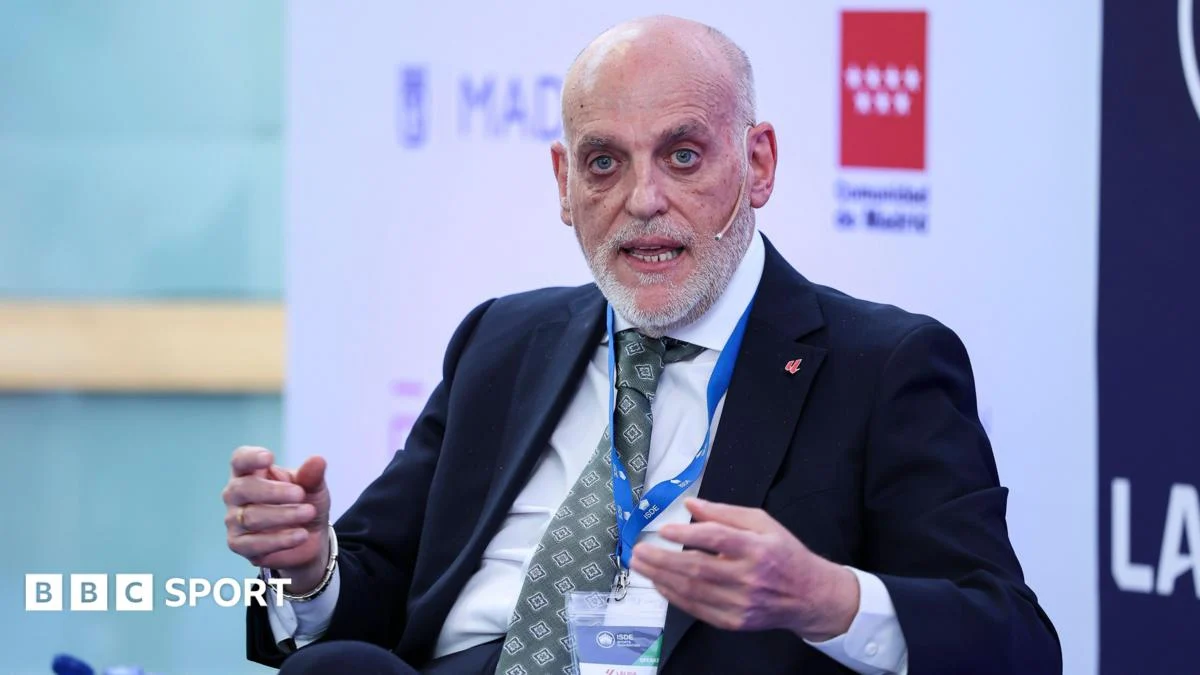
La Liga president Javier Tebas has launched a scathing indictment of FIFA and its president, Gianni Infantino, calling for the latter’s resignation and asserting that the world governing body for football is actively "destroying the football industry." In a candid interview with the Italian newspaper La Gazzetta dello Sport, Tebas, the influential head of Spain’s top professional football league, detailed a litany of grievances, including controversial hydration breaks during the 2026 World Cup, an unusually protracted half-time interval for the final, the postponement of a suspension for United States striker Folarin Balogun, and the potential expansion of the World Cup to a 64-team format.
Tebas unequivocally stated his belief that Infantino’s tenure should end. "In my opinion, yes, I think his time is up," Tebas declared. However, he acknowledged the significant support Infantino commands from national federations, attributing this to what he described as a "rotten at its core" FIFA election system. "There’s no opposition candidate, nobody wants to stand just to lose," Tebas elaborated, painting a picture of a deeply entrenched leadership. "He shouldn’t stay, but the current state of affairs means he won’t leave."
The Spanish league chief made these pronouncements from the United States, where he had been observing his country’s triumph in the 2026 World Cup. His presence in the US provided a vantage point from which he claimed to have heard widespread discontent with Infantino’s leadership. "These past few days here in America, I’ve heard many people who are against Infantino, who disagree with what he’s doing," Tebas revealed. "They say it, but then they do nothing. I don’t know what’s worse, the silence or the complicity, because those who stay silent are perfectly aware of the damage football is suffering."
Infantino is widely expected to secure a fourth term as FIFA president at the organization’s upcoming congress in March. Tebas, however, suggested that Infantino might have faced a more significant challenge to his leadership had the controversy surrounding Folarin Balogun’s suspended ban escalated further.
The Balogun Controversy: A Case Study in FIFA’s Influence
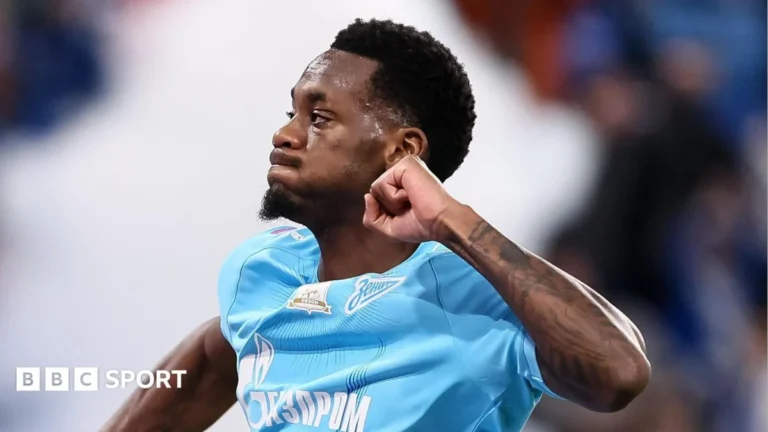
The case of Folarin Balogun, the young American striker, became a focal point of Tebas’s criticism. Balogun was reportedly set to miss the United States’ crucial last-16 tie against Belgium in the 2026 World Cup. However, a suspension was controversially deferred following what Tebas alluded to as an intervention, implying involvement from then-US President Donald Trump. "The suspension of the American player’s ban was absolutely serious. They were lucky that Belgium eliminated the USA, because otherwise a case could have arisen that might have cost Infantino his job," Tebas stated. "Since Belgium won, they managed to bury the matter. But these things are just the tip of the iceberg."
This incident drew sharp criticism at the time from UEFA, Europe’s governing football body. UEFA publicly denounced FIFA’s decision as "unprecedented, incomprehensible and unjustifiable." This stance was so strong that it contributed to UEFA president Aleksander Čeferin’s decision not to attend the World Cup final. The Balogun affair highlighted, in Tebas’s view, a pattern of FIFA making decisions that favour specific interests, potentially undermining the integrity of sporting sanctions.
World Cup Expansion and the Strain on National Leagues
Tebas also voiced strong opposition to Infantino’s expressed openness to expanding the World Cup to a 64-team tournament. This concept, floated by Infantino during the 2026 event, was met with immediate skepticism from Tebas, who argued that the focus should not solely be on the World Cup at the expense of domestic football. "Increasing the number of national teams makes no sense. The football industry isn’t just the World Cup," Tebas asserted. "It’s the national competitions that sustain this sport. They are destroying the football industry, which generates tens of thousands of jobs, for an event that lasts 40 days and involves a minority of players."
He emphasized the foundational role of national leagues in the global football ecosystem. "Are the best players there? Clearly, but they are also in our leagues. We need fewer international matches and more protection for national football, at all levels. They don’t realise they are making irresponsible decisions." This perspective underscores a fundamental tension between FIFA’s global tournament ambitions and the day-to-day realities and financial health of domestic leagues, which form the bedrock of professional football.
Questionable Hydration Breaks and Extended Half-Time
Further illustrating his point about FIFA’s perceived disregard for the practicalities of the sport, Tebas critiqued the mandatory three-minute hydration breaks introduced for all matches played in the United States, Mexico, and Canada during the 2026 World Cup. FIFA justified these breaks as a commitment to player welfare, irrespective of actual weather conditions. However, critics, including Tebas, have suggested these breaks are primarily exploited for commercial purposes.
"Hydration breaks are a lie. We have them in La Liga, but only when it’s genuinely hot," Tebas explained, drawing a contrast with his league’s approach. "Here, the pitches in Dallas, Los Angeles, Atlanta had air conditioning; I had to put on a jumper in the stands. It was a lie, a break for advertising." He pointed to this as evidence of an institution operating solely on its own agenda.
The extended half-time interval for the World Cup final also came under fire. With a star-studded lineup of performers, including Madonna, BTS, Shakira, and Justin Bieber, the traditional 15-minute break was stretched to an unprecedented 27 minutes and 22 seconds. Tebas viewed this as another example of FIFA prioritizing spectacle and its own interests over the flow and integrity of the game. "Fifa arranges things as it pleases, for what it wants, for its own interests, certainly not for football," he stated. "So, if they need a 27-minute half-time break, they’ll have it."
Broader Implications for the Football Industry
Tebas’s critique extends beyond specific incidents to a fundamental concern about the direction of the global football industry under Infantino’s leadership. He argues that FIFA’s current trajectory is unsustainable and detrimental to the sport’s long-term health. The emphasis on expanding major tournaments, the potential for increased international fixtures, and the perceived prioritization of commercial interests over sporting principles are all contributing factors to his alarm.
The economic impact of such decisions is significant. National leagues and clubs, which are the primary employers and investors in the sport, generate the vast majority of football’s revenue and jobs. Tebas’s argument suggests that FIFA’s focus on a relatively short-duration event like the World Cup, especially with an expanded format, diverts resources and attention away from the crucial domestic structures that underpin the entire football pyramid.
The implications for player welfare are also a point of contention. While FIFA claims to prioritize player well-being, Tebas’s comments on the hydration breaks suggest a disconnect between stated intentions and actual implementation, potentially serving commercial interests more than player health. The increasing number of international fixtures, a common criticism leveled against FIFA, also raises concerns about player burnout and increased risk of injury.
The current system, where national federations hold significant voting power within FIFA, has been criticized for creating a lack of robust opposition to the incumbent president. This can lead to a concentration of power and a reduced capacity for genuine debate and reform. Tebas’s assertion that the election system is "rotten at its core" reflects a sentiment shared by many observers who believe that the democratic processes within FIFA need significant overhaul to ensure greater accountability and a more balanced representation of interests across the football world.
The future of football governance, as highlighted by Tebas’s strong statements, hinges on the ability of various stakeholders—from national leagues and clubs to player unions and fan groups—to coalesce and advocate for a more equitable and sustainable model. The coming months, leading up to FIFA’s March congress, will be crucial in determining whether Infantino’s leadership faces any substantial challenge or if Tebas’s dire warnings about the industry’s future will continue to go unheeded.
BBC Sport has reached out to FIFA for comment on Javier Tebas’s statements.