

In a pivotal development poised to accelerate the global transition to renewable energy, Gritt, an innovative robotics startup, has successfully exited stealth mode, announcing a substantial $26 million Series A funding round. This latest injection of capital, led by Obvious Ventures with participation from Union Square Ventures and Active Impact Investment, brings the company’s total funding to $34 million, following an earlier seed round backed by First Round Capital, Climactic, Congruent Ventures, and VSC Ventures. Founded by Carnegie Mellon-trained roboticists Puneet Puri (CEO) and Vishal Dugar (CTO), Gritt is spearheading a new era of intelligent automation designed to tackle one of the most pressing challenges facing the solar industry: a critical labor shortage hindering the rapid deployment of essential clean energy infrastructure. The company’s core mission, as articulated by Puri, is to "help civilization build infrastructure faster" by deploying AI-driven systems capable of operating efficiently and safely in the chaotic, unstructured environments of construction sites.
The Global Imperative and the Solar Boom
The urgency to combat climate change and achieve energy independence has propelled solar energy to the forefront of global sustainability efforts. Nations worldwide are setting ambitious targets for renewable energy deployment, driven by international agreements like the Paris Accord and national decarbonization strategies. According to the International Energy Agency (IEA), solar PV alone is expected to account for over half of the new renewable capacity added globally through 2028, with annual additions projected to exceed 400 GW. The United States, for instance, aims to decarbonize its electricity sector by 2035, necessitating a dramatic expansion of solar and battery storage infrastructure. This aggressive build-out is not merely an environmental imperative but also a strategic economic and geopolitical one, reducing reliance on volatile fossil fuel markets and fostering green job growth. However, this unprecedented demand has exposed significant bottlenecks in the supply chain, particularly concerning the availability of skilled labor for installation.
The Looming Labor Gap in Renewable Infrastructure
The construction sector, a cornerstone of any major infrastructure push, has long grappled with an aging workforce and a persistent shortage of skilled tradespeople. This challenge is exacerbated in the specialized field of large-scale solar farm development, where projects often require the installation of hundreds of thousands of heavy, delicate panels across vast, often remote, terrains. The work is physically demanding, repetitive, and at times hazardous, involving the lifting and precise placement of bulky components, each typically weighing upwards of 50-70 pounds, often at height or in challenging weather conditions. A 2023 report by the Solar Energy Industries Association (SEIA) highlighted that while solar employment continues to grow, attracting and retaining qualified workers for installation roles remains a significant hurdle, potentially slowing project timelines and increasing costs. Traditional industrial robots, designed for controlled factory settings, have historically struggled to adapt to the variability and unpredictability of outdoor construction sites, leaving a critical gap in automation solutions for this vital industry.
Robotics’ Historical Hurdles and AI’s Breakthrough
For decades, the promise of construction robotics remained largely unfulfilled due primarily to the "Moravec’s paradox," which posits that high-level reasoning is often easier for computers than basic sensorimotor skills like perception and manipulation in complex, real-world environments. Industrial robots excelled in repetitive, precisely programmed tasks within structured factory floors but faltered when faced with uneven terrain, changing light conditions, dynamic obstacles, and the sheer variability inherent in construction materials and processes. The cost and complexity of custom-engineering robots for every unique construction task proved prohibitive.
However, the advent of advanced Artificial Intelligence models, particularly in the realms of deep learning, computer vision, and reinforcement learning, has fundamentally reshaped this equation. The latest generation of AI can process vast amounts of sensory data (from cameras, LiDAR, and other sensors) to perceive and understand unstructured environments with unprecedented accuracy. These models enable robots to learn from experience, adapt to new situations, and make real-time decisions, transforming them from rigid, pre-programmed machines into intelligent, adaptable agents. This paradigm shift in AI capabilities is precisely what Gritt’s founders identified as the key to unlocking automation in construction.
Gritt’s Innovative Approach: AI-Powered Automation
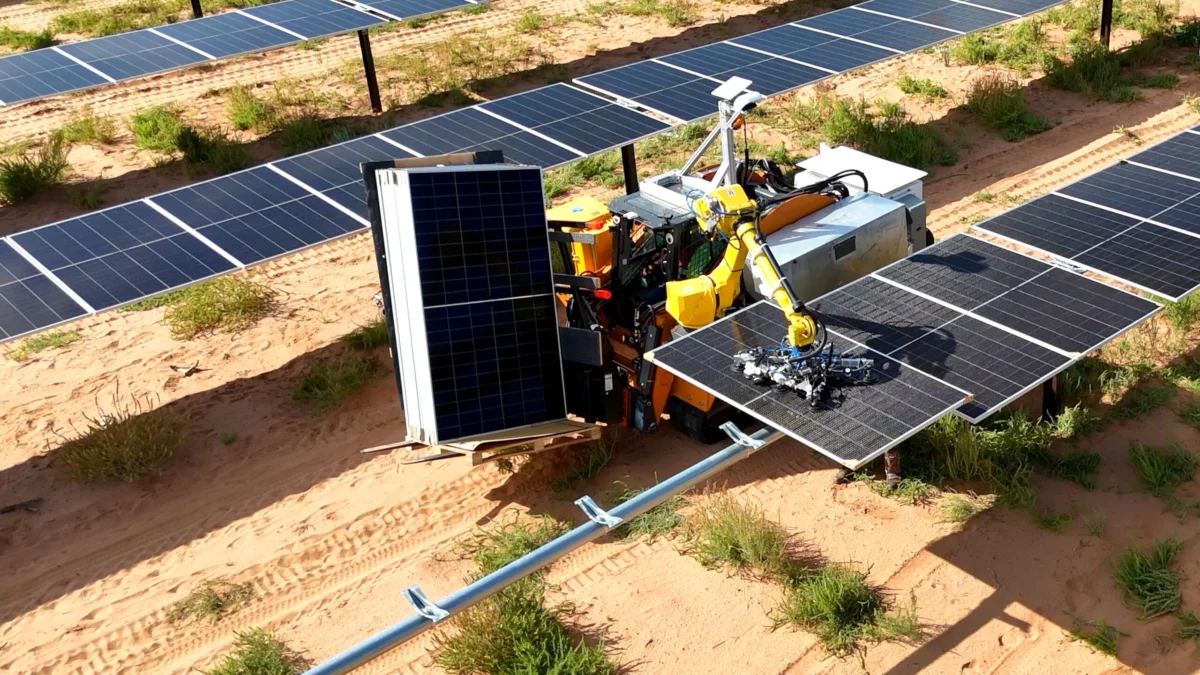
Gritt distinguishes itself by eschewing the costly and time-consuming development of bespoke robotic hardware. Instead, the company leverages readily available, robust off-the-shelf industrial equipment, such as rented skidders (heavy-duty vehicles) and commercially available robotic arms from manufacturers like Kawasaki. This strategy allows Gritt to focus its expertise and resources entirely on its proprietary AI models, which serve as the "brain" controlling these machines. This software-centric approach offers several distinct advantages:
- Cost-Effectiveness: Utilizing existing hardware significantly reduces development and deployment costs, making the solution more scalable and accessible.
- Flexibility and Speed: Gritt can rapidly integrate its AI with various hardware platforms, adapting to different project requirements and accelerating market entry.
- Focus on Intelligence: By concentrating on the AI, Gritt can build highly generalizable systems that learn and improve across diverse tasks and environments, fulfilling Puri’s vision for "intelligence which can work in the outdoor, chaotic environments."
The initial application of Gritt’s intelligent system is the highly demanding task of handling and positioning large, fragile solar panels. The system is designed to autonomously unload panels, transport them across the site, and then meticulously position them onto metal frames with sub-millimeter accuracy, ready for human workers to fasten them securely. This precision not only ensures proper installation but also minimizes waste from damaged panels.
From Concept to Commercial Deployment: Gritt’s Journey
The journey for Gritt began with the shared vision of Puneet Puri and Vishal Dugar, both alumni of Carnegie Mellon University, a renowned hub for robotics research and innovation. Their deep technical expertise in robotics and AI laid the foundation for Gritt’s ambitious goals. While the exact timeline for their seed funding round remains private, it provided the initial capital to develop their core AI platform and conduct early pilot programs. The recent $26 million Series A round marks a significant milestone, allowing Gritt to scale its operations, expand its engineering team, and accelerate the deployment of its systems across the United States.
Andrew Beebe, a partner at Obvious Ventures who led Gritt’s Series A round, underscored the unique entrepreneurial spirit of the founders: "There are people who used to build rockets that went into space and had infinite budget for the smallest little part, and then there are people who know what it means to get into dirty, dull, and dangerous jobs and scale them like mad. These guys are in the second camp, and that’s a special kind of entrepreneur that has the technical chops, the AI, and the machine vision skills to make it work." This sentiment highlights the pragmatic, problem-solving ethos that underpins Gritt’s approach.
Transforming Solar Installation: Efficiency and Safety
Gritt’s systems are not merely incremental improvements; they represent a step-change in productivity and safety for solar installation. The company currently has two systems deployed in the field, continuously collecting data to refine their AI models and enhance performance. The results are compelling: while a typical eight-person crew might install approximately 800 solar panels per day, the same crew, when augmented by Gritt’s AI-powered systems, can achieve an astounding 3,000 to 4,000 panel installations daily. This represents a 3x to 5x increase in efficiency, dramatically shortening project timelines and reducing overall labor costs per installed watt.
Beyond speed, the impact on worker safety is profound. One anonymous Gritt customer, a leader in the power construction sector, enthusiastically reported anticipating a significant reduction in injuries. The arduous task of repeatedly lifting 100-pound panels overhead, a common cause of musculoskeletal injuries in solar installation, is largely mitigated by the robots. This allows human workers to focus on more complex, less physically demanding tasks, improving job satisfaction and reducing worker compensation claims. Furthermore, the customer noted the system’s potential to make work at remote sites, often challenging for attracting and retaining workers, much easier and more appealing.
Market Traction and Future Horizons
Gritt has quickly gained significant traction within the industry. The company is already contracted to help install an impressive 2.8 gigawatts of solar panels over the next 18 months, a testament to the perceived value and reliability of its technology. Its customer base includes three of the top ten power construction companies in the United States, indicating strong acceptance among major industry players. Gritt aims to expand its operational footprint rapidly, with plans to have 48 of its intelligent systems deployed within the next six months.
Looking ahead, Gritt’s vision extends far beyond solar panel installation. The company intends to progressively add new manipulation tasks to its system, enabling it to perform fastening, drilling posts, and even constructing the intricate racking systems upon which solar panels sit. In the longer term, Puri and Dugar envision their AI platform tackling other notoriously labor-intensive construction tasks, such as tying rebar before concrete is poured—a complex and physically demanding job ripe for automation.
Competitive Landscape and Strategic Differentiation
The burgeoning market for construction robotics, particularly in solar, has attracted other innovative companies. Competitors like Luminous Robotics, Cosmic, and China’s Trinabot are also developing panel-installing robots. However, a key differentiator lies in their approach to hardware. While these rivals often build their robotic hardware from scratch, Gritt’s strategy of integrating its AI with off-the-shelf vehicles and robotic arms presents a unique competitive advantage. This modular, software-first approach could enable Gritt to scale faster, maintain a leaner cost structure, and adapt more readily to evolving hardware technologies, potentially giving it an edge in a rapidly growing and evolving market. The ability to quickly integrate with new, more powerful, or more specialized commercial hardware without re-engineering an entire robot platform allows for greater agility and reduced capital expenditure.
Beyond Installation: The Vision of "Physical AI"
The true transformative power of Gritt’s approach lies not just in automating discrete tasks but in its broader vision of "physical AI" for construction sites. The founders assert that the rise of new AI models, particularly their generalizability, is what makes this comprehensive vision feasible. Puri explained that while creating a system for a single solution might have been possible five years ago, modern AI allows for the same underlying pipeline to be reused and improved across diverse tasks. He cited a remarkable example: training their system to stack cinder blocks took weeks, but a similar demonstration for rebar tying, using the same software, took merely a single day. This rapid adaptability and learning capability underscore the potential for a truly intelligent, multi-tasking construction robot.
Furthermore, Gritt envisions its systems evolving into a comprehensive intelligent layer for the entire worksite. Equipped with a suite of sensors and advanced intelligence, these robots could do more than just install panels; they could actively contribute to site management and decision-making. Imagine a Gritt system noticing an open trench as a storm approaches, automatically alerting workers to cover it before rain damages components. Or flagging missing inventory, preventing costly delays. Puri encapsulates this expansive vision: "Gritt becomes now this layer of physical AI, which is doing this dextrous, labor-intensive task, plus it can help you take decisions on the site." This integration of physical execution with intelligent oversight promises to revolutionize project management, safety protocols, and logistical efficiency in construction.
Implications for the Future of Construction and Energy
The emergence of companies like Gritt carries profound implications for the future of both the construction industry and the global energy landscape. Economically, by dramatically reducing installation times and labor costs, Gritt’s technology could significantly lower the overall cost of solar energy, making it even more competitive with fossil fuels and accelerating its adoption. This could stimulate further investment in renewable energy projects and create a virtuous cycle of growth and innovation.
Socially, while concerns about job displacement are natural with automation, such technologies often shift the nature of work rather than eliminating it entirely. The dangerous, dirty, and dull tasks are automated, allowing human workers to transition to roles requiring oversight, maintenance, programming, and higher-level decision-making. This could attract a new generation of tech-savvy talent to the construction industry, elevating its appeal and fostering upskilling opportunities. Unions and industry bodies will need to adapt, focusing on training programs that prepare workers for these new, more technically oriented roles.
Environmentally, the most direct benefit is the expedited deployment of clean energy infrastructure. Faster solar farm construction means quicker reductions in carbon emissions, helping nations meet their climate targets more efficiently and mitigate the worst effects of global warming. Gritt’s technology is not just about building faster; it’s about building a sustainable future, faster.
In conclusion, Gritt’s successful emergence from stealth and significant funding round signals a turning point for the construction sector, particularly in the critical domain of renewable energy. By harnessing the power of advanced AI and adopting a smart, software-first approach to robotics, Gritt is poised to overcome long-standing labor challenges, enhance safety, and dramatically accelerate the build-out of the solar infrastructure essential for a cleaner, more energy-independent world. The vision of "physical AI" operating intelligently and collaboratively on construction sites is no longer a distant dream but a tangible reality taking shape today.