

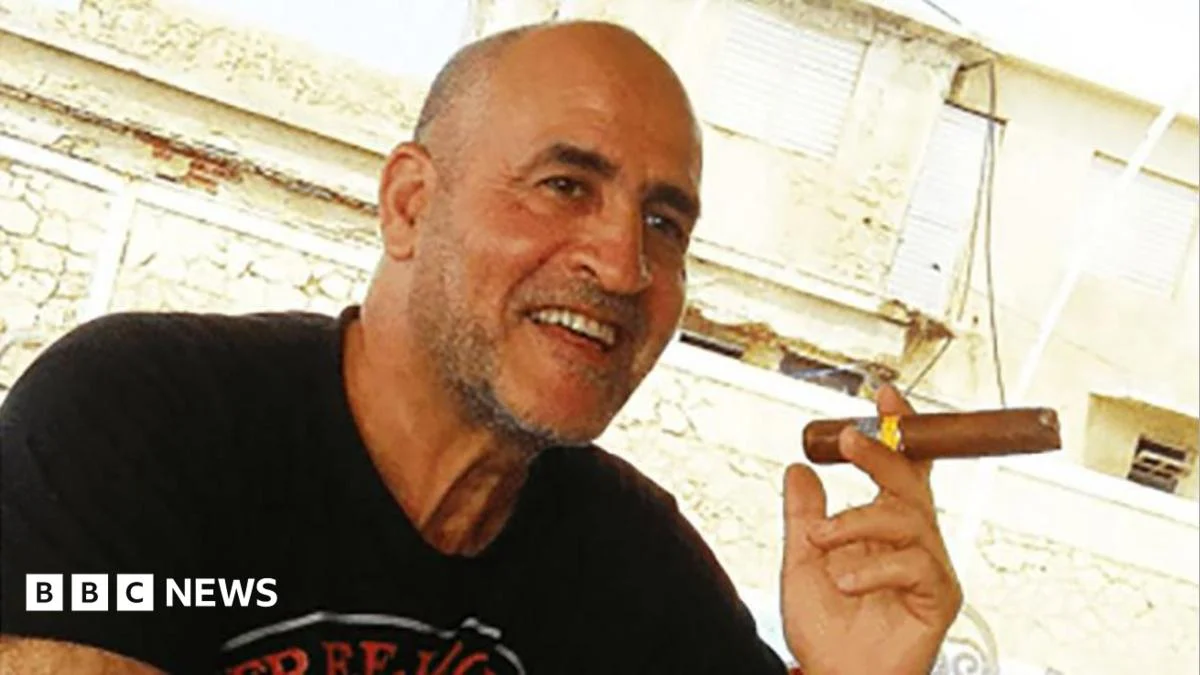
Daniel Siad, a 69-year-old modelling scout whose name appeared thousands of times in documents related to the late convicted sex offender Jeffrey Epstein, has been found dead at his home in Colombes, a north-west suburb of Paris. His discovery on Monday by local authorities immediately prompted an investigation into the cause of death by the Nanterre prosecutor’s office, which confirmed the details to various media outlets. An autopsy is scheduled to be performed to ascertain the circumstances surrounding Siad’s demise, adding another layer of complexity to the sprawling and deeply disturbing network surrounding Epstein, whose own death in a New York jail cell in 2019 was officially ruled a suicide.
The Discovery and Initial Investigation
Law enforcement officials confirmed that Siad was found deceased on Monday, July 22nd, in his residence in Colombes. The Nanterre prosecutor’s office, responsible for judicial proceedings in that jurisdiction, swiftly initiated an inquiry "to determine the cause of death" following the discovery. Such investigations are standard procedure in France when a death is not immediately attributable to natural causes or occurs under suspicious circumstances. The impending autopsy will be crucial in providing forensic insights, including potential medical factors or signs of foul play, which will guide the direction of the ongoing probe. The rapid opening of an investigation underscores the sensitivity surrounding any individual connected to the Epstein scandal, particularly given the prior death of another key associate.
Daniel Siad’s Tangled Web with Jeffrey Epstein
Siad’s name became prominently associated with Jeffrey Epstein following the extensive release of judicial documents by the US government. These "Epstein files," which detailed the disgraced financier’s network of associates, victims, and properties, revealed Siad’s frequent correspondence and interactions. His name reportedly appeared thousands of times, indicating a significant, albeit often opaque, role within Epstein’s orbit.
Victim testimonies have painted a grim picture of Siad’s alleged involvement. Anya, a survivor who chose to remain anonymous, previously shared her account with the BBC, explicitly stating that Siad had been the individual who introduced her to Epstein. Describing the encounter as "a complete set-up," Anya characterized Siad as "essentially a professional trafficker." This chilling accusation aligns with the nature of Epstein’s crimes, which involved the systematic recruitment and exploitation of underage girls and young women.
Further corroborating his deep involvement, one email released in the Epstein files provided a glimpse into Siad’s mindset and methods. In poorly spelled English, Siad wrote to Epstein: "In This busyness I feel like fisherman some time I cache quick, some time no fish." This crude analogy, likening the recruitment of individuals to fishing, has been interpreted by many as a thinly veiled reference to his role in sourcing young women for Epstein, highlighting a callous disregard for human dignity.
Despite the mounting evidence and victim accounts, Siad consistently denied full knowledge of Epstein’s criminal activities. In a recent interview with CNN, he claimed ignorance regarding the abuse of women by Epstein, stating, "I trusted him, I believed this guy is a professional person." This assertion of naiveté has been met with skepticism by investigators and victim advocates, given the sheer volume of his communications with Epstein and the explicit nature of some interactions. Prior to a BBC investigation published on July 18th, Siad’s lawyer had indicated that he was unavailable for comment, suggesting a deliberate attempt to avoid public scrutiny.
Domestic Allegations and the Pursuit of Justice in France
Beyond his links to Epstein, Daniel Siad himself was the subject of several complaints in France. These allegations, which included claims of rape, began to surface with the first complaint filed in February of the current year. The complaints initiated a separate legal process within the French judicial system, prompting an investigation into his conduct.
In response to these allegations, Siad had vehemently denied any wrongdoing in multiple recent media interviews. Speaking to BFMTV in May, he asserted, "I have never raped anyone in my life." Such public denials are common in cases of this nature, but they did not halt the ongoing police investigation, which had reportedly progressed to the stage of taking depositions from alleged victims.
One former model, who had provided a deposition to French police in June as part of the investigation into Siad, expressed profound concern and frustration following news of his death. Speaking to the BBC, she lamented the potential loss of crucial information. "An important link in the chain has just vanished into thin air, without there even having been a chance to recover the information Daniel Siad might have possessed—given that he was never questioned," she stated. Her sentiment underscores a recurring challenge in complex investigations involving powerful or well-connected individuals: the passage of time and the death of key figures can irrevocably compromise the pursuit of truth and justice. She added, "Too much time has been lost… and it is yet another way for the leads to go cold. I hope we won’t have to wait another seven years to see his home searched, even though I think it is already too late."
Victims Deprived of a Crucial Step
The legal representatives of Siad’s alleged victims in France have voiced significant disappointment and concern over his death. Anne-Claire Le Jeune, who represents six women who had filed complaints against Siad, highlighted the profound impact on her clients. "My clients found the strength to break a particularly heavy silence, given Daniel Siad’s ties to Jeffrey Epstein," she noted, emphasizing the courage required to come forward against an individual connected to such a notorious figure. "They faced every stage of the proceedings with remarkable courage."
Le Jeune critically pointed to the slow pace of the investigation as a contributing factor to the current predicament. "It is deeply regrettable that the slow pace of the investigation resulted in his death before he could be questioned or taken into police custody, thereby depriving the victims of a crucial step in their pursuit of truth and justice," she stated. This sentiment reflects a broader frustration among victim advocacy groups regarding the often protracted nature of sexual assault investigations, particularly when dealing with complex cases or high-profile individuals. The opportunity for victims to confront their alleged abuser, or at least to see them formally questioned and potentially held accountable, is often a vital part of their healing and pursuit of closure.
A Pattern of Deaths Among Epstein Associates
The death of Daniel Siad bears a striking and unsettling resemblance to the fate of another prominent Epstein associate, French modelling agent Jean-Luc Brunel. Brunel, 76, was found hanged in his Paris prison cell in February 2022. He had been held in custody for over a year as he faced a rigorous investigation on suspicion of the rape of minors and trafficking of minors for sexual exploitation – charges he consistently denied.
Brunel was a central figure in Epstein’s alleged global sex trafficking ring. He co-founded MC2 Model Management, a prominent agency, reportedly with financial backing from Epstein himself. Investigations revealed Brunel was suspected of playing a pivotal role in transporting and housing girls and young women for Epstein’s illicit activities, essentially functioning as a key recruiter and facilitator. His death in custody, like Epstein’s, sparked widespread speculation and further fueled conspiracy theories regarding the depth and reach of the network and the powerful individuals potentially implicated.
Jeffrey Epstein himself, 66, died by suicide in a New York jail cell in August 2019 while awaiting a federal trial for sex trafficking. His death, ruled a suicide by the medical examiner, nonetheless led to significant public skepticism and multiple investigations into the circumstances of his custody, particularly concerning lapses in suicide watch protocols. The repeated deaths of key figures in the Epstein saga, often under mysterious or highly scrutinized circumstances, have left many victims and the public feeling that complete justice and full accountability remain elusive.
Broader Implications for Justice and Accountability
The death of Daniel Siad presents significant challenges to the ongoing efforts to fully unravel the intricate web of Jeffrey Epstein’s criminal enterprise. While investigations into Epstein’s broader network continue, the loss of a key potential witness or co-conspirator means that direct testimony and access to certain information may now be permanently out of reach. Each death of an alleged perpetrator or facilitator further fragments the investigative path, making it harder to piece together the full scope of the crimes and identify all those responsible.
For the victims, Siad’s death is a profound blow. The legal process, even when slow, offers a formal pathway to validate their experiences and hold perpetrators accountable. When that path is cut short by the death of an alleged abuser, it can re-traumatize survivors, leaving them with a sense of unfinished business and an enduring feeling that justice has been denied. The emotional toll of having to relive their experiences without the prospect of legal resolution is substantial.
This incident also reignites questions about the efficacy and speed of legal systems in addressing complex international trafficking networks involving wealthy and influential individuals. The "slow pace of investigation" highlighted by Anne-Claire Le Jeune points to systemic issues that can inadvertently protect alleged perpetrators or allow critical evidence and opportunities for justice to slip away. There is a continuous call from victim advocacy groups for more robust resources, faster judicial processes, and enhanced international cooperation to ensure that such crimes are thoroughly investigated and that justice, even if delayed, is not ultimately denied.
The case of Daniel Siad, much like those of Jean-Luc Brunel and Epstein himself, serves as a stark reminder of the immense difficulties in bringing powerful individuals and their associates to justice for sex trafficking and abuse. It underscores the critical need for unwavering commitment from law enforcement and judicial bodies globally to pursue every lead, protect every victim, and strive for accountability, even when faced with significant obstacles and the passage of time. The fight for truth and justice for the victims of Jeffrey Epstein’s network, and those connected to it, continues, albeit now with another critical piece of the puzzle lost to history.