


A deadly shooting incident in the northern occupied West Bank village of Tal has resulted in the deaths of at least four Palestinians and two Israelis, marking the deadliest single confrontation in the territory in several months. The tragic event, which unfolded amidst deeply conflicting accounts from both sides, has further exacerbated an already volatile situation in the West Bank, where violence has surged significantly since the onset of the Gaza war in October 2023. The incident has drawn swift condemnations and promises of forceful retaliation, threatening to deepen the cycle of violence that grips the region.
Conflicting Narratives Emerge from the Scene
The sequence of events in Tal, located southwest of Nablus, remains hotly contested, with Israeli and Palestinian sources offering starkly different versions of the confrontation. Palestinian eyewitnesses reported to the BBC that the incident began in the early morning when residents of Tal rushed to confront approximately 30 Jewish settlers who they alleged were attacking Palestinian homes. Ahmed Zeidan, an eyewitness, described hand-to-hand clashes breaking out, even in the presence of Israeli soldiers. Essam Saifi, a local leader of the ruling Palestinian Authority’s Fatah party, further claimed to Reuters that settlers initiated gunfire before Israeli forces arrived and also began shooting. This account suggests a direct engagement between villagers, settlers, and subsequently, Israeli military personnel.
Conversely, the Israel Defense Forces (IDF) presented a narrative asserting that the confrontation began with a Palestinian attack. According to the IDF, soldiers were dispatched to Tal following reports of an assault on Israeli civilians who were hiking in the area. The military specified that a portion of the hiking route traverses an area under full control of the Palestinian Authority (PA), while another part falls under PA administrative control with Israeli security oversight. The IDF stated that the hike was not coordinated with them. A security guard from a nearby settler outpost, who reportedly responded to the scene, had his weapon seized by a Palestinian who then used it against Israelis, killing the guard. Soldiers subsequently "eliminated the terrorist who executed the terror attack," the IDF stated. Major General Avi Bluth, head of the army’s central command, indicated that this individual was one of four members of the same family killed "in the exchange of fire."
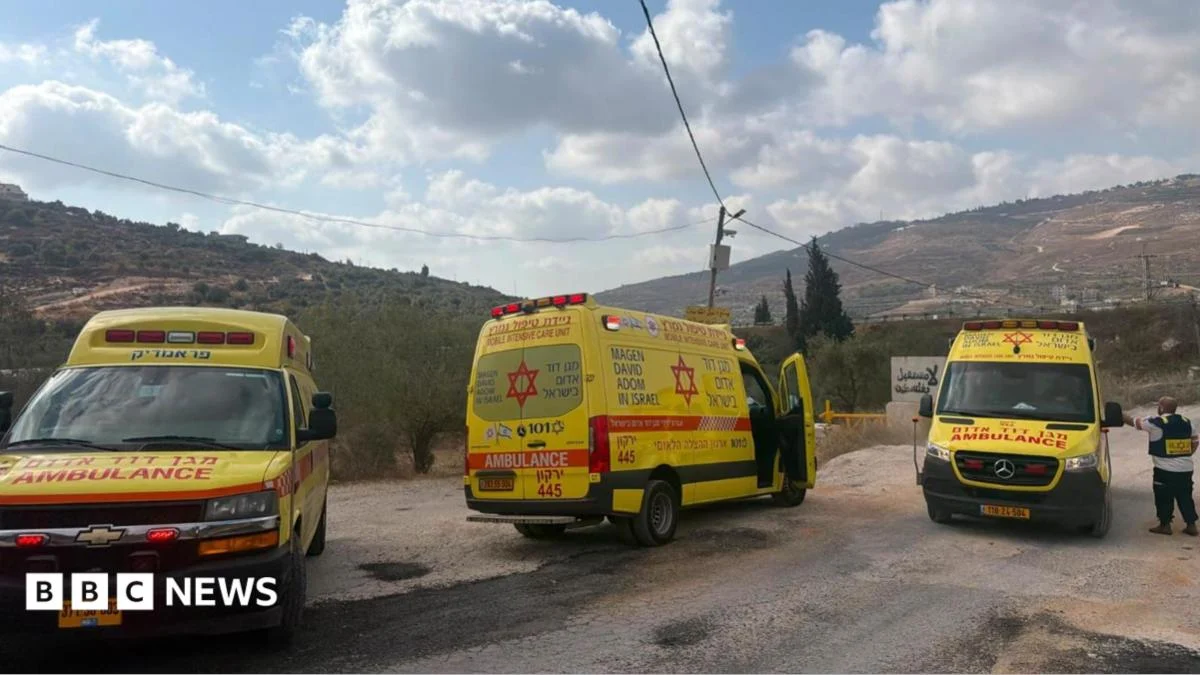
Adding to the complexity, two video clips, widely circulated by local media but not independently verified, offer glimpses into the chaotic scene. One clip purportedly shows a confrontation between Palestinians, Israeli soldiers, and armed Israelis in civilian attire, with gunshots audible and a group of Israeli civilians, including children, watching and heckling. This footage also depicts armed Israelis in civilian clothes pushing and kicking two Palestinian men. A second video, shot from a different angle, appears to show both men attempting to seize weapons, with one successfully doing so. This chaotic sequence is accompanied by several gunshots as the individual seemingly fires the weapon, prompting a response from troops. The IDF later confirmed that a 27-year-old soldier "fell during operational activity in the area of the village," though the precise circumstances of his death remain unclear. The Israeli ambulance service reported that two other Israelis were also wounded in the incident. Palestinian officials confirmed that several other Palestinians sustained injuries.
Escalating Tensions and Background Context in the West Bank
This tragic incident in Tal unfolds against a backdrop of dramatically escalating violence in the occupied West Bank, particularly since the Hamas-led attacks on Israel on October 7, 2023, and the subsequent war in Gaza. The West Bank, occupied by Israel since the 1967 Middle East war, is land that Palestinians envision as part of their future independent state, alongside Gaza and East Jerusalem. Approximately 3.3 million Palestinians reside in the territory, alongside some 700,000 Israeli settlers living in hundreds of settlements and outposts. These settlements are considered illegal under international law, a position reiterated by numerous United Nations resolutions and the vast majority of the international community, though Israel disputes this.
The period following October 7th has witnessed a significant surge in settler attacks against Palestinians and their property. These attacks often include assaults on individuals, vandalism of homes and vehicles, destruction of olive trees, and harassment, frequently occurring with what human rights groups describe as a lack of intervention or even complicity from Israeli security forces. This increase in settler violence, coupled with intensified Israeli military operations, has created an environment of profound instability and fear for Palestinian communities.
Chronology of Violence and Casualties
The statistics paint a grim picture of the escalating conflict. According to the United Nations, since October 2023, at least 1,114 Palestinians have been killed in the West Bank, with the vast majority of these deaths attributed to the IDF. The UN further notes that at least 35 of these fatalities have involved attacks by Israeli settlers. On the Israeli side, the UN reports that 41 Israelis, encompassing both civilians and security personnel, have been killed in Palestinian attacks or during Israeli military operations in the West Bank since the commencement of the Gaza war. These figures underscore the profound human cost of the ongoing occupation and the current surge in hostilities. The Tal incident, with its six fatalities, is a stark example of how quickly confrontations can turn deadly in this highly militarized and contested territory.
Official Reactions and Policy Implications
The international condemnation and official responses to the Tal incident have been immediate and strong, reflecting the deep divisions and intractable nature of the conflict. The Palestinian Foreign Ministry issued a scathing condemnation, labeling the event a "massacre" in Tal. It squarely placed the blame for the "escalation of settler terrorism" on the "protection, political backing, and complete impunity granted by the Israeli government and occupation forces." The ministry asserted that "official Israeli incitement continues to fuel and encourage these crimes, creating an environment in which settler violence flourishes without accountability." This statement highlights the Palestinian Authority’s belief that Israeli government policies directly contribute to and enable settler aggression.
From the Israeli side, Prime Minister Benjamin Netanyahu vowed to act "with full force against the terrorists and those who orchestrate and sponsor them." He convened an emergency meeting with security officials, and reinforcements were swiftly dispatched to the area near the settlement of Havat Gilad. In a joint statement with Defence Minister Israel Katz, Netanyahu’s office announced punitive measures: the home of the Palestinian shooter in Tal would be demolished, and the legalization of unauthorized settler outposts and the establishment of new ones would be expedited.
This latter policy decision is particularly controversial. Outposts are informal settlements, often consisting of just a few caravans, established on hilltops without official Israeli government approval, making them illegal even under Israeli law, in addition to being illegal under international law. The regularization of such outposts and the creation of new ones signals a clear intent to expand the Israeli settlement enterprise, a move that is highly provocative to Palestinians and condemned by most of the international community as an impediment to a two-state solution.
The announcement drew sharp criticism from within Israel as well. Yair Golan, leader of Israel’s Democrats Party and a reserve major general in the IDF, described the joint statement from Netanyahu and Katz on X (formerly Twitter) as "a clear intent to set the area ablaze." This internal dissent underscores the deep divisions within Israeli society regarding settlement policy and its potential consequences for regional stability.
Broader Impact and Regional Destabilization
The Tal incident is not an isolated event but rather a symptom of a broader, dangerous trend. Following the attack, reports quickly emerged of violent confrontations between dozens of armed settlers and Palestinians in other nearby villages in the northern West Bank. Local medics reported that a number of Palestinians were wounded, with one shot in the head in Farata. This ripple effect demonstrates the potential for local incidents to rapidly escalate into widespread unrest across the territory.
Israel’s far-right National Security Minister Itamar Ben-Gvir’s incendiary remarks further illustrate the extremist elements at play. He declared that the villages of "the murderers" must be treated in the same way as Gaza, stating, "For every Jew murdered, the enemy must suffer the loss of land and homes." Such rhetoric, coming from a senior government official, is widely seen as incitement and further fuels the cycle of violence and dehumanization that characterizes the conflict.
The killing of Israelis by Palestinians, while far less frequent than Palestinian casualties, often serves as a tipping point, triggering widespread punitive actions and settler retaliations that further destabilize the West Bank. The international community, including the United Nations, the European Union, and the United States, has repeatedly called for de-escalation and adherence to international law, expressing deep concern over the rising violence. However, these calls have largely gone unheeded amidst the ongoing war in Gaza and the hardline policies pursued by the current Israeli government.
The continuous expansion of settlements and outposts, coupled with the daily friction between settlers and Palestinians, creates an inherently combustible environment. The Tal incident, tragic as it is, serves as a stark reminder of the fragile peace in the West Bank and the urgent need for a political horizon that addresses the root causes of the conflict, rather than perpetuating a cycle of violence and retribution. Without a genuine commitment to de-escalation, accountability for all perpetrators of violence, and a path towards a just and lasting peace, such deadly confrontations are likely to remain a recurring and tragic feature of life in the occupied territories.