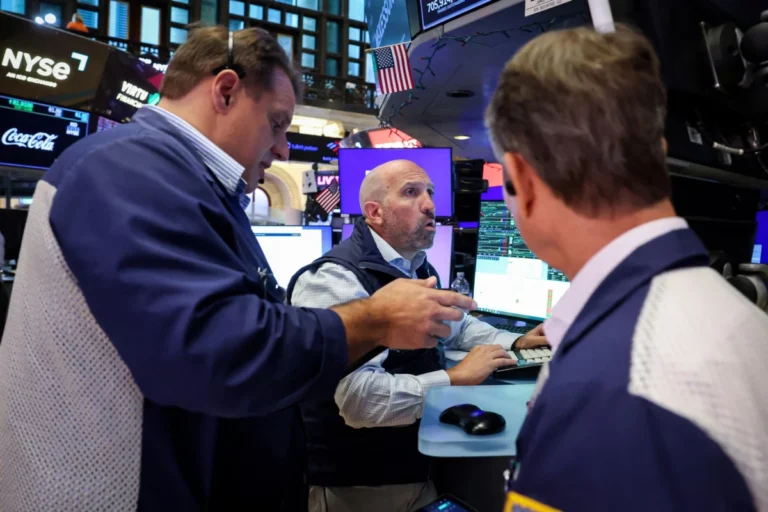


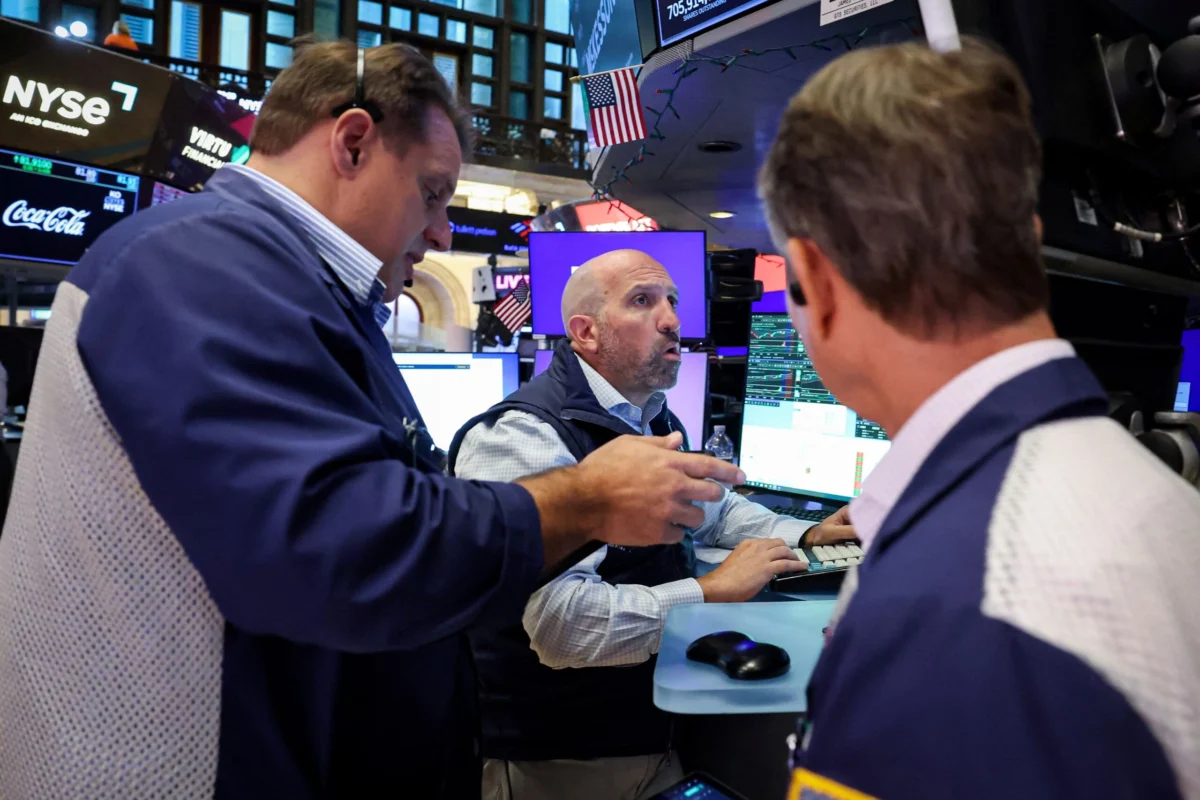
U.S. stock markets experienced a significant downturn on Thursday, July 23, 2026, as investors finally began to fully incorporate the escalating economic and geopolitical ramifications of a renewed and seemingly prolonged conflict in the Middle East. The S&P 500, a key barometer of market health, headed for its steepest decline in a month, reflecting a stark shift in market sentiment that had, until recently, largely brushed off the mounting tensions. This dramatic market reversal was triggered by alarming reports of fresh attacks against oil tankers off the coast of Saudi Arabia, pushing global crude benchmarks well past critical psychological thresholds and sending Treasury yields to multi-year highs.
The Market’s Sudden Jolt: Oil, Yields, and Equities React
For weeks, despite a consistent pattern of U.S. military strikes against Iranian targets – now totaling twelve consecutive nights – domestic equities had shown remarkable resilience. While oil prices and Treasury yields steadily climbed in response to the sustained geopolitical pressure, the broader stock market had remained relatively flat, fueled by a narrative of contained conflict and an underlying faith in the U.S. economy’s ability to absorb energy shocks. This equilibrium shattered on Thursday.
Brent Crude futures, the international benchmark for oil prices, surged emphatically above the $100 per barrel mark, a level not seen in over a year and a half. Simultaneously, the yield on the bellwether 10-year U.S. Treasury note broke through 4.7%, reaching its highest point since January 2025, while 30-year Treasury rates solidified above 5%. These movements signaled a profound re-evaluation of risk by investors, who had previously harbored hopes of a swift de-escalation. Western Texas Intermediate (WTI) Crude futures mirrored the global trend, jumping 6% to settle at $92 per barrel, marking a more than 28% increase from the lows below $70 per barrel recorded earlier this month. The S&P 500, which had demonstrated remarkable stoicism, is now down approximately 2% since the current series of U.S. evening strikes commenced on July 12.
Steve Sosnick, chief strategist at Interactive Brokers, articulated the market’s newfound apprehension, stating, "These problems became too big to ignore. It’s too hard to ignore $100 oil. It’s too hard to ignore 10-year rates that are above 4.70%. It’s too hard for the stock market to ignore 30-year rates that are solidly above 5%." His comments underscore the confluence of factors now weighing heavily on investor confidence, forcing a reconsideration of economic forecasts and risk appetite.
Escalating Tensions in the Middle East: A Troubling Backdrop
The current market volatility is directly tied to the deteriorating security situation in the Middle East, particularly the heightened confrontation between the United States and Iran. The U.S. military has been conducting retaliatory strikes against Iranian-backed proxies and strategic assets for nearly two weeks, citing the need to protect international shipping lanes and deter further aggression in a region critical to global energy supplies. These actions follow an initial phase of conflict that began in March 2026, which itself had triggered significant market disruptions.
The immediate catalyst for Thursday’s market plunge – reports of attacks on tankers near Saudi Arabia’s coast – reignited fears about the security of maritime transit through the Strait of Hormuz. This narrow waterway, located between Iran and Oman, is a chokepoint through which approximately one-fifth of the world’s total petroleum consumption passes daily. Any disruption or perceived threat to shipping in this strategic strait invariably sends shockwaves through global energy markets, as evidenced by the sharp spike in oil prices. The potential for prolonged closure or severe restrictions on transit, as suggested by some analysts like Kpler’s Matt Smith who indicated the Strait might not reopen until next year, presents an existential threat to global supply chains and economic stability.
A Chronology of Conflict and Market Volatility
The market’s journey through the U.S.-Iran conflict has been marked by distinct phases:
-
March 2026: Initial Onset and Stagflation Fears: The formal beginning of hostilities between the U.S. and Iran in March 2026 sent initial tremors through financial markets. The S&P 500 experienced a significant decline, falling more than 7.5% at its lowest point. This period was characterized by a rapid surge in oil prices, with crude benchmarks climbing nearly 70%. Investors grappled with widespread fears of "stagflation," a pernicious economic scenario combining high inflation (driven by elevated energy costs) with stagnant economic growth (as higher gas prices and general costs dampen consumer spending and business investment). Many analysts at the time expressed surprise that the stock market didn’t react even more severely, attributing some resilience to a seemingly robust underlying U.S. economy.
-
April-May 2026: The "Off-Ramp" Rally and AI Optimism: A period of relative calm and optimism emerged in April and May. This rebound was fueled by several factors:

- De-escalation Announcements: A series of diplomatic efforts and de-escalation announcements between the two countries, including reports of talks in Switzerland concerning a "roadmap" and "deconfliction" measures in Lebanon, fostered hopes of a diplomatic resolution or at least a containment of the conflict.
- Reignited AI Trade: Concurrently, renewed investor faith in the artificial intelligence sector provided a powerful bullish impulse. Technology stocks, particularly those linked to AI development and deployment, surged, driving broader market indexes higher and diverting attention from geopolitical risks. This "AI mania" was so potent that it led the S&P 500 to "ferociously rebound," with some comparing its rapid ascent to pre-1987 crash levels. This period demonstrated the market’s capacity to compartmentalize geopolitical risks when other strong catalysts are present. Hostilities, though sometimes continuing, were largely overshadowed by the domestic tech narrative.
-
July 2026: Renewed Flare-Up and Market Plunge: The fragile truce or perceived de-escalation unravelled in July. The U.S. began its current streak of 12 consecutive nights of strikes on July 12. While initially, the market’s reaction was muted, the situation reached a critical inflection point on Thursday, July 23, with the reports of tanker attacks off Saudi Arabia. This incident fundamentally altered the market’s perception of the conflict, transforming it from a containable regional skirmish into a potentially prolonged and economically damaging confrontation. The S&P 500’s sharp decline, coupled with the dramatic spikes in oil and Treasury yields, signals a return of the stagflation anxieties that gripped investors in March, now amplified by the perceived failure of de-escalation efforts.
Expert Perspectives and Economic Headwinds
The shift in market sentiment reflects a growing consensus among some analysts that the previous optimism was perhaps premature. Sameer Samana, head of global equities and real assets at Wells Fargo Investment Institute, now urges traders to reconsider the economic fears they harbored in March. He emphasized that investors should be seriously concerned about both the resurgence of higher inflation and the detrimental impact that sustained elevated gas prices could have on consumer spending. Samana explicitly stated that the reignited conflict provides a compelling reason to prepare for a potentially larger and more sustained drawdown in equities.
This perspective challenges the earlier market resilience, which was partly underpinned by the belief that the U.S. economy was structurally better equipped to handle energy shocks than in previous decades. While Michael Tanney, CEO at investment advisory firm Pereon Wealth, maintains a cautious optimism, suggesting that "in the short term, the elevated spike is more meaningful to the headlines than client portfolios," he also acknowledges a critical breaking point: "If we have a sustained price above $120, that’s the breaking point where you’ll see serious trickle down effects." The rapid approach to this $120 threshold suggests that the market may soon test the limits of its current economic resilience.
The Geopolitical "Off-Ramp" and Political Stakes
A significant factor underpinning the market’s previous rebound and initial calm was a widespread "bet" that President Donald Trump’s administration would ultimately find a diplomatic "off-ramp" to end the conflict, thereby avoiding the severe economic and political consequences of a prolonged war. JPMorgan equity strategists, in a note earlier this month, had advised clients to "use the equity weakness brought on by the Iran conflict to buy into, as the off-ramp and the eventual deal were likely, in our view." They further suggested that "the risks of renewed flareups remain, but we believe one should keep using any dips on the back of adverse geopolitical headlines in order to add."
However, the events of Thursday severely challenge this "off-ramp" thesis. The escalation, rather than de-escalation, of the conflict, coupled with direct threats to global oil supply, indicates that a swift resolution is increasingly unlikely. For President Trump, facing an upcoming election, a prolonged and economically damaging conflict in the Middle East could carry significant political costs, potentially eroding public support and complicating his re-election bid. The administration will be under immense pressure to articulate a clear strategy for de-escalation and energy security, balancing geopolitical objectives with domestic economic stability.
Broader Economic and Sectoral Implications
The re-emergence of sustained high energy prices has far-reaching implications across the global economy. Beyond the direct impact on consumers at the gas pump, businesses face increased operating costs, particularly in transportation-intensive sectors like logistics, aviation, and manufacturing. This could translate into higher prices for goods and services, exacerbating inflationary pressures already present in the global economy.
- Supply Chains: Global supply chains, still recovering from pandemic-related disruptions, would face renewed stress from higher shipping costs and potential bottlenecks in energy-reliant production.
- Sectoral Impact:
- Energy Sector: While high oil prices generally benefit energy producers, the geopolitical instability could introduce volatility and supply uncertainties.
- Airlines and Transportation: These sectors are highly sensitive to fuel costs, and sustained high oil prices would directly impact profitability and potentially lead to higher fares.
- Consumer Discretionary: Higher energy costs reduce disposable income, potentially leading to a slowdown in consumer spending on non-essential goods and services.
- Defense Sector: Renewed conflict could boost defense spending and benefit defense contractors, though this comes at a significant societal cost.
- Alternative Energy: The volatility and cost of fossil fuels could accelerate investment and adoption of renewable energy sources in the long term, though short-term market dynamics may not immediately reflect this.
The International Energy Agency (IEA) and other global bodies are likely to issue warnings about the potential for market imbalances and calls for coordinated action from major oil-producing nations, particularly OPEC+, to stabilize supplies. However, geopolitical tensions often complicate such coordination.
The Federal Reserve’s Dilemma
The escalating conflict and its inflationary consequences present a significant challenge for the Federal Reserve. Just a week ago, the probabilities for a Fed rate hike next week were priced at approximately 12%, with odds for a hike at the central bank’s September meeting at around 53%. However, following Thursday’s market movements, those odds have dramatically shifted. According to CME’s FedWatch tool, chances for a rate hike by the Federal Reserve next week have surged to almost 38%, while odds for a hike at the central bank’s September meeting are now at more than 80%.
This rapid repricing reflects the market’s expectation that the Fed may be forced to adopt a more aggressive stance to combat renewed inflationary pressures, even if it risks dampening economic growth. The central bank’s dual mandate of maintaining maximum employment and price stability becomes incredibly complex in an environment of supply-side energy shocks. Raising rates to fight inflation could cool demand and potentially tip the economy into a recession, while not acting could allow inflation to become entrenched, leading to a more severe economic downturn in the future. This puts the Fed in a precarious position, facing difficult choices that will undoubtedly impact borrowing costs for companies and consumers alike, further tightening financial conditions across the economy.
The market’s dramatic reaction on Thursday, July 23, 2026, marks a critical turning point in how investors perceive the Middle East conflict. The previous resilience, buoyed by hopes of de-escalation and the strength of the AI trade, has given way to a stark realization of the economic perils posed by prolonged geopolitical instability. As oil prices breach significant thresholds and Treasury yields surge, the specter of stagflation looms large, forcing central banks and policymakers to confront a challenging economic landscape. The immediate future for U.S. equities and the broader economy hinges precariously on the evolving dynamics in the Middle East and the policy responses of global economic powers.