
Friday’s ambitious test flight of SpaceX’s integrated Starship system yielded a complex outcome, showcasing significant progress in one area while highlighting persistent engineering challenges in another. The upgraded Starship upper stage successfully deployed the first third-generation Starlink satellites, marking a crucial step forward for the company’s lucrative satellite internet constellation. However, the mission simultaneously recorded another failure for the Super Heavy booster, which was unable to execute a controlled simulated landing in the Gulf of Mexico, impacting the water faster than intended and exploding. This 13th test flight of the massive rocket system underscores SpaceX’s "fly, fail, fix" development philosophy, providing invaluable data for future iterations even as it presents a mixed picture to investors following the company’s recent initial public offering.
A Chronology of Ambition and Anomaly
The path to Friday’s launch was not without its immediate precursors. Just over a week prior, on July 16th, an earlier attempt at the 13th Starship launch had to be dramatically aborted immediately after engine ignition. That incident was attributed to multiple rocket engine failures, prompting SpaceX engineers to replace six engines on the Super Heavy booster in the days leading up to Friday’s flight. This rapid turnaround exemplified the company’s agile development approach, aiming to quickly learn from setbacks and implement solutions.
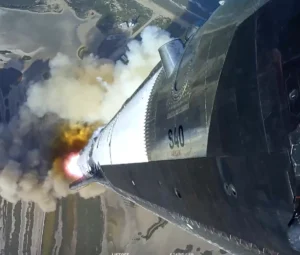
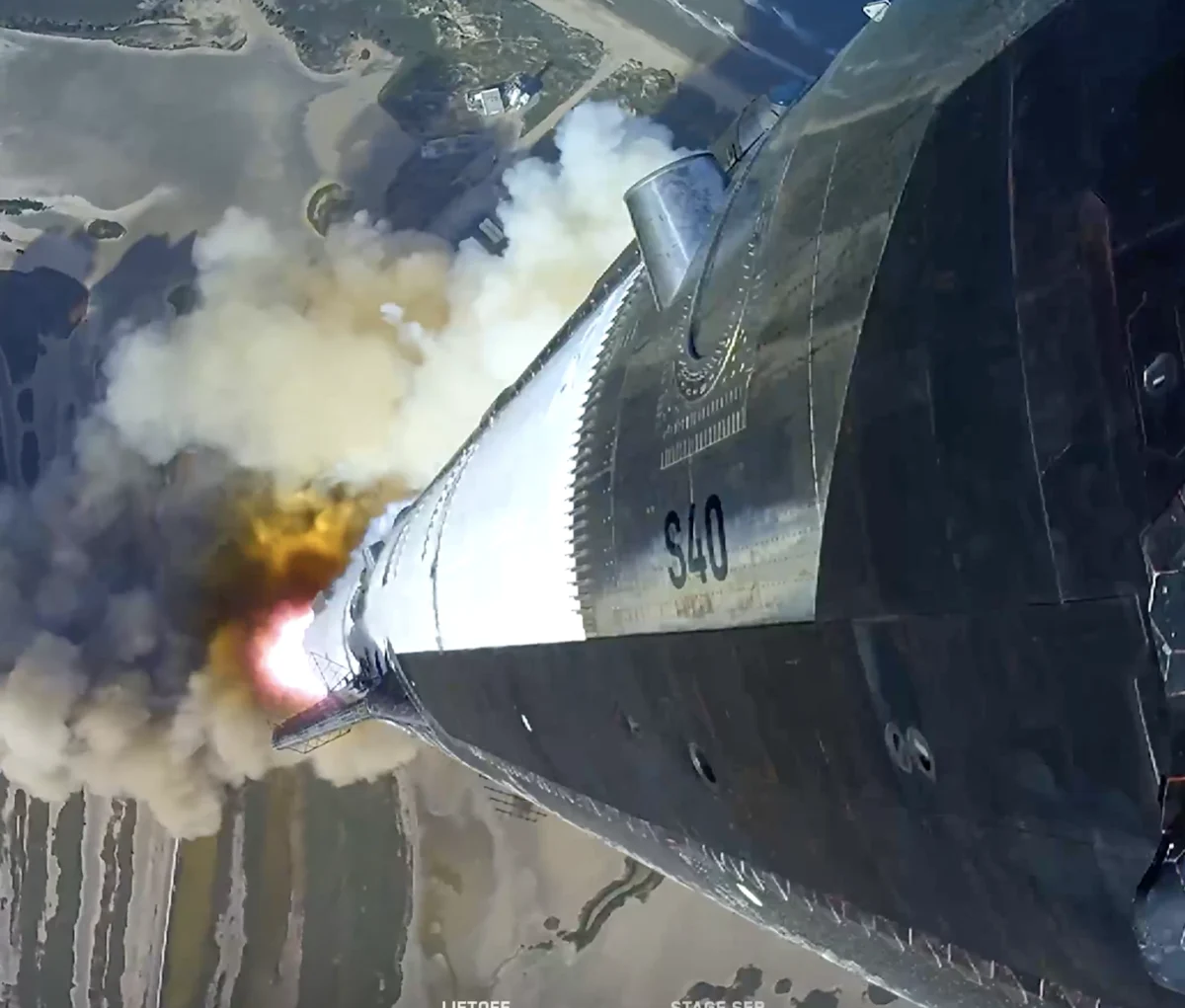
On Friday, the countdown proceeded smoothly, culminating in the thunderous liftoff of the Starship and Super Heavy stack. The initial ascent appeared nominal, with the Super Heavy booster successfully propelling the Starship upper stage to altitude. Following booster separation, the Starship upper stage continued its trajectory, performing as planned to deploy the new Starlink V3 satellites. This critical deployment sequence unfolded without incident, a major win for the Starlink program.
While the Starship upper stage proceeded with its mission, the Super Heavy booster initiated its complex return sequence. Its goal was a simulated landing burn over the Gulf of Mexico, a maneuver designed to mimic the controlled descent and soft splashdown required for future reusability. Unfortunately, the booster encountered issues during this critical phase, failing to properly ignite all the engines necessary to execute the landing burn effectively. Lacking sufficient thrust to decelerate, the booster struck the water at an excessive speed, resulting in an explosion. This marked the second time in as many V3 flights that the Super Heavy booster experienced a significant anomaly during its descent, following a separation issue during the first Starship V3 flight in May.
Meanwhile, the Starship upper stage, having completed its primary objective of satellite deployment, embarked on its own journey back to Earth. It successfully navigated the immense forces and extreme temperatures of atmospheric reentry, a testament to its structural integrity and thermal protection system. Approximately one hour after liftoff, the Ship performed a simulated landing in the Indian Ocean. Notably, unlike some previous test missions where the Ship exploded upon tipping over, this time it remained intact and floated on the water’s surface. This unprecedented outcome allowed SpaceX to deploy a drone for close-up examination of the heat shield tiles on its belly, collecting invaluable data on their performance during reentry. The newly deployed Starlink V3 satellites, designed for testing and data collection rather than operational service at this stage of Starship’s development, subsequently burned up in the atmosphere roughly 20 minutes after their deployment, as Starship is not yet capable of reaching stable Earth orbit. However, SpaceX confirmed successful communication with all satellites while they were in space, validating critical communication links and systems.
The Super Heavy Booster: A Persistent Engineering Hurdle
The Super Heavy booster, standing approximately 230 feet (70 meters) tall and powered by 33 Raptor engines, represents an engineering marvel designed to be the most powerful rocket stage ever built. Its reusability is foundational to SpaceX’s economic model for Starship, promising to dramatically reduce the cost of access to space. The challenges encountered in Friday’s flight, as well as the previous V3 mission in May, underscore the immense technical complexity involved in bringing such a colossal vehicle back for a controlled landing.
The May incident saw a failure during the booster’s separation from the upper stage. While the exact nature of that failure was not fully disclosed, it highlighted the intricate dance of propulsion and control required during staging. Friday’s anomaly, involving the inability to fire all engines for the simulated landing burn, points to issues within the booster’s propulsion or flight control systems during a critical phase of its descent. Achieving a precise "flip and burn" maneuver, where the booster reorients itself and fires its engines to slow down from supersonic speeds for a gentle landing, demands absolute precision in engine ignition, throttling, and gimbaling. Any deviation can lead to an uncontrolled descent, as witnessed over the Gulf of Mexico.
SpaceX has demonstrated remarkable proficiency in rocket reusability with its Falcon 9 and Falcon Heavy programs, which routinely land their first stages back on land or drone ships. However, the Super Heavy is an order of magnitude larger and more complex. The sheer scale, the number of engines, and the different aerodynamic profiles present unique engineering challenges that are still being overcome through this iterative test program. Each failure, while a setback in terms of immediate mission success, provides crucial telemetry and observational data that engineers will meticulously analyze to refine designs, software, and operational procedures for subsequent flights.
Starship Upper Stage: A Beacon of Progress and Data Collection
In stark contrast to the Super Heavy’s performance, the Starship upper stage, often referred to as "Ship," delivered an exemplary performance during Friday’s flight. The Ship, which stands approximately 164 feet (50 meters) tall, houses the payload and crew section, along with its own set of Raptor engines for orbital maneuvers and atmospheric reentry.
A significant improvement over the first V3 launch in May was the absence of any engine loss during the ascent phase. This indicates progress in the reliability and robustness of the Ship’s propulsion system. The successful deployment of the Starlink V3 satellites was the mission’s primary functional objective for the upper stage, validating the payload deployment mechanism and its integration with the Starship platform.
The Ship’s ability to survive the fiery crucible of atmospheric reentry and perform a simulated landing in the Indian Ocean without disintegrating or exploding upon impact marks a substantial milestone. Past Starship prototypes have often met their end in dramatic explosions, a common occurrence in experimental rocket development. The fact that the Ship remained intact and floated on the surface is particularly valuable. This provided SpaceX with an unprecedented opportunity to conduct a post-flight inspection using a drone. Examining the heat shield tiles in situ, after they have endured the extreme conditions of reentry, offers critical insights into their performance, potential damage, and overall effectiveness. This direct observation data is far more comprehensive than telemetry alone and will be instrumental in perfecting the thermal protection system crucial for future crewed and cargo missions, especially those involving repeated reentries.
The Strategic Importance of Starlink V3 Satellites
The deployment of the third-generation Starlink satellites, even if temporary, holds immense strategic importance for SpaceX. Starlink, the company’s rapidly expanding satellite internet service, is currently the only consistently profitable segment of SpaceX’s diverse business portfolio. With over 6,000 satellites launched to date across various generations, Starlink provides broadband internet access to millions of users globally, particularly in underserved and remote areas.
The V3 Starlink satellites are designed to be significantly more capable than their predecessors, offering enhanced throughput and reduced latency. SpaceX has indicated that launching 60 of these new satellites on a single Starship mission could represent a "potential twenty-fold increase" in downlink capacity deployed compared to the satellites carried by a single Falcon 9 launch. This substantial increase in capacity per launch is critical for improving the economics of the capital-intensive Starlink network, enabling faster expansion, higher subscriber capacity, and more robust service.
While these particular V3 satellites were not intended for long-term orbital operation – as Starship itself is not yet capable of achieving stable Earth orbit – their deployment served as a vital test. It validated the integration of the satellites with the Starship’s payload bay, the deployment mechanism, and, crucially, the ability to establish and maintain communication with the new generation of satellites while in space. This successful communication phase ensures that once Starship achieves orbital capability, the V3 satellites can be reliably deployed and brought online. The eventual deployment of these high-capacity satellites in operational constellations is key to Starlink’s continued growth and profitability, which in turn fuels the ambitious and costly development of Starship itself.
SpaceX’s "Fly, Fail, Fix" Philosophy and Market Reaction
SpaceX’s engineering culture is famously built around the "fly, fail, fix" philosophy, a rapid iterative development approach that prioritizes learning from real-world tests, even if they result in failures, over lengthy, theoretical design phases. This methodology has been instrumental in the company’s unprecedented speed in developing complex rocket systems. However, this approach faces a new dynamic now that SpaceX has transitioned from a privately held entity to a public company.
SpaceX went public in June in what was described as the largest initial public offering (IPO) in history, raising billions and attracting a vast pool of public investors. The company’s valuation soared, reflecting immense investor confidence in its long-term vision and technological prowess. Initially trading at a peak of over $200 per share, the stock has experienced a broader downward trend since the IPO, closing at $115 per share on Friday. This decline reflects the inherent volatility and risk associated with high-growth, technology-intensive ventures, particularly those in the nascent space industry.
The "fail" component of SpaceX’s development strategy now has immediate and visible consequences on its stock performance. The launch abort just over a week ago saw the company’s stock decline in the immediate aftermath. Following Friday’s booster failure, SpaceX shares fell another 2% in after-hours trading, before paring some of those losses as investors weighed the mixed results. While long-term investors in SpaceX understand the nature of rocket development, repeated failures, even in test flights, can erode short-term confidence and contribute to market jitters. The challenge for SpaceX, as a public entity, is to effectively communicate the value of its iterative testing process and demonstrate that each "failure" is a necessary step towards ultimate success, balancing transparency with investor expectations.
The Indispensable Role of Full Reusability
The long-term economic viability and transformative potential of Starship hinge almost entirely on achieving full and rapid reusability for both its Super Heavy booster and Starship upper stage. SpaceX’s S-1 filing, a document submitted to the U.S. Securities and Exchange Commission prior to its IPO, explicitly stated that without a fully-reusable Starship, "progress on Starlink would be at a slower pace and higher cost." This declaration underscores the criticality of reusability not just for Starship’s standalone business case, but for the entire Starlink ecosystem.
The fundamental economic premise of Starship is to drastically lower the cost of launching payloads to orbit, to the Moon, and ultimately to Mars. By making both stages reusable, similar to how an airplane can be flown multiple times, SpaceX aims to reduce the marginal cost of launch to little more than the cost of fuel and refurbishment. This paradigm shift would unlock unprecedented opportunities for space exploration, satellite deployment, and even point-to-point travel on Earth. Without this reusability, Starship would essentially operate as an expendable rocket, negating its primary cost-saving advantage and making its ambitious missions financially unsustainable.
The current challenges with the Super Heavy booster’s landing capabilities directly impact this vision. Every expended booster represents a significant financial loss and a delay in realizing the full economic benefits of the Starship program. The ability to quickly turn around and refly the booster, ideally within hours or days, is as crucial as the initial launch success. The ongoing test campaign, therefore, is not merely about achieving flight, but about perfecting the entire operational cycle of launch, landing, and rapid refurbishment.
Looking Ahead: Continued Iteration and Grand Ambitions
Friday’s Starship test flight, the 13th in its rigorous development program, encapsulates the inherent risks and rewards of pioneering space technology. The successful deployment of Starlink V3 satellites and the unprecedented data gathered from the floating Starship upper stage represent significant strides forward, validating critical systems and capabilities. These successes will undoubtedly accelerate the development of Starlink’s next-generation services and contribute to the overall refinement of the Ship’s design, particularly its crucial heat shield.
However, the persistent difficulties with the Super Heavy booster’s landing capabilities serve as a clear reminder of the formidable engineering challenges that remain. SpaceX engineers will now meticulously analyze the vast amounts of data collected from this flight, particularly concerning the booster’s engine ignition sequence and flight control during descent. The company’s "fly, fail, fix" philosophy dictates that these lessons will be rapidly incorporated into the design and operational procedures for the next test flight.
The road to a fully reusable, operational Starship capable of delivering massive payloads and potentially humans to the Moon and Mars is long and fraught with technical hurdles. Yet, each test, regardless of its mixed outcome, brings SpaceX closer to realizing its audacious vision. The company’s ability to maintain investor confidence while pursuing such an iterative and high-risk development path will be a key determinant of its trajectory in the coming years, as it strives to redefine the economics and possibilities of space exploration.