


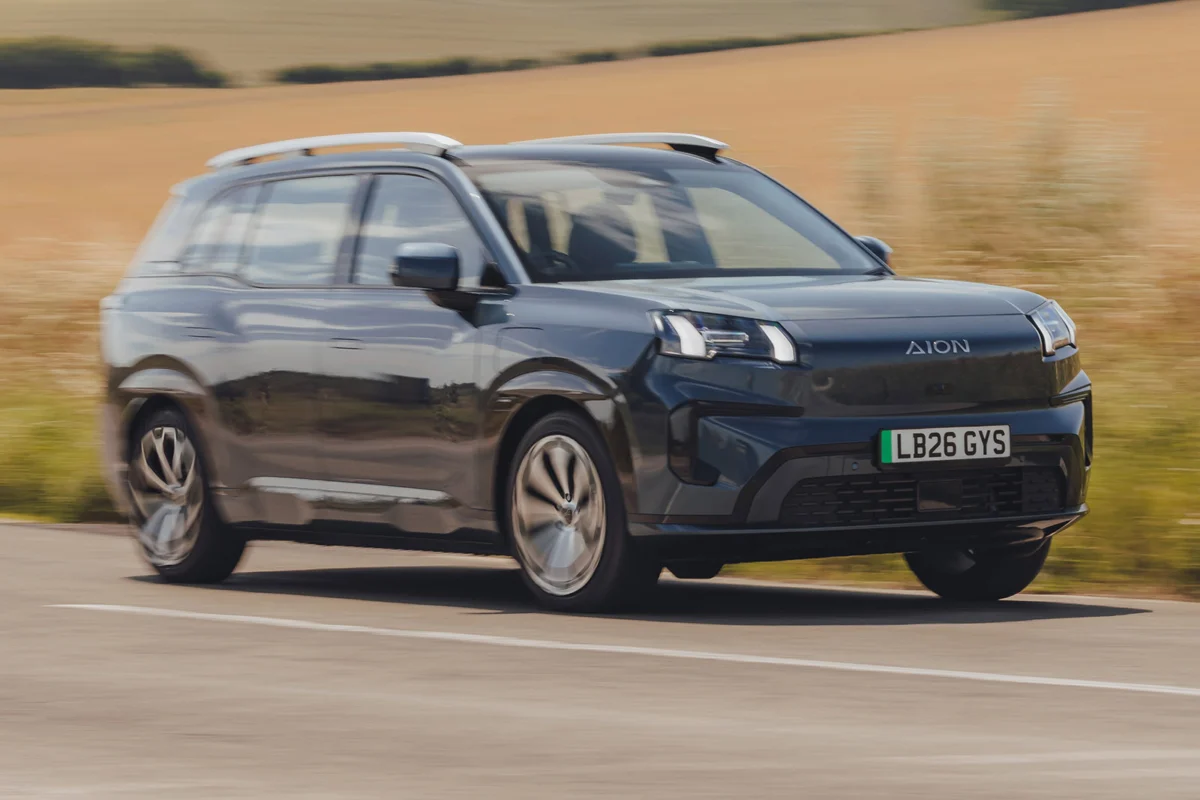
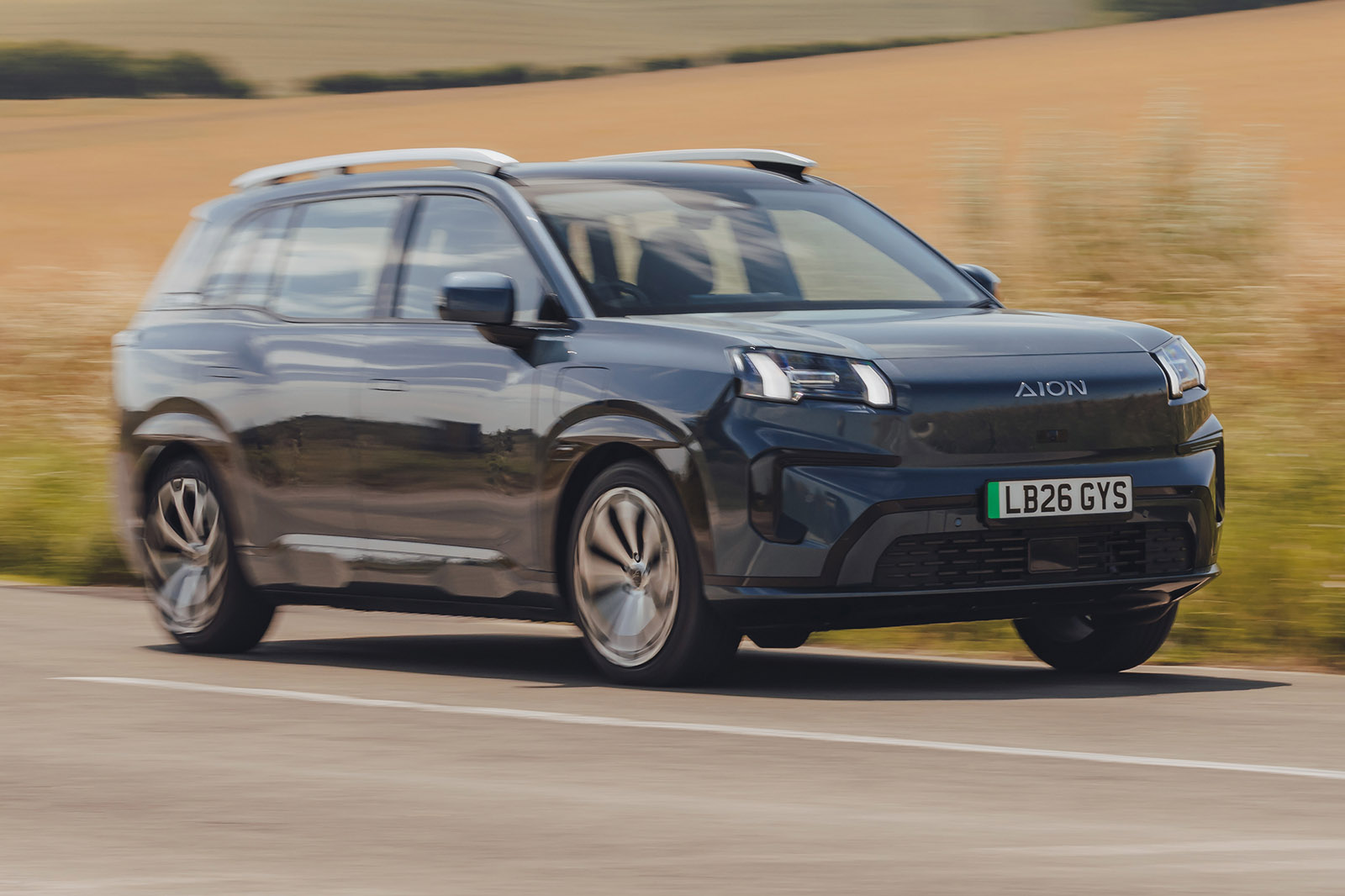
The GAC Aion V enters the increasingly crowded European electric vehicle landscape as a proposition centered on interior refinement and spatial innovation, attempting to bridge the gap between budget-conscious Chinese imports and established Continental luxury marques. Priced at approximately £38,000, the Aion V targets the C-segment SUV market, where it faces stiff competition from the likes of the Volkswagen ID.4, the Tesla Model Y, and the BYD Atto 3. While the exterior aesthetics follow the contemporary trend of aerodynamic efficiency and "sci-fi" styling, the true character of the vehicle is defined by its cabin—a space that prioritizes material quality and passenger comfort, though not without significant ergonomic compromises driven by its digital-first philosophy.
Interior Craftsmanship and Material Quality
Upon approaching the Aion V, the first point of interaction is the cantilevered, pop-out door handles. While these flush-fitting units contribute to a lower drag coefficient and a sleek profile, their operation has been noted for a degree of mechanical "fiddliness" that can detract from the initial entry experience. However, once inside, the cabin presents a compelling argument for GAC’s premium aspirations. The interior architecture is characterized by a generous sense of scale and a "quietly convincing" finish that utilizes materials typically reserved for higher price brackets.
The test vehicle, equipped with the optional Premium Pack, features genuine leather upholstery for the seats. This is complemented by quilted leather-effect paneling on the door consoles, providing a tactile richness that is rare at this price point. Attention to detail extends to the secondary controls; the column stalks are constructed from hefty metallic materials, and the interior door releases feature a chunky, damped action that suggests a high level of build integrity. This tactile quality aligns the Aion V more closely with the interior standards of an upper-medium Volvo or Volkswagen than with the utilitarian plastics often found in entry-level EVs.
The design language of the dashboard follows a minimalist "Far Eastern" approach, common among brands like Nio or XPeng. Physical switchgear is nearly non-existent, creating a clean, uncluttered visual environment. While this enhances the aesthetic appeal and creates a sense of modern luxury, it shifts the burden of vehicle operation almost entirely to the digital interface.
The Digital Ecosystem: ADiGO and the 14.6-inch Interface
The nerve center of the Aion V is its 14.6-inch central touchscreen, which runs GAC’s proprietary "ADiGO" multimedia system. In the current automotive climate, the trend toward screen-centric cockpits is well-established, but the Aion V pushes this boundary by migrating almost every secondary function to the display. This includes not only the standard heating and ventilation (HVAC) controls but also critical driving adjustments such as the Advanced Driver Assistance Systems (ADAS) settings, mirror adjustments, and even wiper speeds.
The ADiGO system employs a widget-style panel on the home screen to facilitate quick access to frequently used functions. A lower navigation bar remains persistent, providing a permanent location for some HVAC controls. However, the system lacks the deep customizability found in competitors like Tesla’s OS or the latest iterations of Volvo’s Google-based interface. This lack of flexibility means that finding specific controls—such as disabling a lane-keep assist system or adjusting the side mirrors—requires navigating through multiple menu layers, which can be laborious and distracting while driving.
The multimedia performance received a 2.5-star rating in initial assessments, reflecting several key weaknesses:
- Connectivity: The system frequently requires manual prompts to reconnect with Apple CarPlay, undermining the seamless integration many modern drivers expect.
- Voice Assistance: The AI-powered voice assistant, intended to mitigate the lack of physical buttons, struggles with accuracy when processing spoken addresses for the factory navigation system.
- Ergonomic Toll: While user-configurable shortcut keys on the steering wheel provide some relief, the reliance on the screen for basic mechanical functions represents a significant usability hurdle.
Spatial Innovation and the "Lounger" Configuration
One of the most distinctive aspects of the Aion V is its unconventional approach to interior packaging. In a departure from the industry standard, where SUV designers typically aim for a balance between passenger space and cargo capacity, GAC has prioritized rear legroom over boot volume. The boot is objectively small for the segment, offering 472 liters of capacity. For comparison, the industry average for a C-segment electric SUV typically ranges between 550 and 600 liters. While the boot is deep and features an adjustable-height floor, its limited length restricts its utility for large family loads.
However, the trade-off is realized in the rear passenger compartment. The legroom and headroom are described as "abundant," rivaling vehicles in the class above. The rear seatbacks also recline to an unusually generous angle, a feature that becomes clear only when the front seats are fully utilized.
The Aion V’s "practicality trick" involves the front seats. By removing the front headrests, the front-seat squabs can be reclined nearly horizontally. When fully retracted, they align perfectly with the edge of the rear seat cushions, transforming the interior into two lounger-style chairs. This "Third Space" concept is designed for use during vehicle charging sessions, allowing passengers to repose in a lounge-like environment. This execution is arguably more practical than the "sleeping quarters" configurations seen in other EVs, as it maintains a seated, ergonomic position suitable for reading or using mobile devices.
Background and Chronology of the Aion Brand
GAC Aion is the electric vehicle arm of the Guangzhou Automobile Group (GAC), one of China’s "Big Five" state-owned automakers. Founded in 2017 as GAC New Energy Automobile, the brand was rebranded as Aion in 2020 to focus exclusively on high-tech, premium electric mobility.
- 2017: Establishment of the GAC New Energy branch.
- 2019: Launch of the Aion S sedan, which became a top-seller in the Chinese domestic market.
- 2020: Introduction of the original Aion V, featuring early-stage 5G connectivity and Level 3 autonomous driving hardware.
- 2022-2023: Aion achieves record-breaking sales in China, often rivaling BYD and Tesla in monthly registration figures.
- 2024: The brand begins its aggressive international expansion, targeting Southeast Asia and Europe. The current iteration of the Aion V represents the spearhead of this global strategy, refined with materials and features intended to appeal to Western tastes.
The development of the Aion V reflects GAC’s investment in its GEP 2.0 (GAC Electric Platform) architecture, which allows for the long-wheelbase, short-overhang proportions that enable the vehicle’s massive interior legroom despite its compact exterior footprint.
Technical Data and Specifications
The Aion V is built on a dedicated EV platform that supports various battery and motor configurations. While specific regional variants may differ, the general specifications for the model include:
| Feature | Specification |
|---|---|
| Price | Approximately £38,000 (Targeting the UK/EU Market) |
| Battery Capacity | 60 kWh to 80 kWh (Depending on trim) |
| Range (WLTP) | Estimated 250 – 310 miles |
| Cargo Capacity | 472 Liters |
| Infotainment | 14.6-inch Touchscreen with ADiGO OS |
| Key Features | Lounger-mode seats, Premium Pack leather, Flush door handles |
| Charging | DC Fast Charging (10% to 80% in approx. 30 minutes) |
The vehicle’s weight distribution and low center of gravity, typical of "skateboard" chassis designs, contribute to a stable driving experience, though the focus remains squarely on comfort rather than sporting dynamics.
Market Implications and Competitive Analysis
The arrival of the Aion V in the European market is a significant indicator of the "Second Wave" of Chinese automotive exports. Unlike the first wave, which focused primarily on low-cost alternatives, the current wave—led by GAC Aion, BYD, and MG—is competing on technology and interior ambiance.
Industry analysts suggest that the Aion V’s strategy of offering "premium-feel" materials at a mid-market price point could disrupt established players. However, the 2.5-star multimedia rating highlights a critical vulnerability: software maturity. As European consumers increasingly prioritize user-friendly interfaces and reliable smartphone integration, the "digital toll" exacted by the ADiGO system could be a barrier to widespread adoption.
Furthermore, the decision to prioritize passenger comfort over boot space suggests GAC is targeting a specific demographic—perhaps urban professionals or small families who value cabin experience over outright hauling capacity. This niche positioning contrasts with the "do-it-all" approach of the Volkswagen ID.4 or the Tesla Model Y.
Conclusion and Future Outlook
The GAC Aion V is a vehicle of contrasts. It succeeds in creating an interior environment that feels genuinely upscale, utilizing materials and a "lounger" seat configuration that sets it apart in a sterile segment. Its value proposition is strong, offering a premium aesthetic for £38,000. However, the vehicle is hampered by the current industry-wide obsession with eliminating physical controls. The reliance on a touchscreen for essential functions like mirror adjustment and ADAS management creates a steep learning curve and potential safety distractions.
As GAC continues to refine its software and potentially reintroduces physical shortcuts based on Western feedback, the Aion brand stands to become a formidable competitor. For now, the Aion V represents a bold, if ergonomically flawed, step toward the future of the luxury electric SUV, where the car is viewed not just as a transport tool, but as a mobile lounge designed for the era of electrification.