

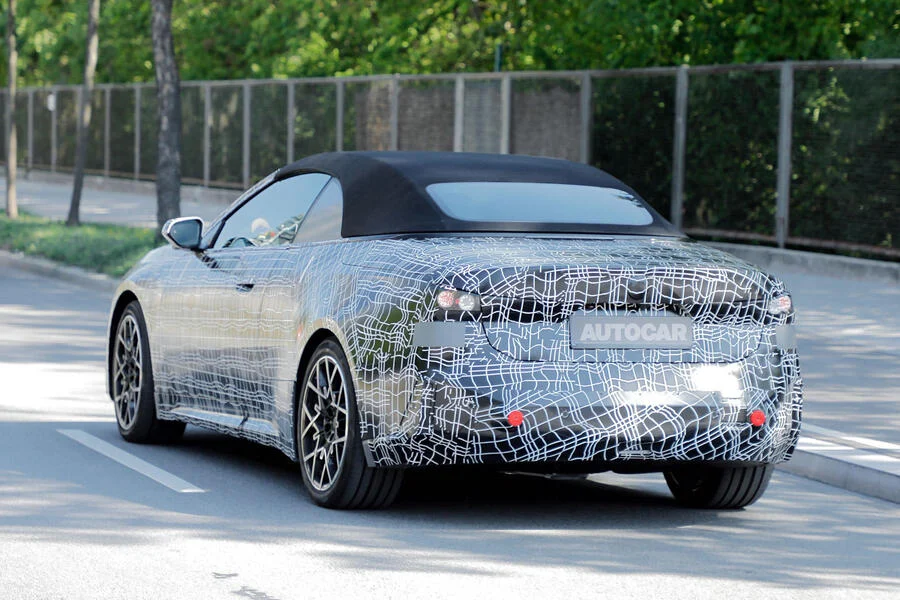
BMW has reached a significant milestone in its transition toward a fully electrified future with the emergence of a new prototype that signals the imminent arrival of the i4 Convertible. This development provides the clearest evidence to date that the Munich-based automaker is well advanced in adapting its highly anticipated Neue Klasse (NK) electric platform for open-top applications. The upcoming four-seat model is slated for a public debut in the second half of 2027, with a commercial launch in UK showrooms expected by early 2028. This move marks a strategic expansion of BMW’s electric portfolio, positioning the i4 Convertible as a cornerstone of an all-new two-door i4 family that will also include a traditional Coupé variant.
The introduction of the i4 Convertible is a landmark moment for the brand, as it represents BMW’s first dedicated, ground-up electric open-top model. While the current i4 Gran Coupé has seen significant success in the executive EV segment, it remains a derivative of the flexible Cluster Architecture (CLAR), which was designed to accommodate internal combustion, plug-in hybrid, and battery-electric drivetrains. The shift to the Neue Klasse platform allows BMW to move away from these engineering compromises, offering a vehicle that is optimized purely for electric propulsion.
Design Philosophy and the Return of the Soft Top
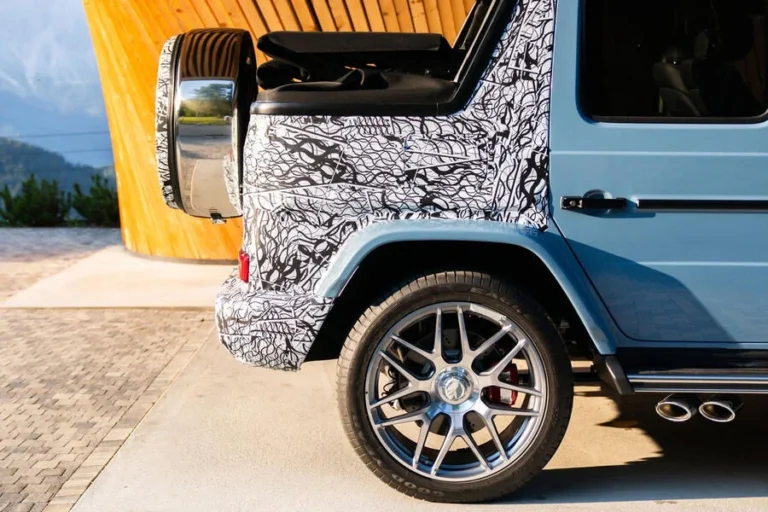
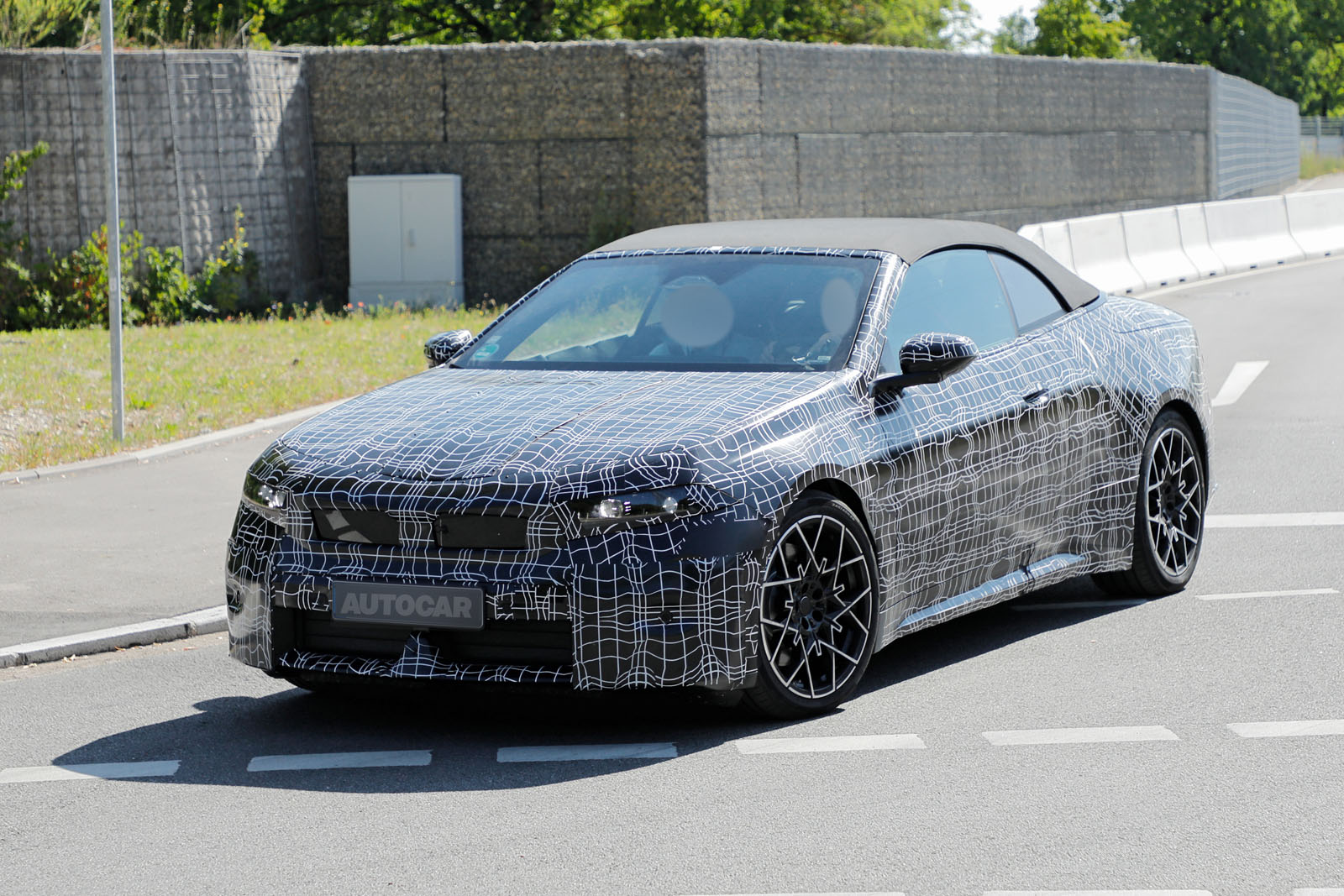
The recently sighted disguised prototype reveals critical styling and engineering choices that define the i4 Convertible’s identity. Most notably, BMW has opted to retain an electrically operated fabric roof. This decision confirms that the manufacturer will not return to the retractable hard-top systems that characterized the E93-generation 3 Series and the early F33 4 Series. The choice of a soft top aligns with the current G23-generation 4 Series, prioritizing weight reduction, center-of-gravity management, and luggage capacity—factors that are particularly sensitive in electric vehicle design where battery mass is already a significant variable.
The use of a fabric roof also allows for a more elegant rear-end silhouette. When the roof is lowered, it stows beneath a flush-fitting rear tonneau cover, maintaining the clean lines expected of a premium BMW cabriolet. Beyond the roof mechanism, the prototype highlights the radical proportions enabled by the Neue Klasse architecture. By eliminating the need for a long engine bay to house longitudinal six-cylinder engines, designers have pushed the wheels further toward the corners. This results in significantly shorter front and rear overhangs and a lengthened wheelbase relative to the car’s total footprint. These proportions not only improve interior passenger space for the four-seat configuration but also align the i4 Convertible’s aesthetic with the recently previewed i3 saloon.
Technical Specifications and the Neue Klasse Architecture
At the heart of the i4 Convertible lies the 800V electrical architecture that defines the Neue Klasse generation. This system is a generational leap over the 400V technology used in the current i4 and iX models. The 800V system is designed to facilitate ultra-fast DC charging, with BMW targeting speeds of up to 400kW. In practical terms, this could allow drivers to add approximately 180 miles of range in just 10 minutes of charging, provided they are connected to a compatible high-power charger.
The i4 Convertible will also benefit from BMW’s sixth-generation (Gen 6) battery technology. Moving away from the prismatic cells used in current models, the Neue Klasse platform utilizes new cylindrical cells with a uniform diameter of 46mm but varying heights. These cells offer a 20% increase in energy density by volume and are integrated directly into the vehicle’s structure (cell-to-pack), which improves torsional rigidity—a critical factor for convertibles which often suffer from "scuttle shake" due to the lack of a fixed roof.
The powertrain lineup is expected to mirror the forthcoming i3 saloon. Entry-level models will likely feature a single-motor, rear-wheel-drive setup, staying true to BMW’s "Sheer Driving Pleasure" ethos. However, the performance highlight will be the i4 50 xDrive Convertible. This variant is expected to utilize a dual-motor configuration consisting of a highly efficient synchronous motor on the rear axle and an asynchronous motor on the front axle. In its current state of development for the i3 saloon, this drivetrain produces 463bhp and 476lb ft of torque. Given the sporty positioning of the i4, M Performance variants with even higher outputs are almost certain to follow, potentially rivaling the current M4 in terms of straight-line acceleration.
Chronology of the Electric Transition
The development of the i4 Convertible is part of a broader timeline that sees BMW overhauling its core lineup between 2025 and 2030. The following timeline outlines the key stages of this transition:
- September 2023: BMW unveils the Vision Neue Klasse concept at the Munich Motor Show, establishing the design language and technical goals for the next generation of EVs.
- 2025: Production begins for the first Neue Klasse model, a compact SUV (the new iX3), at BMW’s new factory in Debrecen, Hungary.
- 2026: The i3 saloon (the electric successor/alternative to the 3 Series) is launched globally.
- Late 2027: World premiere of the i4 Convertible and i4 Coupé.
- Early 2028: Customer deliveries of the i4 Convertible commence in the UK and European markets.
- Mid-2029: Planned end of production for the current G23-generation combustion-engined 4 Series Convertible.
This staggered rollout ensures that BMW can scale up its electric production capacity while continuing to serve customers who are not yet ready to transition away from internal combustion engines.
Strategic Coexistence and Official Commentary
Crucially, the arrival of the i4 Convertible does not immediately signal the end of the petrol-powered 4 Series. BMW has confirmed a strategy of "strategic coexistence," where the current G23-generation 4 Series Convertible—offered with a range of turbocharged four- and six-cylinder engines—will remain in production alongside the new electric model until at least 2029. This dual-track approach allows BMW to hedge its bets against varying rates of EV adoption in different global markets, such as North America and parts of Asia, where charging infrastructure may lag behind Europe.
Joachim Post, BMW’s Board Member for Development, emphasized the importance of maintaining the brand’s sporting DNA during this transition. Speaking on the future of the 4 Series lineage, Post noted that the model remains a vital pillar for the company. "The 4 Series is an important car for us," he stated. "It’s more sporty, and BMW is a sporty brand which has a clear heritage also on the performance side. It will play an important role also for the future."
This sentiment is echoed by BMW Group CEO Oliver Zipse, who has frequently described the Neue Klasse as a "re-founding" of the company. The goal is to translate the traditional driving dynamics—steering precision, balanced weight distribution, and chassis feedback—into a digital and electric context. To achieve this, the i4 Convertible will utilize a new central vehicle control unit, colloquially referred to by engineers as the "Heart of Joy." This super-computer integrates powertrain control and driving dynamics into a single stack, allowing for much faster processing and more nuanced torque vectoring than previous systems.
Market Implications and Competitive Landscape
The i4 Convertible will enter a market that is currently underserved. While the electric SUV and saloon segments are becoming increasingly crowded, the electric convertible market remains a niche. Current competitors are few, consisting primarily of the high-end Maserati GranCabrio Folgore and the more affordable MG Cyberster. Porsche is also developing an electric replacement for the 718 Boxster, which will likely be the i4 Convertible’s primary rival in terms of prestige and driving dynamics.
By entering this space with a four-seat configuration, BMW is targeting a specific demographic: the "lifestyle" buyer who seeks the sensory experience of open-top motoring combined with the refinement and environmental credentials of an electric drivetrain. The absence of engine noise in a convertible allows for a more immersive connection with the surroundings, a characteristic BMW intends to enhance through its "IconicSounds Electric" soundscapes, developed in collaboration with composer Hans Zimmer.
From a manufacturing standpoint, the i4 family will be central to BMW’s "iFactory" production strategy. This involves a focus on circularity and sustainability, with the Neue Klasse models utilizing a higher percentage of secondary (recycled) materials, particularly in the battery housings and interior trims. The use of cylindrical cells also simplifies the recycling process at the end of the vehicle’s life cycle.
Conclusion
The sighting of the i4 Convertible prototype confirms that BMW is not merely focused on high-volume electric crossovers but remains committed to the emotive segments that built its reputation. By leveraging the advanced capabilities of the Neue Klasse platform—800V charging, high-density cylindrical batteries, and a dedicated EV silhouette—BMW is preparing to offer a vehicle that addresses the traditional weaknesses of electric cars (weight and charging times) while maximizing the inherent strengths of an open-top cruiser. As the 2027 debut approaches, the i4 Convertible stands as a testament to the brand’s ability to evolve its "Ultimate Driving Machine" philosophy for a new era.