


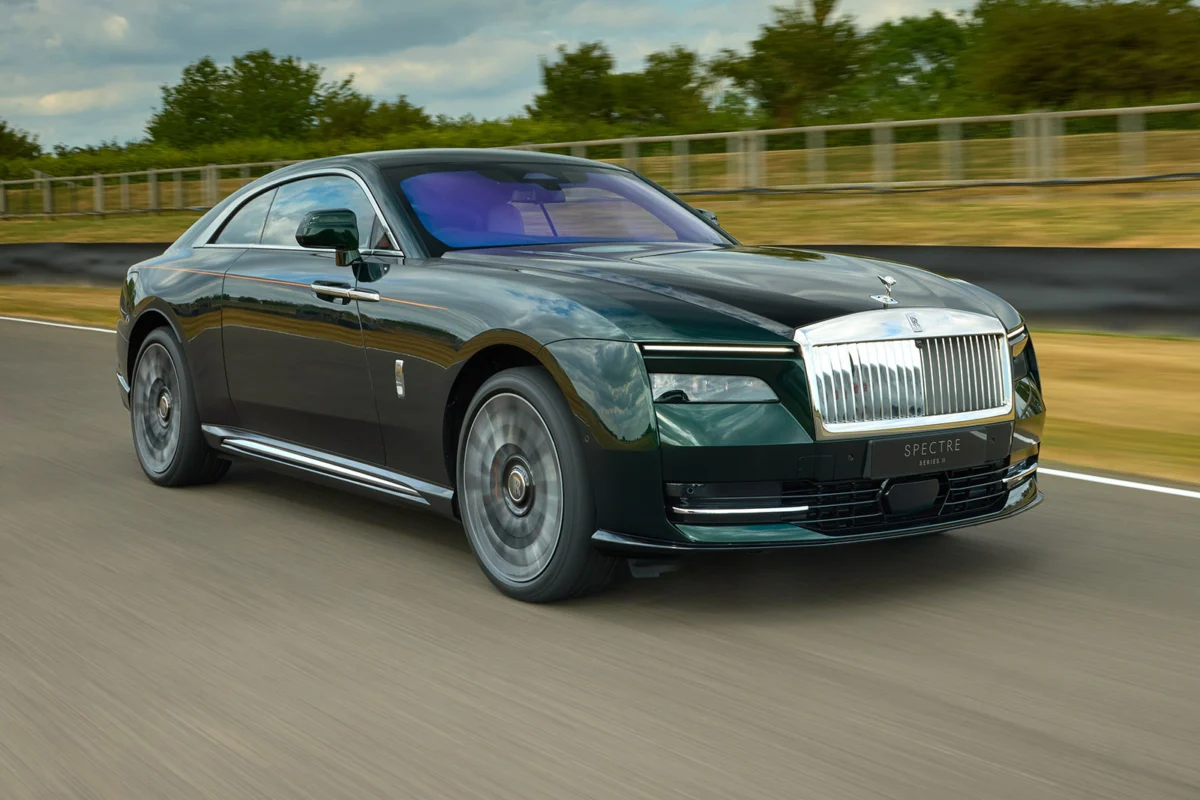
The Rolls-Royce Spectre represents a definitive pivot for the storied marque, marking its inaugural transition into the era of ultra-luxury electrification. While the powertrain signals a departure from the traditional V12 combustion engine, the interior environment remains a steadfast bastion of the brand’s core philosophy: effortless luxury, meticulous craftsmanship, and a sensory experience that isolates occupants from the external world. Inside the Spectre, the seating configuration is intentionally designed to position the driver and passengers slightly higher and less recumbently than is common in contemporary grand touring (GT) coupes. This ergonomic choice was made specifically to prioritize ease of ingress and egress, ensuring that the act of entering the vehicle remains as dignified as the journey itself. The front seats are described as beautifully soft, offering a sensation of being "ensconced" rather than merely seated. In the rear, the two-seat second row provides ample space for adult passengers, and while it does not reach the expansive "limousine-like" proportions of the Phantom, it remains highly competitive within the luxury coupe segment.
Architectural Layout and Material Innovation
The internal architecture of the Spectre draws significant inspiration from the Ghost saloon rather than the larger, more formal Phantom. This is most evident in the dashboard and center console layout, which favors a more integrated and approachable design. Unlike the Phantom, which features a disappearing infotainment screen that can be hidden behind a gallery of art, the Spectre opts for a fixed, modern display. However, Rolls-Royce has mitigated the potential "tech-heaviness" of this digital integration by surrounding it with traditional tactile elements. The cabin is replete with physical switchgear, ranging from the classic "organ-stop" vent pulls to the old-fashioned "blower slider" temperature controls. Each piece of hardware has been engineered with a specific weight and resistance, reflecting the brand’s commitment to material detail.
In the updated ‘S2’ iteration of the cabin, Rolls-Royce has introduced several refined revisions. A new timepiece has been integrated into the fascia, serving as a focal point of the dashboard’s analog aesthetic. Furthermore, the material palette has expanded to include "Duality Twill," a bamboo-based, leather-alternative cloth. This inclusion marks a significant step for the brand as it explores sustainable luxury materials that do not compromise on the tactile richness expected by its clientele. For those seeking a more traditional yet distinctive look, the new Brindled Walnut wood veneer offers a metallic-flecked finish that adds a shimmering depth to the interior panels. Despite these standard offerings, the brand maintains its "Bespoke" program, allowing owners to commission unique paintwork, leather dyes, and wood panelling, provided the client’s budget permits such level of personalization.
The Black Badge Distinction and Performance Integration
For clients seeking a more assertive aesthetic and enhanced performance, the Black Badge edition of the Spectre offers a unique interior treatment. This variant features specialized instrument designs and color schemes that distinguish it from the standard model. One notable feature is the inclusion of "Infinity mode," which, when engaged, alters the digital instrument cluster to a dedicated performance-oriented display. This mode also unlocks an additional level of powertrain responsiveness, catering to a more spirited driving style.
The material choices in the Black Badge also shift toward a contemporary "technical" luxury. Carbon fiber finishes are used extensively throughout the cabin, though Rolls-Royce engineers are quick to note that this is not a weight-saving measure. Instead, the carbon fiber is treated as a decorative element, with the weave alignment painstakingly matched to ensure visual continuity across different surfaces. Even the headlight controls and interior hardware in the Black Badge are wrought with an expensive, heavy feel, reinforcing the idea that every touchpoint must communicate a sense of permanence and quality.
Engineering the Entryway: The Automotive Albatross
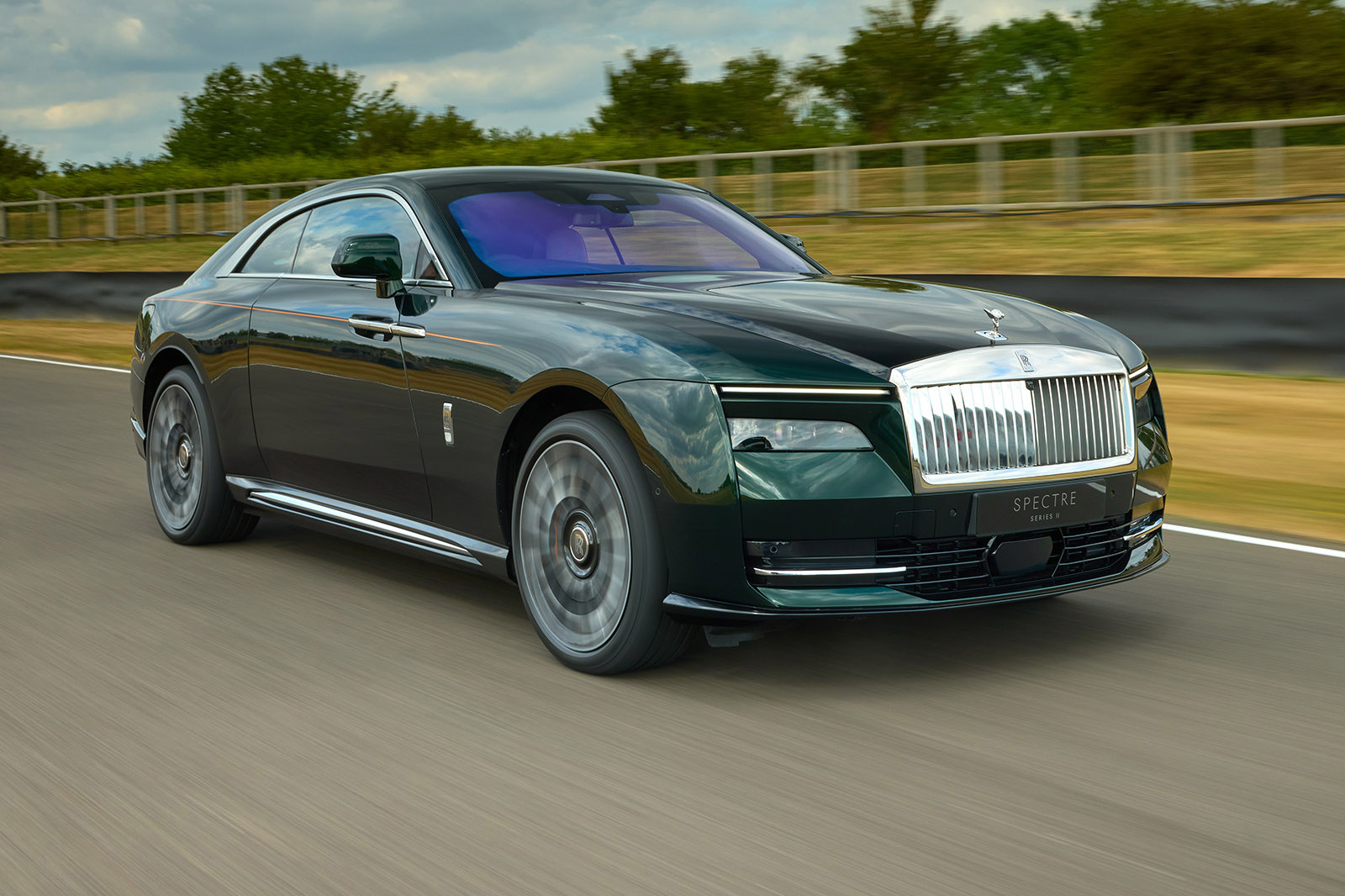
One of the most remarkable engineering feats of the Spectre is its door design. The vehicle features rear-hinged "coach doors," which Rolls-Royce claims are the largest in current global production. These doors are constructed entirely of aluminum to manage weight, yet their dimensions are staggering. Automotive testing data from Autocar has recorded the "door span"—the total width occupied when both doors are fully opened—at a massive 4,600mm. To put this into perspective, the Rolls-Royce Ghost has a door span of 4,040mm, and the Bentley Continental GTC Convertible measures 4,180mm.
The 4.6-meter span makes the Spectre something of an "automotive albatross," requiring significant clearance in parking environments. To manage these proportions, Rolls-Royce has equipped the Spectre with "Effortless Doors." These are fully power-assisted; rather than pulling the door open manually, the user tugs discreetly on the polished steel handle, and the car’s motors take over. For the driver, the experience is even more automated: once seated, a firm press on the brake pedal triggers the driver’s door to close itself, eliminating the need for the occupant to reach out and pull the handle.
Multimedia and Digital Ecosystem
The digital interface in the Spectre represents a sophisticated evolution of the brand’s software suite. While the system is a reskinned version of BMW’s Operating System 8.0, it has been heavily customized to fit the Rolls-Royce ethos. This version is considered superior to the standard BMW implementation because it avoids the modern trend of burying vital functions in sub-menus. For instance, the ventilation and climate controls remain physical, rather than being integrated into the touchscreen.
The Spectre retains the iDrive-style rotary input device on the center console, allowing for navigation of the menus without necessitating screen smudges. Additionally, user-programmable physical shortcut buttons are provided, which act as a bridge between the digital and analog worlds. The digital instrument dials are designed to look like traditional physical gauges, maintaining a sense of continuity with the brand’s heritage while providing the flexibility of a digital display. This restraint in digital integration is expected to be a major selling point as other luxury manufacturers move toward all-glass cockpits that can often feel sterile.
Historical Context and Electrification Timeline
The arrival of the Spectre is the fulfillment of a prophecy made by the brand’s co-founder, Charles Rolls, in 1900. After experiencing an early electric vehicle called the Columbia Electric Carriage, Rolls noted that "the electric car is perfectly noiseless and clean. There is no smell or vibration, and they should become very useful when fixed charging stations can be arranged." It took more than a century for the technology to align with the brand’s exacting standards.
The journey to the Spectre began in earnest with the 102EX, an experimental electric Phantom revealed in 2011. This was followed by the 103EX vision vehicle in 2016. The formal development of the Spectre involved a 2.5-million-kilometer testing program, designed to simulate 400 years of typical Rolls-Royce usage. This program took the car from the extreme cold of Arjeplog, Sweden, to the intense heat of the French Riviera. The goal was to ensure that the transition to electric power would not diminish the "Magic Carpet Ride" quality for which the brand is famous.
Supporting Technical Data and Specifications
To support its massive frame and provide the necessary range, the Spectre is built upon the "Architecture of Luxury," a proprietary all-aluminum spaceframe chassis that also underpins the Ghost and Phantom.
- Battery Capacity: 102 kWh lithium-ion battery.
- Range: Approximately 329 miles (WLTP cycle).
- Power Output: 584 hp (430 kW) and 900 Nm of torque.
- Acceleration: 0-60 mph in 4.4 seconds.
- Weight: Roughly 2,975 kg (nearly 3 tons), making it one of the heaviest passenger cars on the market.
- Charging: 10% to 80% in 34 minutes using a 195 kW DC fast charger.
The sheer weight of the vehicle is mitigated by a sophisticated Planar suspension system, which can decouple the anti-roll bars to allow each wheel to act independently, preventing the rocking motion that can occur when a heavy car hits a bump on one side.
Official Responses and Market Implications
Rolls-Royce Motor Cars CEO Torsten Müller-Ötvös has frequently emphasized that the Spectre was designed to be a "Rolls-Royce first and an electric car second." This sentiment is echoed by the brand’s engineering team, who prioritized silence and smoothness over raw electric efficiency. The decision to move toward a fully electric lineup by 2030 has sent shockwaves through the ultra-luxury segment, forcing competitors like Bentley and Mercedes-Maybach to accelerate their own electrification timelines.
Industry analysts suggest that the Spectre’s success will be measured not just by sales volume, but by its ability to retain traditional clients while attracting a younger, tech-savvy demographic. The "ambient lighting features" and "Starlight Headliner" (which now extends to the doors for the first time in the Spectre) remain singularly special features that appeal to the emotional side of luxury purchasing. As the automotive world moves toward commoditized electric platforms, Rolls-Royce’s insistence on bespoke craftsmanship and physical, tactile luxury serves as a powerful differentiator. The Spectre proves that while the source of power may change, the definition of a Rolls-Royce remains anchored in an uncompromising commitment to the finest materials and an unparalleled sense of occasion.